

+2 Daha


Pão de Queijo is considered one of the fundamental elements of Brazilian cuisine, with origins dating back to the 18th century. The state of Minas Gerais is regarded as the region where this food item first emerged historically. The development of Pão de Queijo is directly linked to Brazil’s colonial period and its economy based on slave labor. During this time, agricultural systems introduced by the Portuguese and the use of enslaved labor facilitated the expansion of coffee and sugarcane production. Concurrently, the native cassava root (manioc) began to be processed as a primary starch source and was adopted as the main ingredient in bread-making practices.
In an era when access to European flours was limited, manioc flour (polvilho) was used as a substitute in bread preparation. Local producers combined manioc flour with regionally produced milk and cheese, thereby laying the foundation for what would become the traditional Pão de Queijo. The dairy industry that developed particularly in the Minas Gerais region enabled the production of hard, intensely flavored cheeses, which made a defining contribution to the flavor profile of Pão de Queijo.
The widespread popularity of Pão de Queijo increased in the early 20th century with Brazil’s rapid urbanization and the migration of rural populations to major cities. During this period, the traditional recipe was standardized in both homemade applications and commercial production processes, eventually becoming a widely recognized product throughout Brazil.
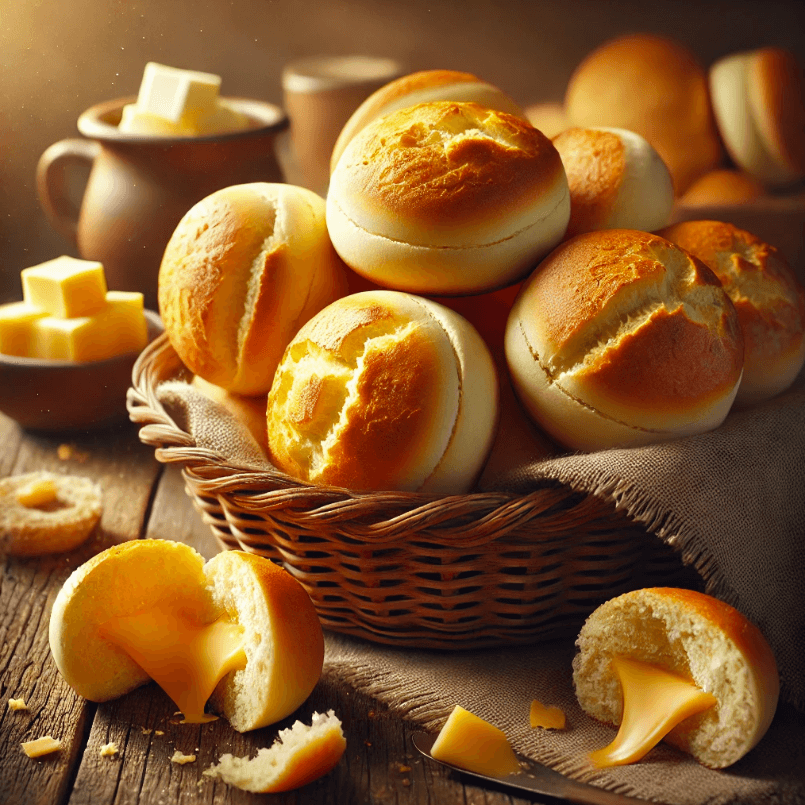
Pão de Queijo ( Created by AI)
Pão de Queijo is a small-sized baked good prepared by combining manioc flour, cheese, liquid, and fat into a cohesive dough. One of its primary structural distinctions from traditional bread varieties lies in its gluten-free composition. The manioc flour used in the recipe exists in two primary forms: polvilho azedo (fermented manioc starch) and polvilho doce (sweet manioc starch). In traditional recipes, these two types of starch are blended in specific proportions to control the dough’s elasticity and leavening behavior.
The dough is typically enriched with locally produced hard cheeses, such as Minas cheese or Canastra cheese. The type and quantity of cheese used significantly influence the final texture and flavor of the product. Milk, eggs, and fat (preferably vegetable oil or rendered pork fat) are added to form the dough. Achieving a homogeneous consistency is crucial for the product’s rise and textural quality after baking.
The prepared dough is shaped into small balls and baked in a preheated oven at a high temperature (approximately 180–200°C). During the baking process, the interior of the dough develops a soft and elastic structure, while the exterior forms a slightly firm crust. The internal cavities that develop in Pão de Queijo result from the gelatinization of starch granules in the manioc flour.
Pão de Queijo holds a central place in the daily dietary practices of southeastern Brazil. It is traditionally consumed during breakfast and as a snack between meals. Culturally associated with the Minas Gerais region, it is now widely produced and consumed throughout Brazil, both in household settings and across commercial food chains. The food item is closely linked to the historical development of Brazil’s dairy and cheese industries and is regarded as a product of rural production economies.
From a nutritional perspective, Pão de Queijo is rich in carbohydrates and fats. The high energy value of manioc flour makes it suitable for individuals with elevated caloric requirements. Its protein content varies depending on the proportion and type of cheese used. Due to its lack of gluten, it is a popular choice among individuals with celiac disease or gluten intolerance. However, because of its high saturated fat content and caloric density, moderate consumption is recommended in accordance with modern dietary guidelines.
Recognized as an element of national identity, Pão de Queijo has gained international visibility and is featured in global cuisines through Brazilian restaurants and diaspora communities. As such, it functions as both a vehicle of cultural transmission and a component of Brazil’s evolving gastronomic identity.
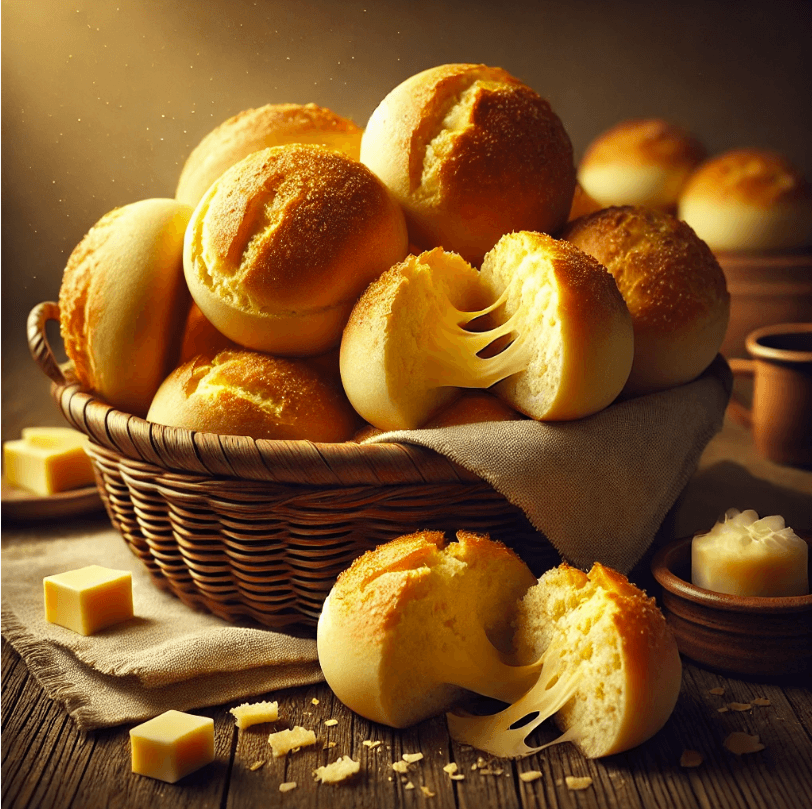
Pão de Queijo (Created by AI)

Henüz Tartışma Girilmemiştir
"Pão de Queijo" maddesi için tartışma başlatın
Structural Characteristics and Preparation Process
Socio-Cultural and Nutritional Context
Pão de Queijo: Ingredients and Preparation Process
Main Ingredients
Essential Components
Preparation Steps
Preparation of Liquid Ingredients
Kneading the Dough
Shaping and Baking
Serving Suggestions
Bu madde yapay zeka desteği ile üretilmiştir.