

Bu içerik Türkçe olarak yazılmış olup yapay zeka ile otomatik olarak İngilizceye çevrilmiştir.
+1 Daha
Pasinler Plain is one of the prominent plains in the Eastern Anatolia Region, located within the boundaries of Erzurum and distinguished by its geomorphological formation, climatic characteristics, historical development, and agricultural potential. Situated east of Erzurum, the plain encompasses a vast area centered on the district of Pasinler and forms a cohesive geographical system together with the surrounding mountainous regions.
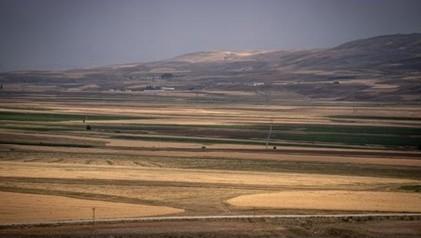
Pasinler Plain lies east of the city center of Erzurum and exhibits the characteristics of a depression extending in an east-west direction. The plain is bounded by mountain ranges to the north and south, resulting in a morphologically enclosed basin structure. This formation originated from tectonic movements and is evaluated within the context of Eastern Anatolia’s active geological framework.
The plain’s floor is filled with alluvial materials transported from surrounding elevated areas and features a broad, relatively flat topography. This characteristic has been decisive in the concentration of settlement and agricultural activity. The average elevation of the plain’s floor ranges between approximately 1600 and 1700 meters, directly influencing climatic conditions and the duration of the agricultural production cycle. Pasinler Plain covers a wide area and is regarded as one of the significant alluvial plain systems in Eastern Anatolia. It spans approximately 350 km², extending from the Deveboynu Mountains in the west to the area where the Zivin and Velibaba streams flow into the Aras River【1】.

Pasinler Ovası (Anadolu Ajansı)
The formation of Pasinler Plain is largely based on tectonic subsidence. The region lies within one of the tectonically active zones of Eastern Anatolia, and its development is primarily attributed to faulting and subsidence movements. The plain’s floor is covered with alluvial deposits formed by river sedimentation, providing favorable conditions for agricultural activity.
The surrounding area is mountainous and rugged, with rivers originating from these highlands serving as key contributors to the plain’s hydrological system. The low gradient and expansive flat terrain of the plain’s floor constitute a fundamental morphological feature that facilitates the spatial expansion of agricultural activities.
The climate of Pasinler Plain is characterized by continental features. Winters are long, cold, and snowy, while summers are short and cool. Annual average temperatures remain low, with pronounced temperature variations. During winter months, temperatures frequently fall below zero, while summers exhibit only limited warming.
Precipitation is concentrated primarily in spring and autumn, with snowfall dominating during winter. These climatic conditions directly influence the type and duration of agricultural activities. The short vegetation period restricts the growing season, while late spring frosts and early autumn cold spells exert decisive effects on farming. Additionally, microclimatic variations occur due to the accumulation of cold air on the plain’s floor. This phenomenon limits crop diversity in agricultural production and leads to a predominant focus on plant species with short growth cycles.
Pasinler Ovası in April (Seren Yanık)
The plain is fed by rivers originating from the surrounding mountainous areas. These rivers play a crucial role both in the formation of the plain and in sustaining agricultural activities. The river systems have contributed to the development of the plain’s fertile soil structure through the deposition of alluvial sediments.
These water sources, locally used for irrigation, constitute one of the primary inputs for agricultural production in the region. Pasinler Plain lies within the Aras River basin, and its river network forms a drainage system connected to this basin. The rivers flowing through the plain and joining the Aras River system are fundamental components shaping the region’s drainage structure. In this context, the Pasin River, along with the Zivin and Velibaba streams, are the principal rivers constituting the plain’s hydrographic system【2】. This underscores the dependence of agricultural production on the continuity of water resources and irrigation opportunities.
Alluvial soils are widespread in Pasinler Plain. These soils have formed through the accumulation of fine materials transported by rivers and exhibit high potential for agricultural productivity. The chemical and physical properties of the soils vary depending on fertilization practices and irrigation conditions.
It has been determined that nitrogen-based fertilizer applications significantly affect the availability of microelements (Fe, Mn, Zn, Cu) in the soil. This relationship highlights a direct connection between soil fertility and both crop diversity and yield. These characteristics contribute to making the plain a suitable agricultural environment for cereal and vegetable production. Moreover, irrigated farming is widely practiced across a significant portion of the plain【3】.
Pasinler Plain and its surroundings are characterized by a steppe (meadow) vegetation type, composed of species adapted to semi-arid climatic conditions. Floristic studies conducted in the plain and its vicinity have revealed the region’s richness in various herbaceous plant species.
The widespread expansion of agricultural land has led to localized degradation of the natural vegetation, yet natural flora diversity persists in certain areas. A direct relationship exists between the expansion of cultivated land and the natural vegetation, influencing biodiversity in the region【4】.

Pasinler Ovası (Anadolu Ajansı)
Pasinler Plain is an important agricultural area due to its fertile soil structure and favorable topography. While cereal production is predominant in the region, vegetable cultivation also attracts attention. Major crops grown on the plain include wheat and barley as cereals, sugar beet as an industrial crop, cabbage and potato as vegetables, and forage crops.
Within this framework, agricultural production is classified as follows: wheat and barley constitute the primary cereal crops; sugar beet stands out as an economically valuable industrial crop; cabbage and potato are the main vegetable products; and forage crops form a vital component of the production system linked to livestock farming. Sunflower production is also part of the region’s agricultural activities【5】.
A direct relationship exists between soil structure and crop patterns. This production system demonstrates that the plain’s agricultural character is predominantly cereal-based, while vegetable cultivation constitutes a more limited but economically significant production segment. A large portion of the plain’s floor is utilized for agriculture, leading to the persistence of natural vegetation only in limited areas.
Agricultural production in Pasinler Plain is highly dependent on natural environmental conditions. The short vegetation period resulting from the continental climate restricts both the quantity and diversity of production. Key limiting factors affecting agricultural output include frost events, drought risk, a short growing season, and seasonal variability in water resources.
However, fertilization practices, irrigation opportunities, and mechanization are key factors enhancing agricultural productivity and contributing to a more planned and sustainable production system. Furthermore, a direct relationship exists between forage crop production and livestock farming, demonstrating that the region’s agricultural production system constitutes an integrated economic structure.
In recent years, production using heirloom seeds has gained prominence, particularly in cabbage cultivation, providing economic benefits to farmers. Heirloom seeds, adapted to local environmental conditions and preserving their genetic traits, hold an important place in agricultural production.

Cabbage yield of 57 kilograms using heirloom seeds (Anadolu Ajansı)
These seeds are particularly notable for their resilience to harsh continental climatic conditions. Heirloom seeds also serve as local genetic resources and are among the elements ensuring the region’s agricultural sustainability. Cabbage produced using heirloom seeds in Pasinler Plain is cultivated on approximately 500 decares, yielding an average of 700 heads per decare, with total production reaching 350,000 heads and being exported beyond the region【6】.
Pasinler Plain has historically been an important area for settlement and transportation. Located in the interior of Eastern Anatolia, the plain has served as a zone of interaction among various civilizations, enhancing its strategic importance throughout history.
Settlement units surrounding the plain preserve traces of historical continuity and shed light on the region’s past. This underscores the plain’s function throughout history as a corridor and zone of interaction. The historical designation of the lower Pasinler Plain as “Geçit Ülkesi” in historical sources further supports this characteristic【7】.
Settlements within and around the plain have generally developed in relation to agricultural activities. Pasinler district serves as the central settlement of the plain. The settlement pattern reflects proximity to water sources and arable land.
Rural settlements exhibit relatively low population density, with economic activities predominantly based on agriculture.
The economic structure of Pasinler Plain is largely based on agriculture and livestock farming. Agricultural production constitutes the primary livelihood for the local population. Livestock farming is also a significant component of the regional economy.
The sustainability of agricultural production is developing in relation to irrigation opportunities and the adoption of modern farming techniques. Additionally, licensed storage facility projects are planned for the region, with expectations that these investments will enhance the plain’s economic potential. In this context, agriculture remains the dominant sector in regional economic activities. Particularly potato and cereal production play a decisive role in the regional economy due to storage requirements and marketing processes【8】.
Pasinler Plain is one of the significant plains of the Eastern Anatolia Region, distinguished by its geographical location, natural resources, and agricultural potential. Its geomorphological structure, climatic characteristics, and soil fertility directly shape regional economic activities. Maintaining its historical role as an important center for settlement and production, the plain continues to be a noteworthy area for regional development today.
[1]
Yılmaz Geçit, “Pasinler Ovası ve Çevresinin İklimi,” Adıyaman Üniversitesi Sosyal Bilimler Enstitüsü Dergisi 2, no. 3 (2009): 73–110, erişim tarihi 17 Nisan 2026, https://dergipark.org.tr/tr/download/article-file/15324
[2]
Oktay Özgül, “Pasin Ovasının Tarihî Coğrafyası,” Kafkas Üniversitesi Sosyal Bilimler Enstitüsü Dergisi 8 (2011): 91–106, erişim tarihi 17 Nisan 2026, https://www.kafkas.edu.tr/dosyalar/sobedergi/file/008/7_0.pdf
[3]
Kenan Barik, Canan Kant ve Adil Aydın, “Daphan ve Pasinler Ovası Toprak Örneklerine Suya Doygun Koşullarda Farklı Azotlu Gübre Uygulamalarının Toprakların Fe, Mn, Zn ve Cu Elverişliliğine Etkisi,” Atatürk Üniversitesi Ziraat Fakültesi Dergisi 37, no. 1 (2011), erişim tarihi 17 Nisan 2026, https://dergipark.org.tr/tr/pub/ataunizfd/article/40610
[4]
Yusuf Kaya, “Pasinler Ovası ve Çevresinin Florasına Katkılar,” Ot Sistematik Botanik Dergisi 4, no. 1 (1997), erişim tarihi 17 Nisan 2026, https://search.trdizin.gov.tr/tr/yayin/detay/56670
[5]
Oktay Özgül, “Pasin Ovasının Tarihî Coğrafyası,” Kafkas Üniversitesi Sosyal Bilimler Enstitüsü Dergisi 8 (2011): 91–106, erişim tarihi 17 Nisan 2026,https://www.kafkas.edu.tr/dosyalar/sobedergi/file/008/7_0.pdf
[6]
Anadolu Ajansı, “Pasinler Ovası’nda ata tohumlarla üretilen lahanalar üreticinin yüzünü güldürdü,” erişim tarihi 17 Nisan 2026, https://www.aa.com.tr/tr/yasam/pasinler-ovasinda-ata-tohumlarla-uretilen-lahanalar-ureticinin-yuzunu-guldurdu/3736404
[7]
Oktay Özgül, “Pasin Ovasının Tarihî Coğrafyası,” Kafkas Üniversitesi Sosyal Bilimler Enstitüsü Dergisi 8 (2011): 91–106, erişim tarihi 17 Nisan 2026, https://www.kafkas.edu.tr/dosyalar/sobedergi/file/008/7_0.pdf
[8]
Anadolu Ajansı, “Erzurum’da kurulacak lisanslı depolar Pasinler Ovası’na can suyu olacak,” erişim tarihi 17 Nisan 2026, https://www.aa.com.tr/tr/ekonomi/erzurumda-kurulacak-lisansli-depolar-pasinler-ovasina-can-suyu-olacak/3648920

Henüz Tartışma Girilmemiştir
"Pasinler Plain" maddesi için tartışma başlatın
Geographical Location and Boundaries
Geomorphological Features
Climatic Characteristics
Hydrography
Soil Characteristics
Vegetation and Flora
Agricultural Activities
Traditional Farming and Heirloom Seeds
Historical Geography
Settlement and Population
Economic Structure