

Bu içerik Türkçe olarak yazılmış olup yapay zeka ile otomatik olarak İngilizceye çevrilmiştir.
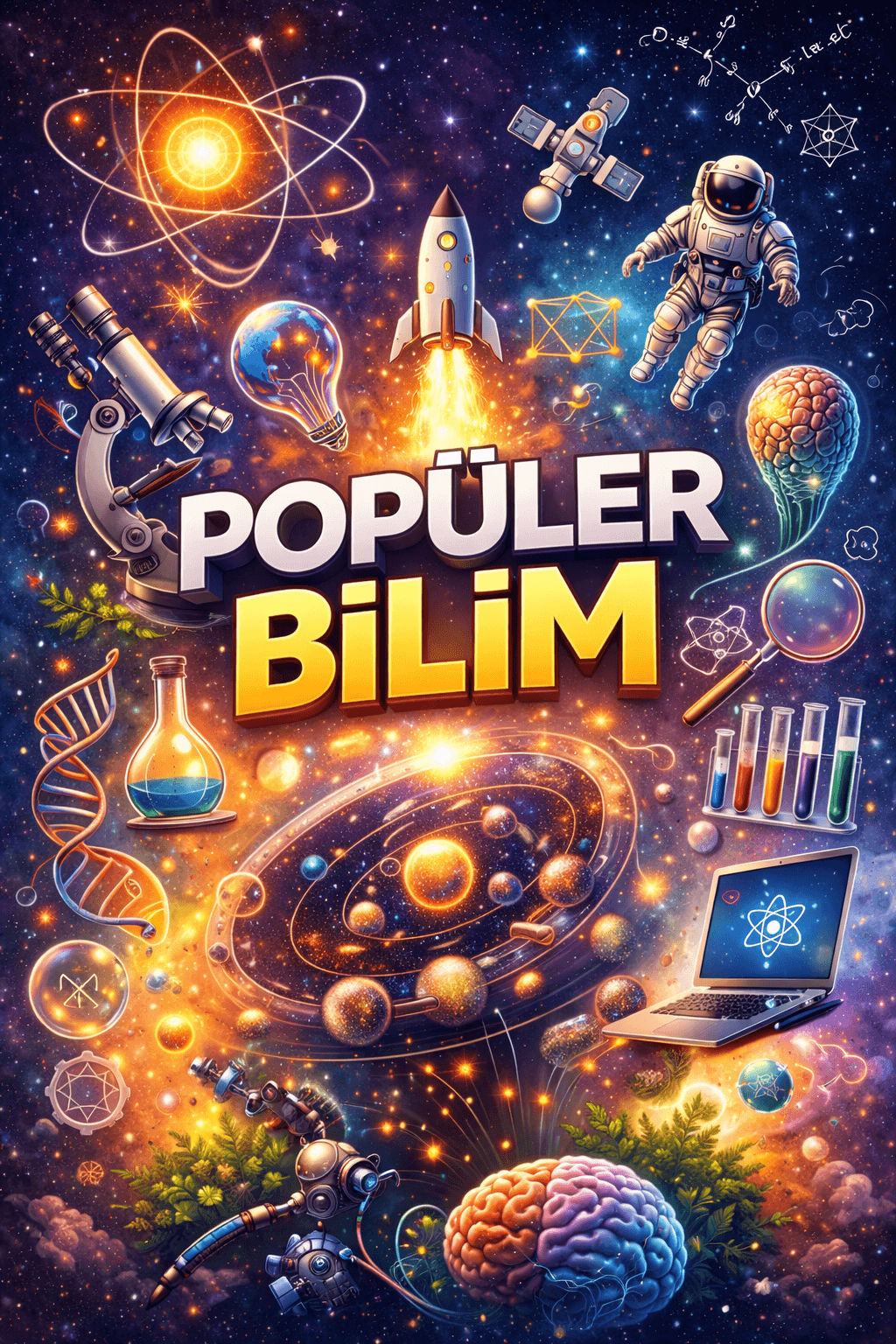
Generated with artificial intelligence
Purpose(s) | Introducing science and increasing scientific awareness. | ||||||||
|---|---|---|---|---|---|---|---|---|---|
Definition(s) | The communication of scientific knowledge to the general public in an understandable manner. | ||||||||
Importance | Builds a bridge of information between science and society. | ||||||||
Tools | Books, magazines, documentaries, and digital content. | ||||||||
Target Audience | The non-expert general reader and viewer. | ||||||||
Popular science is a field of science communication that involves conveying scientific knowledge and research findings to non-expert audiences in an understandable and accessible manner. This concept encompasses written, visual, and digital content used to transfer scientific knowledge from academic circles to the public domain, enabling society to engage with scientific developments.
In science communication literature, popular science is defined as a subset of deliberate communication activities aimed at conveying scientific knowledge, methods, and findings to non-scientist audiences. Science communication studies regard popular science as a vital tool for transferring scientific knowledge to society, fostering scientific awareness, and integrating scientific insights into public discourse. In this context, popular science contributes to ensuring that scientific research findings are not confined to academic circles but are instead made usable by the public and their societal impact enhanced. This process is significant for incorporating scientific knowledge into public debates and making scientific issues more visible in public decision-making processes.
Popular science refers to the process of reconfiguring scientific knowledge for non-expert audiences. Maintaining the accuracy of scientific content is essential in this process, while technical details are reduced and the presentation is adapted into a structure comprehensible to readers. Popular science aims not only to communicate scientific knowledge but also to foster understanding of scientific processes. Therefore, science communication research evaluates popular science not merely as a means of information transfer but also as a way of sharing the scientific mode of thinking with society.
Popular science texts typically repackage the content and findings of scientific articles using simplified language and narrative structures. These texts are designed to reduce technical details and make the content reader-friendly. This form of communication, aimed at sharing scientific knowledge with the public, is considered important for enhancing scientific literacy, enabling public evaluation of scientific developments, and strengthening interactions between science and society. Popular science facilitates public understanding of scientific knowledge while simultaneously making the social context of scientific research more visible.
The key characteristics of popular science are discussed in the literature under the following headings:
• Target audience: The general public, who lack scientific expertise but are interested in scientific developments.
• Language and style: Use of language that minimizes technical terminology and favors clear, comprehensible expression.
• Communication channels: Print and visual media, digital platforms, and popular science publications.
• Purpose: To increase scientific awareness and public participation.
These characteristics demonstrate that popular science is a form of communication that enables the public circulation of scientific knowledge.
Popular science initiatives aim to enhance the impact of scientific knowledge on social life and ensure that scientific issues are understood by the public. In science communication literature, the main functions of popular science activities are listed as follows:
1. Increasing scientific literacy.
2. Informing the public about scientific developments.
3. Making the societal impacts of scientific research visible.
4. Strengthening mutual interaction between science and society.
These functions are significant for the democratization of scientific knowledge and for enabling its use in public decision-making processes.
Popular science reaches the public through various media and publishing channels. Popular science books, magazines, newspapers, television programs, documentaries, and digital platforms constitute the primary outlets of this field. These publications enhance the dissemination of scientific knowledge by making scientific content accessible to broad audiences.
The media-mediated spread of scientific knowledge strengthens the interaction between science and society and enables scientific information to be incorporated into public debates. This process is also important for the influence of scientific knowledge on public trust and public policy. Popular science publications increase the circulation of scientific knowledge by regularly conveying scientific developments to the public and reinforcing the visibility of scientific issues in the public sphere.
Popular science publishing in Türkiye has acquired an institutional character, particularly through activities led by public institutions. One of the leading institutions in this field is the Scientific and Technological Research Council of Türkiye (TÜBİTAK). 【1】 TÜBİTAK’s popular science magazines, books, and digital platforms aim to deliver scientific knowledge to readers of diverse ages and educational backgrounds. These publications support the development of scientific literacy by making scientific content accessible to broad audiences. Popular science publishing in Türkiye continues to evolve as a field that enhances the public circulation of scientific knowledge and strengthens the interaction between science and society.
TÜBİTAK’s science communication activities and the publication of popular science magazines constitute a significant part of institutional efforts to make scientific knowledge accessible to the public in Türkiye. The journal Bilim ve Teknik, first published by TÜBİTAK in 1967, is one of the most enduring examples of popular science publishing in Türkiye.【2】
Popular science has developed globally as a fundamental element of modern science communication. Since the 19th century, the dissemination of scientific knowledge to broad audiences through scientific journals, newspapers, and books has become widespread. With the rise of radio and television in the 20th century, popular science content reached even larger audiences, and in the 21st century, digital media and online platforms have become the primary tools of popular science communication.
Today, research in science communication has underscored the growing importance of popular science due to the increasing societal impact of scientific research and the closer integration of scientific issues into public policy. International organizations and academic studies emphasize that popular science is a vital instrument for enhancing scientific literacy and strengthening the interaction between science and society.
Davies, Sarah R., Megan Halpern, Maja Horst, David A. Kirby, and Bruce Lewenstein.
Dunnwald, Martine, Valerie B. DeLeon, and Anne M. Burrows. “The Importance of Science Communication and Public Engagement.” *PubMed Central*, 2025. Accessed February 16, 2026. https://pmc.ncbi.nlm.nih.gov/articles/PMC12702833/
Lewenstein, Bruce. “What Is Science Communication?” *Journal of Science Communication* 21, no. 3 (2022). Accessed February 16, 2026. https://jcom.sissa.it/article/pubid/JCOM_2107_2022_C02/
National Academies of Sciences, Engineering, and Medicine. *Communicating Science Effectively: A Research Agenda*. Washington, DC: National Academies Press, 2017. Accessed February 16, 2026. https://www.ncbi.nlm.nih.gov/books/NBK425715/
Pei, Jiaxin, Anders Sundnes Løvlie, Niels Ole Finnemann, et al.
Science Europe. "Science Communication." Accessed February 16, 2026. https://scienceeurope.org/our-priorities/science-communication/
Özdemir, Şebnem, and Nergishan Koçer, Dilara. “21. Yüzyılda Türkiye’nin Bilim İletişimi Uygulamaları Üzerine Bir Çalışma.” *Manisa Celal Bayar Üniversitesi Sosyal Bilimler Dergisi* 18, special issue (2020): 373–392. https://doi.org/10.18026/cbayarsos.685206
“Modeling Public Perceptions of Science in Media.” arXiv, 2025. Accessed February 16, 2026. https://vbn.aau.dk/en/publications/modeling-public-perceptions-of-science-in-media
“Science Stories as Culture: Experience, Identity, Narrative and Emotion in Public Communication of Science.” *Journal of Science Communication* 18, no. 5 (2019): A01. Accessed February 16, 2026. https://jcom.sissa.it/article/pubid/JCOM_1805_2019_A01/
[1]
Şebnem Özdemir ve Dilara Nergishan Koçer, “21. Yüzyılda Türkiye’nin Bilim İletişimi Uygulamaları Üzerine Bir Çalışma,” Manisa Celal Bayar Üniversitesi Sosyal Bilimler Dergisi 18, özel sayı (2020): 373–392, https://doi.org/10.18026/cbayarsos.685206
[2]
TÜBİTAK. “Bilim ve Teknik.” Erişim 16 Şubat 2026. https://bilimteknik.tubitak.gov.tr/

Generated with artificial intelligence
Purpose(s) | Introducing science and increasing scientific awareness. | ||||||||
|---|---|---|---|---|---|---|---|---|---|
Definition(s) | The communication of scientific knowledge to the general public in an understandable manner. | ||||||||
Importance | Builds a bridge of information between science and society. | ||||||||
Tools | Books, magazines, documentaries, and digital content. | ||||||||
Target Audience | The non-expert general reader and viewer. | ||||||||
Henüz Tartışma Girilmemiştir
"Popular Science" maddesi için tartışma başlatın
Definition and Importance
Characteristics
Purpose and Function
Publishing and Media
Popular Science Publishing in Türkiye
Popular Science Worldwide