


Bu içerik Türkçe olarak yazılmış olup yapay zeka ile otomatik olarak İngilizceye çevrilmiştir.

Imagine a farmer in one of Diyarbakır’s vineyard paths, under the summer sun, cupping soil in his hands. For years he has spoken to this same earth; he knows by touch and experience when to water it and when to let it rest. But in recent years, the soil no longer speaks as it once did. Rains have become erratic, droughts have lengthened, and water has now become the region’s most precious and most contested resource. In Southeastern Anatolia, this scene is no longer just the story of one farmer; it is the story of millions of hectares of farmland, thousands of families, and the future of an entire region.
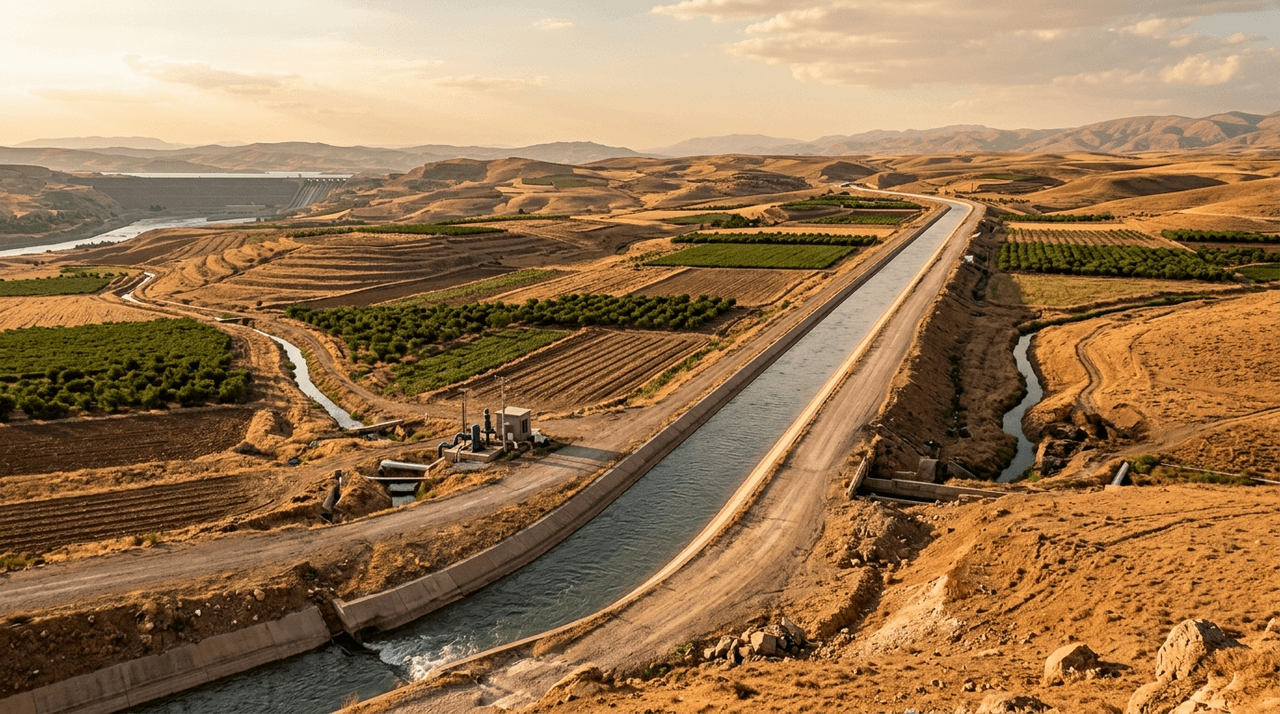
The irrigation infrastructure of the Southeastern Anatolia Project (generated by artificial intelligence)
It is precisely at this point that an ancient question seeks a new answer: How do we irrigate the soil more intelligently?
The Southeastern Anatolia Project (GAP), one of Türkiye’s most comprehensive regional development initiatives, aimed to integrate the development of water and soil resources, agriculture, energy, and industry across the Euphrates and Tigris basins. While dams, irrigation canals, and power plants brought new productive capacity to the region, the core objective remained unchanged: to unite land and people, and align the region’s development with the nation’s overall progress.
But large-scale infrastructure alone is not enough. Dams deliver water; canals transport it — yet decisions about where, when, and how much water reaches each field still largely depend on experience, guesswork, and sometimes luck. And it is here that GAP’s half-century legacy meets today’s youngest technology: artificial intelligence.【1】
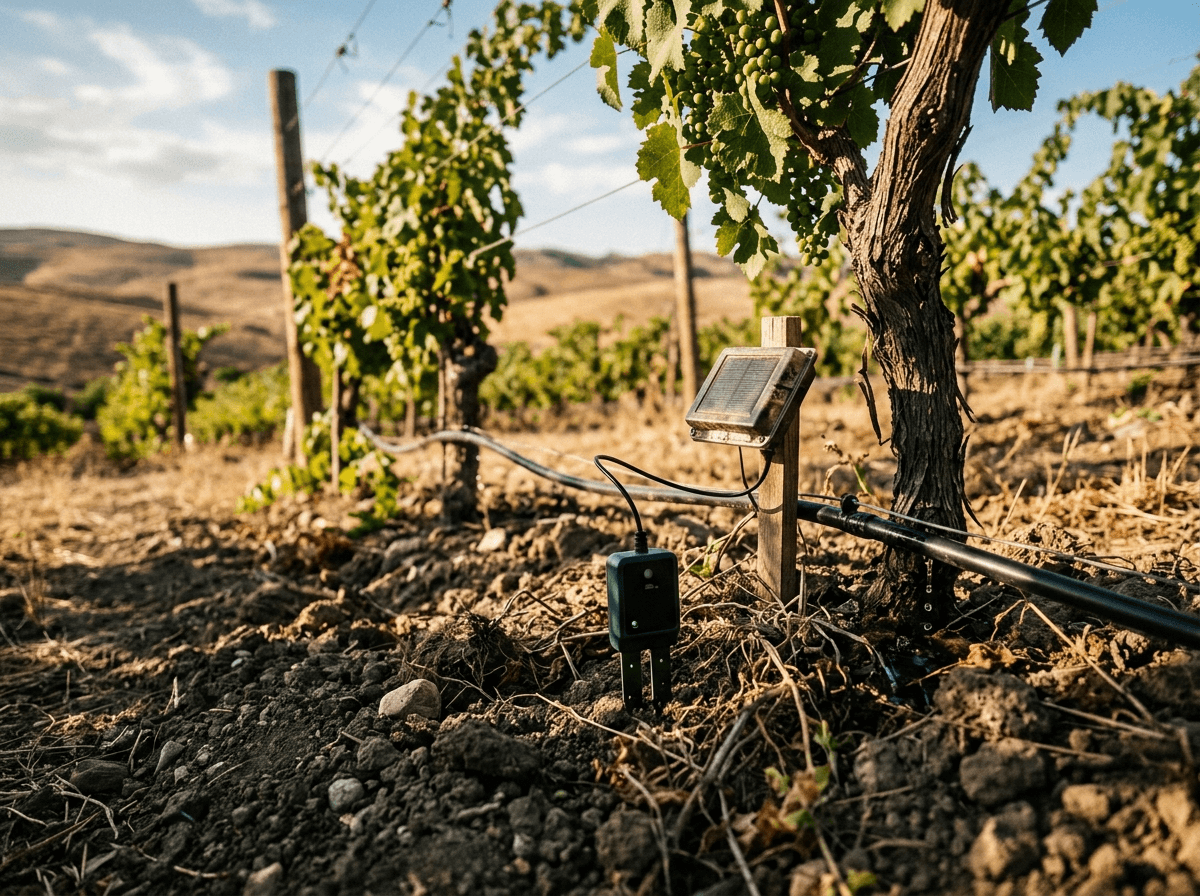
Bağcılıkta hassas tarım sensörleri (yapay zekâ ile hazırlanmıştır)
Dicle University is taking a significant step in one of Southeastern Anatolia’s oldest agricultural traditions: viticulture. Under the Silvan Project, the university aims to widely introduce modern irrigation technologies to the region, while simultaneously developing a pilot AI-supported early warning and decision-assistance platform in Diyarbakır. This system seeks to bring precision agriculture practices to vineyards, empowering producers with data to reinforce decisions that for centuries have been guided by intuition.【2】
This is not an isolated example. In another project led by Bursa Technical University, soil moisture sensors, agricultural meteorological stations, and AI models are combined to create a system that delivers real-time, crop-specific irrigation recommendations — with the goal of reducing water and energy use by at least 20 percent.【3】The Eastern Anatolia Project (EAP) Administration shares a similar vision, deliberately placing youth and women at the heart of this transformation as it brings AI and technology into agriculture.【4】
The common thread is clear: Across different regions of Türkiye, different institutions are asking the same question — how do we amplify the wisdom of the soil with the power of data?
Because in the GAP region, the issue of water is also a question of staying.【5】 Drought and inefficiency push young people toward cities, sometimes even abroad; but the path to farming the land more intelligently, with less waste and greater sustainability, is also the path that allows people to remain rooted in their homeland. An AI-supported irrigation decision does not only determine a vineyard’s yield this year — it determines whether that vineyard will be passed on to future generations.【6】
This connects the issue directly to the spirit of TEKNOFEST and the essence of the National Technology Initiative: Technology only finds its true meaning when it touches human life, the land, and the future. Fifty years ago, GAP’s dams aimed to “bring water”; today’s artificial intelligence aims to “deliver water to the right place, at the right time, in the right amount.” Both are different chapters of the same story: Southeastern Anatolia’s land, rewritten through technology.
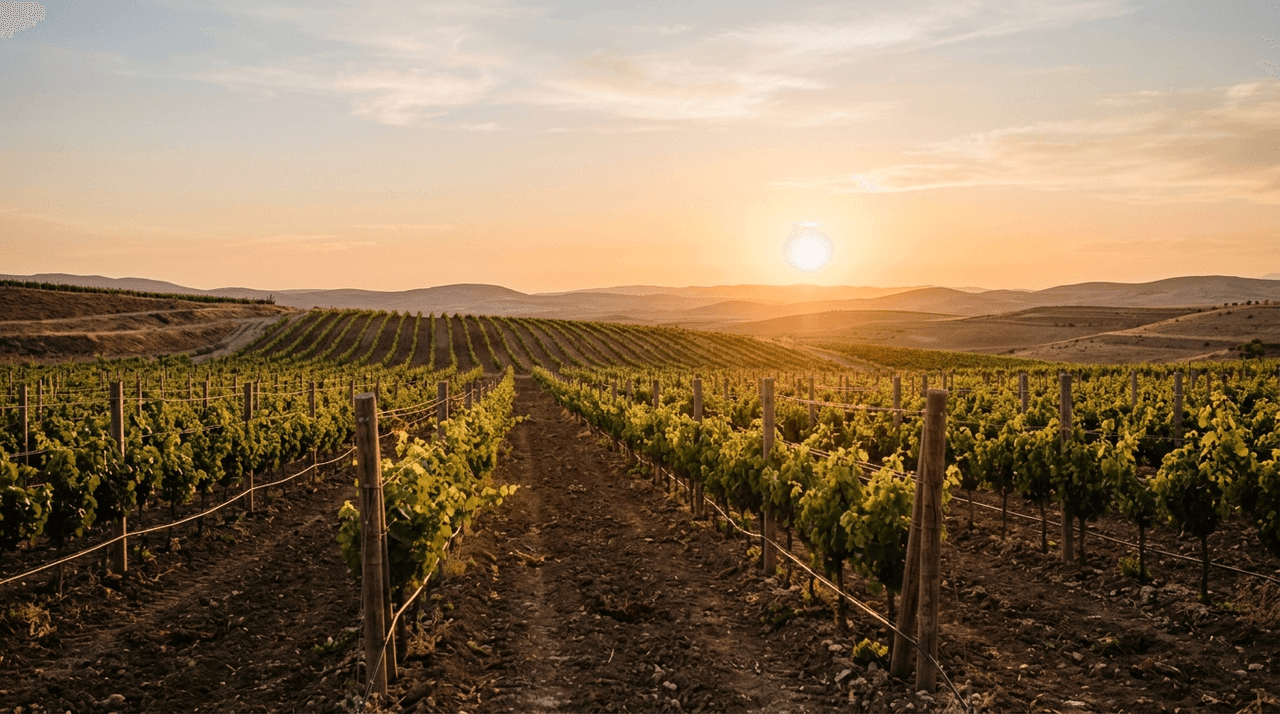
Toprağın geleceğine bakış (yapay zekâ ile hazırlanmıştır)
Perhaps in the future, that farmer in Diyarbakır will still cup the soil in his hands — but he will no longer be alone. A screen in his pocket will tell him within seconds the soil’s moisture level, the weather forecast, and the exact moment his vines are thirsty. Experience and data, hand and algorithm, GAP’s fifty-year legacy and Türkiye’s current National Technology Initiative will meet on the same field.
And perhaps the real question is this: The soil of Southeastern Anatolia is no longer waiting only for water; it is also waiting for knowledge.
Every young person today bent over a robotics team, an AI project, or an engineering notebook is writing the same future as this land. Perhaps fifty years from now, one of those who designed the algorithms walking through GAP’s vineyards will be the very person reading these lines today — and the soil will finally have found a generation that listens to its voice.
Bursa Hakimiyet. "Bursa Teknik Üniversitesi'nden Tarımda Su İsrafına Yapay Zekâ Çözümü." May 12, 2026. Accessed September 4, 2026.https://www.bursahakimiyet.com.tr/bursa/bursa-teknik-universitesi-nden-tarimda-su-israfina-yapay-zeka-cozumu-1626431
GAP Bölge Development Administration. "GAP Nedir?" Accessed September 4, 2026.https://www.gap.gov.tr/sayfa/gap-hakkinda/gap-nedir/.
Güneydoğu Ekspres. "Dicle Üniversitesi'nden Dijital Tarım Hamlesi." Accessed September 4, 2026.https://www.guneydoguekspres.com/dicle-universitesinden-dijital-tarim-hamlesi.
Sivas İrade. "DAP'tan Sivas'ta Yapay Zekalı Tarım Modeli." July 30, 2026.https://www.sivasirade.com/haber/daptan-sivasta-yapay-zekali-tarim-modeli-271163.html.
[1]
Bursa Hakimiyet. "Bursa Teknik Üniversitesi'nden Tarımda Su İsrafına Yapay Zekâ Çözümü." Accessed September 4, 2026.
[2]
Güneydoğu Ekspres. "Dicle Üniversitesi'nden Dijital Tarım Hamlesi." Accessed September 4, 2026.
[3]
Bursa Hakimiyet. "Bursa Teknik Üniversitesi'nden Tarımda Su İsrafına Yapay Zekâ Çözümü." Accessed September 4, 2026.https://www.bursahakimiyet.com.tr/bursa/bursa-teknik-universitesi-nden-tarimda-su-israfina-yapay-zeka-cozumu-1626431
[4]
Sivas İrade, "DAP'tan Sivas'ta Yapay Zekalı Tarım Modeli," July 30, 2026, Accessed September 4, 2026,https://www.sivasirade.com/haber/daptan-sivasta-yapay-zekali-tarim-modeli-271163.html
[5]
GAP Regional Development Administration. "GAP'ın Hedefleri." Accessed September 4, 2026.
[6]
Sivas İrade, "DAP'tan Sivas'ta Yapay Zekalı Tarım Modeli," July 30, 2026, Accessed September 4, 2026,
The Soil’s New Partner: AI-Driven Decision Systems
Why Is This More Than Just a “Technology Story”?
Conclusion: Algorithms That Hear the Soil’s Voice