
Bu içerik Türkçe olarak yazılmış olup yapay zeka ile otomatik olarak İngilizceye çevrilmiştir.
The Sternocleidomastoid Muscle is one of the most prominent and powerful muscles of the neck. It functions in head rotation, neck flexion, and assists in respiration. It is innervated by the accessory nerve (CN XI) and serves as a key anatomical landmark in defining the boundaries of the neck.
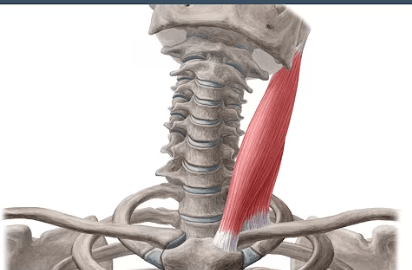
The sternocleidomastoid muscle is a strong, superficial muscle located in the anterolateral region of the neck. It has two heads: the sternal head originates from the anterior surface of the manubrium of the sternum, and the clavicular head arises from the medial third of the clavicle. These two heads converge and extend upward and posteriorly to attach to the mastoid process of the temporal bone and the superior nuchal line of the occipital bone. The muscle originates from two distinct sites but unites into a single muscular belly. As the sternal and clavicular heads ascend, their tendons insert into the mastoid process and the occipital bone. The muscle defines the boundaries of the anterior and posterior triangles of the neck, forming important anatomical reference points.
The sternocleidomastoid muscle develops from the paraxial mesoderm and is innervated by cranial nerve XI (nervus accessorius). Functionally, it is classified among the muscle groups responsible for head and neck movements.
The motor innervation of the muscle is provided by cranial nerve XI (nervus accessorius). Proprioceptive sensory fibers originate from the cervical plexus, particularly from spinal nerves C2 and C3. Its blood supply is primarily derived from branches of the occipital artery and the superior thyroid artery.
When contracted unilaterally, the muscle rotates the head to the opposite side (contralateral rotation) and tilts it toward the same side (ipsilateral lateral flexion). When contracted bilaterally, it flexes the head and neck forward and elevates the head during extension. During deep inspiration, it acts as an accessory respiratory muscle by elevating the thoracic cage together with the scalene muscles. Clinically, the most common pathology associated with this muscle is torticollis, which occurs in congenital and acquired forms. Congenital torticollis typically results from intramuscular fibrosis following birth trauma, while acquired torticollis may arise from infection, trauma, or neurological disorders. The sternocleidomastoid muscle serves as a critical anatomical landmark in surgical and medical procedures by defining the neck triangles. Additionally, it is a key muscle palpated during neurological examinations to assess the function of the accessory nerve.

Henüz Tartışma Girilmemiştir
"Sternocleidomastoid Muscle" maddesi için tartışma başlatın
Anatomical Structure
Morphology and Attachment Points
Embryological Origin and Classification
Innervation and Vascular Supply
Function and Clinical Relevance