



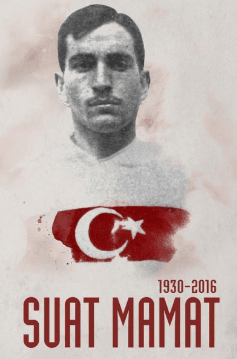
Suat Mamat (AA)
One of the figures who left a mark on Turkish football during its early professional era, both at the club level and on the national team stage, Suat Mamat played an active role during the formative years of Turkish football history through a long career as a player and coach. His understanding of the game, positional versatility, and ability to perform in multiple roles gave him a distinctive profile within the football structure of his time. His football career extended beyond statistics and club achievements, as he directly participated in Türkiye’s international tournament experiences.
Magic Feet: Suat Mamat | The Legendary Footballer Who Scored Our First Goal in the World Cups (TrtSpor)
Suat Mamat was born on 8 November 1930 in the Bakırköy district of Istanbul. He was the second son in a family of five children. His father and older brother worked for the State Railways. This family connection to the railways indirectly shaped Mamat’s path toward football. He spent his childhood in Bakırköy, growing up playing football on the streets and vacant lots within the urban fabric of the time. These environmental conditions made football an integral part of his daily life from an early age.
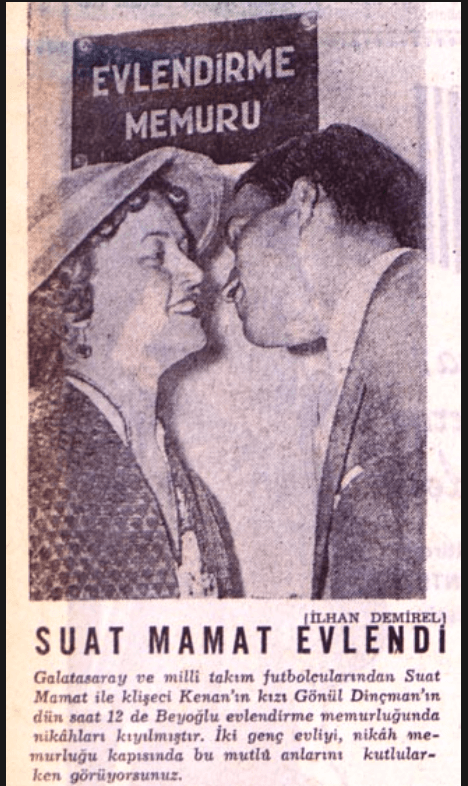
Suat Mamat’s marriage announcement. 21.08.1955. (Milliyet)
Suat Mamat began his football career at the age of 16 with Yedikule Demirspor. This choice aligned with his family’s ties to the railways. After a brief stint at Yedikule Demirspor, he moved to Bakırköy Sümerspor. His time at this club marked the foundation of his formal football career. When he reached military service age, he did not leave football and played for İstanbul Karagücü. His performances at Karagücü opened the door to recognition by major clubs in the following years.
Between 1949 and 1952, he played for Ankara Demirspor. This period represented one of the rare experiences of his career outside Istanbul. His playing style, centered around midfield duties, became more defined during these years. His ability to play as a central midfielder, right inside midfielder, and occasionally in other positions placed him among the versatile players of his era.
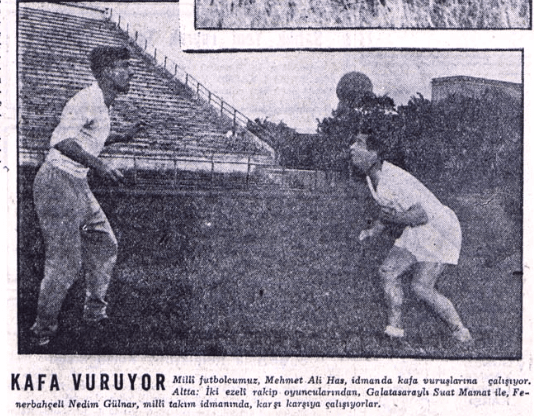
Suat Mamat (right) and Nedim Gülnar (right) during training. 18.06.1955. (Milliyet)
In 1952, he transferred to Galatasaray. He initially played under amateur status before signing a professional contract. His first official match for Galatasaray was on 16 November 1952 against Beyoğluspor. He wore the yellow-red jersey for eleven consecutive seasons from 1952 to 1963. During this period, he won three Istanbul League titles and one Türkiye League championship. Throughout his long tenure at Galatasaray, he served as a playmaker in midfield and took active responsibility in the team’s offensive organization. His most stable and enduring club career was spent at Galatasaray.
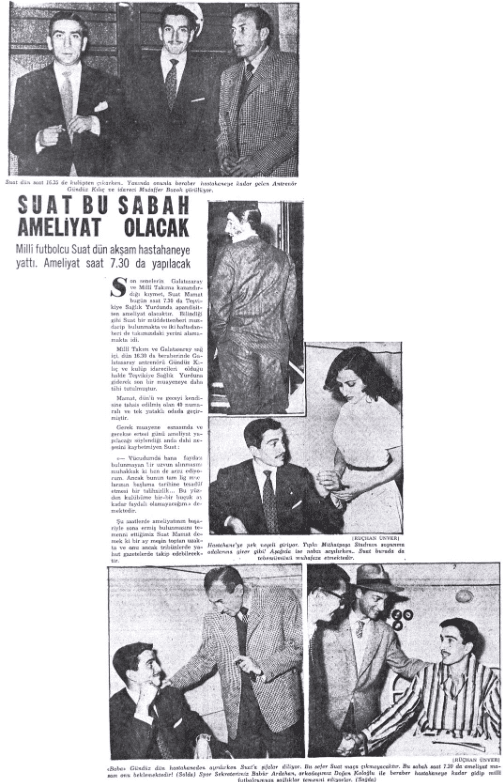
Suat Mamat’s surgery announcement. 16.11.1945. (Milliyet)
Suat Mamat first wore the national team jersey on 14 March 1954 in a World Cup qualifying match against Spain. He remained part of the national team squads for approximately a decade. He was among the players who took the field during Türkiye’s participation in the 1954 World Cup in Switzerland. The goal he scored on 17 June 1954 against Germany in the World Cup finals is recorded as Türkiye’s first goal in World Cup history. Over his national team career, he made 27 appearances—including one for the B national team—and scored five goals. Alongside Burhan Sargun and İlhan Mansız, he is among the standout players in Türkiye’s history for scoring three goals in World Cup finals.
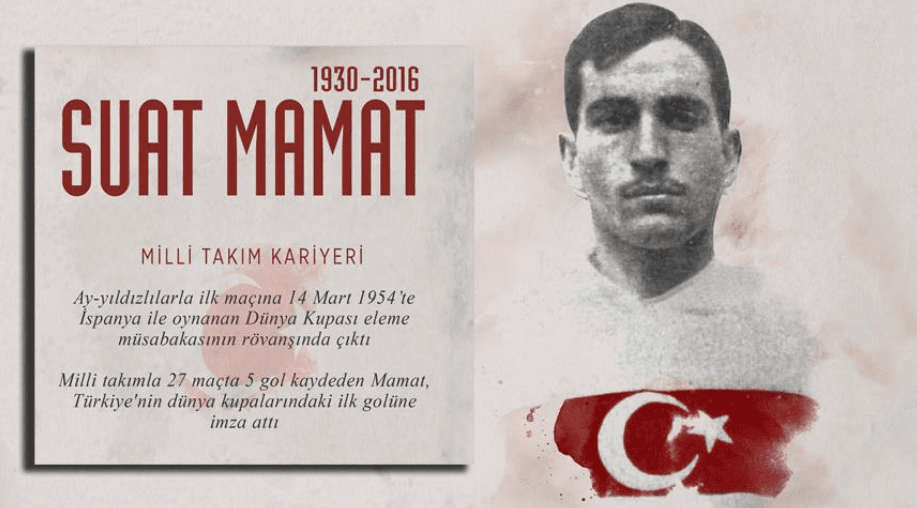
Suat Mamat’s national team career (AA)
In 1963, after leaving Galatasaray, he transferred to Beşiktaş. He played four seasons for the black-and-white club from 1963 to 1967. During this period, he won two league championships with Beşiktaş. He contributed goals in league matches and played in midfield and various other positions. Wearing the jersey of a rival club after his long tenure at Galatasaray marked one of the significant turning points in his career.
In the 1967–1968 season, he transferred to Vefa. He appeared in nine official matches for Vefa and scored one goal. At the end of that season, he celebrated his jubilee and retired from active football. His continued presence on the pitch at an age considered advanced for footballers at the time was one of the notable aspects of his career.
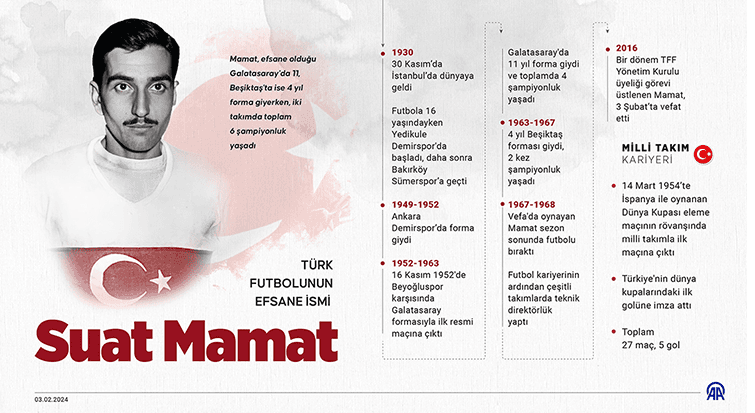
Suat Mamat’s career (AA)
Suat Mamat primarily played as a central midfielder. He also played as a right inside, right winger, centre forward, and right back. On the field, he was responsible for playmaking, distributing passes, and supporting attacks. He executed technical moves such as the röveşata, which were uncommon in the football of his era, and stood out for his timing in aerial duels. It is known that in some matches, when the goalkeeper was injured, he temporarily took over goalkeeping duties and performed them competently.
After retiring as a player, he began a career as a coach. He served as head coach for Balıkesirspor, Rizespor, Zonguldakspor, Kırıkkalespor, Mersin İdmanyurdu, and Eyüpspor. He led Kırıkkalespor and Mersin İdmanyurdu to promotion to a higher league. He also held positions within the Turkish Football Federation, served on its board for a period, and worked with youth national teams.
Suat Mamat passed away on 3 February 2016 at the age of 85. His funeral was held on 5 February 2016 after the noon prayer at Levent Mosque. He is remembered as a figure who served for many years across various levels of Turkish football as both a player and a coach.
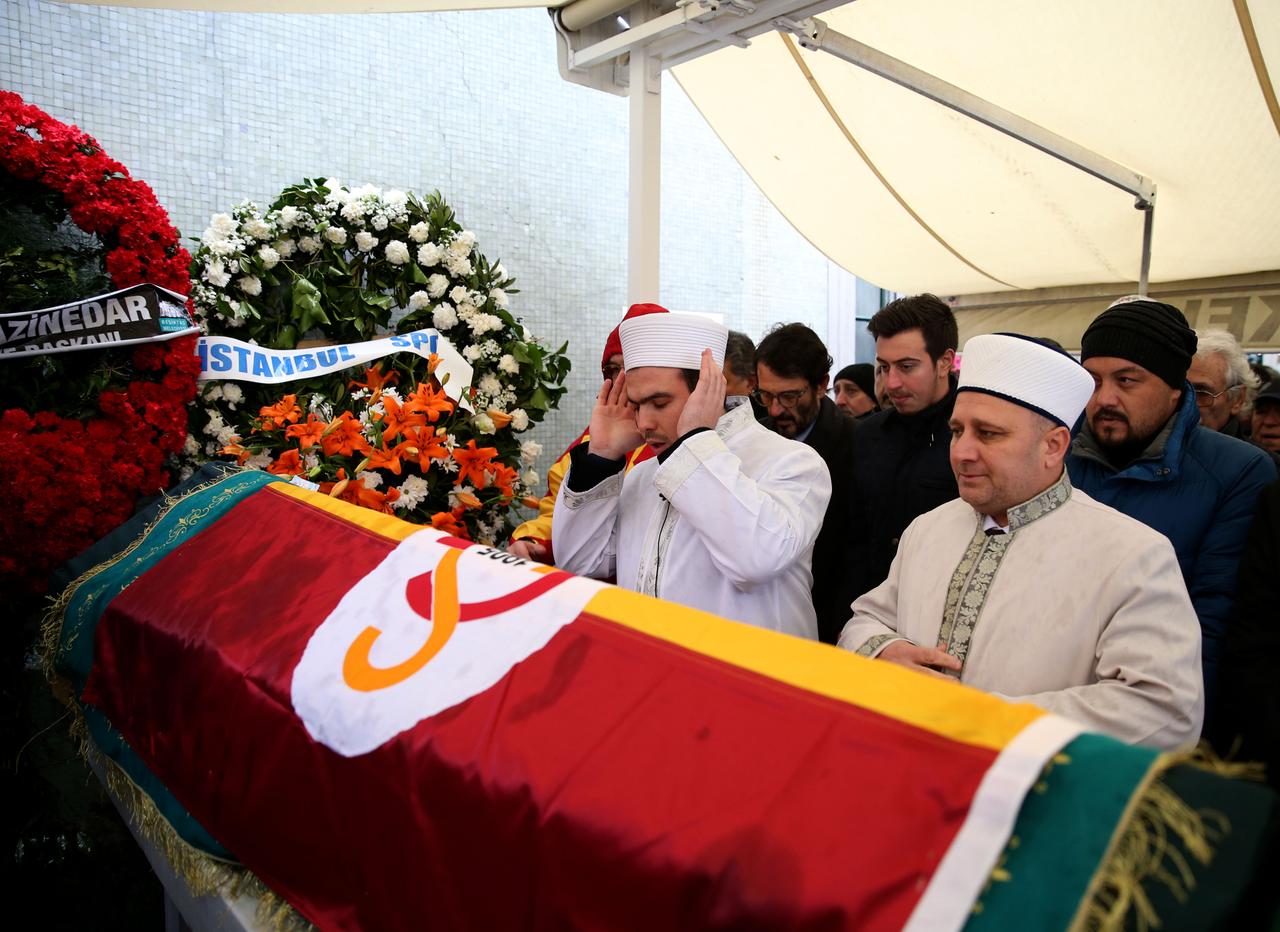
Suat Mamat’s funeral (AA)
Anadolu Ajansı. “Türk futbolunun efsane ismi Suat Mamat.” Anadolu Ajansı, February 3, 2024. Accessed February 2, 2026. https://www.aa.com.tr/tr/spor/turk-futbolunun-efsane-ismi-suat-mamat/3126639
Dinyakos. "Suat Mamat – Futbol sahalarında bir sanatçı." Accessed February 2, 2026. https://dinyakos.com/2019/02/03/suat-mamat-futbol-sahalarinda-bir-sanatci/
TFF İstanbul İl Temsilciliği. "Suat İsmail Mamat vefat etti." TFF İstanbul, February 4, 2016. Accessed February 2, 2026. https://tffistanbul.org/haber/suat-ismail-mamat-vefat-etti/2304
Transfermarkt. "Suat Mamat – Oyuncu profili." Accessed February 2, 2026. https://www.transfermarkt.com.tr/suat-mamat/profil/spieler/137062#google_vignette
YouTube. "Sihirli Ayaklar: Suat Mamat | Dünya kupalarındaki ilk golümüzü atan efsanevi futbolcu." TRT Spor Arşiv, Accessed February 2, 2026. https://www.youtube.com/watch?v=NsRFHHtbPa8

Suat Mamat (AA)
Henüz Tartışma Girilmemiştir
"Suat Mamat" maddesi için tartışma başlatın
Life and Family
Beginnings and Amateur Years
Early Professional Career
Galatasaray Era
National Team Career and World Cup
Beşiktaş Era
Vefa Period and Retirement from Playing
Playing Style and Positions
Coaching and Federation Roles
Death