


Bu içerik Türkçe olarak yazılmış olup yapay zeka ile otomatik olarak İngilizceye çevrilmiştir.

Did you know that behind the hospital where thousands of people born in Istanbul took their first breath lies a story of love, loyalty, and philanthropy stretching from Egypt to Üsküdar?
Situated within the historic fabric of Üsküdar, Zeynep Kamil Hastanesi is a significant historical legacy that continues to provide services in women’s and children’s health, spanning from the Ottoman era to the present day. Within the past of this institution, which we pass by every day, it is possible to uncover a lasting imprint of kindness left by two individuals.
What motivated Princess Zeynep Hanım, daughter of the Governor of Egypt Kavalalı Mehmet Ali Paşa, and Ottoman statesman Yusuf Kamil Paşa to establish a sanctuary of healing in Üsküdar?
How did this charitable initiative, launched to provide free medical care to patients with limited financial means, transform over the years into one of Istanbul’s most enduring healthcare institutions?
The answers to these questions are embedded in a narrative that began in 1862 with the purchase of a plot of land in the Nuh Kuyusu neighborhood and extended through wars, social transformations, medical advancements, and the见证 of thousands of births.
What distinguishes the story of Zeynep Kamil Hastanesi is the presence of a love that endured trials over many years. This relationship, reminiscent of the tale of Ferhat and Şirin, has become inseparable from the life story of two individuals whose romance began in Egypt and continued as they built a new life in Istanbul. At the heart of this narrative are Yusuf Kamil Paşa, who would later become one of the Ottoman Empire’s most prominent statesmen, and Princess Zeynep Hanım, daughter of the Governor of Egypt, Kavalalı Mehmet Ali Paşa.
Yusuf Kamil Paşa’s life began very differently from that of a typical court-educated statesman. Born in Arapgir, Malatya, Yusuf Kamil became an orphan at a young age. After receiving his education under the guardianship of his uncle Osman Paşa, he took up a position at the Divan-ı Hümayun Kalemi in Istanbul. Following the experience gained there, he traveled to Egypt and began working in the court of Kavalalı Mehmet Ali Paşa. Historical accounts describe how Yusuf Kamil quickly earned the governor’s trust through his intelligence, diligence, and literary talent.【1】
The Story of Zeynep Kamil Hospital (TRT Documentary)
Zeynep Hanım belonged to the influential Kavalalı family of Egypt. As the daughter of Kavalalı Mehmet Ali Paşa, she was raised within the palace circle and belonged to the privileged strata of society at the time. Nevertheless, her character is remembered for her compassion toward the poor.【2】The paths of these two individuals, raised in vastly different social environments, crossed during Yusuf Kamil’s service in the Egyptian palace.
According to accounts, a closeness gradually developed between Yusuf Kamil and Zeynep Hanım. As Kavalalı Mehmet Ali Paşa’s trust in Yusuf Kamil grew, the possibility of their union through marriage became feasible.【3】However, it is reported that not everyone in the palace welcomed this marriage.【4】Yusuf Kamil, coming from a modest family, becoming a son-in-law of the powerful Kavalalı family was a remarkable development in terms of the social and political balance of the era. Thus, the love between two individuals soon became entangled in family dynamics and power struggles within the state.
The most difficult period in the lives of Yusuf Kamil and Zeynep Hanım began when political developments in Egypt directly affected their relationship. Popular narratives state that under pressure from opponents of their marriage, Yusuf Kamil was sent to Istanbul, where he resided in 1845.【5】Yusuf Kamil’s life in Istanbul marked the beginning of years spent far from Egypt.
Following the death of Kavalalı Mehmet Ali Paşa, political changes in Egypt further complicated the couple’s lives. After the brief reign of Ibrahim Paşa, who succeeded his father, power passed to Abbas Paşa. According to accounts, during this period Yusuf Kamil’s position in Egypt weakened, and the influence of those hostile to him increased. The new administration began pressuring Zeynep Hanım to end her marriage to Yusuf Kamil.【6】
When Yusuf Kamil resisted these pressures, he was exiled to Aswan, where he fell ill and struggled to access medical care.【7】Separation now meant more than just physical distance between two people; it also revealed the impact of political authority on personal life. While Yusuf Kamil was pressured to divorce, Zeynep Hanım remained in Egypt, forced to live apart from her husband.【8】
One of the most striking details of this period is the legendary story of the secret letter. According to the tale, Zeynep Hanım sent her husband in exile a slipper. Hidden inside the lining of the slipper was a letter in which she urged him to take care of his health and assured him that she would wait for him.【9】In this part of the story, the letter became a symbolic representation of how love was sustained in an era of limited communication and profound separation.
The events during Yusuf Kamil’s exile reached a new phase through the intervention of Ottoman Sultan Abdülmecid. According to accounts, the Sultan, informed of Yusuf Kamil’s plight, issued an order to the Egyptian administration demanding his return to Istanbul.【10】Thus, his exile ended, and Yusuf Kamil returned to Istanbul.
But for him, the real challenge was not merely escaping exile—it was reuniting with Zeynep Hanım. It is reported that Yusuf Kamil appealed to the Sultan to have his wife also sent to Istanbul, and Sultan Abdülmecid issued a new order accordingly.【11】With Zeynep Hanım’s arrival in Istanbul, the couple was finally reunited after years of separation.
Accounts also state that the couple remarried in Istanbul, a crucial part of their reunion story. The groom’s witness was Grand Vizier Mustafa Reşid Paşa, and the bride’s witness was Sheikh al-Islam Arif Hikmet Bey.【12】This detail reveals that their reunion was regarded as a significant event even within the Ottoman administrative circles of the time.
Having established a new life in Istanbul, the couple settled in Üsküdar. The relationship that had begun in Egypt and been tested by political tensions, separation, and exile now continued in the Ottoman capital. Their life story would later be remembered through the charitable works they undertook.
Accounts that the couple had no children play an important role in the narrative of their philanthropy. It is reported that the childless couple showed great affection toward orphans and the needy, directing their resources toward socially beneficial endeavors.【13】However, explaining their charitable initiatives solely by their childlessness reduces their efforts to a single cause. The idea of establishing a hospital must also be understood within the context of the philanthropic traditions of the era and the urgent need for healthcare services. Indeed, these two individuals left their mark on Istanbul’s history through their charitable initiative aimed at bringing medical care to the public.
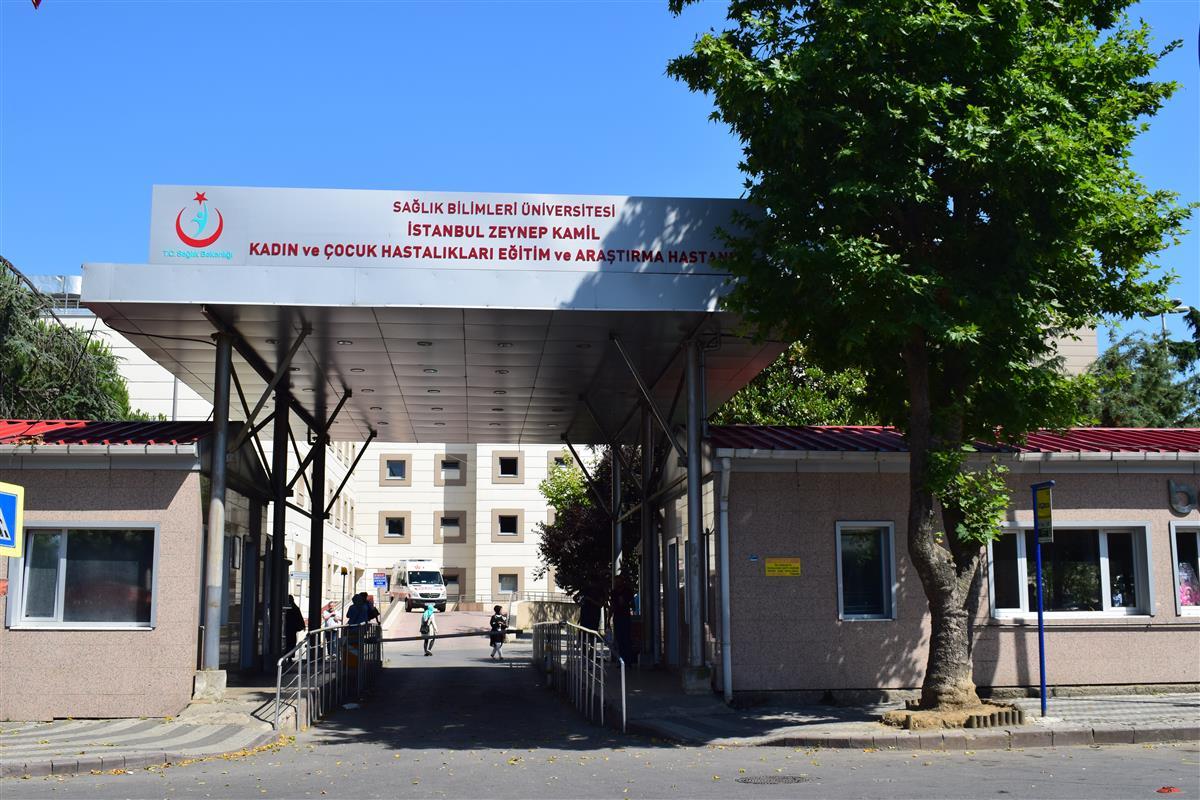
Zeynep Kamil Hastanesi (Zeynep Kamil Hastanesi)
The hospital they established on their private property to provide free medical care to patients was one of the tangible examples of philanthropy in that era. In a time when access to healthcare was far from widespread, such an institution represented a vital initiative to enable those with limited means to receive treatment. The founding vision of the hospital was not merely to treat illness but to restore patients’ health so they could return to their daily lives.
In accordance with this purpose, in 1862 a plot of land in the Nuh Kuyusu neighborhood of Üsküdar—then used as a garden—was purchased for the construction of the hospital. This date is also inscribed on the hospital’s emblem.【14】Thus, the foundations were laid for an institution that would gradually become a major healthcare center within the historic fabric of Üsküdar.
Yusuf Kamil Paşa’s appointment as Grand Vizier by Sultan Abdülaziz in 1863 further solidified the couple’s position in public life. However, the story of the hospital’s founding cannot be understood solely through the lens of their state roles or the political developments of the era. The institution’s defining feature was its foundational principle: the provision of healthcare without any financial expectation.
The construction and preparation of the hospital for service did not occur as a single, immediate step following the decision to establish it. The realization of the building took years, and the institution’s activities evolved over time in response to changing needs. The official opening of the hospital is dated to 1882.
In this regard, Zeynep Kamil Hastanesi holds a special place in Üsküdar’s medical history. Referred to as Istanbul’s first private charitable institution, it also remains one of the oldest healthcare facilities in Üsküdar to have continuously provided medical services to the present day.【15】The approach established by its founders laid the foundation for the various roles the hospital would assume in subsequent periods.
One of the details reflecting the historical identity of Zeynep Kamil Hastanesi is the inscription above the entrance of its original building. The phrase fîhi şifâun li’n-nâs can be translated into Turkish as “In it is healing for humanity.”【16】
This phrase, inscribed at the hospital’s entrance, is intrinsically linked to the building’s purpose as a center for healthcare. A few words engraved on a façade can, over time, become a historical symbol carrying the memory of an institution. The inscription of Zeynep Kamil Hastanesi has, since its founding, served as a symbolic link between its original mission and its contemporary function.
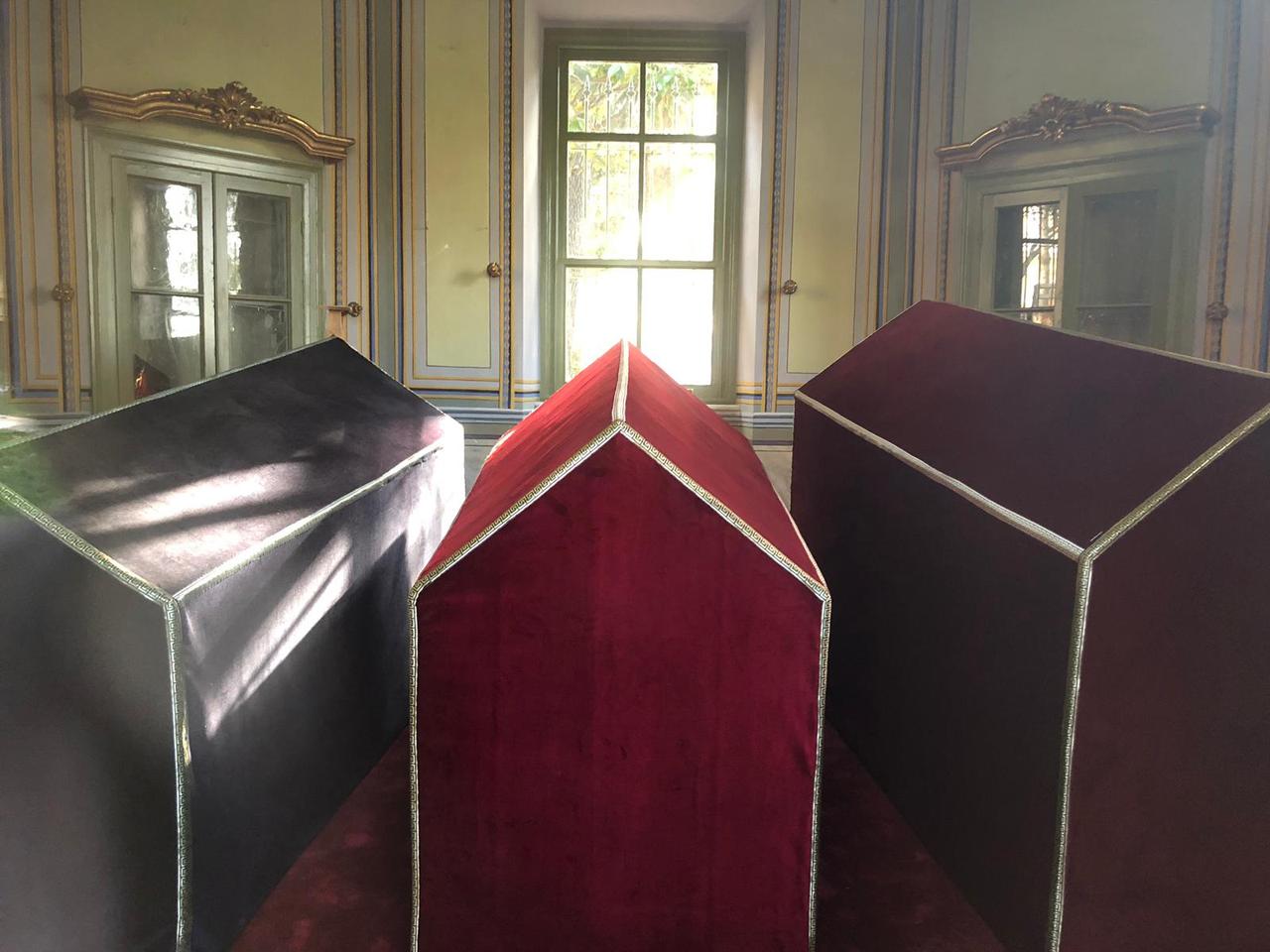
Zeynep Kamil Türbesi (Zeynep Kamil Hastanesi)
The identification of Zeynep Hanım and Yusuf Kamil Paşa with this charitable initiative continued even after their deaths, remaining an integral part of the hospital’s history. The couple was buried in the hospital’s garden.【17】Thus, the memory of the founders was preserved alongside the institution they created. The tomb in the hospital garden became one of the key elements completing the historical identity of the healthcare facility.
Following its founding, the history of Zeynep Kamil Hastanesi entered a new phase shaped by medical advancements and evolving healthcare needs. One of the most prominent figures in this transformation was Dr. Cemil Topuzlu Paşa, who played a vital role in the modernization of Ottoman medicine.
In 1896, the hospital was designated by Sait Halim Paşa, nephew of Zeynep Hanım, as a specialized surgical clinic for Dr. Cemil Topuzlu. During this period, the hospital underwent a comprehensive renovation.【18】Improvements in medical equipment, the installation of a heating system in the building, and the employment of Austrian nurses in patient care were key indicators of the institution’s evolving approach to service.【19】
These innovations extended beyond physical improvements. The advancement of surgical procedures and the adoption of new treatment methods strengthened the hospital’s connection with the medical world of the time. During Dr. Cemil Topuzlu’s tenure, both general surgical operations and cesarean sections were performed.
The period lasting until Dr. Topuzlu’s departure abroad in 1915 marked an era of significant development in surgical practices at the hospital. These efforts contributed to the historical foundation that enabled the institution to serve diverse patient groups in subsequent years.
With the proclamation of the Republic, the organization of healthcare services, administrative structures of institutions, and societal health needs in Türkiye were restructured. Zeynep Kamil Hastanesi was affected by this transformation. In 1933, the institution was transferred to the Istanbul Municipality and, in 1935, under the leadership of Dr. Eyüp Sabri Aksoy, was converted into a maternity hospital.【20】
Following its past as a center for surgical procedures and diverse patient care, the institution was reorganized as a healthcare facility focused on childbirth, women’s health, and child health.
During his nearly 17-year tenure as chief physician, Dr. Eyüp Sabri Aksoy played a pivotal role in establishing the hospital’s identity as a maternity facility.【21】Thus, Zeynep Kamil became one of Istanbul’s key centers for childbirth services. The foundations for its later specialization in gynecology and child health were also strengthened during this period.
As demand for childbirth services increased, it became necessary to expand physical capacity and diversify healthcare offerings. The hospital’s next phase of development was shaped by comprehensive investments aimed at meeting these needs.
The period of Dr. Fahri Atabey’s appointment as chief physician in 1952 was significant for the expansion of Zeynep Kamil Hastanesi’s physical capacity and the development of its service areas. During this time, new units in gynecology and child health were planned.
Under Dr. Fahri Atabey’s leadership, a new operating block and a 150-bed gynecology clinic were constructed.【22】In the development of child health services, the 200-bed pediatric clinic led by Dr. Ziyaeddin Akbay played a crucial role.【23】These buildings were opened to service in 1958.【24】Thanks to these investments, the hospital’s service capacity expanded, and its institutional specialization in women’s and children’s health strengthened.
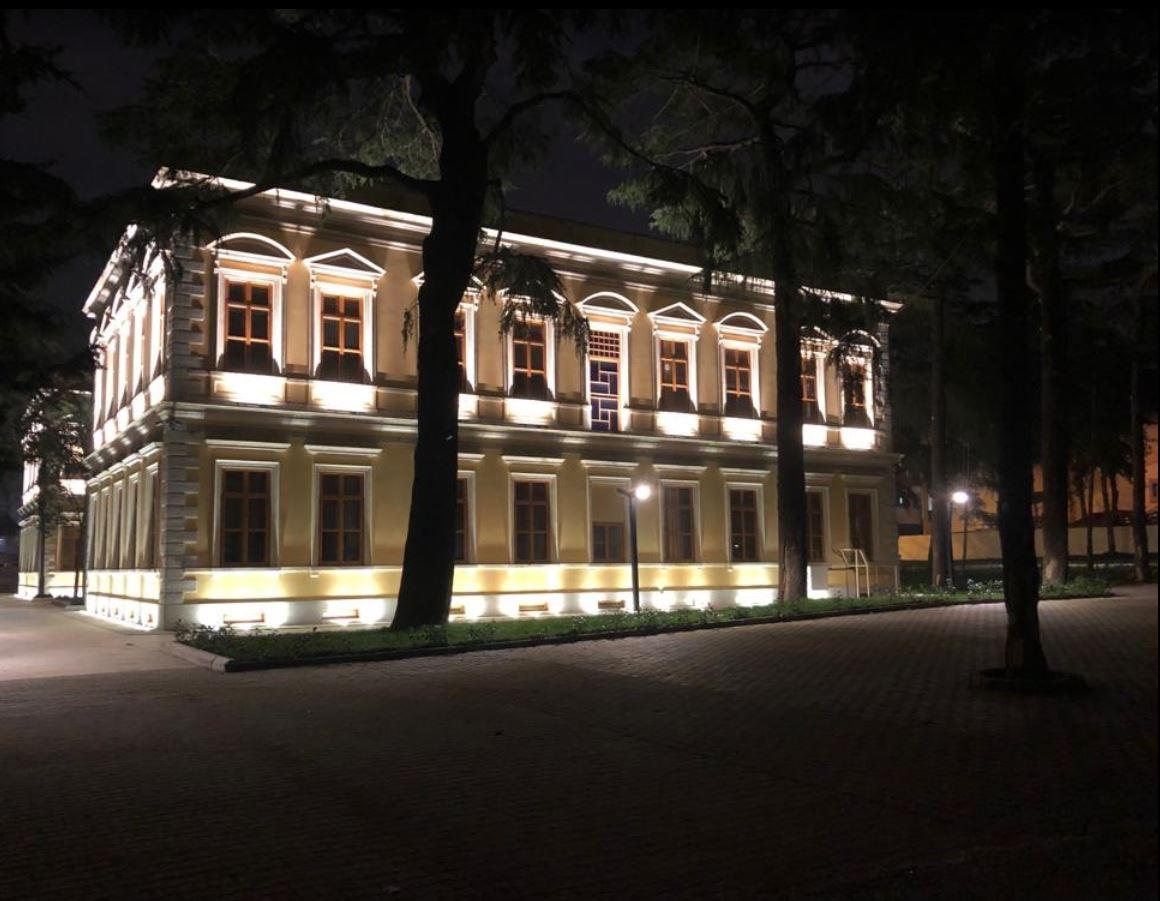
Zeynep Kamil Tarihî Bina (Zeynep Kamil Hastanesi)
The hospital’s development also extended to the training of healthcare professionals. In 1961, the opening of the Zeynep Kamil Nursing College building added a new dimension to the institution’s activities in healthcare education.【25】Thus, the hospital also gained importance as an institution providing nursing education.
After Dr. Fahri Atabey was elected Mayor of Istanbul in 1968, the position of chief physician was assumed by Dr. Burhanettin Üstünel.【26】The hospital’s subsequent development continued through the construction of new buildings and administrative reforms.
Dr. Burhanettin Üstünel held the position of chief physician from 1968 until 1986. His long tenure corresponded to years of expansion in the hospital’s physical infrastructure and diversification of healthcare services.
During this period, construction of the maternity building was completed, along with pavilions for pediatric infectious diseases and orthopedics. The establishment of new units contributed to the development of a structure capable of addressing diverse treatment needs in women’s and children’s health. Another major change in the hospital’s administration occurred in 1982, when management was transferred from the Istanbul Municipality to the Ministry of Health through an official agreement.【27】This development marked the beginning of a new era in the hospital’s administrative structure.
Since its founding, Zeynep Kamil Hastanesi has continued its existence as an institution committed to sustaining healthcare services, despite undergoing various forms of management and service models. This process—from its origins as a charitable institution in the late Ottoman period, through its transformation into a Republican-era maternity hospital, and finally into a specialized teaching and research hospital—reveals the institution’s historical evolution.
Today, Zeynep Kamil Women’s and Children’s Diseases Training and Research Hospital, affiliated with the Republic of Türkiye Ministry of Health, is a specialized healthcare institution providing services in gynecology and childbirth, child health and diseases, and pediatric surgery. In addition to clinical services, the institution also conducts specialist training and continuing medical education, contributing to the development of healthcare professionals.
The hospital’s current identity is built upon the continuation of its legacy of healthcare provision, enhanced by the capabilities of modern medicine. What began as a charitable initiative to offer free treatment now operates as a teaching and research hospital housing multiple specialized fields. Although its service areas and administrative structure have changed, its fundamental mission of serving human health remains intact.
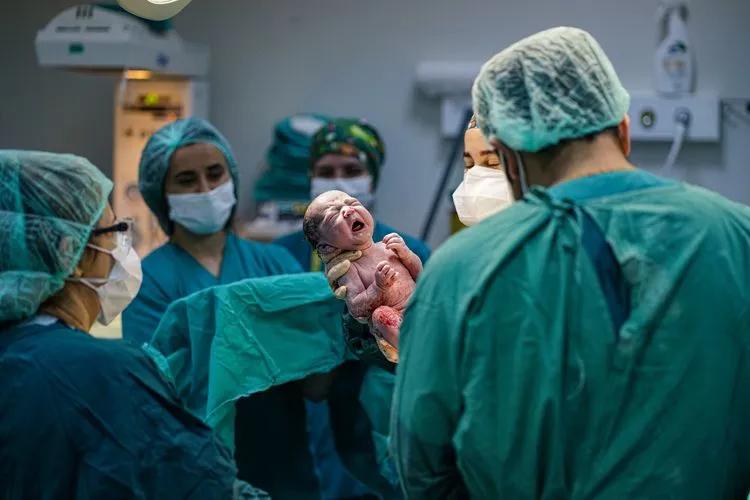
Zeynep Kamil Kadın ve Çocuk Hastalıkları Eğitim ve Araştırma Hastanesi (Anadolu Ajansı)
The name Zeynep Kamil has become embedded in the personal and familial memories of many people born in Istanbul. The hospital’s association with childbirth has transformed it into a physical space for life stories passed down through generations. Children born here, the families who welcomed them, and healthcare workers who served here over the years are the carriers of diverse narratives that constitute the institution’s social memory.
The story of Zeynep Kamil Hastanesi tells far more than the history of a single building. The charitable initiative launched by Princess Zeynep Hanım, daughter of the Governor of Egypt Kavalalı Mehmet Ali Paşa, and Yusuf Kamil Paşa is part of a broad historical transformation spanning from the final years of the Ottoman Empire through the Republic to the present day.
The transformations the hospital has undergone illustrate how healthcare services have evolved over time. What began as an institution established to provide free treatment became a center for advanced surgical procedures; during wartime, it treated wounded soldiers; in the Republican era, it became a maternity hospital; and later, it evolved into a specialized teaching and research hospital in women’s and children’s health.
Throughout all these transformations, a historical connection endures between the idea of healing inscribed on the hospital’s entrance and the founders’ original purpose of serving humanity. Today, every birth and every treatment carried out in the hospital’s modern corridors reminds us that the responsibility assumed by the institution in the past continues under different conditions.
Anadolu Ajansı. "Tarihi hastanenin koridorları pandemiye inat bebek sesiyle yankılanıyor." Accessed October 16, 2026.https://www.aa.com.tr/tr/saglik/tarihi-hastanenin-koridorlari-pandemiye-inat-bebek-sesiyle-yankilaniyor/1842958.
CNN Türk. "Zeynep Kamil Hastanesi'nin gerçek hikayesi, 155 yıllık bir aşkın öyküsü." Accessed October 16, 2026.https://www.cnnturk.com/turkiye/zeynep-kamil-hastanesinin-155-yillik-ask-hikayesi-719406?page=1.
Etker, Şeref, Feza Günergun, and Abdullah Köşe. “Zeynep-Kamil Hastanesi’nin Kuruluşu ve Vakfiyesi.” İSAM (İslam Araştırmaları Merkezi), pp. 1–37. Accessed October 16, 2026.https://makale.isam.org.tr/server/api/core/bitstreams/dfecd042-b3f5-4554-9044-1fb8de93e45c/content.
Gürsu, Türkan, and Şükrü Sarper Gürsü. “Zeynep Kamil Hastanesi Tarihinden Efemeralar”. *Zeynep Kamil Tıp Bülteni* 51, no. 3: 174–78. Accessed October 16, 2026.https://dergipark.org.tr/tr/pub/zktipb/article/792012.
TRT Belgesel. "Zeynep Kamil Hastanesi'nin Hikayesi | Geleceğe Kalanlar | TRT Belgesel." YouTube Video. Date Published: July 1, 2022. Accessed October 16, 2026.https://www.youtube.com/watch?v=F-K-2ODptdU
Zeynep Kamil Hastanesi. "Fotoğraf Galerisi." Zeynep Kamil Hastanesi. Accessed October 16, 2026.https://zeynepkamilkdch.saglik.gov.tr/TR-87773/fotograf-galerisi.html.
Zeynep Kamil Hastanesi. "Tarihçemiz." Accessed October 16, 2026.https://zeynepkamilkdch.saglik.gov.tr/TR-87631/tarihcemiz.html.
[1]
CNN Türk. "Zeynep Kamil Hastanesi'nin gerçek hikayesi, 155 yıllık bir aşkın öyküsü." Accessed October 16, 2026.
[2]
CNN Türk, "The True Story of Zeynep Kamil Hospital, the Tale of a 155-Year Love."
[3]
CNN Türk, "The Real Story of Zeynep Kamil Hospital: A 155-Year Love Story."
[4]
CNN Türk, "The Real Story of Zeynep Kamil Hospital: A 155-Year Love Story."
[5]
CNN Türk, "The True Story of Zeynep Kamil Hospital, the Tale of a 155-Year Love."
[6]
CNN Türk, "The Real Story of Zeynep Kamil Hospital: A 155-Year Love Story."
[7]
CNN Türk, "The Real Story of Zeynep Kamil Hospital: A 155-Year Love Story."
[8]
CNN Türk, "The Real Story of Zeynep Kamil Hospital: A 155-Year Love Story."
[9]
CNN Türk, "The Real Story of Zeynep Kamil Hospital: A 155-Year Love Story."
[10]
CNN Türk, "The Real Story of Zeynep Kamil Hospital: A 155-Year Love Story."
[11]
CNN Türk, "The Real Story of Zeynep Kamil Hospital: A 155-Year Love Story."
[12]
CNN Türk, "The Real Story of Zeynep Kamil Hospital: A 155-Year Love Story."
[13]
CNN Türk, "The Real Story of Zeynep Kamil Hospital: A 155-Year Love Story."
[14]
Zeynep Kamil Hastanesi, "Tarihçemiz." Zeynep Kamil Hastanesi, erişim tarihi: 16 Ekim 2026. https://zeynepkamilkdch.saglik.gov.tr/TR-87631/tarihcemiz.html.
[15]
Zeynep Kamil Hastanesi, "Tarihçemiz."
[16]
Zeynep Kamil Hastanesi, "Tarihçemiz."
[17]
Zeynep Kamil Hastanesi, "Tarihçemiz."
[18]
Zeynep Kamil Hastanesi, "Tarihçemiz."
[19]
Zeynep Kamil Hastanesi, "Tarihçemiz."
[20]
Zeynep Kamil Hastanesi, "Tarihçemiz."
[21]
Zeynep Kamil Hastanesi, "Tarihçemiz."
[22]
Zeynep Kamil Hastanesi, "Tarihçemiz."
[23]
Zeynep Kamil Hastanesi, "Tarihçemiz."
[24]
Zeynep Kamil Hastanesi, "Tarihçemiz."
[25]
Zeynep Kamil Hastanesi, "Tarihçemiz."
[26]
Zeynep Kamil Hastanesi, "Tarihçemiz."
[27]
Zeynep Kamil Hastanesi, "Tarihçemiz."
A Love That Began in Egypt: Yusuf Kamil Paşa and Zeynep Hanım
Separation, Exile, and Waiting
A New Life Begins in Istanbul
Compassion Beyond Childlessness: A Legacy for Society
The Birth of a Charitable Institution
The Message at the Hospital’s Door: Healing for Humanity
The Dr. Cemil Topuzlu Era: Opening the Door to Modern Medicine
A New Identity in the Republican Era
The Dr. Fahri Atabey Era: A Growing Healthcare Institution
The Dr. Burhanettin Üstünel Era and Transfer to the Ministry of Health
Zeynep Kamil Hospital Today
More Than a Hospital: Üsküdar’s Living Memory