

Bu içerik Türkçe olarak yazılmış olup yapay zeka ile otomatik olarak İngilizceye çevrilmiştir.
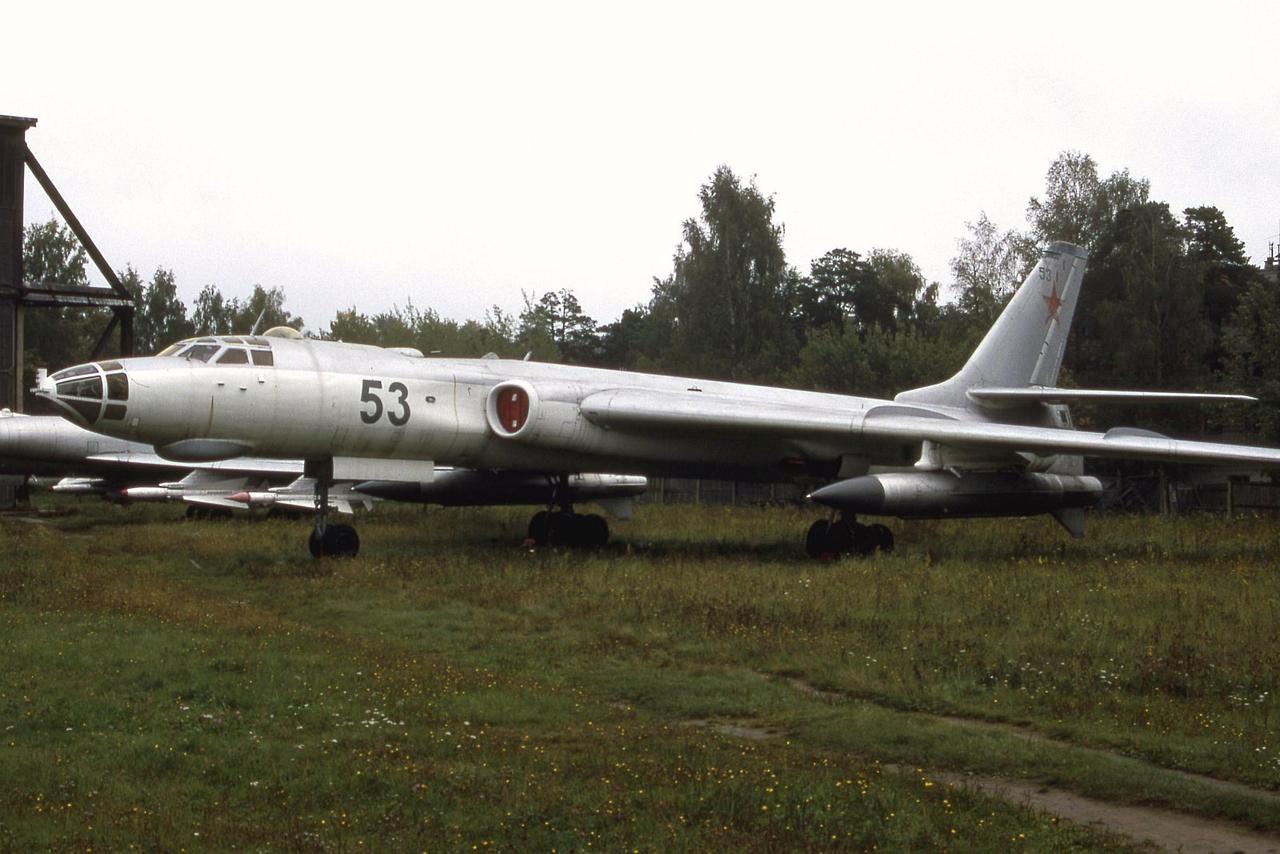
Tupolev Tu-16 is a twin-engine jet bomber designed by the Soviet Union. Designated "Badger" by NATO, this aircraft entered service in the mid-1950s and became a key component of the Soviet Strategic Bomber Forces throughout the Cold War. The Tu-16 is distinguished by its versatile design, which allowed it to be adapted for a wide range of missions over the years.

Tupolev Tu-16 (Peter Garwood)
The development of the Tu-16 began during a period when the Soviet Union was making advances in jet engine technology and required a modern platform to replace piston-powered bombers. The Tu-16 holds the distinction of being the Soviet Union’s first mass-produced jet bomber.
The aircraft’s design adopted the swept-wing configuration, a relatively new feature for jet aircraft at the time, enabling higher speeds. Two Mikulin AM-3 turbofan engines are mounted in nacelles beneath the wing roots. The Tu-16 was designed for both high-altitude and low-altitude missions.
Tupolev Tu-16 (Weapon Detective)
The Tu-16 is a platform distinguished by its power and range within the bomber class.

Tupolev Tu-16 (José Luis Celada Euba)
The aircraft’s defensive armament consists of seven remotely controlled 23 mm Afanasyev-Makarov (AM-23) cannons, typically mounted in the upper and lower fuselage and tail positions. Its offensive capabilities include:
Beyond its primary role as a bomber, the Tu-16 remained in service for decades due to its ability to perform a variety of missions.
Throughout its production, the Tu-16 was developed into numerous variants.
The aircraft was not only operated by the Soviet Union but also by allied nations. Countries such as Egypt, Iraq and Indonesia added the Tu-16 to their inventories. However, one of the most significant international users was the People’s Republic of China. China produced the Tu-16 under license as the Xian H-6, modernizing it and continuing to operate it actively today. The modernizations of the H-6 demonstrate the aircraft’s adaptability to contemporary combat requirements and the robustness of its original design.
Aerocorner. "Tupolev Tu-16." Aerocorner. Accessed August 16, 2025. https://aerocorner.com/aircraft/tupolev-tu-16
José Luis Celada Euba. "Tupolev Tu-16." Flickr. Accessed August 16, 2025. https://www.flickr.com/photos/joseluiscel/54305891920/in/photolist-CxzfHr-2d34DMr-fAdMBD-2i1urMo-DNMZmQ-8sfu1Q-2i1wPLh-227fpvL-5dhxEv-dPUUWs-9BAnfx-9BAeik-8aJcTQ-9h1EDt-9BAmNe-j5GLbw-gCd7XF-2qJPTFo-8aJda1-gAQtnP-EfERig-2i1wU2g-4Sywve-2mAonob-2i1y3kE-71jKoD-rWLeJE-gAQ1KH-71jKEx-secWP3-71oJVb-71jJCZ-2jmyu39-f9yQwd-e31ga1-8bDtJn-8bGLzs-5ozVxi-9gT7tC-8bGLHN-2i1wSz3-S18WvM-71xfHy-9gTaDj-5H1zR6-PkPJ5Q-2nWa4e9-2nW4JzV-2nW4EME-2nW7iv9
Key.aero. "Tupolev Tu-16: The versatile Badger." Accessed August 16, 2025. https://www.key.aero/article/tupolev-tu-16-versatile-badger
Military Factory. "Tupolev Tu-16." Military Factory. Accessed August 16, 2025. https://www.militaryfactory.com/aircraft/detail.php?aircraft_id=303
Peter Garwood. "Tupolev Tu-16." Flickr. Accessed August 16, 2025. https://www.flickr.com/photos/petermgarwood/51584953162
Tayyareci. "Tupolev Tu-16." *Tayyareci.* Accessed August 16, 2025. https://www.tayyareci.com/v2/rus-ucaklari/tu16.asp.html
Weapon Detective. "Tupolev Tu-16 | The Soviet Badger." YouTube. Accessed August 16, 2025. https://www.youtube.com/watch?v=Wwipf8YIjbA

Henüz Tartışma Girilmemiştir
"Tupolev Tu-16" maddesi için tartışma başlatın
Design and Development
Structural Features
Technical Specifications
Armament and Missions
Variants and International Use