
 Son Eklenen:

Bu içerik Türkçe olarak yazılmış olup yapay zeka ile otomatik olarak İngilizceye çevrilmiştir.
US-Brazil Diplomatic Crisis is a diplomatic tension between the United States and Brazil that emerged in 2026 due to tariff measures, ambassadorial appointments and mutual visa restrictions. The crisis deepened as the administration of US President Donald Trump imposed successive tariff decisions against Brazil, alongside the refusal to approve ambassadorial appointments by either side and the imposition of reciprocal visa restrictions.
One of the most prominent developments in the process was the US Department of State's revocation of the visa of Brazil's Ambassador to Washington Maria Luiza Ribeiro Viotti on 4 August 2026.
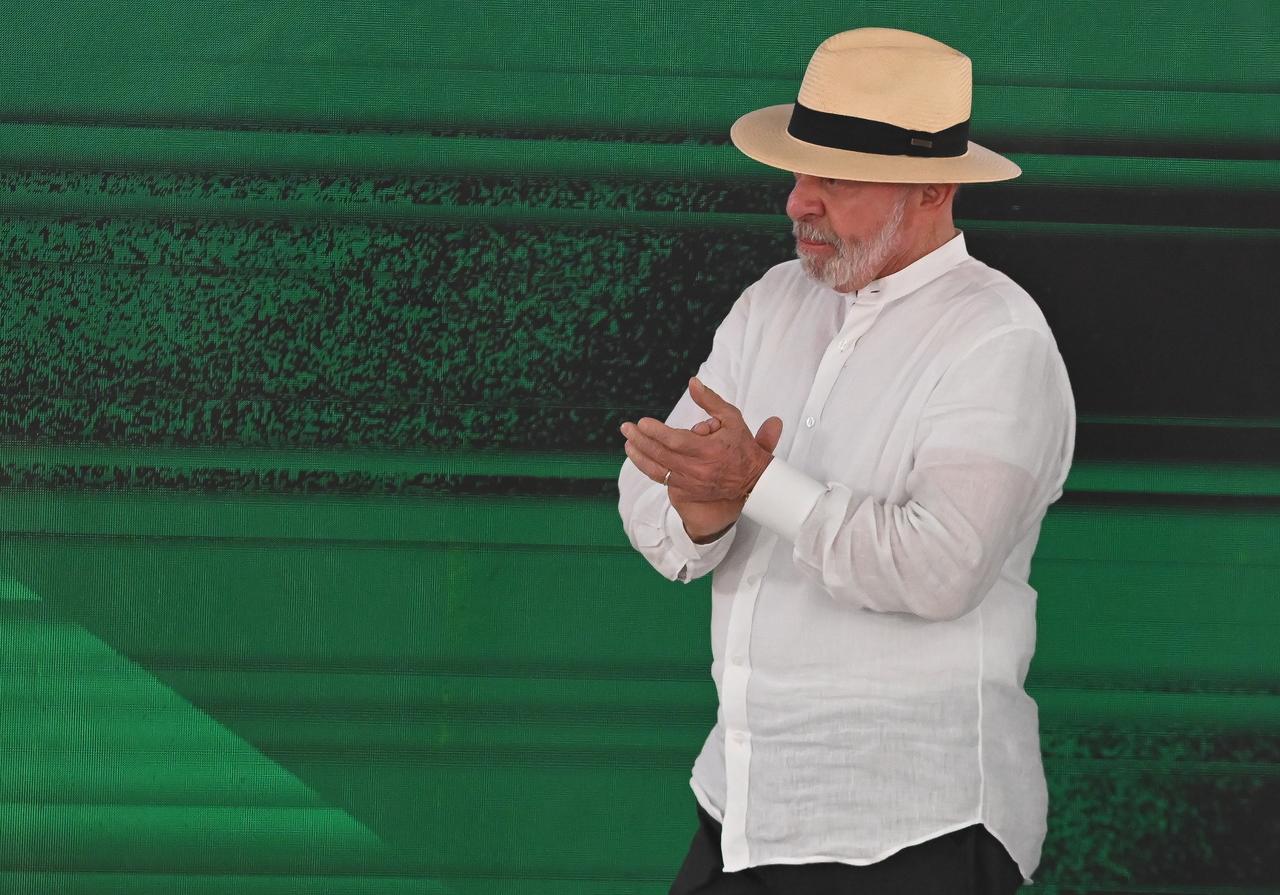
Brezilya Devlet Başkanı Luiz Inácio Lula da Silva - (Anadolu Ajansı)
The US Trade Representative (USTR) launched Section 301 investigations against 60 economies in March 2026.【1】 These investigations were viewed as part of the trade policy following global tariffs previously imposed by the Trump administration under the International Emergency Economic Powers Act (IEEPA) but later annulled by the US Supreme Court. Under these investigations, an examination of Brazil was initiated and two separate tariff decisions were imposed on the country.【2】
US President Donald Trump nominated Republican politician Daniel (Danny) Perez as Ambassador to Brazil on 1 June 2026.【3】 The Brazilian government considered it a breach of diplomatic protocol that the United States publicly announced the nomination before formally submitting its request for diplomatic consent (agrément) and therefore withheld its approval pending formal procedures.【4】 Perez's nomination was submitted to the US Senate on the same day and was approved by the Senate Committee on Foreign Relations by the end of July 2026, though a full Senate vote had not yet taken place.【5】
US State Department officials stated that they had not responded for a prolonged period to Brazil's request for agrément regarding its ambassadorial candidate. The Brazilian government, however, emphasized that there is no fixed deadline for the diplomatic consent process and that the request remains under review.【6】
Diplomatic tensions between the two countries continued in July 2026 with a mutual visa dispute. The Brazilian government denied visas to Assistant Secretary of State for Democracy, Human Rights and Labor Riley M. Barnes and Deputy Assistant Secretary Samuel Samson for a planned visit scheduled for 27–30 July.【7】 Brazilian President Luiz Inácio Lula da Silva claimed the visit was intended to interfere in Brazil's electoral process; the US side rejected this allegation and stated the visit was planned as part of routine diplomatic engagement.【8】
On 4 August 2026, the US Department of State announced that it had revoked the visa of Brazil's Ambassador to Washington Maria Luiza Ribeiro Viotti. An anonymous State Department official briefing journalists clarified that the action did not mean that the ambassador had been declared persona non grata or expelled from the United States. The official stated that the decision was limited solely to the revocation of the ambassador's visa.【9】 The official further stated that the decision was taken under the principle of reciprocity and that Viotti's visa would be reinstated if the United States granted diplomatic consent (agrément) to Brazil's ambassadorial candidate, Daniel (Danny) Perez.【11】 Another State Department official noted that if Viotti were to leave the United States, she would need to submit a new visa application to re-enter. This official also stated that further reciprocal diplomatic steps could not be ruled out in the future, but emphasized that the United States continues to respect the government chosen by the Brazilian people through free and fair elections.【12】
On 4 August 2026, the Brazilian Presidency issued a statement rejecting the US Department of State's decision to revoke the visa of Brazil's Ambassador to Washington Maria Luiza Ribeiro Viotti. The statement asserted that the stated justifications for the decision did not reflect the truth and that the move was inconsistent with relations based on mutual respect between the two countries. It further assessed the action as part of a broader pattern of escalating diplomatic measures against Brazil.【13】
The statement also affirmed that Brazil's evaluation of Daniel (Danny) Perez's nomination as ambassador was being conducted within the framework of international diplomatic norms. The Brazilian government maintained that it is standard international practice for the receiving country to grant diplomatic consent before the candidate's name is publicly disclosed.【14】
On 15 July 2026, the US Trade Representative (USTR) announced the imposition of a 25 percent additional tariff on thousands of Brazilian imports including sugar, clothing, paper and steel.【15】 The decision was based on a Section 301 investigation addressing digital trade, the electronic payment system Pix, access to the ethanol market and allegations of illegal deforestation. The tariff took effect on 22 July 2026. Beef, coffee, certain rare earth elements, aircraft parts and specific petroleum and natural gas products were exempted from the measure.
US Secretary of State Marco Rubio, in a social media statement, claimed that Brazilian President Luiz Inácio Lula da Silva had chosen a confrontational stance over negotiation with Washington and that the tariffs were the consequence of this approach. Brazilian Foreign Minister Mauro Vieira rejected these claims, stating that the Lula administration remained open to negotiations and had actively participated in the investigation process. Vieira further asserted that the United States was demanding that Brazil open its economy to foreign competition without reciprocal concessions in key sectors.【16】
As a result of a separate Section 301 investigation covering 60 economies, the United States decided to impose a 12.5 percent additional tariff on Brazil due to its failure to establish adequate legal frameworks to prevent imports of products made with forced labor.【17】 The decision was announced on 23 July 2026 and took effect on 24 July. This tariff replaced a temporary 10 percent tariff that had been in place since February 2026.
The combined application of both tariffs resulted in total tariff rates of 37.5 percent on certain product categories such as footwear, machinery, equipment, apparel and non-pharmaceutical chemicals.【18】 Embraer aircraft and components, petroleum, beef, coffee, orange juice and pharmaceutical raw materials were exempted.
Brazil's Ministry of Foreign Affairs (Itamaraty), in an official note, argued that the USTR had invoked human rights and labor rights concerns to justify protectionist trade policies and that this approach had unfairly targeted numerous countries. The Brazilian Presidency's Communications Secretariat characterized the US justifications for the tariffs as "absurd."【19】
The Brazilian government considered initiating proceedings under the World Trade Organization's (WTO) dispute settlement mechanism and announced that under the Commercial Reciprocity Law enacted in 2025, it could impose proportionate countermeasures against countries applying trade barriers to Brazilian products.
In this context, on 27 July 2026 Brazil formally requested consultations with the WTO regarding the 25 percent and 12.5 percent tariffs. Itamaraty argued that the US measures were inconsistent with obligations under the 1994 General Agreement on Tariffs and Trade (GATT 1994) and the Understanding on Rules and Procedures Governing the Settlement of Disputes.【20】
The diplomatic crisis unfolded ahead of the presidential elections scheduled for October 2026 in Brazil. On 2 August 2026, President Luiz Inácio Lula da Silva formally announced his candidacy for a fourth non-consecutive presidential term at the Workers' Party (PT) National Congress in São Paulo, framing the election as a critical moment for national sovereignty.
Lula's main rival in the election was Senator Flávio Bolsonaro, son of former President Jair Bolsonaro. Flávio Bolsonaro's candidacy received public endorsements from Argentine President Javier Milei and Israeli Prime Minister Benjamin Netanyahu.
Al Jazeera. “US Revokes Visa of Brazilian Ambassador Amid Deepening Diplomatic Spat.” Accessed August 5, 2026.https://www.aljazeera.com/news/2026/8/4/us-revokes-visa-of-brazilian-ambassador-amid-deepening-diplomatic-spat
Al Jazeera. “US to Impose New 25 Percent Tariffs on Some Brazilian Imports.” Al Jazeera. Accessed August 5, 2026.https://www.aljazeera.com/economy/2026/7/16/us-to-impose-new-25-percent-tariffs-on-some-brazilian-imports
Anadolu Ajansı. “ABD, Brezilya'nın Washington Büyükelçisinin Vizesini İptal Etti.” Accessed August 5, 2026.https://www.aa.com.tr/tr/dunya/abd-brezilyanin-washington-buyukelcisinin-vizesini-iptal-etti/4018575
BBC News. “US Revokes Brazil Ambassador's Visa as Diplomatic Tensions Escalate.” BBC News. Accessed August 5, 2026.https://www.bbc.com/news/articles/cy9wpww7dyro
CNN. “Trump Admin Revokes Visa of Brazilian Ambassador to US.” CNN. Accessed August 5, 2026.https://edition.cnn.com/2026/08/04/politics/trump-admin-revokes-visa-brazil-ambassador
Correio Braziliense. “Tarifas dos EUA: Veja o que Diz o Itamaraty em Ação na OMC.” Accessed August 5, 2026.https://www.correiobraziliense.com.br/politica/2026/07/7469147-tarifas-dos-eua-veja-o-que-diz-o-itamaraty-em-acao-na-omc.html
Diário Campineiro. “Brasil Contesta Tarifas dos EUA e Ameaça Aplicar Lei de Reciprocidade.” Accessed August 5, 2026.https://diariocampineiro.com.br/brasil-contesta-tarifas-dos-eua-e-ameaca-aplicar-lei-de-reciprocidade/
Imirante. “Itamaraty Vê Tarifa dos EUA Cumulativa e Cobra Reciprocidade.” Accessed August 5, 2026.https://m.imirante.com/noticias/brasil/2026/07/24/ipolitica-itamaraty-ve-tarifa-dos-eua-cumulativas-e-cobra-reciprocidade
Reuters. “US Revokes Visa of Brazilian Ambassador Over Diplomatic Dispute.” Accessed August 5, 2026.https://www.reuters.com/world/americas/us-revokes-visa-brazilian-ambassador-over-diplomatic-dispute-official-says-2026-08-04/
Vermelho. “Brasil Rechaça Alegações de Trabalho Forçado para Tarifas de 12,5% dos EUA.” Accessed August 5, 2026.https://vermelho.org.br/2026/07/24/brasil-rechaca-alegacoes-de-trabalho-forcado-para-tarifas-de-12-dos-eua/
[1]
Portal Vermelho, “Brasil Rechaça Alegações de Trabalho Forçado para Tarifas de 12,5% dos EUA,” erişim 5 Ağustos 2026, https://vermelho.org.br/2026/07/24/brasil-rechaca-alegacoes-de-trabalho-forcado-para-tarifas-de-12-dos-eua/
[2]
Al Jazeera, “US to Impose New 25 Percent Tariffs on Some Brazilian Imports,” erişim 5 Ağustos 2026, https://www.aljazeera.com/economy/2026/7/16/us-to-impose-new-25-percent-tariffs-on-some-brazilian-imports
[3]
CNN, “Trump Admin Revokes Visa of Brazilian Ambassador to US,” erişim 5 Ağustos 2026, https://edition.cnn.com/2026/08/04/politics/trump-admin-revokes-visa-brazil-ambassador
[4]
Al Jazeera, “US Revokes Visa of Brazilian Ambassador amid Deepening Diplomatic Spat,” erişim 5 Ağustos 2026, https://www.aljazeera.com/news/2026/8/4/us-revokes-visa-of-brazilian-ambassador-amid-deepening-diplomatic-spat
[5]
CNN, “Trump Admin Revokes Visa of Brazilian Ambassador to US,”
[6]
CNN, “Trump Admin Revokes Visa of Brazilian Ambassador to US,”
[7]
BBC News, “US Revokes Brazil Ambassador's Visa as Diplomatic Tensions Escalate,” Accessed August 5, 2026.
[8]
Anadolu Ajansı. "ABD, Brezilya'nın Washington Büyükelçisinin Vizesini İptal Etti." Accessed August 5, 2026.https://www.aa.com.tr/tr/dunya/abd-brezilyanin-washington-buyukelcisinin-vizesini-iptal-etti/4018575
[9]
Al Jazeera, “US Revokes Visa of Brazilian Ambassador amid Deepening Diplomatic Spat,”
[11]
BBC News, “US Revokes Brazil Ambassador's Visa as Diplomatic Tensions Escalate,”
[12]
Reuters, “US Revokes Visa of Brazilian Ambassador over Diplomatic Dispute,”
[13]
CNN, “Trump Admin Revokes Visa of Brazilian Ambassador to US,”
[14]
CNN, “Trump Admin Revokes Visa of Brazilian Ambassador to US,”
[15]
Al Jazeera, “US to Impose New 25 Percent Tariffs on Some Brazilian Imports,” erişim 5 Ağustos 2026, https://www.aljazeera.com/economy/2026/7/16/us-to-impose-new-25-percent-tariffs-on-some-brazilian-imports
[16]
Al Jazeera, “US to Impose New 25 Percent Tariffs on Some Brazilian Imports,”
[17]
Correio Braziliense, “Tarifas dos EUA: Veja o Que Diz o Itamaraty em Ação na OMC,” erişim 5 Ağustos 2026, https://www.correiobraziliense.com.br/politica/2026/07/7469147-tarifas-dos-eua-veja-o-que-diz-o-itamaraty-em-acao-na-omc.html
[18]
Portal Vermelho, “Brasil Rechaça Alegações de Trabalho Forçado para Tarifas de 12,5% dos EUA,”
[19]
Imirante, “Itamaraty Vê Tarifa dos EUA Cumulativa e Cobra Reciprocidade,” erişim 5 Ağustos 2026, https://m.imirante.com/noticias/brasil/2026/07/24/ipolitica-itamaraty-ve-tarifa-dos-eua-cumulativas-e-cobra-reciprocidade
[20]
Correio Braziliense, “Tarifas dos EUA: Veja o Que Diz o Itamaraty em Ação na OMC,”

The U.S. Department of State revoked the visa of Maria Luiza Ribeiro Viotti, Brazil’s Ambassador to Washington, on August 4, 2026. The decision was made on the grounds of reciprocity, in response to Brazil’s refusal to approve the accreditation of U.S. ambassador-designate Daniel Perez and its denial of visas to two U.S. diplomats. The Brazilian government rejected the decision, characterizing it as part of hostile measures targeting Brazil. The crisis followed the imposition by the United States in July of tariffs of 25 percent and 12.5 percent on Brazilian goods.
Henüz Tartışma Girilmemiştir
"United States–Brazil Diplomatic Crisis (2026)" maddesi için tartışma başlatın
5 Ağustos 2026
Background of the Crisis
5 Ağustos 2026
Ambassadorial Appointments and Visa Dispute
5 Ağustos 2026
US Revocation of Brazil's Ambassador's Visa
5 Ağustos 2026
Brazil's Response
5 Ağustos 2026
Commercial Dimension of the Crisis: Tariff Measures
5 Ağustos 2026
Election Process and Political Context