


Bu içerik Türkçe olarak yazılmış olup yapay zeka ile otomatik olarak İngilizceye çevrilmiştir.

When it starts to rain, most of us share the same instinct: run for an umbrella, take shelter under the nearest roof, quicken our steps to reach dry ground as soon as possible. Rain is seen as an obstacle that disrupts the flow of daily life and must be endured and gotten through as quickly as possible. Yet walking in the rain can remind us of something we never expected: slowing down.
Today, time is almost always treated as a resource that must be filled with activity. Walking becomes a means to get from one place to another, waiting turns into a loss, and silence is perceived as a void to be filled. The phone in our hand directs us toward some stimulus even in the briefest moment of stillness. This condition has gradually become so normalized that doing nothing but walking now seems strange, even unsettling.
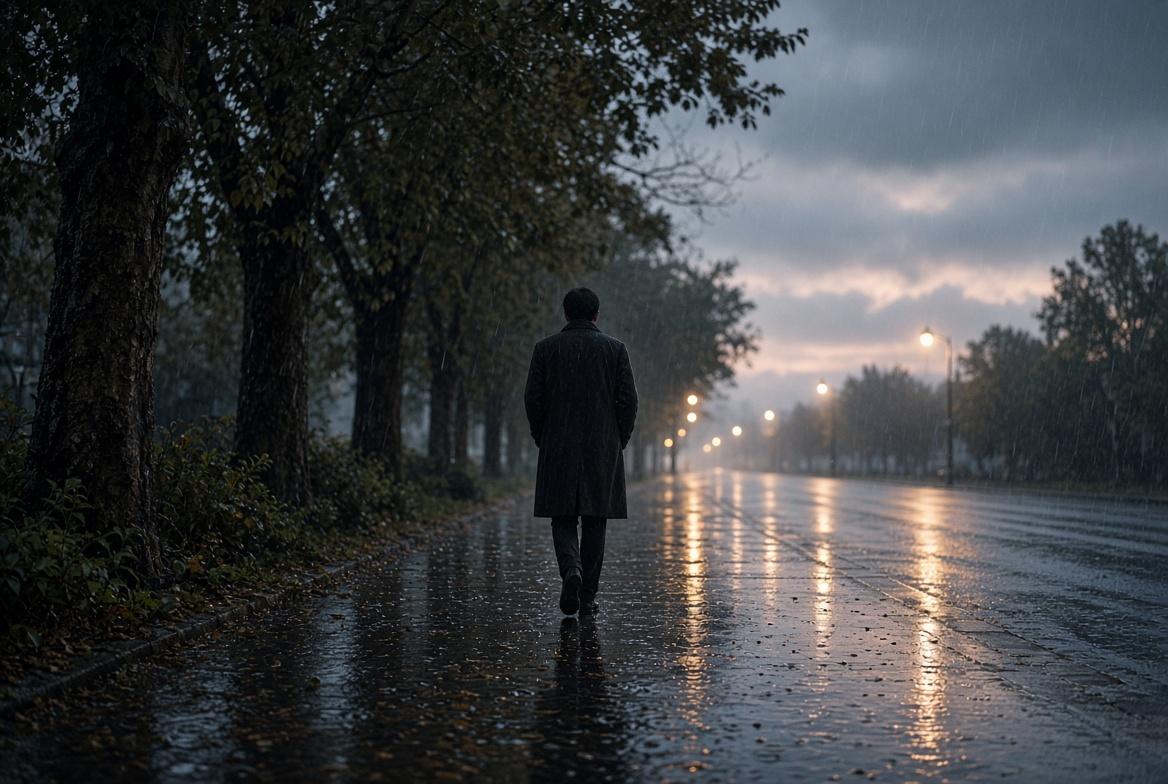
Yağmurda Islanmak (Yapay Zeka ile Oluşturulmuştur.)
Rain offers a small point of resistance against this speed. After all, there is no point in rushing in the rain; no matter where you go, you will get damp. This inevitability can strangely be comforting. The moment you give up trying to control the situation, a peculiar sense of freedom emerges. Instead of searching for somewhere to escape to, you accept being present in the moment.
When walking in the rain, our steps naturally change. Instead of hurrying, we adopt a cautious yet calm pace, mindful of the water beneath our feet. This physical shift often brings about a mental change as well. As our steps slow, our thoughts become less hurried. It is as if the body whispers to the mind: there is no need to rush.
This simple observation carries a valuable insight: slowing down often begins not in the mind, but in the body. Small physical adjustments—regulating the breath, slowing the pace of steps, relaxing the shoulders—help the mind align with the same rhythm. Rain offers a natural opportunity to trigger this change; the moment we realize there is no point in running to avoid getting wet, our bodies have already begun to slow.
Another quality of walking in the rain is how it awakens our senses in unusual ways. The sound of raindrops hitting the pavement, leaves, and rooftops; the scent of wet earth; the dim, soft light filtering through the clouds; the chill of droplets on your jacket—these are all subtle details we overlook in the rush of daily life.
When we walk quickly, our attention is almost entirely fixed on the destination: reaching our goal as fast as possible. But when we slow down, attention naturally spreads to the surroundings. Sounds become clearer, scents more noticeable, light more meaningful. In this sense, rain acts like a sensory reminder, inviting our body and mind to notice what is truly happening in the present moment.
A common misunderstanding when speaking of slowing down is to confuse it with laziness or inefficiency. Yet slowing down does not mean stopping or doing nothing. It simply means, for a brief moment, bringing the mind back from its constant rush forward to where it actually is. These small pauses can, in the long term, help us think more clearly and make more balanced decisions. Simple moments like walking in the rain offer us small opportunities to remember this pause. Instead of grabbing an umbrella and running every time it rains, sometimes we can choose to slow our steps for just a few moments, take a deep breath, and remain within the moment. This will not change the overall pace of life, but it may be enough to create a small space of respite within the day.
Rain itself does not appear every day. But what rain teaches us is something applicable at any moment: sometimes letting go of the need to control, accepting what is inevitable, and choosing to stay present. This could mean noticing the aroma of your morning coffee without checking your phone; removing your headphones on the way to work and listening to the sounds of the street; or focusing on your breath for a few seconds between meetings. What matters is recognizing these small moments of slowing down that life offers us, and instead of resisting them, allowing them to happen. Rain is merely one of the most tangible examples. Rather than avoiding getting wet, pausing for a moment to look up at the sky, listen to the sound of the drops, and slow your steps—perhaps this is the beginning of a small but valuable habit we can carry into the rest of the day.
Walking in the rain carries within it a small metaphor for life itself. We cannot control everything; not every moment unfolds as planned; sometimes we simply must accept getting wet. Yet it is precisely in this moment of acceptance that a strange peace becomes possible. Perhaps next time it rains, instead of rushing off immediately, we will try slowing our steps for a few moments. After all, getting wet is not as bad as it seems; what we truly lose is the moment itself.
When Speed Becomes a Habit
The Body Slows, the Mind Slows
Reconnecting with the Senses
Slowing Down Is Not Abandoning Productivity
Bringing It Into Daily Life