


Bu içerik Türkçe olarak yazılmış olup yapay zeka ile otomatik olarak İngilizceye çevrilmiştir.
+1 Daha
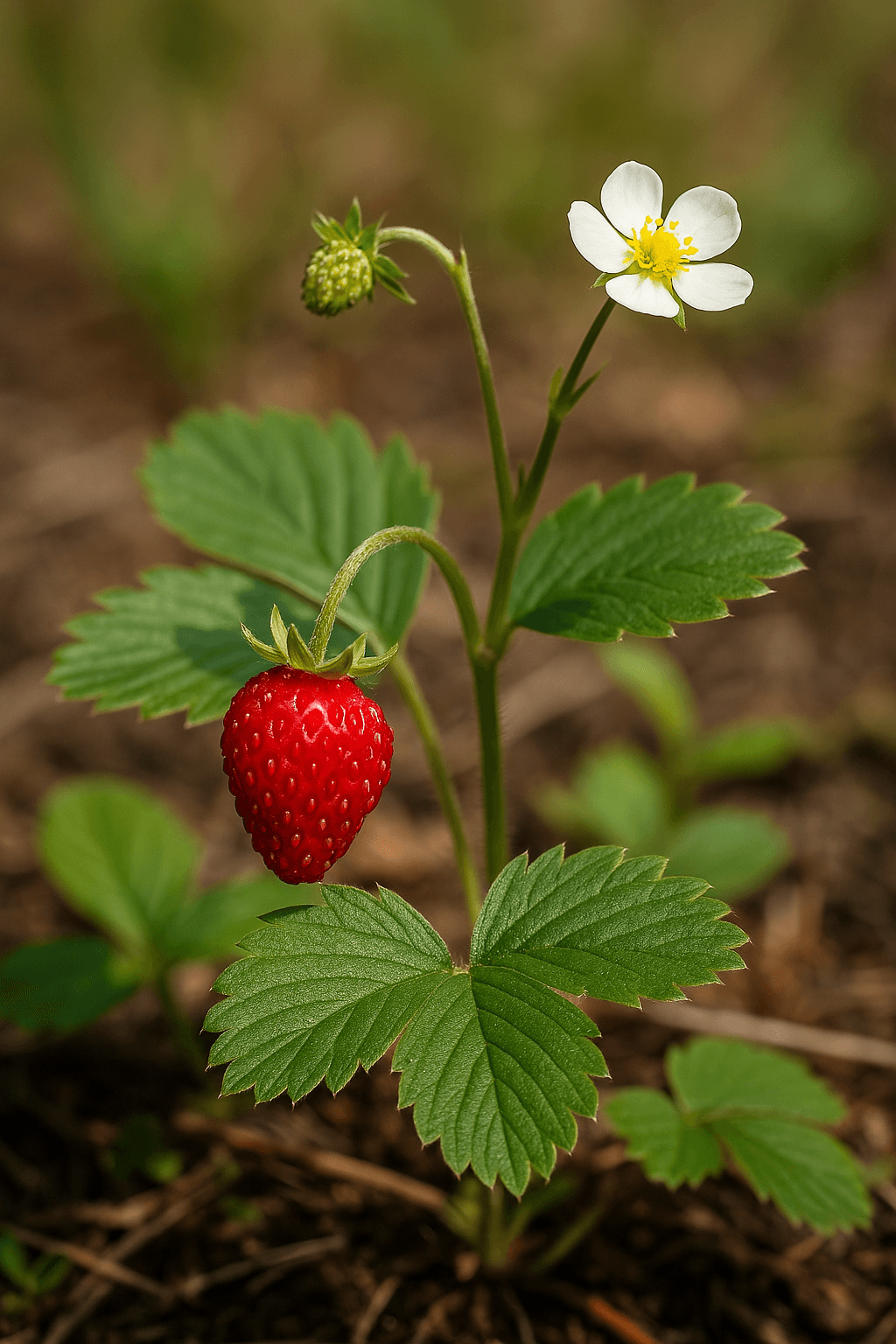
Fragaria vesca L. is a perennial plant known as wild strawberry and belonging to the Rosaceae family. Despite its small-sized fruits, it attracts attention due to its high antioxidant capacity, rich phytochemical content, and long-standing use in traditional medicine. The growing importance of plant-derived natural products in both food and pharmacology has made the investigation of new biological sources a priority. In this context, naturally occurring species may possess richer phytochemical profiles compared to cultivated varieties. Fragaria vesca is among the most notable of these species.

AI-generated Fragaria vesca community
Wild strawberry is a species found across the northern hemisphere in Europe, Asia and North America, producing aromatic and nutritionally valuable fruits. In Türkiye’s flora, this species is particularly widespread in the Black Sea and Marmara regions. Recent studies have shown that this plant stands out not only for its flavor but also for its positive health effects mediated by phenolic compounds and antioxidants.
Fragaria vesca is a small herbaceous perennial plant. Its stem has a creeping habit and reproduces vegetatively through horizontal extensions called stolons. The leaves are trifoliate with serrated leaflet margins. The underside of the leaves is hairy and exhibits characteristics that support its ecological adaptability.
The plant flowers in spring and early summer. The white flowers typically consist of five petals. The fruit is red, small and bears seeds on its surface. Botanically, this fruit develops from the enlargement of the receptacle. The small seeds on the surface are the true fruits.
Ecologically, F. vesca prefers shaded, moist and nutrient-rich soils. Its natural distribution range is extensive; it can grow at elevations from sea level up to 2000 meters. In Türkiye, it is particularly abundant in the Black Sea forests.
The fruits of F. vesca are rich in phenolic compounds. Among these are phenolic acids such as ellagic acid, chlorogenic acid, p-coumaric acid and ferulic acid; flavonoids such as quercetin and kaempferol; and anthocyanins such as pelargonidin and cyanidin. In addition, it contains high levels of ascorbic acid (vitamin C) and small amounts of carotenoids.
This rich phytochemical profile determines the plant’s antioxidant capacity. Studies using DPPH (2,2-diphenyl-1-picrylhydrazyl) and ABTS (2,2’-azinobis-3-ethylbenzothiazoline-6-sulfonic acid) assays have demonstrated that F. vesca effectively neutralizes free radicals, revealing its protective effect against oxidative stress.
It is known that antioxidant capacity is linked to environmental stress factors. Wild species, being exposed to greater environmental stresses, may synthesize higher amounts of phenolic compounds as a defense mechanism. This is considered one of the main reasons why F. vesca exhibits higher antioxidant activity compared to cultivated strawberry.
The high concentration of phenolic compounds and vitamin C in the plant protects cells from oxidative damage and provides protective effects against numerous chronic diseases such as diabetes, cancer and cardiovascular diseases. In particular, the anticarcinogenic effects of ellagic acid have been reported in many recent studies.
Vitamin C supports the immune system, while flavonoids exhibit anti-inflammatory effects. Anthocyanins are known for their protective effects on vascular health and vision. Additionally, some in vitro experiments have reported that F. vesca extracts show neuroprotective effects and protect the nervous system against oxidative stress.
However, more clinical studies are needed to determine the direct effects of these benefits in humans. Nevertheless, regular consumption of F. vesca can be considered as a functional food within balanced dietary programs.
In the past, Fragaria vesca was used in European folk medicine as a digestive aid, diuretic and antipyretic. Especially wild strawberry tea was preferred for liver and intestinal disorders. The fruits were also consumed fresh or dried, and used in the production of jams, syrups and fruit juices.
Modern applications are far more diverse. In the cosmetics industry, it is used in skin care products as a moisturizer and anti-aging agent. In the food industry, it serves as a natural flavoring agent and antioxidant additive. Furthermore, it is evaluated as a model plant in biotechnological research. In particular, micropropagation studies aim to preserve the genetic diversity of the species.
Although F. vesca and the cultivated strawberry F. × ananassa belong to the same genus, they differ in many aspects. F. vesca fruits are smaller but have more intense aroma. F. × ananassa is the large-fruited variety preferred in commercial production.
Comparative analyses of antioxidant content have shown that F. vesca has higher levels of phenolic compounds and flavonoids. The cultivated strawberry, due to its higher water content, may have diluted concentrations of these compounds.
From an agricultural perspective, F. × ananassa is easier to cultivate and yields higher production. However, in terms of nutritional content and phytochemical profile, F. vesca holds a more advantageous position as a functional food.
Fragaria vesca is a species widely found in natural flora, valued in both traditional and modern applications due to its rich phytochemical content and high antioxidant capacity. It has potential for use in multiple sectors including food, cosmetics and pharmacology. Future research is critically important for conserving its genetic resources, improving its agricultural potential and clearly demonstrating its clinical effects. Additionally, developing sustainable harvesting methods is essential for the conservation of natural populations.
Giampieri, Francesca, José M. Alvarez-Suarez, Daniel A. Battino, Maurizio Gasparrini, Stefania Afrin, Tamara Forbes-Hernandez, et al. “The Strawberry: Composition, Nutritional Quality, and Impact on Human Health.” *PubMed Central*. 2020. Accessed April 9, 2025. https://www.ncbi.nlm.nih.gov/pmc/articles/PMC7037259/pdf/molecules-25-00498.pdf.
Taşkin, Murat, and Aydın Korkmaz. “Dağ Çileği (Fragaria vesca) ve Çilek (Fragaria × ananassa) Meyvelerinin Antioksidan Kapasitelerinin ve Bazı Biyokimyasal Özelliklerinin Belirlenmesi (Determination of Antioxidant Capacity and Some Biochemical Properties of Wild and Cultivated Strawberry Fruits).” ResearchGate. 2023. Accessed April 9, 2025. https://www.researchgate.net/publication/375121918.
Yıldız, Gülşah. “Bazı Kültür Bitkileri ve Doğal Bitkilerde Toplam Fenolik Madde Miktarlarının Belirlenmesi.” DergiPark. 2006. Accessed April 9, 2025. https://dergipark.org.tr/tr/download/article-file/19988.

Henüz Tartışma Girilmemiştir
"Wild Strawberry (Fragaria vesca)" maddesi için tartışma başlatın
Morphological Characteristics and Ecological Distribution
Phytochemical Content and Antioxidant Activity
Health Effects
Traditional and Modern Uses
Comparison between Fragaria vesca and Fragaria × ananassa