


Bu içerik Türkçe olarak yazılmış olup yapay zeka ile otomatik olarak İngilizceye çevrilmiştir.
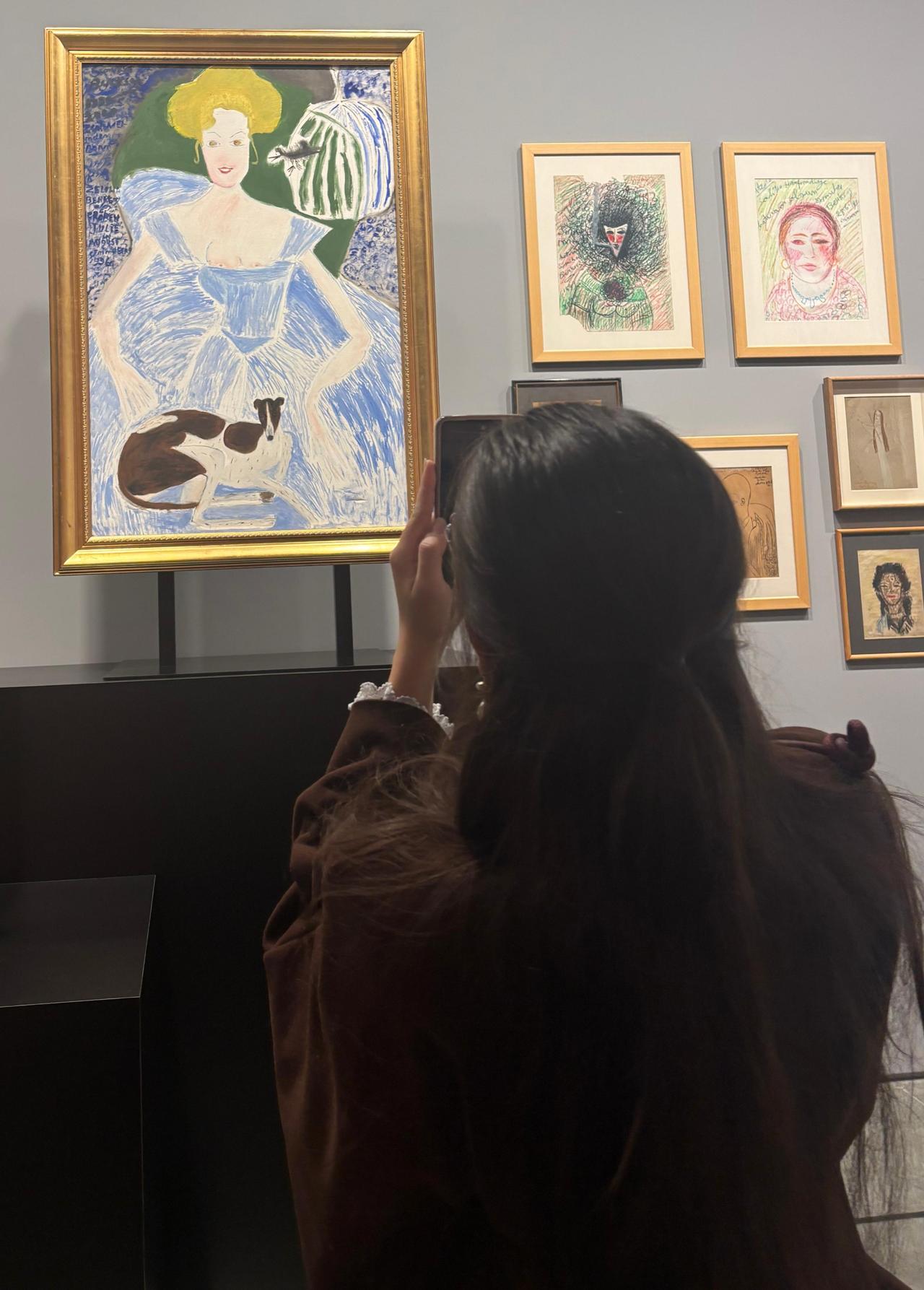
The Edwardian era (1901–1914) is a fashion period named after King Edward VII of the United Kingdom, characterized by intense social, cultural and aesthetic transformations. During this time, women’s clothing both inherited the legacy of the preceding Victorian fashion and developed new aesthetic sensibilities that contributed to the formation of modern female identity. Edwardian women’s fashion was defined by a distinctive silhouette, elegant fabric use, intricate embellishments and striking accessories. Hats and headpieces played a particularly important role in representing women’s social identity.
Edwardian women’s clothing was shaped through corsets and structured garments that molded the body according to a specific ideal. The most distinctive feature of this period, frequently referred to in literature as the “S-bend silhouette” or “S-curve silhouette,” created a posture in which the chest was thrust forward and the hips pushed backward, forming an S-shaped curve.
The primary element in achieving this silhouette was the corset. Unlike corsets of the previous century which flattened the body, Edwardian corsets were designed to push the torso forward, accentuating the upper chest while creating the illusion of a slender waist. Women’s garments typically consisted of several layers:
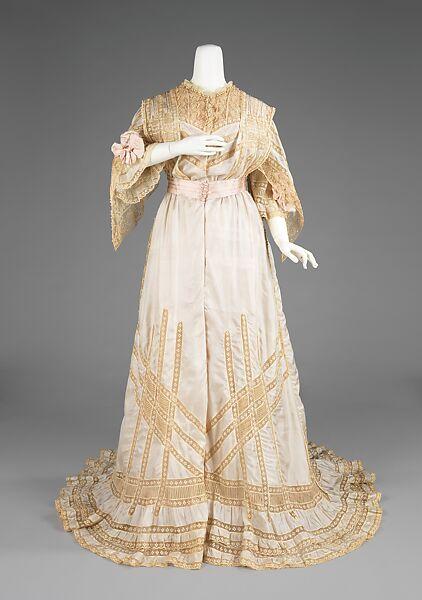
Edwardian Era Nightgown, 1905–10 - (The Metropolitan Museum of Art)
This layered construction reflected not only the aesthetic ideals of the era but also its social norms.
Fabrics used in Edwardian fashion emphasized notions of delicacy and lightness. The most popular materials of the period included:
These materials were chosen not only for their aesthetic qualities but also to signify social status. Rich and complex textures functioned as visual markers of the wearer’s position within the upper class.
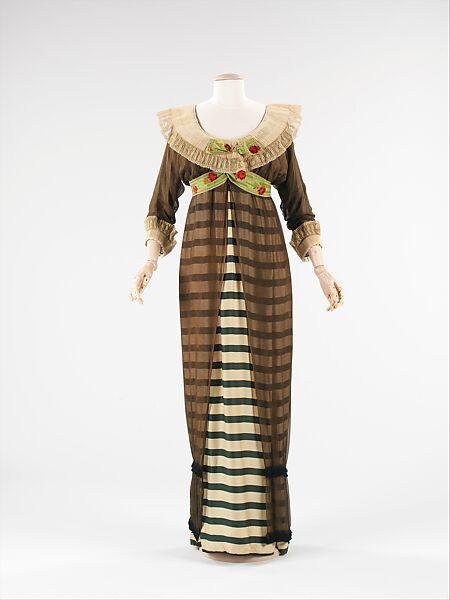
Edwardian Era Evening Dress, 1910 - (The Metropolitan Museum of Art)
During the Edwardian era, distinct types of clothing were developed to suit different social activities, reflecting the diversity of the period’s social life. These included:
These garments carried both functional and social meanings. For instance, the walking suit can be seen as a symbol of women’s increasing public presence.
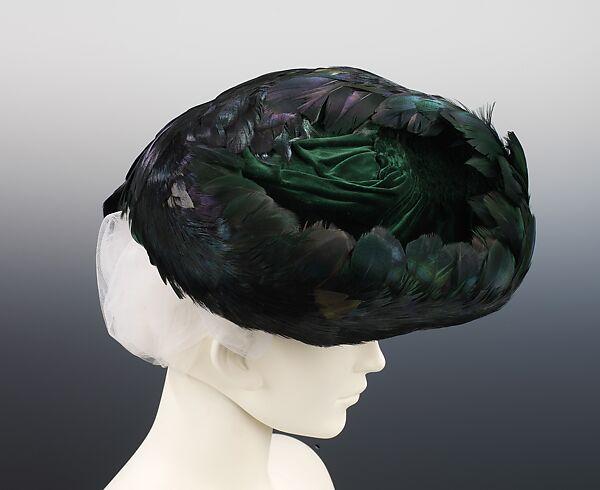
Edwardian Era Hat, 1902 - (The Metropolitan Museum of Art)
One of the most striking fashion elements of the Edwardian era was women’s hats. These were not merely accessories but indicators of social status and aesthetic taste. Edwardian hats were typically large and richly decorated. Primary decorative elements included:
Long pins known as hat pins, used to secure the hats in place, became one of the era’s most significant fashion accessories.
Edwardian hat fashion was not merely an aesthetic phenomenon; it also had significant economic and ecological consequences. For example, the extensive use of bird feathers in hat decorations led to the mass hunting of numerous bird species, contributing to the emergence of early conservation movements.
Moreover, the majority of workers in the millinery industry, as hat-making was known, labored under poor conditions and low wages. This situation offers important social insights into early labor relations within the fashion industry.
Edwardian women’s fashion is regarded as a crucial instrument in the public representation of female identity. Clothing served not only as an aesthetic choice but also carried symbolic functions indicating:
This fashion sensibility reflected not only the culture of dress but also the social structure, class relations and transformation of female identity during the era. Therefore, the history of Edwardian fashion can be understood not merely as an aesthetic study but as an essential component of social and cultural historical research.
Gernsheim, Alison. *Victorian & Edwardian Fashion: A Photographic Survey*. Dover Publications eBooks, 1981. https://books.google.com.tr/books?hl=tr&lr=&id=_Si-yrdMImAC&oi=fnd&pg=PP1&dq=info:G_GeOSKQC2MJ:scholar.google.com/&ots=KSzE4L8GR8&sig=fndWA8gitwLBZ73RvZ91jgj5WRk&redir_esc=y#v=onepage&q&f=false
Kimpton, Peter. *Edwardian Ladies Hat Fashions: Where Did You Get That Hat?* Images of the Past, 2017. https://books.google.com.tr/books?hl=tr&lr=&id=63O7DQAAQBAJ&oi=fnd&pg=PT10&dq=info:ibcbg0bb99EJ:scholar.google.com/&ots=q3XdHP3lqk&sig=PYGDwL8-eFhaRrQzCotWG-tsU6I&redir_esc=y#v=onepage&q&f=false
Poiret, Paul. *Evening dress*. 1910. Brooklyn Museum Costume Collection, The Metropolitan Museum of Art, New York. Accessed June 6, 2026. https://www.metmuseum.org/art/collection/search/155987
Pritchard, Marian E. The Cult of Chiffon: An Edwardian Manual of Adornment. Courier Dover Publications, 2017. https://books.google.com/books?id=zVeQDQAAQBAJ&pg=PP10&dq=info:6VgCZ3Ha4Z0J:scholar.google.com/&ots=DScDp4_Ls6&sig=PkMH0kxrfhGcsa81Eum7BiftT-Y&redir_esc=y#v=onepage&q&f=false
Rowland, Suzanne. Making Edwardian Costumes for Women. Crowood, 2016. https://books.google.com.tr/books?hl=tr&lr=&id=AQJ7DAAAQBAJ&oi=fnd&pg=PP7&dq=info:UzjgqM2ipLIJ:scholar.google.com/&ots=jSAkoSwofe&sig=B9JCdWuda8cWlEc1n7vl_lmt2DI&redir_esc=y#v=onepage&q&f=false
The Metropolitan Museum of Art. Negligée. 1905–1910. Brooklyn Museum Costume Collection, The Metropolitan Museum of Art, New York. Accessed June 6, 2026. https://www.metmuseum.org/art/collection/search/159404
Walker Importer. Hat. ca. 1902. Brooklyn Museum Costume Collection, The Metropolitan Museum of Art, New York. Accessed June 6, 2026. https://www.metmuseum.org/art/collection/search/157019
General Characteristics of Edwardian Women’s Wear
Fabrics and Aesthetic Sensibilities
Types of Women’s Garments
Edwardian Women’s Hats
The Social and Ecological Dimensions of Hat Fashion
Fashion and Social Identity