

+1 Daha

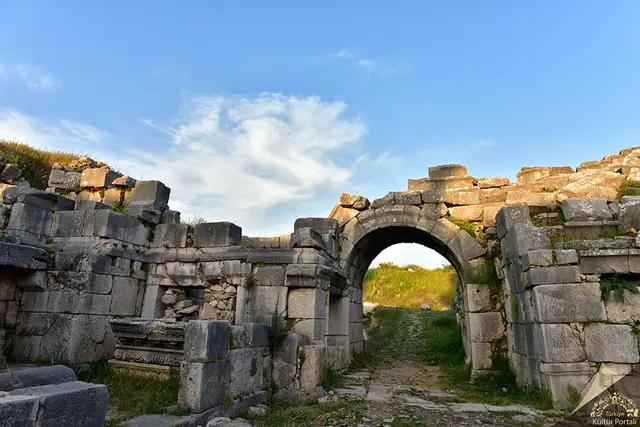
Xanthos Ancient City
Location | Antalya Kaş | ||||||||
|---|---|---|---|---|---|---|---|---|---|
Founding Date | 8th century BCE | ||||||||
Significance | The administrative and cultural center of Lycia | ||||||||
Important Structure(s) | Lycian and Roman Acropolis Byzantine Walls and Churches Nereid Monument Roman Agora Tomb of Kherei Lycian Sarcophagi Harpy Monument Roman Theater | ||||||||
UNESCO Status | Included in the World Heritage List | ||||||||
Xanthos is an important ancient city located in the southwestern part of Türkiye, along the Fethiye-Kaş highway, within the borders of Kınık Village. As the largest administrative center of Lycia, Xanthos was built on two hills overlooking the plain by the Eşen River (known in antiquity as the Xanthos River). One of these hills is the Lycian acropolis, while the other is the Roman acropolis.
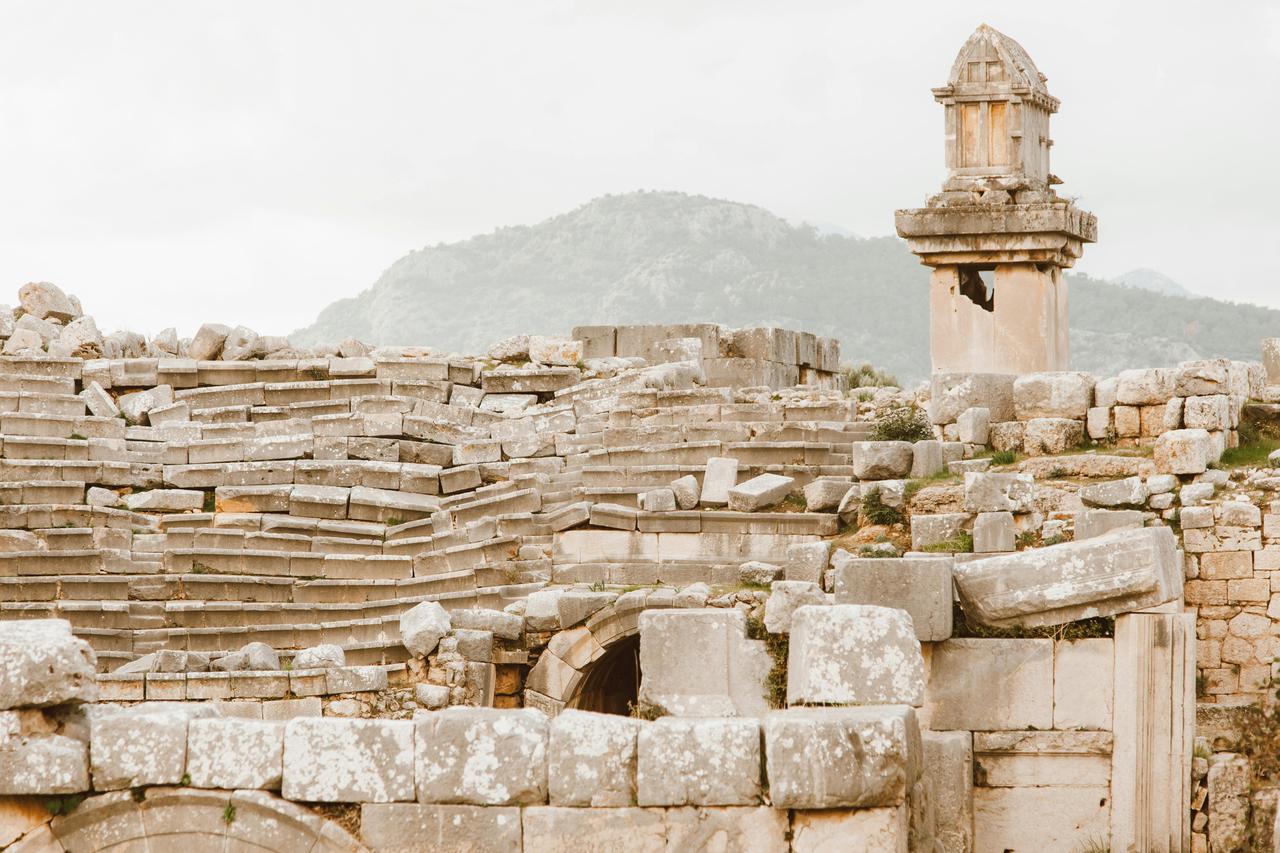
Xanthos Ancient City (ROMAN ODINTSOV, https://www.pexels.com/tr-tr/fotograf/mimari-kule-rock-kaya-6342319/)
The history of the city dates back to the 8th century BCE. According to Homer’s accounts, the Xanthians, under the leadership of Sarpedon, participated in the Trojan War. However, archaeological excavations do not provide definitive evidence as to whether the city was an established settlement during this period.
Throughout history, Xanthos was attacked and destroyed multiple times. During the siege of the Persian general Harpagos in 545–546 BCE, the Xanthians fiercely resisted; however, when defeat became inevitable, they killed their women and children, set the city on fire, and collectively committed suicide. A small number of surviving families later rebuilt the city. Additionally, between 475–450 BCE, Xanthos suffered a major fire disaster.
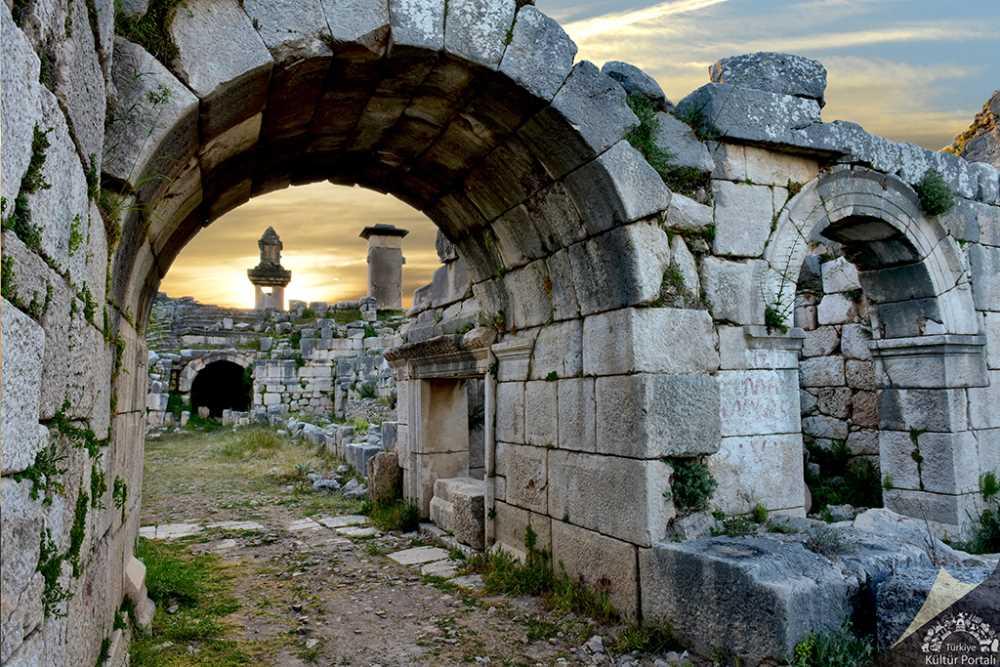
Xanthos Ancient City (Gülcan Acar, https://www.kulturportali.gov.tr/turkiye/antalya/gezilecekyer/xanthos)
With Alexander the Great's conquest of the region in 334 BCE, Xanthos came under Macedonian rule. After Alexander’s death, the city fell under the control of the Ptolemaic Dynasty from 309 BCE onward and later came under the rule of the Syrian King Antiochus III. In the 2nd century BCE, Xanthos became the capital of the Lycian League. However, in 42 BCE, the Roman commander Brutus completely destroyed the city. Shortly afterward, it was rebuilt through the efforts of Marcus Antonius.
During the Roman Empire, the city continued to develop as an important settlement. Many new structures were added during the reign of Emperor Vespasian. In the Byzantine period, Xanthos served as a bishopric center, but following the Arab raids in the 7th century, it lost its significance. The city was rediscovered in 1838 by Charles Fellows, and some of its remains were transported to the British Museum.
Xanthos contains significant architectural remains from the Lycian, Hellenistic, Roman, and Byzantine periods. The most notable structures in the city include:
Xanthos and Letoon were inscribed on the UNESCO World Heritage List in 1988. The city is considered an important site preserving the historical, cultural, and architectural heritage of the Lycian civilization. The presence of the longest inscriptions in the Lycian language highlights Xanthos' significance in written history.
However, there are some challenges regarding the preservation of Xanthos. The asphalt road passing through the site has been considered a factor negatively impacting its historical integrity, leading to a decision to close it in 2010. Additionally, rising water levels in Letoon and the visual pollution caused by surrounding greenhouses are among the issues requiring further conservation measures.
Müze Kart. "Xanthos Örenyeri." Accessed 12.03.2025. https://muze.gov.tr/muze-detay?DistId=MRK&SectionId=XAN01
T.C. Antalya Valiliği. "Antik Kentler." Accessed 12.03.2025. http://www.antalya.gov.tr/antik-kentler
T.C. Kültür ve Turizm Bakanlığı. Antalya İl Kültür ve Turizm Müdürlüğü. "Xanthos." Accessed 12.03.2025. https://antalya.ktb.gov.tr/TR-310939/xanthos.html
T.C. Kültür ve Turizm Bakanlığı. Kültür Varlıkları ve Müzeler Genel Müdürlüğü. "Xanthos-Letoon (Antalya - Muğla)." Accessed 12.03.2025. https://kvmgm.ktb.gov.tr/TR-44429/xanthos-letoon-antalya---mugla.html
Türkiye Kültür Portalı. "Xanthos - Antalya." Accessed 12.03.2025. https://www.kulturportali.gov.tr/turkiye/antalya/gezilecekyer/xanthos
UNESCO World Heritage Convention. "Xanthos-Letoon." Accessed 12.03.2025. https://whc.unesco.org/en/list/484/
Photographs
Acar, Gülcan. (https://www.kulturportali.gov.tr/turkiye/antalya/gezilecekyer/xanthos)
Odintsov, Roman. (ROMAN ODINTSOV, https://www.pexels.com/tr-tr/fotograf/mimari-kule-rock-kaya-6342319/)

Xanthos Ancient City
Location | Antalya Kaş | ||||||||
|---|---|---|---|---|---|---|---|---|---|
Founding Date | 8th century BCE | ||||||||
Significance | The administrative and cultural center of Lycia | ||||||||
Important Structure(s) | Lycian and Roman Acropolis Byzantine Walls and Churches Nereid Monument Roman Agora Tomb of Kherei Lycian Sarcophagi Harpy Monument Roman Theater | ||||||||
UNESCO Status | Included in the World Heritage List | ||||||||
Henüz Tartışma Girilmemiştir
"Xanthos " maddesi için tartışma başlatın
History of Xanthos
Architectural Structures of Xanthos
Xanthos' Inclusion in the UNESCO World Heritage List
Bu madde yapay zeka desteği ile üretilmiştir.