


Bu içerik Türkçe olarak yazılmış olup yapay zeka ile otomatik olarak İngilizceye çevrilmiştir.
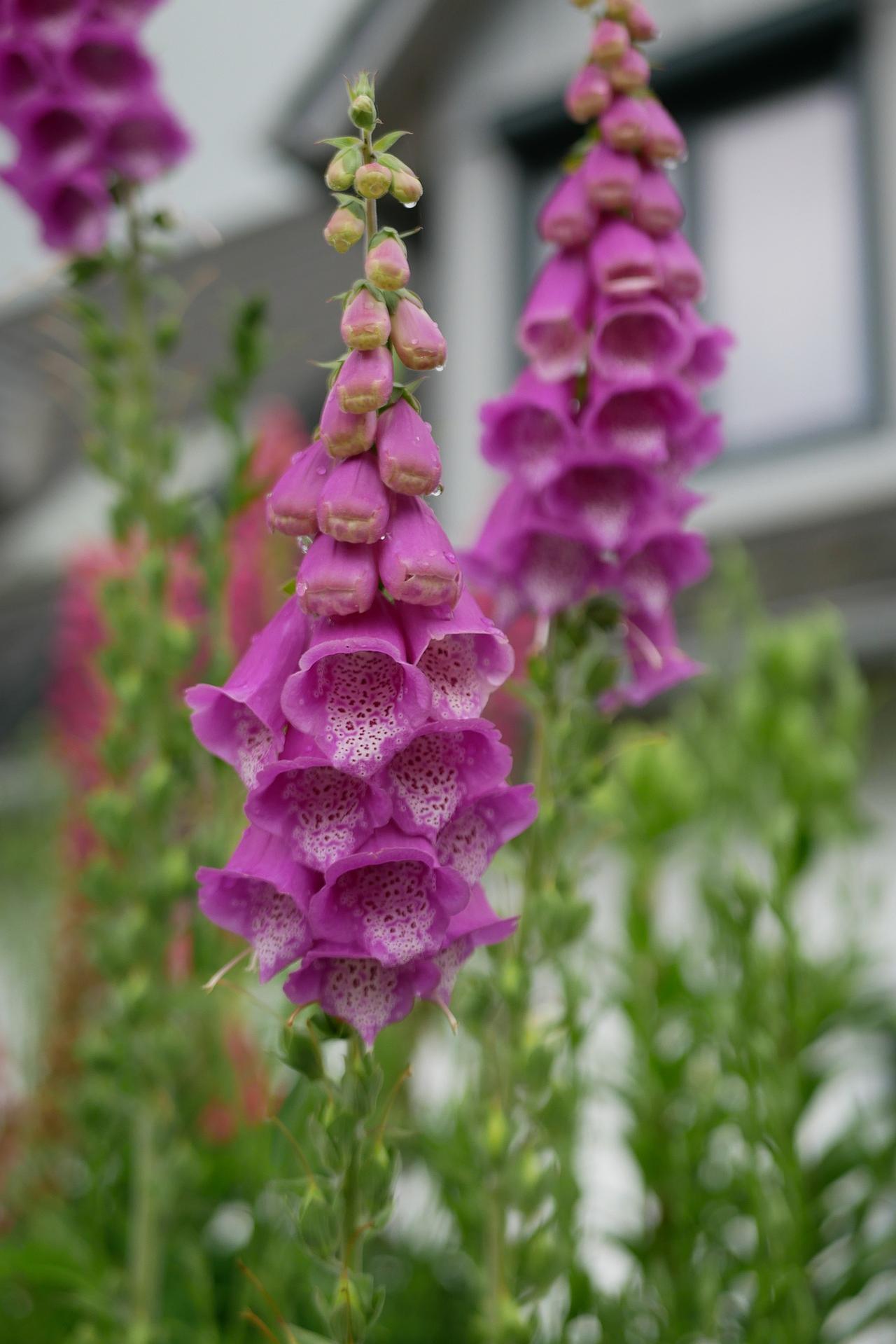
Digitalis, scientifically known as Digitalis, is a herbaceous flowering plant genus primarily used as a raw material for heart medications. It typically features flowers in colors such as purple, pink, and white, with bright yellow buds at the tips of long, thick flower stalks, pendulous flowers arranged in a row along one side of the stalk, and broad, hairy leaves at the base. The compounds digitoxin and digoxin contained in the plant are used to regulate heart rhythm. However, due to its toxicity, its use requires great caution.
The discovery of digitalis and its immediate medical application began with the research of 18th-century English physician William Withering. Withering observed that this plant alleviated symptoms of heart failure and published the first scientific work on the subject in 1785. This advancement increased the importance of herbal medicines in modern pharmacology.
Digitalis belongs to the family Scrophulariaceae (figworts), though it is now classified under the family Plantaginaceae (plantains). It is generally a biennial plant. In its first year, it forms a rosette of leaves; in the second year, a flowering stalk develops. The flowers are tubular and arranged in a spiral pattern around the stalk. The leaves and flowers of digitalis are rich in medicinal compounds.
The leaves of digitalis are typically hairless, elliptical or lance-shaped. The flowers are usually five-petaled, tubular, and blue-purple in color, measuring 5 to 10 cm in length. They grow in clusters at the tips of the branches.
Glycosides extracted from the digitalis plant are used to treat conditions such as heart failure and irregular heartbeat. Digoxin, in particular, improves circulation by increasing the force of cardiac contractions. However, the therapeutic dose is very close to the toxic dose, so it must be used only under medical supervision.
Digitalis can be lethal at high doses due to its active compounds. Symptoms of poisoning include nausea, visual disturbances, irregular heartbeat, and loss of consciousness. Therefore, even if encountered in the wild, it should never be collected or used casually.
Digitalis is also cultivated in gardens as an ornamental plant due to its visually appealing flowers. It thrives in moist, partially shaded areas. The flower’s shape resembles the spindle used in spinning, which is why it is called “yüksük otu” in Turkish. In Anatolia, it is also known as “yavşan otu.”

Digitalis. (Generated by artificial intelligence.)
Ankara Üniversitesi. "Türkiye'nin Zehirli Bitkileri." Open Course Materials. Accessed April 6, 2025. https://acikders.ankara.edu.tr/pluginfile.php/170851/mod_resource/content/0/Turkiye%20nin%20Zehirli%20%20Bitkileri%20Hafta%209.pdf.
Balabanlı, Cahit, Sebahattin Albayrak, Mevlüt Türk, and Osman Yüksel. “TÜRKİYE ÇAYIR –MERALARINDA BULUNAN BAZI ZARARLI BİRKİLER VE HAYVANLAR ÜZERİNDEKİ ETKİLERİ”. Turkish Journal of Forestry 7, no. 2 (February 2009): 89–96. https://dergipark.org.tr/en/download/article-file/195584. Accessed April 6, 2025.

Henüz Tartışma Girilmemiştir
"Yüksük Otu" maddesi için tartışma başlatın
History
Botanical Characteristics
Physical Characteristics
Prominent Species
Medical Use and Warnings
Cultural and Aesthetic Value