


Bu içerik Türkçe olarak yazılmış olup yapay zeka ile otomatik olarak İngilizceye çevrilmiştir.
+2 Daha
Zambiya Cumhuriyeti
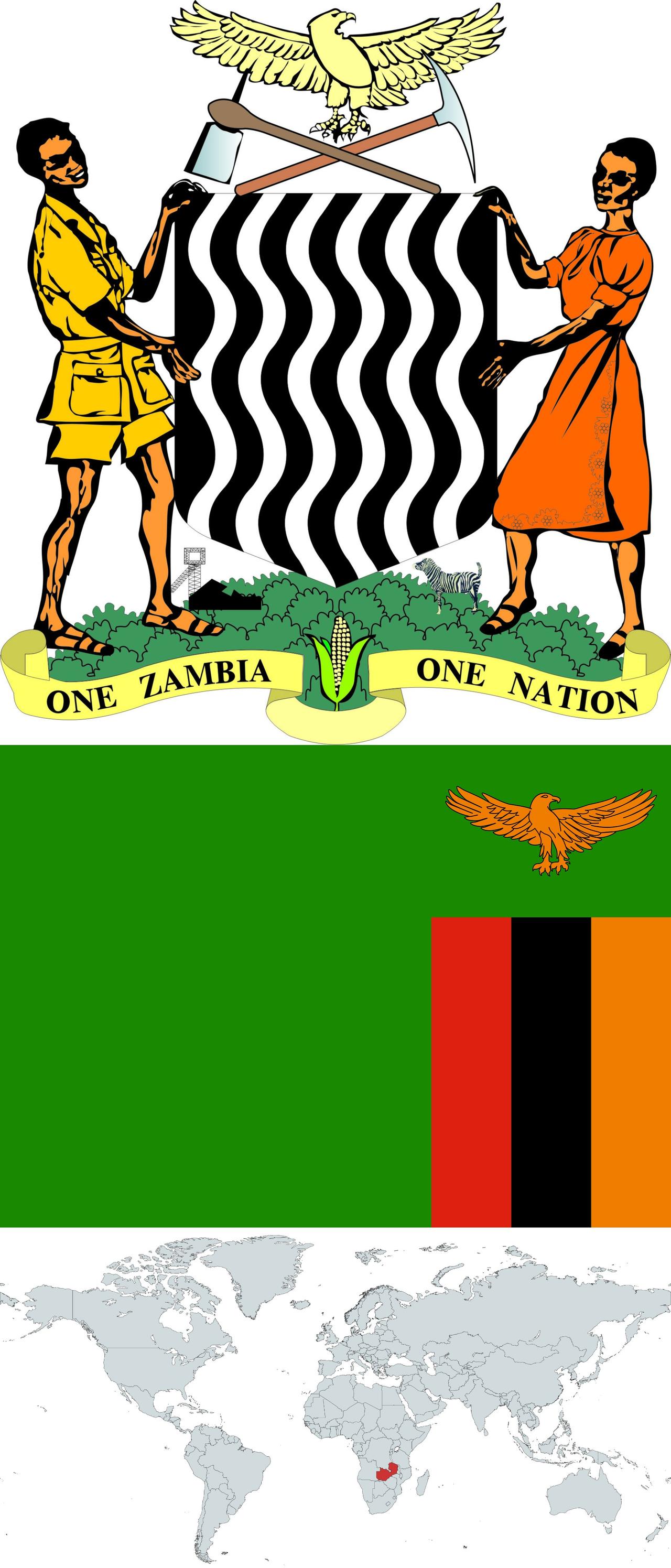
Zambia is a landlocked country located in the interior of southern Africa, bordered by eight nations. To the north, it shares borders with the Democratic Republic of the Congo and Tanzania; to the east, with Malawi and Mozambique; to the south, with Zimbabwe, Botswana, and Namibia; and to the west, with Angola. The country’s official name is the Republic of Zambia, and it has a total area of 752,614 km², covering a vast continental territory.【1】 Due to its geographic position, Zambia functions as a landlocked state within regional land transport networks.
Historically known as Northern Rhodesia, Zambia gained independence from the United Kingdom in 1964. The capital, Lusaka, serves as one of the country’s administrative, political, and economic centers and is among its largest urban settlements. Other major cities include Ndola, Kitwe, Kabwe, Mufulira, Chingola, and Luanshya. The official language is English, while numerous local languages are widely used in daily life. The national currency is the Kwacha, and Zambia’s population, which varies across periods, consists of a diverse array of ethnic groups.
Zambia’s national flag was adopted upon the country’s independence from the United Kingdom on 24 October 1964. The flag was designed by artist Gabriel Ellison on that date. Prior to independence, the country, under British rule as Northern Rhodesia, used a modified Blue Ensign. Today, this flag serves both as the national flag and as a standard in various official contexts.【2】
The flag is based on a green background. In the lower right corner are three vertical stripes of red, black, and orange. Above these stripes flies an African fish eagle. The placement of the symbols on the fly side of the flag is distinctive and sets it apart from common flag designs.
Each color on the flag carries specific meanings. Green represents the country’s natural environment and agricultural structure; red symbolizes the struggle for freedom; black stands for the Zambian people and all Black Africans; and orange signifies the nation’s natural resources and mineral wealth. The eagle symbolizes freedom and the people’s resilience in overcoming challenges. In 1996, minor modifications were made to the flag: the green shade was lightened, and the eagle’s design was adjusted to better match the emblem on the national coat of arms.
National Anthem of Zambia (National Anthems Channel)
Zambia’s national anthem is based on the melody of the hymn “Nkosi Sikelel’ iAfrika,” which originated in South Africa. This hymn gained popularity in South Africa in 1923 as a Christian hymn and later became the closing hymn at meetings of the African National Congress (ANC). Over time, it became a symbolic song associated with the Black struggle against apartheid and spread across different regions of Africa through churches. During this period, the hymn was widely recognized in Eastern and Southern Africa as part of African nationalist movements.【3】
With the passage of the Zambia Independence Act by the British Parliament in 1964, the country gained independence and adopted “Nkosi Sikelel’ iAfrika” as its national anthem, replacing “God Save The Queen,” which had been used during the Northern Rhodesia era. By 1973, there was a need to revise the anthem’s lyrics. After submitted entries in a national competition were deemed unsuitable, six texts were combined to create “Stand and Sing of Zambia, Proud and Free.” The authors of this text are recorded as G. Ellis, E. S. Musonda, J. M. S. Lichilana, I. Lowe, J. Sajiwandani, and R. J. Seal. The same year, the National Anthem Act formally recognized this text as Zambia’s official national anthem and established legal regulations for its use.【4】
Zambia’s state emblem was adopted on 24 October 1964, the same day the country gained independence. The emblem is adapted from the coat of arms of Northern Rhodesia dating back to 1927. The black and white wavy vertical lines in the design provide a historical foundation and were retained after independence with minor revisions.
At the center of the emblem is a shield bearing a wavy black and white pattern representing Victoria Falls. This section symbolizes the Zambezi River and the country’s natural geography. Above the shield is the African fish eagle, symbolizing freedom and the nation’s hope for the future. Beside the eagle, crossed pickaxe and hoe figures represent agriculture and mining activities.
On either side of the shield are figures of a man and a woman representing the Zambian people. At the bottom of the emblem, on a green base, are elements symbolizing agriculture, mining, and natural life. Below the emblem is the motto “One Zambia, One Nation,” emphasizing national unity. The state emblem also forms the basis of the official state seal used to authenticate official documents.
The earliest traces of human settlement in Zambia extend back to the earliest periods of human history. Archaeological findings in the region demonstrate human presence from ancient times. Among the earliest communities were the Bushmen, who lived by hunting and gathering. These groups sustained their livelihoods using resources from the natural environment. From the first centuries AD, different communities migrated into the region. Bantu-speaking groups arrived from the 4th century onward and gradually adopted settled lifestyles. During this period, agricultural practices and metalworking techniques developed, with copper metallurgy becoming particularly prominent. The successive waves of Bantu expansion led to lasting changes in the population structure.
In early settlements, various ethnic groups gradually coalesced. Between 1500 and 1800, communities from different parts of Africa played a key role in shaping today’s Zambian population. During this period, groups such as the Lunda, Luba, and Lozi established powerful structures in the region. By the 19th century, the Ngoni group from southern regions settled in the eastern areas. Throughout this period, state formation remained limited, but some communities gained power through trade and production activities. Local groups participated in the exchange of ivory, copper, and similar goods, increasing interaction between different regions.
During the medieval period, Zambia’s population structure was shaped by various migration movements. Among the early settlers were the Tonga and Nkoya groups. The Nkoya community was connected to the political structures centered around the Luba- Lunda areas and moved southward. During this process, some communities concentrated in specific regions and established local governance structures.
By the 15th century, groups such as the Bemba and Lozi established more distinct political and social structures in the region. These structures developed through trade activities, including ivory and slave trading.【5】 During the same period, interaction and competition increased among different communities in the interior.
By the early 16th century, the Nsokolo community settled in northern regions. By the 19th century, the Ngoni and Sotho communities migrated from the south and integrated into existing settlement areas. These movements increased ethnic diversity and reshaped settlement patterns.
During the early modern period, contact between local communities and external regions increased in Zambia. By the late 18th century, the first Europeans to reach the region were Portuguese traders who established relationships with local communities for the trade of gold, ivory, and slaves. This process connected regional economic activities to external trade networks.
In the mid-19th century, Scottish explorer and missionary David Livingstone undertook several journeys to the region. Livingstone operated around the Zambezi River, studied its geography, and made observations. In 1855, he became the first European to see the region’s great waterfalls and named them after Queen Victoria, giving them the name Victoria Falls. The same natural formation is known by a different name among the local population.【6】
During this period, European-centered commercial and missionary activities increased, strengthening external interest in the region. Relations between local communities and external actors were shaped through trade and religious activities, particularly concentrated around river basins. In the second half of the 19th century, European explorers, missionaries, and traders arrived in the region, leading to various commercial and political initiatives.【7】
From the 1880s onward, British-centered companies acquired economic rights over Zambian territory, particularly gaining control over mineral resources.【8】 Through agreements with local authorities, the region was divided into different administrative units. During this period, the British South Africa Company (British South Africa Company) played a dominant role in regional administration.
By the end of the 19th century, the region was divided into two separate administrative units: North-Western and North-Eastern Rhodesia. In 1911, these units were merged to form a single administration under the name Northern Rhodesia.【9】 In 1923, administration was transferred from company control to the British Colonial Office.【10】
From the 1940s, the formation of political parties began in Northern Rhodesia. The first political party was established in 1948, and in 1951, the African National Congress was formed under the leadership of Harry Nkumbula. In 1955, factions that split from the African National Congress founded the United Party for Independence. Political movements led by Harry Nkumbula and Kenneth Kaunda formed the foundational structure for the independence movement.【11】
After World War II, the economic and social structure of Northern Rhodesia underwent significant changes. Increased mineral production during the war, especially copper mining, strengthened the sector’s role in the regional economy. This development accelerated urbanization and increased the size of the working class.
In 1953, Northern Rhodesia was merged with Southern Rhodesia and Nyasaland to form the Central African Federation. The federation brought the three regions under a single administrative structure, but political and social developments weakened its continuity. The independence movement initiated by the indigenous population gained strength over time and secured a majority in the legislative assembly by 1962. As a result, the federation was dissolved in December 1963.【12】
In the early 1960s, competition among political parties intensified, accelerating the independence process. Following the 1962 elections, local political movements gained control of governance, and in 1964, Northern Rhodesia declared independence as Zambia. After independence, the country began to be governed under a new political and administrative framework.【13】
After gaining independence in 1964, Zambia’s political structure was reorganized, and the administration under the leadership of Kenneth Kaunda continued under a one-party system during the 1970s. This structure remained in place for a long time, with political activities conducted within a defined framework.
In the 1980s, the economic structure weakened due to low copper prices, foreign debt, and production problems. During this period of a state-centered economic model, the political structure was also affected, and in 1990, the transition to a multi-party system began. In the 1991 elections, the MMD under the leadership of Frederick Chiluba came to power, and the multi-party political system was implemented.【14】
In the 2000s, the political structure continued under a multi-party system. In the 2001 elections, Levy Mwanawasa was elected president, and during this period, the government pursued policies to combat corruption and implement economic reforms. Mwanawasa was re-elected in the 2006 elections. He died in office in 2008 and was succeeded by Vice President Rupiah Banda. In the 2011 elections, Patriotic Front leader Michael Sata was elected president.【15】
Today, Zambia is governed under a multi-party democratic system. The presidency is held by Hakainde Hichilema. The political structure is maintained within a constitutional framework, with elections held at regular intervals. In the economic structure, mining, particularly copper production, continues to hold a significant position.【16】

Geography of Zambia (Stamp World History)
Zambia is a landlocked country located in the southern part of Sub-Saharan Africa. The country lies in the interior of the African continent and has the status of a landlocked state. It is situated between approximately 8°–18° south latitude and 22°–34° east longitude. Its area is 752,614 km², providing a vast plateau structure.【17】
Zambia’s land borders are with the Democratic Republic of the Congo to the north, Tanzania to the northeast, Malawi to the east, Mozambique to the southeast, Zimbabwe to the south, Botswana and Namibia to the southwest, and Angola to the west. This border arrangement makes Zambia neighbor to eight different states.
Due to its location in the interior of the African continent, Zambia has a landlocked geographic structure distant from coastal influences. This situation makes the country dependent on neighboring states for transport connections. Zambia’s territory is also divided between the Zambezi and Congo river basins. The Zambezi basin covers a large portion of the country, while areas belonging to the Congo basin are located in the northern regions. This structure is one of the key geographic features determining the orientation of the country’s water systems.
Zambia is largely a country situated on high plateaus. The average elevation of a significant portion of its territory ranges between 1,000 and 1,500 meters. This plateau structure causes the country’s surface to exhibit similar elevation characteristics over wide areas. The highest elevations are found in the Mafinga and Makutu mountain ranges. In these mountainous areas composed of quartzite and sandstone, elevations locally exceed 2,000 meters.【18】
Mafinga Hills contain the highest point in the country, recorded at 2,329 meters. The lowest point in the country is along the Zambezi River, at 329 meters. These areas extend along the southern border and form the country’s lowest elevation levels.【19】
Zambia is generally a country with a high plateau structure, and its surface features are largely characterized by elevations on this plateau. The highest areas are the Mafinga and Makutu mountain ranges composed of quartzite and sandstone. The high elevations of the Nyika Plateau in the northeast are also considered mountainous areas. Along the Luangwa Valley in the east, the plateau rises gradually and is surrounded by mountainous and hilly structures. In this region, the Muchinga Mountains extend along the watershed dividing the Zambezi and Congo basins. The highest point of this mountain range is Mumpu. Additionally, the Mafinga Hills region, an extension of the Nyika Plateau, contains the country’s highest point. These mountainous areas, along with valleys and depressions that fragment the plateau surface, play a decisive role in the country’s morphological structure.
The western part of Zambia is characterized by wide, flat plains. One of the most prominent examples is the Barotse Floodplain along the Zambezi River. This plain is typically submerged from December to June, following the annual rainfall regime that coincides with the rainy season from November to April. Floods play a decisive role in the natural environment and directly affect the lifestyles, economic activities, and settlement patterns of communities living in these areas. Smaller-scale floodplains across the country similarly influence the environmental and social structure.
Zambia’s valleys are largely associated with major river systems and form distinct, deep, and wide morphological units. The Zambezi Valley, extending along the southern border, is one of the main examples of this structure, notable for its width and depth. In the eastern region, the Luangwa Valley, extending from the northeast to the southwest, cuts through the plateau surface to form a prominent depression. The valley’s extensions penetrate into the plateau through deep incisions created by the Lunsemfwa River. Additionally, valleys around the lakes Mweru-Luapula, Mweru-wa-Ntipa, and Tanganyika are depression areas linked to the rift system. These structures are among the key geomorphological elements that enhance the country’s topographic diversity.

Zambezi River (Flickr)
Zambia’s hydrography is largely shaped by the Zambezi and Congo basins. Approximately three-quarters of the country lies within the southern Zambezi basin, while the northern regions belong to the Congo basin. The Zambezi River originates in northwestern Zambia, flows westward across the country, forms borders with Namibia, Botswana, and Zimbabwe, and reaches the Indian Ocean via Mozambique. This river, approximately 2,650 kilometers long, is one of Africa’s major rivers.【20】 The Victoria Falls on the river is approximately 1.6 kilometers wide and features water cascading nearly 100 meters. The Kariba Dam on the Zambezi has created the Lake Kariba, one of the world’s largest artificial lakes. In this basin, the Kafue and Luangwa rivers are among the Zambezi’s largest tributaries and flow largely within Zambian territory.【21】
In the northern Congo basin, the Chambeshi River originates in northern Zambia, flows through the Bangweulu Swamps, and becomes the Luapula River, which forms part of the border with the Democratic Republic of the Congo. The Luapula River then flows into Lake Mweru and, via the Luvua River, joins the Congo river system. Zambia’s major lakes include Tanganyika, Mweru, Mweru wa Ntipa, and Bangweulu. Lake Tanganyika is also a key hydrological component of the Congo basin, with the Kalambo River feeding its southeastern end. The Kalambo Falls on this river is known as Africa’s second-highest uninterrupted waterfall. Additionally, Zambia is home to over 400 fish species, a significant portion of which inhabit Lake Tanganyika.【22】
Zambia’s climate is tropical but exhibits a more temperate structure due to elevation. The year is clearly divided into rainy and dry seasons: the rainy season generally occurs between November and April, while the dry season spans from May to October. The dry season is further divided into cool and warm phases. Rainfall varies across the country, decreasing from north to south. Vegetation consists of savannas, grasslands, shrub communities, and occasional forests. Dense forest areas are found in the eastern regions, while in the west, tree communities develop on sandy areas, with some regions featuring evergreen forests.
Zambia’s climate is tropical and becomes more temperate due to elevation. Temperatures remain above 20°C for most of the year. During May–August, temperatures drop to lower levels, while other months experience higher temperatures. Summer temperatures rarely exceed 35°C. Higher elevations experience cooler conditions, especially during the cold season. The year is divided into three main periods. The rainy season runs from November to April, the cool and dry winter from May to August, and the hot and dry period from September to October.【23】
The rainy season corresponds to summer, while the dry season overlaps with winter. During the May–August period, the daily average temperature is approximately 17°C. In other months, temperatures range between 21–27°C. Rainfall is unevenly distributed across the country. In the north, annual rainfall exceeds 1,200 millimeters, while in the southwestern regions, it falls below 800 millimeters. Rainfall decreases from north to south. High evaporation rates are more pronounced in the southern regions, reinforcing regional climate differences.【24】
Zambia’s vegetation consists of extensive savannas, grasslands, wooded savannas, and shrub formations. Vegetation varies according to climate and elevation conditions. Dense forest areas are found in the eastern regions, while in the west, savannas and grasslands are common, along with scattered shrub communities. Seasonal flooding in certain areas leads to the development of distinct plant communities, enhancing the diversity of the natural environment.
Forests with diverse tree species are found in higher elevations. In the western regions, tree communities established on Kalahari sands cover extensive areas. Additionally, evergreen forest areas are found in western regions. The country lies within a specific flora region, with several tree species from the legume family being common. These plant communities include both drought-resistant and water-dependent species.

Mopani Mine (Flickr)
Zambia possesses various natural resources, including copper, cobalt, zinc, lead, coal, emerald, gold, silver, and uranium. The country is also notable for semi-precious stones and cobalt production, with mining of minerals such as tourmaline, amethyst, and aquamarine. Copper is among the country’s primary natural resources and constitutes a vital component of mining activities. A significant portion of the country’s area consists of forested land, while agricultural land represents another key land use type. Natural resources reflect a diversity formed by underground wealth alongside forests and agricultural areas.
Zambia’s energy infrastructure consists of a vertically integrated structure focused on electricity generation, transmission, and distribution. At the center of this structure is the state-owned ZESCO Limited, which maintains a dominant position in electricity generation through hydropower sources.【25】 Independent power producers (IPPs) also operate within the system, contributing to generation capacity by selling electricity to ZESCO. Expanding transmission and distribution networks, increasing access in rural areas, and strengthening grid connections are key priorities. However, high dependence on hydropower causes fluctuations in energy supply due to variations in water levels, revealing the system’s vulnerability through periodic power outages.
In transport infrastructure, road investments and cross-border connectivity are prioritized. The public-private partnership (PPP) model has become a primary approach for financing and implementing infrastructure projects. Projects such as the Chingola–Chililabombwe road and the Lusaka–Ndola dual carriageway are major road investments implemented under the PPP model. The same approach is applied in the energy sector, encouraging private sector participation in infrastructure projects. This model provides an important mechanism for additional financing and the implementation of large-scale infrastructure projects.
Environmental issues in Zambia largely stem from energy consumption patterns and natural resource use. The high share of biomass in energy consumption, particularly the widespread use of firewood and coal in rural areas, increases pressure on deforestation and negatively impacts environmental sustainability. Dependence on biomass also perpetuates traditional methods of household energy use, contributing to environmental burdens. Although there is a trend toward cleaner energy sources in the energy transition, the current structure’s reliance on fossil fuels and biomass continues to generate environmental impacts.
Regarding natural disasters, drought and fluctuations in water resources due to climate variability are major risk factors. The high reliance on hydropower makes the energy system vulnerable to changes in water levels. During dry periods, declining reservoir levels cause electricity shortages and load shedding. Additionally, irregular rainfall patterns affect both energy production and agricultural activities. Excessive rainfall periods increase flood risks in some areas, adversely impacting settlements and production zones. This demonstrates that natural disasters directly affect the country’s energy security and economic activities.
Zambia’s economy is structured as a liberal model based on free competition, with limited structural diversity. The economy is primarily based on copper mining, making the country vulnerable to international price fluctuations. Agriculture, industry, and the service sector constitute other components of economic activity, but copper remains decisive in export revenues. According to United Nations classification, Zambia is among the least developed countries and international development assistance significantly influences its economic structure. Economic activities generally show a growth trend but are marked by irregular fluctuations.
Macroeconomic indicators reveal sustained economic growth in recent years. Real gross domestic product growth reached 3.76% in 2025, with continued growth projected in the following period.【26】 Key challenges in the economy include levels of public debt, financing needs, and structural reform requirements. A significant portion of the population lives below the poverty line, and the unemployment rate remains high. Diversifying the economy, increasing manufacturing and employment, and reducing dependence on the mining sector are fundamental to strengthening the economic structure.
Zambia’s economy has exhibited a fluctuating growth pattern over time. Indicators such as GDP, per capita income, inflation, and external balance show periodical variations, reflecting an economic structure vulnerable to macroeconomic fluctuations. Economic growth rates have varied over the years, with population growth and price changes influencing economic indicators. Public debt levels and the current account balance are decisive elements in the economic outlook.
Economic indicators reveal periodical fluctuations in GDP and per capita income. The inflation rate has varied across years, while public debt remains at high levels. The current account balance shows a structure alternating between deficit and surplus.
In Zambia, agriculture and livestock farming remain largely traditional sectors despite favorable natural conditions and vast land availability. Approximately 7% of the country’s land is arable, 40% is pastureland, and 43% is forested.【30】 Although agriculture employs more than half of the working population, its share of GDP remains limited. Agricultural production is largely rain-dependent, and limited irrigation capacity renders production vulnerable to climatic conditions. Nevertheless, in normal years, the country largely meets its food needs.
Maize is the primary crop in agricultural production and constitutes the main food source for the population. Other widely cultivated products include cassava, groundnuts, sorghum, millet, rice, wheat, and beans. In commercial agriculture, production of coffee, tobacco, cotton, and vegetables is prominent. Maize and cassava-based products are decisive in food consumption, with other cereals and legumes also contributing to nutrition. Livestock farming is widespread across the country, but productivity remains limited due to underutilization of existing animal resources. In addition to cattle, goats, and sheep farming, poultry farming is practiced; however, the presence of tsetse flies in some regions restricts livestock activities.
In Zambia, the industrial sector accounted for approximately 37.47% of GDP in 2024, occupying a significant position in the economic structure.【31】 The sector’s development is largely dependent on mining activities, with copper production being the primary determinant of the industrial structure. In addition to copper, extraction of cobalt, coal, zinc, and other minerals contributes to industrial production. Historically, mining has been the driving force behind industrialization, particularly concentrated in the Copperbelt region. However, the industrial sector exhibits a high degree of dependence on international copper prices.
Manufacturing industry, compared to mining, has developed to a more limited extent and operates in areas such as food processing, cement, chemicals, fertilizers, and light consumer goods. A significant portion of industrial enterprises have been privatized since the 1990s and restructured under free market principles. Although hydropower is decisive in energy production, fluctuations in energy supply can affect industrial activities. Overall, the industrial sector maintains a mining-oriented structure, with other production branches developing in a complementary manner.
In Zambia, the services sector constitutes one of the largest components of the economic structure. According to 2024 data, the services sector accounts for approximately 55.14% of GDP.【32】 The sector encompasses retail and wholesale trade, transportation and storage, education, financial services, public services, and various commercial activities. The sector’s weight in the economic structure is supported by the fact that more than half of the employed population works in services. In contrast, the shares of agriculture and manufacturing in GDP remain limited, with a significant portion of economic activity conducted through trade and service activities concentrated in urban centers. This structure indicates that Zambia generally follows a service-oriented sectoral shift within a free-market economic model.
Zambia’s financial system develops within the framework of the banking sector and monetary policy. In recent years, financial sector performance has improved in parallel with increased economic activity. The ratio of outstanding credit to total credit declined from 6.1% in 2022 to 5.1% in 2023, while capital adequacy ratios remained at strong levels (approximately 23% by end of 2023). Monetary policy has been tightened to control inflationary pressures; the policy interest rate rose from 9.5% in 2022 to 11.0% in 2023. Inflation reached approximately 10.9% by the end of 2023. The financial system also exhibits dependence on external sources and international financing mechanisms, with International Monetary Fund (IMF) support programs, development finance institutions, and foreign direct investments serving as key pillars of financial stability. Additionally, exchange rate stability, reserve levels, and debt sustainability constitute fundamental vulnerabilities of the financial system.【33】
Zambia’s foreign trade structure generally shows export and import levels close to each other, yet exhibits a mining-export-based economic profile. According to 2024 data, the country’s total exports amounted to approximately $11.2 billion, while imports reached approximately $11.19 billion. Zambia derives its foreign trade revenues largely from the mining sector due to its copper export-based structure.
Zambia’s 2024 export structure is largely composed of mining and raw material-based products. The highest export item is copper and copper products, accounting for $7,591 million and holding a decisive weight in total exports. This is followed by metal ores, slag, and ash ($476 million) and cement, stone, and mineral-based products ($326 million). Other significant export items include mineral fuels and oils ($307 million) and iron and steel products ($191 million). In food and agricultural industry products, tobacco and processed tobacco products ($194 million) and food industry residues and animal feed ($145 million) were recorded. This structure demonstrates that Zambia’s exports are dominated by natural resource-based products, especially copper.【34】
Analyzing Zambia’s 2024 import structure reveals that the country’s external purchases are largely based on industrial production, energy, and transportation needs. The highest import category is mineral fuels and oils – $2,585 million, followed by machinery, mechanical appliances, and tools – $1,780 million. In the transportation sector, imports of motor vehicles – $1,191 million were recorded. To support agricultural production, imports of fertilizers – $661 million, and for industrial and consumer production, imports of plastics and their products – $504 million were recorded. Additionally, electrical machinery and apparatus – $477 million and pharmaceutical products – $307 million are significant import items. Other products outside these main groups also hold a high share in total imports, revealing the country’s highly diversified external dependency.【35】
Foreign investment and the business environment in Zambia have been open to foreign capital since the 1990s through market liberalization policies, with privatization in the mining sector defining this process. Foreign direct investment is projected to reach $965.42 million in 2025 and $1,212.69 million in 2026, with its share of GDP remaining around 3%.【38】 The country is a member of the World Trade Organization (WTO), and is part of COMESA and SADC, participating in regional integration processes under the Tripartite Free Trade Agreement. In the investment environment, firms from China, South Africa, India, and Europe-Middle East stand out, while the economy’s dependence on copper and maize, alongside debt and diversification needs, remain key structural issues.【39】
Zambia is a representative democratic republic based on a presidential system. Within a unitary state structure, political powers are centralized at the national level. The country operates under a multi-party political system, with governance divided among legislative, executive, and judicial branches under a constitutional framework. The president serves as both head of state and head of government and is elected by universal suffrage for a fixed term. Elections are held at regular intervals.
Legislative power resides in a unicameral parliament, whose members are directly elected from single-member constituencies. The executive branch consists of the president and the cabinet appointed by him. The judiciary comprises independent courts, and the legal system is generally based on the English common law tradition. The administrative structure is organized on the principle of centralized administration, with the country divided into provinces and districts. Local administrations operate through councils, and some traditional governance elements are integrated into the administrative system. Different parties are represented in parliament.
Zambia’s constitutional order is based on the Constitution of Zambia, the supreme legal document of the state. Under this framework, the constitution is binding on all state institutions and administrative structures. Regulations and practices contrary to constitutional provisions are deemed invalid and lack legal validity. The current constitutional framework is based on the Constitution of Zambia dated 5 January 2016. The constitutional structure defines the functions and powers of the state’s fundamental organs, establishing the boundaries of the legal framework.【40】
Zambia is governed as a representative democratic republic based on a presidential system. The president holds both the office of head of state and head of government and exercises executive authority. The President is elected by universal suffrage for a five-year term, and the same individual may serve a maximum of two terms. In presidential elections, a candidate must secure more than 50% of valid votes; if this threshold is not met, a runoff election is held within 37 days between the two candidates with the highest vote counts. The executive branch operates through a cabinet appointed by the president, with ministers selected from among members of the National Assembly.【41】
In Zambia, legislative power resides with the unicameral National Assembly. The Assembly consists of members elected from single-member constituencies, with a specified number of members appointed by the president. The National Assembly’s primary responsibilities include debating, adopting, and amending legislative proposals, as well as approving the national budget and public expenditures. The legislative body also exercises oversight over the executive branch. Legislative processes establish the legal framework for determining and implementing national policies at the national level.
In Zambia, executive power is vested in the president, who serves as both head of state and head of government. The executive branch operates through a cabinet composed of the vice president and ministers appointed by the president. Ministers are selected from among members of the National Assembly and perform executive duties while maintaining connections with the legislative body. The president is responsible for the day-to-day functioning of state administration and ensures the implementation of national policies. The president also exercises executive authority by forming the cabinet and making certain administrative decisions.
Zambia’s judiciary is structured as an independent state organ, operating solely within the framework of the constitution and laws. The judiciary’s primary function is the interpretation and application of the law. The court system exhibits a hierarchical structure, with the Constitutional Court and the High Court at the highest level. The Constitutional Court has jurisdiction over the interpretation of constitutional provisions and the resolution of constitutional disputes. The High Court serves as the final court of appeal. Below these superior courts are Subordinate Courts, Small Claims Courts, and Local Courts, which conduct first-instance proceedings. Judges of the higher courts are appointed by the president, while lower court judges are appointed by the Judicial Service Commission. Within the judiciary, courts examine cases and render decisions within their respective levels of jurisdiction.
Zambia’s administrative structure is organized under a unitary state system, with administrative powers centralized at the national level. The country is administratively divided into nine provinces, which are further subdivided into smaller administrative units. There are a total of 72 local administrations at the provincial level. Provincial administrations are structured as administrative units responsible for implementing central government policies. Within this structure, provincial administrators operate in coordination with the central government. The overall administrative system functions according to a hierarchical structure extending from the center to the periphery.【42】
At the local administration level, administrative activities are carried out through various councils. City, municipal, and district councils constitute local administrative units at different scales. These councils are responsible for service delivery and implementation of administrative regulations at the local level. In addition to elected representatives, some regions include representatives appointed by traditional leaders. The administrative system is structured on a hierarchical relationship between central authority and local administrations.
Zambia operates under a multi-party political system, with various political parties active in the country. Major political parties include the United Party for National Development (UPND), Patriotic Front (PF), Movement for Multi-Party Democracy (MMD), Forum for Democracy and Development (FDD), and United National Independence Party (UNIP). The political structure remained under a single-party regime for a long period after independence in 1964; from 1972 to 1991, UNIP was the sole legal political party. With the transition to a multi-party system in 1991, participation of different political parties in elections became possible.【43】
In the current political structure, presidential and general elections are held every five years. In the most recent elections on 12 August 2021, UPND candidate Hakainde Hichilema received 57.9% of the votes and was elected president, assuming office on 24 August 2021. In the National Assembly, the UPND holds 82 seats, the PF holds 60 seats, independents hold 13 seats, and PNUP holds 1 seat. The next general and presidential elections are expected to be held in 2026. The political system is presidential, with executive power concentrated in the presidency.【44】
Zambia’s population has shown steady growth in recent years. As of 2025, the total population was recorded at 21.91 million.【45】 In 2024, the female population in Zambia was approximately 10.76 million, while the male population was approximately 10.55 million.【46】 A population size of approximately 21.9 million is projected for 2025. The population structure is young, with approximately 45% of the total population under the age of 15. The annual population growth rate is around 2.7%, with a fertility rate of approximately four children per woman. In past periods, HIV/AIDS had a significant impact on the population, with approximately 11% of the population estimated to have lived with the disease.【47】
Approximately 47% of the population lives in urban areas, with the remainder residing in rural areas.【48】 The spatial distribution of the population varies according to economic activities and settlement opportunities. The country’s official language is English, used in education and official matters. In addition, local languages such as Bemba, Nyanja, Tonga, Lozi, Lunda, and Luvale are widely spoken, reflecting the country’s linguistic diversity.
Population distribution varies between rural and urban areas. Approximately 39.2% of the population lives in urban areas. The capital, Lusaka (1.7 million), Kitwe (504,000), Ndola (455,000), and Kabwe (203,000) are among the country’s leading urban centers. The proportion of the population living in rural areas is higher than in urban areas, and settlement patterns vary according to regional economic and social conditions.【49】
Zambia’s ethnic structure is predominantly composed of Bantu-origin communities. The country is home to various ethnic groups, including Bemba, Tonga, Chewa, Lozi, Nsenga, Tumbuka, Ngoni, Lala, and Kaonde. None of these groups constitutes an absolute majority of the national population. The Bemba community is concentrated primarily in the northern regions, the Tonga in the southern regions; the Chewa, Nsenga, and Ngoni in the eastern regions; and the Lozi in the western regions. Communities such as Kaonde, Lunda, and Luvale are found mainly in the northwestern regions. There is also a small population of European and Asian origin, accounting for approximately class
[1]
Türkiye Cumhuriyeti Dışişleri Bakanlığı, “Zambia Country Profile,” T.C. Dışişleri Bakanlığı Resmi Web Sitesi, Last Access: 22 April 2026, https://www.mfa.gov.tr/zambia-kunyesi.tr.mfa
[2]
Lars Roede, “Zambias Flagg og Våpen,” Store Norske Leksikon, Last Access: 22 April 2026, https://snl.no/Zambias_flagg_og_v%C3%A5pen
[3]
State House of Zambia, “National Symbols,” State House – Republic of Zambia, Last Access: 22 April 2026, https://www.sh.gov.zm/national-symbols/
[4]
“National Symbols,”
[5]
Dag Leraand, “Zambias Historie,” Store Norske Leksikon, Last Access: 22 April 2026, https://snl.no/Zambias_historie
[6]
Western Province Provincial Administration, “Zambia,” Western Province Government of Zambia, Last Access: 22 April 2026, https://www.wes.gov.zm/?page_id=1186
[7]
Western Province Provincial Administration, “Zambia,”
[8]
Dag Leraand, “Zambias Historie,” Store Norske Leksikon, Last Access: 22 April 2026, https://snl.no/Zambias_historie
[9]
“Zambias Historie,”
[10]
Ahmet Kavas, “Zambia,” TDV İslâm Ansiklopedisi, Last Access: 22 April 2026, https://islamansiklopedisi.org.tr/zambiya#2
[11]
TDV İslâm Ansiklopedisi, “Zambia,”
[12]
TDV İslâm Ansiklopedisi, “Zambia,”
[13]
Dag Leraand, “Zambias Historie,” Store Norske Leksikon, Last Access: 22 April 2026, https://snl.no/Zambias_historie
[14]
“Zambias Historie,”
[15]
“Zambias Historie,”
[16]
Mikal Hem, “Zambia,” Store Norske Leksikon, Last Access: 22 April 2026, https://snl.no/Zambia
[17]
Türkiye Cumhuriyeti Dışişleri Bakanlığı, “Zambia Country Profile,” T.C. Dışişleri Bakanlığı Resmi Web Sitesi, Last Access: 22 April 2026, https://www.mfa.gov.tr/zambia-kunyesi.tr.mfa
[18]
Meral Avcı, “Zambia,” TDV İslâm Ansiklopedisi, Last Access: 22 April 2026, https://islamansiklopedisi.org.tr/zambiya
[19]
Mikal Hem, “Zambia,” Store Norske Leksikon, Last Access: 22 April 2026, https://snl.no/Zambia
[20]
Meral Avcı, “Zambia,” TDV İslâm Ansiklopedisi, Last Access: 22 April 2026, https://islamansiklopedisi.org.tr/zambiya
[21]
Western Province Provincial Administration, “Zambia,” Western Province Government of Zambia, Last Access: 22 April 2026, https://www.wes.gov.zm/?page_id=1186
[22]
Meral Avcı, “Zambia,” TDV İslâm Ansiklopedisi, Last Access: 22 April 2026, https://islamansiklopedisi.org.tr/zambiya
[23]
TDV İslâm Ansiklopedisi, “Zambia,”
[24]
TDV İslâm Ansiklopedisi, “Zambia,”
[25]
Albert Chitandula, Anas Abuzayed, Kumbuso Joshua Nyoni ve Albert Solà Vilalta, “Status Quo of The Energy System and Consumption in Zambia,” 2024, pp. 12–13, Last Access: 22 April 2026, https://www.researchgate.net/publication/386391962_Status_Quo_of_the_Energy_System_and_Consumption_in_Zambia
[26]
Statista Research Department, “Growth of The Real Gross Domestic Product (GDP) in Zambia from 1980-2031,” Statista, 21 April 2026, Last Access: 22 April 2026, https://www.statista.com/statistics/457689/gross-domestic-product-gdp-growth-rate-in-zambia/
[27]
T.C. Ticaret Bakanlığı, "Zambia Country Profile 2026," T.C. Ticaret Bakanlığı Resmi Web Sitesi, 2026, p. 6, Last Access: 22 April 2026, https://ticaret.gov.tr/data/5f15967a13b876d3e4564e5d/Zambiya_Ulke_Profili_2026.pdf
[28]
Statista Research Department, “Zambia: Export of Goods from 2014 to 2024,” Statista, 16 March 2026, Last Access: 22 April 2026, https://www.statista.com/statistics/457756/export-of-goods-to-zambia/
[29]
Statista Research Department, “Zambia: Import of Goods from 2014 to 2024,” Statista, 28 November 2025, Last Access: 22 April 2026, https://www.statista.com/statistics/457752/import-of-goods-to-zambia/
[30]
Dag Leraand ve Knut Hofstad, “Økonomi og Næringsliv i Zambia,” Store Norske Leksikon, Last Access: 22 April 2026, https://snl.no/%C3%98konomi_og_n%C3%A6ringsliv_i_Zambia
[31]
Statista Research Department, “Zambia: Share of Economic Sectors in The Gross Domestic Product (GDP) from 2014 to 2024,” Statista, 28 November 2025, Last Access: 22 April 2026, https://www.statista.com/statistics/457737/share-of-economic-sectors-in-the-gdp-in-zambia/
[32]
“Zambia: Share of Economic Sectors in The Gross Domestic Product (GDP) from 2014 to 2024,”
[33]
African Development Bank (AfDB), “Zambia Economic Outlook,” African Development Bank, 2024, Last Access: 22 April 2026, https://www.afdb.org/en/countries-southern-africa-republic-zambia/zambia-economic-outlook
[34]
T.C. Ticaret Bakanlığı, "Zambia Country Profile 2026," T.C. Ticaret Bakanlığı Resmi Web Sitesi, 2026, p. 10, Last Access: 22 April 2026, https://ticaret.gov.tr/data/5f15967a13b876d3e4564e5d/Zambiya_Ulke_Profili_2026.pdf
[35]
A.e., p. 10
[36]
Statista Research Department, “Zambia: Main Export Partners in 2023,” Statista, 28 November 2025, Last Access: 22 April 2026, https://www.statista.com/statistics/457750/most-important-export-partner-countries-for-zambia/
[37]
Statista Research Department, “Zambia: Main Import Partners in 2023,” Statista, 28 November 2025, Last Access: 22 April 2026, https://www.statista.com/statistics/457746/most-important-import-partners-of-zambia/
[38]
T.C. Ticaret Bakanlığı, "Zambia Country Profile 2026," T.C. Ticaret Bakanlığı Resmi Web Sitesi, 2026, p. 12, Last Access: 22 April 2026, https://ticaret.gov.tr/data/5f15967a13b876d3e4564e5d/Zambiya_Ulke_Profili_2026.pdf
[39]
A.e., p. 7
[40]
Mikal Hem, “Zambia,” Store Norske Leksikon, Last Access: 22 April 2026, https://snl.no/Zambia#-Stat_og_politikk
[41]
LegalClarity, “Zambia Government Type and Political Structure,” LegalClarity, Last Access: 22 April 2026, https://legalclarity.org/zambia-government-type-and-political-structure/
[42]
T.C. Ticaret Bakanlığı, "Zambia Country Profile 2026," T.C. Ticaret Bakanlığı Resmi Web Sitesi, 2026, pp. 4–5, Last Access: 22 April 2026, https://ticaret.gov.tr/data/5f15967a13b876d3e4564e5d/Zambiya_Ulke_Profili_2026.pdf
[43]
T.C. Dışişleri Bakanlığı, “Zambia Republic,” T.C. Lusaka Embassy Official Website, Last Access: 22 April 2026, https://lusaka-be.mfa.gov.tr/Mission/ShowInfoNote/391884
[44]
T.C. Dışişleri Bakanlığı, “Zambia Republic,”
[45]
Statista Research Department, “Total Population of Zambia from 1980-2031,” Statista, 21 April 2026, Last Access: 22 April 2026, https://www.statista.com/statistics/457707/total-population-of-zambia/
[46]
Statista Research Department, “Zambia: Total Population from 2014 to 2024, by Gender,” Statista, 16 March 2026, Last Access: 22 April 2026, https://www.statista.com/statistics/967971/total-population-of-zambia-by-gender/
[47]
Ane Bergersen, “Zambias Befolkning,” Store Norske Leksikon, Last Access: 22 April 2026, https://snl.no/Zambias_befolkning
[48]
“Zambias Befolkning,”
[49]
Mikal Hem, “Zambia,” Store Norske Leksikon, Last Access: 22 April 2026, https://snl.no/Zambia


Zambiya Cumhuriyeti
Henüz Tartışma Girilmemiştir
"Zambia" maddesi için tartışma başlatın
National Symbols
Flag
National Anthem
State Emblem / Official Symbols
History
Ancient Period
Medieval Period
Early Modern Period
Modern Period
World War II and After
Contemporary Period
Geography
Location
Landforms
Mountains
Plains and Valleys
Rivers and Lakes
Climate and Vegetation
Climate
Vegetation
Natural Resources
Energy and Transport Infrastructure
Environmental Issues and Natural Disasters
Economy
Key Economic Indicators
Sectoral Distribution
Agriculture and Livestock
Industry
Services Sector and Financial System
Foreign Trade
Main Export Products (2024, Million $)
Main Import Products (2024, Million $)
Main Trade Partners (2023)
Foreign Investment and Business Environment
Political and Administrative Structure
Legal System / Constitutional Framework
Governance System
Legislative, Executive, and Judicial Branches
Legislative
Executive
Judicial
Administrative Structure
Political Parties and Current Political Structure
Demography, Society, and Education
Key Demographic Indicators
Population Distribution and Urbanization
Ethnic Structure