




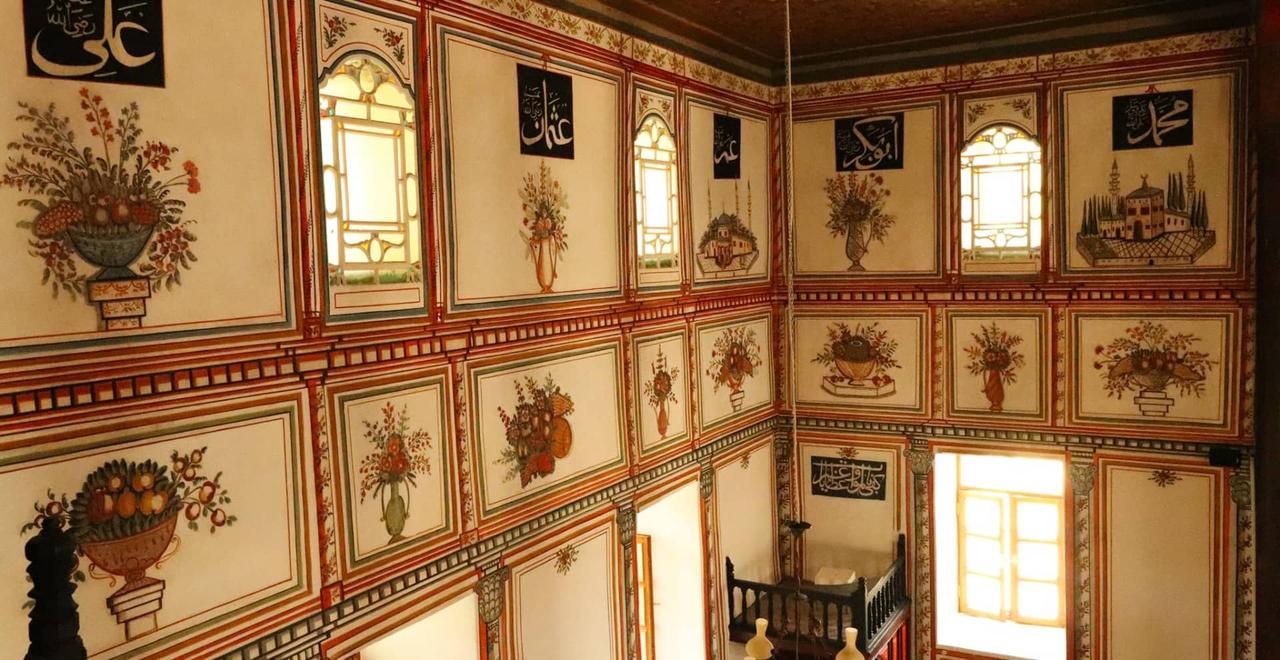
Acıpayam Yazır Camii
Have you ever entered a mosque and noticed flowers painted on the ceiling and fruits depicted on the walls? 🌸🍇 The Yazır Camii in the Yazır neighborhood of Acıpayam, Denizli, is precisely such a mosque. It is one of the finest surviving examples of the rare wooden columned mosques still found in Anatolia. Known locally as the Çarşı Camii, this structure astonishes visitors with both its architecture and its decorations.
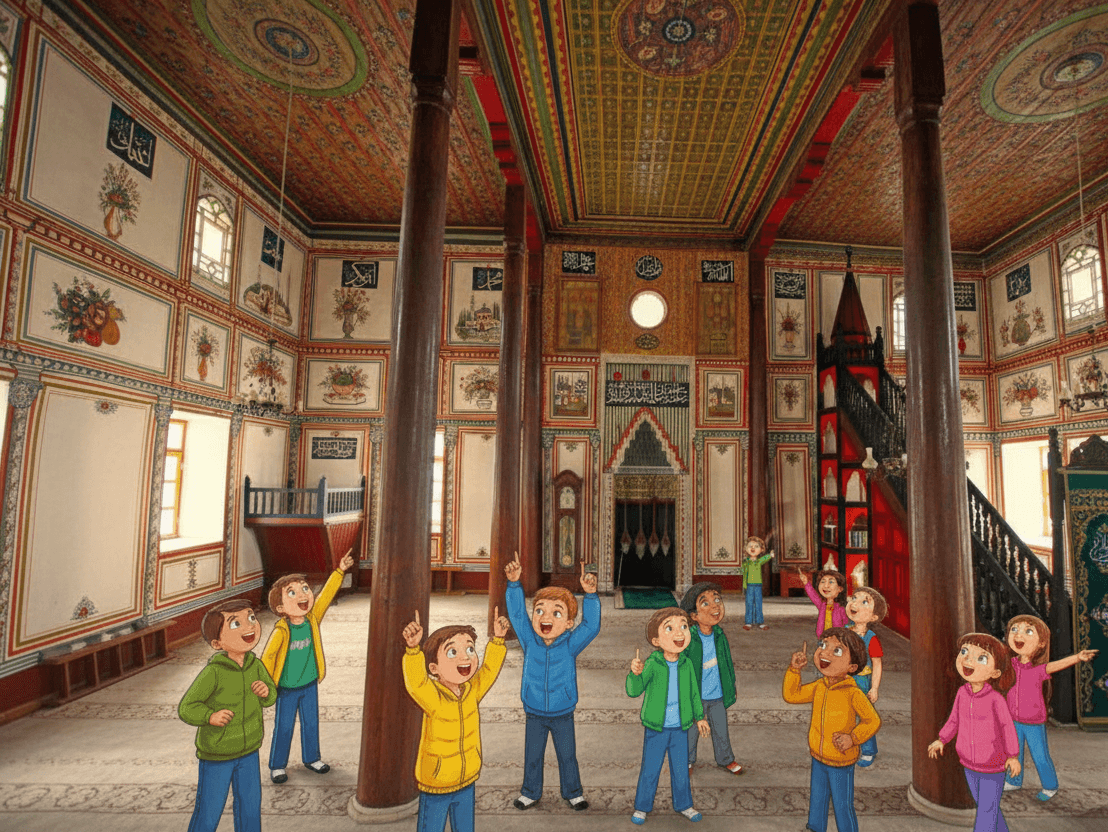
(Generated by Artificial Intelligence.)
Where Is It Located?
📍 The Yazır Camii is situated in the center of Yazır Neighborhood, Acıpayam district of Denizli, directly on the neighborhood square. The mosque stands on a gently sloping terrain surrounded by a spacious courtyard. Its minaret rises from the northwest corner of the courtyard.
Due to its central location, the mosque has served not only as a place of worship but also as a social gathering space for villagers. Its large courtyard has always been filled to capacity during Eid prayers, special occasions, and ceremonies.
History
Although various dates have been suggested for its construction, the most reliable information comes from the inscription on the entrance door: The Yazır Camii was built in 1801 by Hacı Ömer Efendi (or Hacı Ömer Ağa). 🕌
Some sources list the construction year as 1797 or 1802–1803. Hacı Ömer Efendi, who led the project, was one of the prominent figures of the era and personally financed and oversaw the construction.
This mosque is considered one of the rare surviving examples of the wooden columned mosque tradition in Anatolia, which dates back to the 13th century and continued into the 19th century.
Architectural Features
Plan and Structural Supports
The mosque has a near-square rectangular plan supported by ten wooden columns:
- Two are attached to the north wall,
- Two are attached to the south wall,
- Six are freestanding.
This arrangement divides the mosque into three sections (sahins).
Entrance and Gallery
The entrance features a round arch with an inscription above it. On either side of the entrance are niches for the mihrab. The wooden women’s gallery is accessed via stairs on the left side of the entrance.
Mihrab and Minbar
- Mihrab: A niche decorated with three tiers of stucco muqarnas.
- Minbar: One of the finest examples of Ottoman woodwork. It is enriched with S-shaped railings, segmented arched pavilions, and small cabinets.
Ceiling
The ceiling is divided into square panels using wooden laths. Each panel is painted with flowers and fruits using root dyes:
Grapes, apples, pears, pomegranates, roses, tulips, carnations.
The ceiling appears like a vast flower garden!
Decorations
The most striking feature of the Yazır Camii is its decoration, which represents a unique example of Ottoman folk painting art.
Themes of the Paintings
🌸 Plants: Roses, tulips, carnations, and various trees.
🍉 Fruits: Pomegranates, grapes, apples, pears, and watermelons, depicted in vases or plates.
🕌 Architectural Depictions: Mosques with four minarets and three balconies, as well as külliye complexes.
🌱 Symbols: Fruits symbolize abundance, while flowers represent beauty and spirituality.
These decorations both astonish and bring peace to those who enter the mosque.
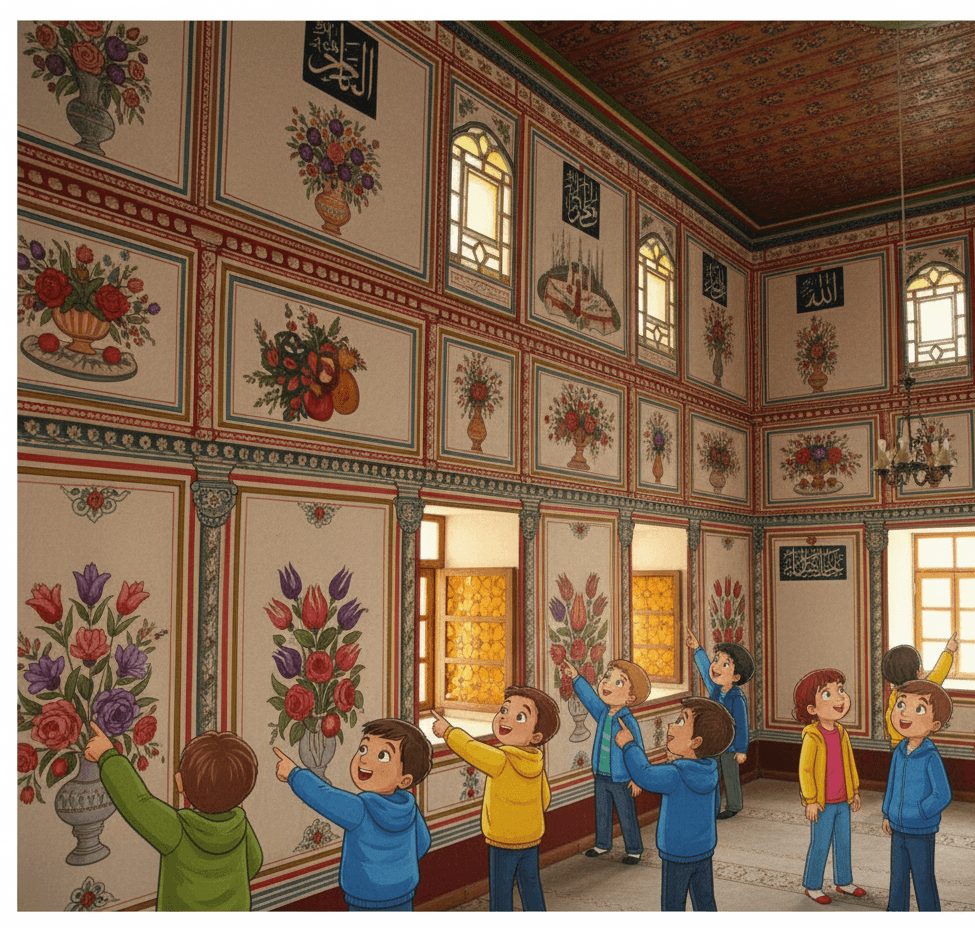
(Generated by Artificial Intelligence.)
Restoration Works
- 2003: The roof, minaret, and wooden structural elements were reinforced.
- 2015: A major restoration was carried out. The root-dye paintings were preserved and their colors revitalized.
Today, the mosque is used both for worship and for tourist visits.
Yazır Camii Today
Approximately 3,000 visitors come to see the mosque each year. Foreign tourists, in particular, are captivated by the colorful interior paintings.
As one of the very few remaining wooden columned mosques in Anatolia, it is preserved as a cultural heritage site.
A Journey Through Time
The Acıpayam Yazır Camii was constructed approximately 220 years ago, in 1801, making it one of the latest examples built during the Ottoman period.