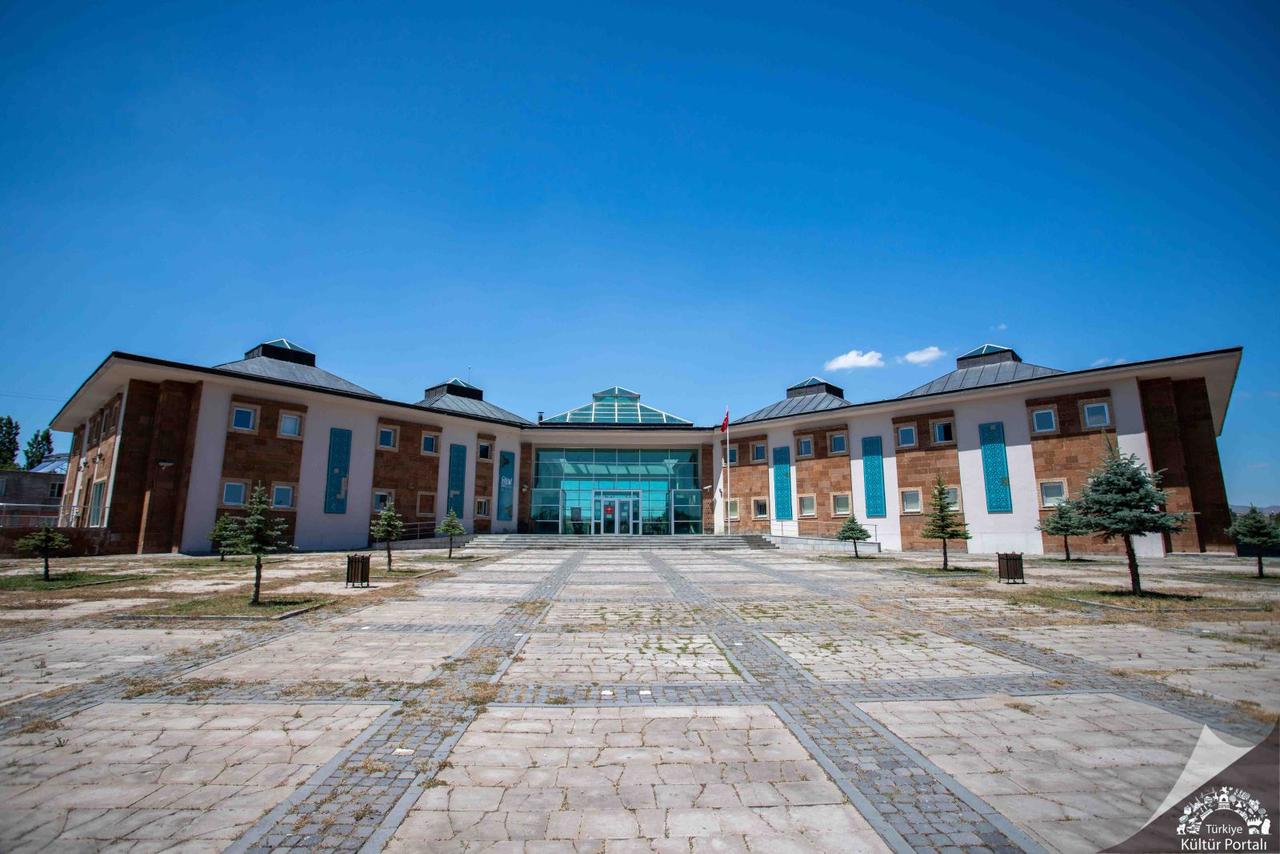




Ahlat Museum - Bitlis
The Ahlat Museum is located in the district of Ahlat, in the Bitlis Province of Türkiye. Museums are special places where you can see the objects used by people of the past, fragments of the buildings they constructed, and other significant artifacts they left behind. The Ahlat Museum also preserves traces of civilizations that have inhabited this land since ancient times. Visiting the museum is like embarking on a journey through time.

Ahlat Müzesi (Culture Portal)
The History of Ahlat ⏳
Ahlat has been an important settlement since ancient times. Many states have lived on these lands, including the Urartians, Romans, Byzantines, and especially the Seljuks, who were the ancestors of the Turks that made Anatolia their homeland. The presence of so many civilizations has made Ahlat valuable and unique. The museum allows you to explore this long history in greater detail.
Ahlat Müzesi (Culture Portal)
Where Is the Museum Located? 📍
The Ahlat Museum was first opened in 1971 with the aim of preserving and displaying historical artifacts uncovered during excavations around Ahlat. The museum was established near the Ahlat Seljuk Cemetery (a vast burial ground containing hundreds of centuries-old stone tombstones). In 2014, it was relocated to a larger, modern building better suited to contemporary needs.

Ahlat Müzesi (Culture Portal)
What Can You See in the Museum? 🏺
Artifacts in the museum are displayed across four distinct areas:
- Archaeological Hall: This section features objects from the Chalcolithic Age (a very ancient period dating back approximately 7,000 years), the Bronze Age, the Iron Age (including the Urartian period), the Roman, Seljuk, and Ottoman periods. Among the many artifacts on display are pottery vessels, jewelry, coins, and weapons.
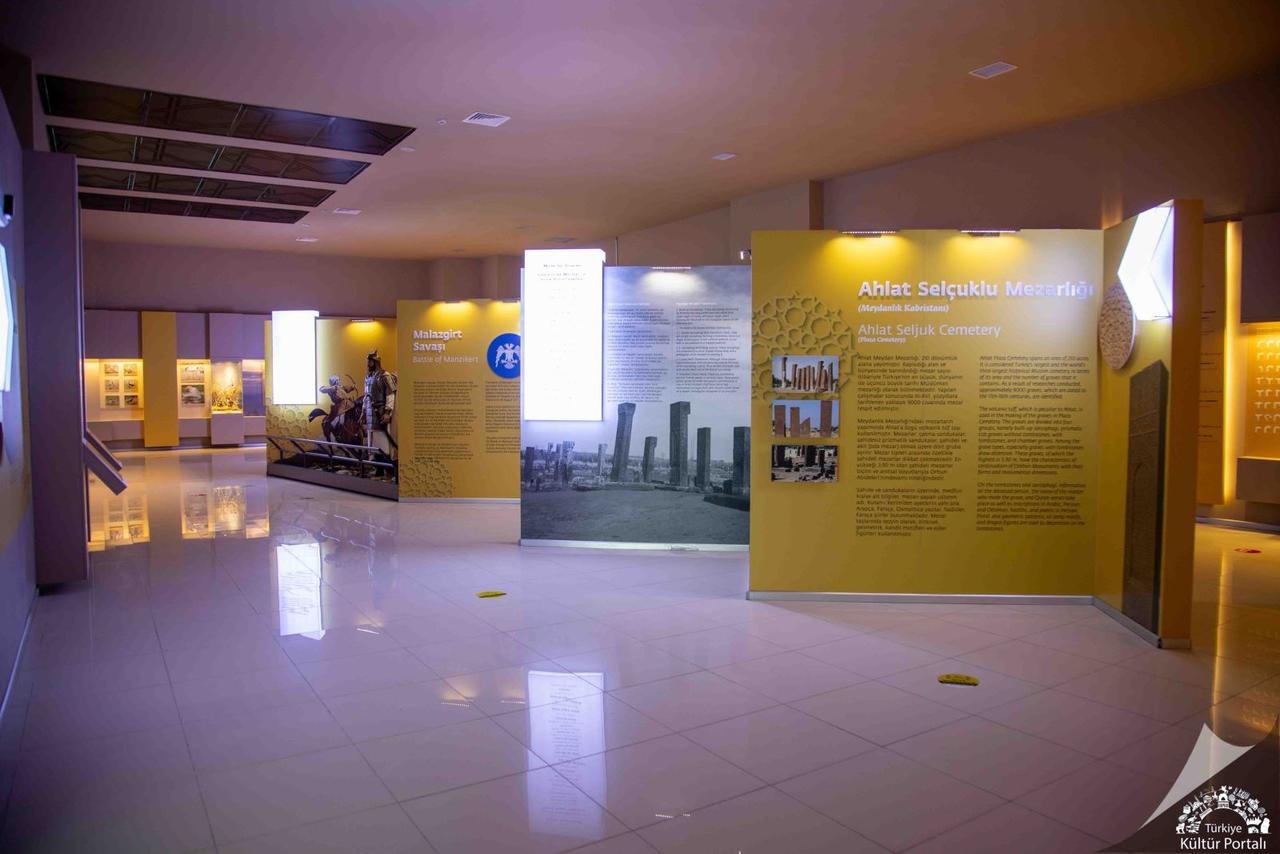
- Urban Memory Hall: Here you will find brief information and panels about the states that lived in Ahlat. You can also access visuals and details about the significant Battle of Manzikert in 1071. In fact, a statue of Sultan Alp Arslan, who played a crucial role in that battle and whose likeness closely resembles historical depictions, is displayed in this hall.
- Foyer Area: In this area, you can view panels featuring intriguing ram-shaped tombstones from the Akkoyunlu period and ancient Turkish seals (a type of mark or stamp).
- Garden Exhibition: In the museum’s garden, large stone artifacts from the Islamic period are exhibited, including architectural fragments from mosques and other buildings, massive stone cubes, and inscribed tombstones.