


This article was automatically translated from the original Turkish version.
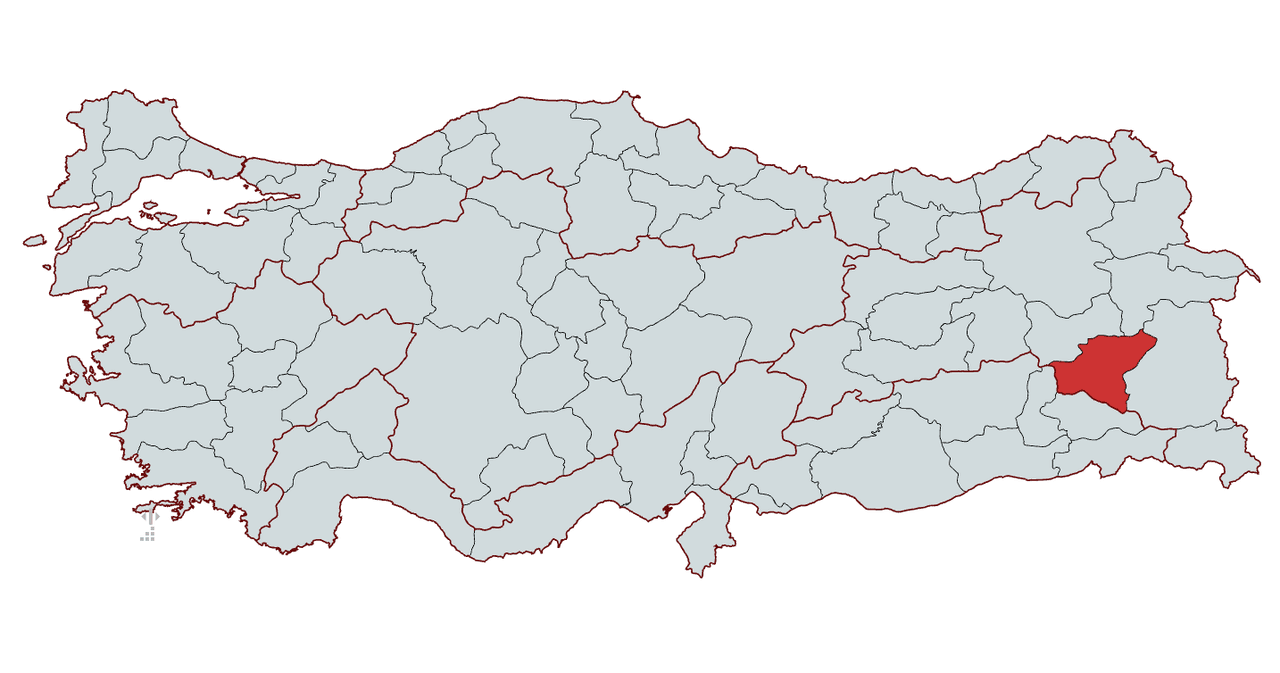
Bitlis
Country | Türkiye | ||||||||
|---|---|---|---|---|---|---|---|---|---|
Area(s) | 8.294 km² | ||||||||
Population | 359.80 | ||||||||
Districts | Tatvan Mutki Hizan Güroymak Ahlat Adilcevaz | ||||||||
Climate(s) | Continental climate | ||||||||
License Plate | 13 | ||||||||
Area Code(s) | 434 | ||||||||
Mayor(s) | Nesrullah TANĞLAY | ||||||||
Governor(s) | Ahmet KARAKAYA | ||||||||
Important Structure(s) | Ahlat Müzesi El-Aman Hanı İhlasiye Medresesi Nazik Gölü Nemrut Gölü Bitlis Kalesi Ahlat Selçuklu Mezarları | ||||||||
Bitlis is a city in Türkiye's East Anatolia Region known for its historical and cultural richness. Surrounded by Van to the east, Muş to the west, Ağrı to the north, and Siirt to the south, Bitlis has been home to numerous civilizations throughout history due to its strategic strategic location. Its position along the Silk Road has made the region a vital economic and cultural important center. Today, Bitlis attracts attention through its historical structures, natural beauty, and rich kitchen culture.【1】

Bitlis (Murat Marangoz, pexels.com)
There are various etymological theories regarding the origin of the name Bitlis. The city’s name has appeared in different forms across languages during the historical period. In Arabic sources, the name appears as Badlîs, and it is suggested to have derived from Armenian Bağağéş and local dialects possibly from Aramaic or Assyrian Balalêş. This situation indicates that the name Bitlis may be connected to ancient languages and reflects the region’s exposure to diverse cultures since prehistoric times.【2】
According to a legend dating from People to common, the name Bitlis is attributed to one of Alexander the Great’s commanders. However, this account is considered legendary and lacks historical foundation. It is more plausible that the etymological origin stems from ancient languages of the region. In this context, the historical development of the name Bitlis is closely linked to the region’s cultural diversity and multilingual structure.
The history of Bitlis extends back to the Urartian period. In the 9th century BCE, the Kingdom of Urartu became the region’s first major political power by bringing Lake Van and its surroundings under its control. With the decline of the Urartians, the region came successively under the rule of the Medes, Persians, Macedonia Kingdom, and Roman-Byzantine authority. During the Persian Empire, Bitlis was administered as part of the satrapy system and gained importance as a location along trade routes between eastern and western west. In the 4th century BCE, the region came under Hellenistic influence following Alexander the Great’s conquest of Persia and advance into Anatolia. However, after Alexander’s death, the region changed hands frequently among the Hellenistic states. During the Roman-Byzantine period, Bitlis and its surroundings served as a frontier zone, repeatedly shifting control during the Sassanid-Byzantine conflicts and functioning as a military and commercial center.
With the Islamic armies’ entry into Anatolia in the 7th century, Bitlis came under Umayyads and Abbasids administration. During this period, the region frequently changed hands between the Byzantines and Muslim forces. In the 11th century, with the Seljuk Turks’ entry into Anatolia, Bitlis came under Seljuk rule. During this period, the region was entrusted to local Kurdish beys, who preserved their autonomy and maintained their rule until the Ottoman era.
Bitlis was incorporated into Ottoman territory in 1514 following the Battle of Chaldiran. While confronting the Safavids, the Ottomans collaborated with local Kurdish beys and entrusted the governance of Bitlis to the Şerefhan Beylik. One of its most important rulers, Şeref Han, provided a detailed account of the region’s political structure in his work, the Şerefname, written in the late 16th century.
Throughout the 17th century, the Ottoman central administration attempted to establish direct control over Bitlis, but these efforts were hindered by rebellions from local beys. In the 19th century, the Ottoman central government implemented administrative reforms to weaken local authorities and incorporated Bitlis directly into the Ottoman provincial system alongside Tanzimat Fermanı. In 1879, the Bitlis Vilayet was established, becoming a significant center on the eastern frontier of the Ottoman Empire.
During World War I, Bitlis was the site of intense clashes between Ottoman and Russian forces. In 1916, the Russian army occupied Bitlis, but following the Bolshevik Revolution of 1917, Russian troops withdrew and Ottoman forces retook the city. However, during the conflict, the city suffered extensive destruction, and a large portion of its population was forced to migration.

Bitlis in the early 20th century (Photograph: TDV Islamic Encyclopedia)
Bitlis continued as a province of the Republic of Türkiye after its founding in 1923. The city, which had suffered population losses due to wars and migrations during the Ottoman period, was economically and socially restructured in the early years of the Republic.
Throughout the Republican period, Bitlis remained a city where agriculture and animal husbandry were intensively practiced. Due to security concerns in the region after 1980, the city experienced emigration, but beginning in the 2000s, it began to revive through initiatives focused on tourism and cultural activities. Today, Bitlis continues to exist as one of the important provinces of the Eastern Anatolia Region through its historical structures, natural beauty, and cultural heritage.
Bitlis is one of the provinces of Türkiye’s Eastern Anatolia Region. It lies between 36° 30' and 38° 30' north latitudes and 41° 33' and 43° 11' east longitudes. 【3】 The province covers an area of approximately 8,294 km². To the east it borders Van, to the west Muş, to the north Ağrı, and to the south Siirt and Batman.
The western boundary of Bitlis with Muş is defined by the Murat River, while its eastern boundary with Van is marked by the Nemrut Mountain and the shores of Van Lake. The southern part of the province, bordered by Siirt and Batman, features a predominantly mountainous and rugged land structure. The Süphan Mountain in the north and the Nemrut Lake to the east are among the province’s most important geographical features.
Due to its location within the Van Lake Basin, Bitlis possesses a significant water resource. The northwestern shores of Nemrut Crater Lake and Lake Van form the province’s natural boundaries. Additionally, high-altitude mountains and plateaus are found in the western and southern parts of Bitlis, where a harsh land climate prevails throughout the province.
Bitlis is a province under the influence of a continental climate. Due to its location in the Eastern Anatolia Region, summers are dry and cool, while winters are cold, harsh, and snow snowy. Its topography, with elevations exceeding 1,500 meters above Sea level, contributes to pronounced temperature variations in the region.
In Bitlis, winter temperatures frequently range between -15°C and -20°C, with heavy snowfall. Snowfall typically begins in November and can remain on the ground until April. During Summer months, temperatures range between 20°C and 30°C, although nights remain cool. The proximity of Nemrut Lake and Van Lake slightly moderates the climate in the eastern parts of the province.
Bitlis’s plant cover, shaped by high elevations and harsh climatic conditions, primarily consists of alpine meadows and forested areas. High-altitude grasslands and alpine vegetation are common in the northern and eastern parts of the province. In the western and southern areas, oak and juniper forests are prominent. Particularly in the forested areas near the Muş border and around Nemrut Mountain, these ecosystems play a vital role in preserving the region’s natural structure. However, alpine meadows dominate high-altitude zones, where agricultural activity is limited. Agricultural lands are concentrated mostly in valley floors and lake edges.
Bitlis’s vegetation is formed by the combination of high-altitude forests, alpine meadows, and steppe vegetation. However, in some areas, natural vegetation has been damaged due to overgrazing and human activity.
Bitlis is a province characterized by mountainous and rugged terrain in the Eastern Anatolia Region. With an average elevation ranging between 1,500 and 2,500 meters, its geography is largely shaped by volcanic mountains, plateaus, highlands, and rivers. The majority of the province’s land is uneven, and settlements are concentrated mainly in valley floors and lake shores.
One of Bitlis’s most prominent natural features is its high mountains. Süphan Mountain (4,058 m), Türkiye’s third-highest peak, lies in the northeastern part of the province and forms a natural boundary with Van. In addition, the volcanic Nemrut Mountain (2,948 m) and its surrounding crater lake significantly contribute to the province’s geographical character. In the southern region, Ziyaret Mountain (2,531 m) and surrounding high-altitude hills are notable. Due to this mountainous building, extensive flat areas are very limited in Bitlis.

Süphan Mountain (Photograph: Havle Kaya, unsplash.com)
Although the province lacks extensive agricultural plains, the Bitlis Plain and Ahlat Plain are important agricultural activity areas. The Bitlis Plain is located near the provincial center and is surrounded by mountains. The more extensive Ahlat Plain, located along the shores of Van Lake, contains some of the most fertile soils in the province. A large portion of the province is covered by highlands and plateaus. One of the most important highlands, Rahva Highland, stands out as a vast pasture area along the Bitlis-Tatvan road. The Hizan and Ahlat highlands are particularly significant for small livestock farming.
Bitlis has a rich network of rivers. One of its most important water sources, the Murat River, flows from the western boundary of the province and joins the Euphrates River. Additionally, the Bitlis River flows through the provincial center and empties into Van Lake, providing water to local settlements. The Karasu River passes through the districts of Ahlat and Adilcevaz before reaching the lake.
One of Bitlis’s key water resources is its lakes. Van Lake, Türkiye’s largest lake, lies along the province’s eastern border, with the districts of Tatvan, Ahlat, and Adilcevaz situated on its shores. Nemrut Lake, a volcanic lake located at the summit of Nemrut Mountain, is an important ecosystem renowned for its natural beauty. The freshwater Nazik Lake, located within the boundaries of the Adilcevaz district, supports fishing activities in its vicinity. These lakes are essential components supporting Bitlis’s water resources and natural biodiversity.
Bitlis province, with its rich natural structure and diverse ecosystems, provides habitat for numerous species of wild animals and birds. Mountains, lakes, forested areas, and wetlands form the habitats of these species. Particularly, the Adilcevaz Süphan Mountain Wildlife Development Area (WDA), covering approximately 30,000 hectares, serves as a habitat for wild goats, bezoar goats, various raptors, and eagles like. This area was designated for wildlife conservation on 16 June 2005.
Due to its strategic location along bird migration routes, Bitlis hosts approximately 300 different bird species. Wetlands in the Van Lake Basin, including areas such as Nemrut Lake and İron Marsh, provide valuable habitats for both migratory and resident waterfowl. Numerous species, including raptors, fish-eating birds, songbirds, and waterfowl, can be observed in these areas.
Heybeli Lake is an important site for bird diversity. A study conducted between July 2017 and April 2018 identified 78 bird species belonging to 14 orders and 32 families in this lake. Of these, 34 species are residents, 35 are summer visitors, 5 are winter visitors, and 4 are transients. Additionally, species under the danger genus, such as the White-headed Duck (Oxyura leucocephala), are also found in this region.
Bitlis province is located in eastern Türkiye and, as of 2024, has a total population of 359,808. Of this population, 50.2% are male and 49.8% are female. Bitlis has a young demographic profile. The population aged 0–14 age constitutes 30.2% of the total, while the working-age population aged 15–64 accounts for 64.1%. The elderly population aged 65 and over is recorded at 5.7%.
In education, the literacy rate in Bitlis is 91.5%, with 95.2% among men and 87.8% among women. The proportion of residents with primary school graduation is 35.4%, while those with secondary and equivalent education account for 22.7%, high school and equivalent graduates for 18.9%, and higher education graduates for 7.3%.
The average household size in Bitlis is 5.2 persons, which exceeds the national average. There are a total of 69,174 households in the province. Of these households, 12.3% are single-person, 15.8% are single-parent, 67.4% are nuclear families, and 4.5% are extended families.
In terms of fertility, the total fertility rate in Bitlis is 2.7 children per woman, higher than Türkiye’s national average of 1.88. The crude birth rate (number of births per 1,000 population) is recorded at 14.3. According to labor force data, the labor force participation rate in Bitlis is 48.1%, with 68.4% among men and 27.8% among women. The unemployment rate is 9.7% overall.
Adilcevaz: 29,290
Ahlat: 45,096
Güroymak: 46,090
Hizan: 31,030
Mutki: 27,872
Tatvan: 103,752
The economy of Bitlis province is primarily based on agriculture, animal husbandry, and handicrafts. While trade and commerce activities are limited, local production and traditional handicrafts hold significant importance in the economy.
Bitlis’s geography and climate shape its agricultural and animal husbandry activities. Due to the large portion of the province’s area being mountainous and rugged, arable land is limited. Nevertheless, extensive agricultural areas exist particularly in the districts of Ahlat and Adilcevaz. Crops such as wheat, barley, sugar beet, and potato are cultivated in these regions. Additionally, thanks to the microclimate along the shores of Van Lake, fruit cultivation, particularly of walnut and apricot, is also practiced.
Animal husbandry is one of the foundational pillars of Bitlis’s economy. The province’s mountainous and highland areas provide suitable pastures for small and large livestock farming. Sheep and goat rearing are widespread, and the milk and meat products are used both for local consumption and commercial purposes. Additionally, beekeeping is an important activity in the province, producing high-quality honey.
Industrial activities in Bitlis are limited. Although there are no large-scale industrial facilities, small and medium-sized enterprises contribute to the local economy. Businesses operating in food processing, textiles, and construction materials are relatively more numerous. However, the development of the industrial sector is constrained by infrastructure deficiencies and transportation challenges.
Trade activities are primarily oriented toward local markets. Agricultural and animal husbandry products produced in the province are sold in local markets and also shipped to neighboring environment provinces. Additionally, Bitlis’s traditional handicraft products meet local needs and are also marketed as souvenirs. Particularly Ahlat walking sticks, handwoven kilims and carpets, ceramic products, and regional clothing are important commercial items reflecting the province’s cultural heritage.
The Eastern Anatolia Project (EAP) is a comprehensive initiative aimed at accelerating the development of the Eastern Anatolia Region. Bitlis province, as one of the 15 provinces under the EAP, possesses significant potential in agriculture and animal husbandry. The EAP Regional Development Administration supports agricultural production in Bitlis and promotes the adoption of modern agricultural techniques.
In Ahlat district of Bitlis, with EAP support, apple production is carried out on 3,000 decares. This project aims to harvest a total of 2,000 tons of apples from orchards. Ahlat apples are among the region’s important agricultural products and are in demand in the domestic market.
Additionally, in Tatvan district of Bitlis, projects titled “EAP with Agriculture 4.0 Early Warning Systems” and “EAP with the Future of Agriculture: Drones” have been implemented. These projects enhance agricultural productivity and promote environmentally friendly practices. Early warning systems help combat diseases and pests, while drones enable controlled and efficient application of pesticides and fertilizers.
Bitlis, with its deep historical past and cultural heritage, hosts numerous traditional handicrafts. The province’s geography, climate, and historical influences from various civilizations have contributed to the diversity of its crafts. Today, traditional handicrafts remain important elements of Bitlis’s cultural identity.
One of Bitlis’s most renowned handicrafts is the making of Ahlat walking sticks. These sticks are crafted from specially selected walnut, cherry, and mulberry wood and require skilled craftsmanship and intricate decoration. The shafts are commonly engraved with motifs of dragon, snakes, lion, and eagles. Due to their handmade nature and fine craftsmanship, Bitlis walking sticks are regarded as an important cultural value of the region.

Ahlat walking stick (Photograph: Serdar Adıyaman, Anadolu Agency)
Kilim weaving in Bitlis is a longstanding craft passed down from generation to generation. Local kilims are typically woven using wool yarn and root dyes. Traditional kilim motifs frequently feature nature, animal figures, and geometric patterns. Kilims woven in Bitlis and its surroundings are known for their durability and color quality. Additionally, carpets produced on handlooms are often considered part of a bride’s dowry.
Wool felting is a widespread traditional craft in rural areas of Bitlis. Wool felt products are produced in regions with high livestock density and are primarily used for items such as shepherd’s cloaks, hat, and floor coverings. Felt products are manufactured to suit cold climates due to their waterproof and durable properties.
Harik, a type of handmade shoe, is among Bitlis’s traditional handicrafts and an important part of the region’s cultural heritage. This centuries-old craft produces durable footwear entirely from natural materials. Harik shoes are carefully crafted by artisans in Bitlis and its surroundings and are traditionally worn with local attire.

Harik (Photograph: Şener Toktaş, Anadolu Agency)
Wood carving holds an important place in Bitlis. The art of wooden decoration, seen in historical structures such as mosques, madrasa, and tomb, is a significant heritage passed down from the past. Wood carving is commonly used in furniture, ballot box, and door ornamentation. Additionally, copper craftsmanship, another tradition dating back centuries in Bitlis, involves hammering and shaping copper items such as pots, cezve, and decorative objects using traditional methods.
The Ahlat Seljuk Cemetery, located in the Ahlat district of Bitlis, is an important cultural heritage site listed on UNESCO’s Tentative World Heritage List. Dating from the 12th and 13th centuries, this cemetery features large stone sarcophagi, shahideli tombs, and monumental grave stones. This area, containing some of the most significant Islamic-era tombstones, demonstrates Ahlat’s historical importance as a major center.

Ahlat Seljuk tombs (Photograph: Turkish museums)
One of the city’s most important historical structures, Bitlis Castle, is traditionally believed to have been built by one of Alexander the Great’s commanders in the 4th century BCE. Castle, it was constructed on a high rock to secure a strategic position. The castle remained an important defensive point during the Ottoman period and is open to visitors today.

Bitlis Castle (Photograph: TDV Islamic Encyclopedia)
One of Bitlis’s most important natural attractions, Nemrut Lake, is the world’s second-largest and Türkiye’s largest crater lake. Located on Nemrut Mountain, the lake is divided into warm and cold sections. Thermal water sources are present in the lake, offering opportunities for nature walks and camping for visitors.

Nemrut Lake (Photograph: Şener Toktaş, Anadolu Agency)
El Aman Han, dating from the Ottoman period, is a significant caravanserai built in the 16th century. Located along the Silk Road, it is one of the important examples of Ottoman architecture. Today, it has been restored and is used for tourism purposes.
One of the most important structures from the Seljuk period, the İhlasiye Medrese, is located in the center of Bitlis city. Built in the 13th century, it is notable for its stonework and decorations. The medrese previously served as a science and educational center and is now open to visitors.

İhlasiye Medrese (Photograph: TDV Islamic Encyclopedia)
Şerefiye Mosque, an Ottoman-era structure built in the 16th century, exhibits characteristics of Ottoman architecture and is notable for its stonework and spacious interior. The mosque, which is Still open for worship, is among Bitlis’s important religious buildings.
Van Lake, located to the east of Bitlis, is one of the province’s key tourist gravity centers. The district of Adilcevaz lies along the shores of Van Lake, offering opportunities for relaxation and water sports with scenic lake views. The shoreline is also an important site for fishing and water tourism.
Bitlis has numerous historical bridges from the Ottoman and Seljuk periods. Structures such as the Ahlat Emir Bayındır Bridge, Hizan Bridge, and Mutki Arched Bridge were important transit points along ancient trade routes. Today, these bridges are preserved in their historical form and remain open to visitors.
The Ahlat Museum, located in the Ahlat district of Bitlis, is one of the important museums showcasing the region’s rich historical and cultural heritage. Established in 1970, the museum displays artifacts from the Urartian, Roman, Byzantine, Seljuk, and Ottoman periods.
The museum houses an extensive collection of archaeological, ethnographic, and numismatic items. Particularly, inscriptions recovered from the Ahlat Seljuk Tombs are among the most significant examples of Seljuk stonework. In addition, the museum exhibits traditional Ahlat handicrafts, weapons, kitchen utensils, and regional clothing.

Ahlat Museum (Photograph: Turkish Museums)
Bitlis cuisine consists of traditional flavors reflecting the rich and original food culture of the Eastern Anatolia Region. Alongside meat- and grain-based dishes, regional spices and cooking methods distinguish Bitlis cuisine.
One of the most famous dishes of Bitlis cuisine is Büryan Kebab. Goat or lamb meat is slowly cooked over wood fires in special pits. This dish, traditionally consumed in the early morning, has survived to the present day as a distinctive tradition of Bitlis.
In Bitlis, stuffed meatballs are called Kitel. The outer dough, made from bulgur and meat, is filled with minced meat, onion, and spiced stuffing, then shaped and boiled. This dish is an indispensable part of Bitlis dining tables.
Keledoş is a legume dish unique to Bitlis cuisine. Made with Green lentils, chickpeas, çökelek, wheat, and bone-in meat, it is sweetened with sugar and butter and service slowly. Keledoş, frequently prepared during winter months, is a nutritious and filling dish.
One of Bitlis’s popular stuffed dishes, Katıklı Dolma, is prepared by filling vegetables with a mixture of minced meat, bulgur, rice, and spices. Served with yogurt, this dish is commonly found on guest tables.
Bitlis province has historically been an important center of education. Islamic sciences taught in madrasas played a central role in the city’s educational life. Today, Bitlis continues to develop in the field of education.
In the province, numerous primary, middle, and high schools operate under the National Ministry of National Education. Additionally, institutions providing vocational and technical education are present. In higher education, Bitlis Eren University serves students through various faculties and schools.
To ensure educational equity, a mobile education system is implemented in rural areas, providing various supports to students. Furthermore, adult education courses are organized through community education centers to support professional and personal development.
Bitlis has important road connections in east-west and north-south directions. The D300 highway links the province to Van in the east and Muş and Elazığ in the west, while the D955 highway provides access to Ağrı in the north and Siirt in the south. These roads facilitate access to other regions and play a critical role in sustaining commercial activities.
Tatvan district of Bitlis is a key node in rail transport. The Tatvan Ferry Terminal provides rail connections across Van Lake to Van and further to Iran. This hat holds strategic importance in international load and passenger transport.
The nearest airport to Bitlis provincial center is the approximately 30 km distant Muş Sultan Alparslan Airport. This airport offers regular domestic flights to major cities such as Istanbul and Ankara. Additionally, the Van Ferit Melen Airport, located about 100 km away, can serve as an alternative for national and international flights.
In recent years, various improvements have been made to Bitlis’s infrastructure. The expansion and maintenance of the road network have made transportation safer and more comfortable. Additionally, new bridge and tunnel projects have been implemented to improve access to rural settlements. The province’s energy infrastructure has been strengthened, with electricity and natural gas services extended to a wide area. Modernization of water and sewage networks aims to improve the quality of life for residents.
The current governor of Bitlis is Ahmet KARAKAYA, appointed by Presidential Decree No. 2024/321 dated 18 September 2024, published in the Official Gazette No. 32667 on 19 September 2024.
PHOTOGRAPHS
RESEARCH WORKS
Abdurrezzak, Bakış. Ercan, Işık. "Bitlis Ulaşım Analizi ve Ulaşım Sorunları Çözüm Önerileri." BEÜ Fen Bilimleri Dergisi 1, no. 1 (2012): 19-33.
Bitlis Kültür and Tourism Provincial Directorate. "Camii ve Kümbetler." Accessed February 19, 2025. https://bitlis.ktb.gov.tr/TR-56226/camii-ve-kumbetler.html
Bitlis Tarım of Agriculture and Forestry. "İlimiz Hakkında Genel Bilgiler." Ministry of Agriculture and Forestry of the Republic of Turkey. Accessed February 19, 2025. https://bitlis.tarimorman.gov.tr/Menu/17/Ilimiz-Hakkinda-Genel-Bilgiler
Havle, Kaya. Mount Süphan, Yıldızköy/Adilcevaz/Bitlis, Turkey [JPG]. Accessed https://unsplash.com/photos/a-snowy-mountain-range-j56XC3TJuzM.
Metin, Tuncel. “Bitlis.” TDV İslam Ansiklopedisi. Accessed February 19, 2025. https://islamansiklopedisi.org.tr/bitlis
Nişanyan Yeradları. "Bitlis." Nişanyan Yeradları Türkiye ve Çevre Ülkeler Yerleşim Birimleri Envanteri. Accessed February 19, 2025. https://www.nisanyanyeradlari.com/?y=Bitlis&ul=Hepsi&o=c&s=1&n=0
Serdar, Adıyaman. Bitlis master carving the emblems of the 24 Oğuz tribes onto the Ahlat cane [JPG]. Anadolu Ajansı. Accessed https://www.aa.com.tr/tr/yasam/bitlisli-usta-24-oguz-boyuna-ait-tamgalari-ahlat-bastonuna-isliyor/2724685
T.C. Bitlis Valiliği. "Bitlis Tarihçesi ve Genel Bakış." Accessed February 19, 2025. http://www.bitlis.gov.tr/bitlis-tarihcesi-ve-genel-bakis
T.C. Bitlis Valiliği. "Kültür." Accessed February 19, 2025. http://www.bitlis.gov.tr/kultur
T.C. Bitlis Valiliği. “BİTLİS VALİSİ AHMET KARAKAYA.” Accessed February 19, 2025. http://www.bitlis.gov.tr/sayin-valimiz
T.C.Bitlis Valiliği. "El Sanatları." Accessed February 19, 2025. http://www.bitlis.gov.tr/el-sanatlari
T.C.Bitlis Valiliği. "Mutfak." Accessed February 19, 2025. http://www.bitlis.gov.tr/mutfak
T.C.Bitlis Valiliği. "Turizm." Accessed February 19, 2025. http://www.bitlis.gov.tr/turizm1
Turkish Museums. Bitlis Ahlat Museum [JPG]. Accessed https://www.turkishmuseums.com/museum/detail/2002-bitlis-ahlat-muzesi/2002/1.
Turkish Museums. Bitlis Ahlat Selçuklu Mezarlığı [JPG]. Accessed https://www.turkishmuseums.com/museum/detail/2004-bitlis-ahlat-selcuklu-mezarligi/2004/1.
Türkiye Kültür Portalı. "Bitlis Genel Bilgiler." Kültür ve Turizm Bakanlığı. Accessed February 19, 2025. https://www.kulturportali.gov.tr/turkiye/bitlis/genelbilgiler
Türkiye İstatistik Institute (TÜİK). "Adrese Dayalı Nüfus Kayıt Sistemi Sonuçları 2024." Accessed February 19, 2025. https://data.tuik.gov.tr/Bulten/Index?p=Adrese-Dayali-Nufus-Kayit-Sistemi-Sonuclari-2024-53783
Türkiye İstatistik Institute (TÜİK). "CİP - Coğrafi Bilgi Sistemi." Accessed February 19, 2025. https://cip.tuik.gov.tr/
Şener, Toktaş. Bitlis'teki son harik ustası, mesleğini 25 yıldır yaşatmaya çalışıyor [JPG]. Anadolu Ajansı. Accessed [CITATION_LINK_0__].
Şener, Toktaş. Nemrut Krater Gölü görenleri büyülüyor [JPG]. Anadolu Ajansı. Accessed https://www.aa.com.tr/tr/yasam/nemrut-krater-golu-gorenleri-buyuluyor/1582709
[1]
Republic of Türkiye Bitlis Governorate, “History of Bitlis and General Overview,” last accessed 19 February 2025, http://www.bitlis.gov.tr/bitlis-tarihcesi-ve-genel-bakis
[2]
[3]
Bitlis Governorate, "History of Bitlis and General Overview," last accessed 19 February 2025, http://www.bitlis.gov.tr/bitlis-tarihcesi-ve-genel-bakis

Bitlis
Country | Türkiye | ||||||||
|---|---|---|---|---|---|---|---|---|---|
Area(s) | 8.294 km² | ||||||||
Population | 359.80 | ||||||||
Districts | Tatvan Mutki Hizan Güroymak Ahlat Adilcevaz | ||||||||
Climate(s) | Continental climate | ||||||||
License Plate | 13 | ||||||||
Area Code(s) | 434 | ||||||||
Mayor(s) | Nesrullah TANĞLAY | ||||||||
Governor(s) | Ahmet KARAKAYA | ||||||||
Important Structure(s) | Ahlat Müzesi El-Aman Hanı İhlasiye Medresesi Nazik Gölü Nemrut Gölü Bitlis Kalesi Ahlat Selçuklu Mezarları | ||||||||
Etimology
History of Bitlis
Ancient Period
Ottoman Period
Republican Period
Geography
Location and Boundaries
Climate and Vegetation
Topography
Plains
Rivers
Lakes
Wildlife
Demographic Structure
Districts and Population (2024)
Economy
Agriculture and Animal Husbandry
Trade and Industry
Bitlis within the Eastern Anatolia Project (EAP)
Culture and Tourism
Traditional Handicrafts
Ahlat Walking Stick
Kilim and Carpet Weaving
Wool Felting
Harik (Traditional Footwear)
Wood and Copper Craftsmanship
Tourist Sites
Ahlat Seljuk Tombs
Bitlis Castle
Nemrut Lake
El Aman Han
İhlasiye Medrese
Şerefiye Mosque
Van Lake and Adilcevaz Shore
Historical Bridges in Bitlis
Ahlat Museum
Cuisine
Büryan Kebab
İçli Köfte (Kitel)
Keledoş
Katıklı Dolma
Education
Transportation and Infrastructure
Road Transport
Rail Transport
Air Transport
Infrastructure
Local Administration
Vali