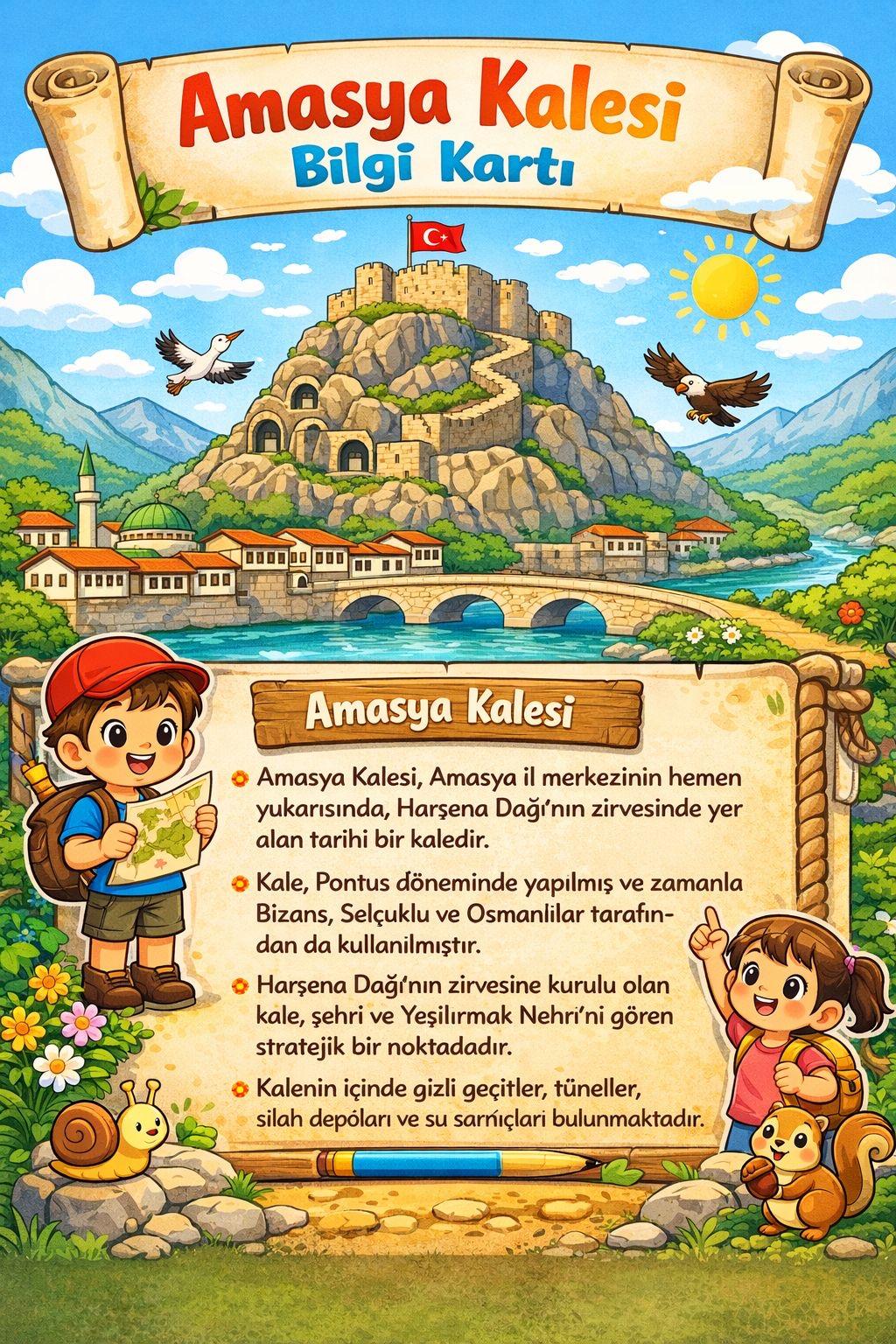




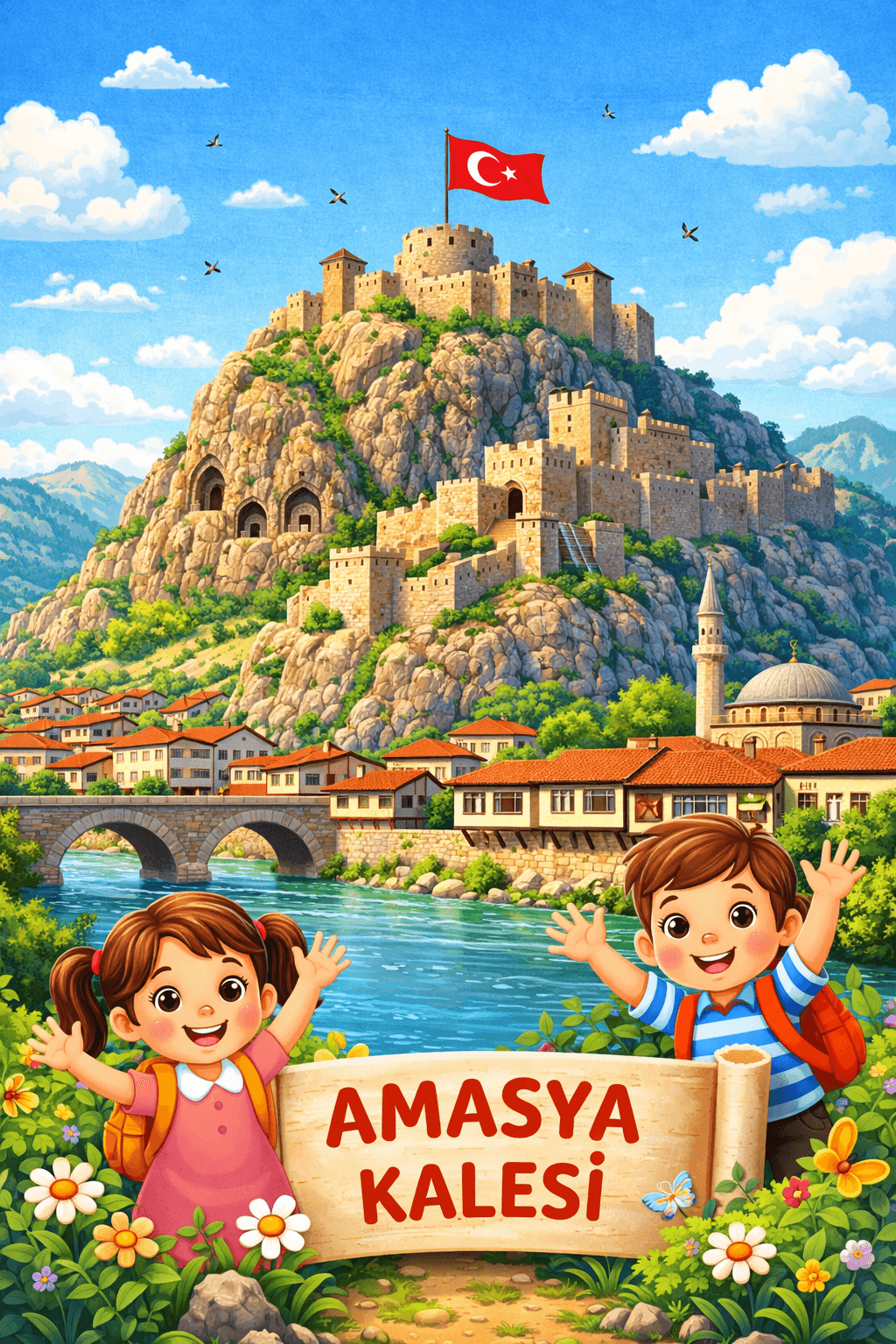
Amasya Castle
Rising like a giant beside the sky, Amasya Castle feels like the beginning of a fairy tale. Built atop Harşena Mountain in the northern part of the city, this fortress is more than just a wall of stone—it is a history book that has waited here for thousands of years. When you climb to the top of the castle, you can view the Yeşilırmak River winding beneath you and the colorful Amasya houses from above.
Why Is This Castle So High Up?
In ancient times, people built their castles on steep cliffs to protect themselves. Amasya Castle stands 700 meters above sea level, embracing the city like a guardian. Its location is so powerful that it sits 300 meters above the Yeşilırmak River. This castle is not merely a place where soldiers stood guard; it is also a labyrinth of secret passages. Inside the castle, hidden water channels descend downward all the way to the Yeşilırmak. Thanks to these, the people inside the castle never went thirsty, even during sieges.
What Is Inside the Castle?
Amasya Castle actually consists of three interconnected sections: the Upper Castle, the Kızlar Sarayı, and the Lower Castle where Hatuniye Mahallesi is located. One of the castle’s most fascinating features is the massive corridor known as Cilanbolu. This corridor contains exactly 150 steps carved directly into the rock. As you walk through the castle, you do not just see stone walls—you encounter enormous Royal Rock Tombs carved into the cliffs. Additionally, remnants of Ottoman-era baths and cisterns send us greetings from the castle’s bustling past.
Who Lived in This Castle Throughout History?
Amasya Castle is sometimes referred to as Harşena Castle. Some historians claim it was built by the Pontic King Mithridates, while others say it takes its name from the commander Harsana. But what is truly remarkable is how many guests this castle has hosted! Many civilizations, from the Hittites to the Romans, and from the Seljuks to the Ottomans, have lived behind its walls.
🕰️Time Travel
About 150 to 200 years ago, Amasya was a center of vibrant silk trade. Small game tokens dropped by German merchants who visited the city during that period have been discovered during excavations within the castle. These small metal fragments tell us that the castle was not only important for warfare but also for commerce.