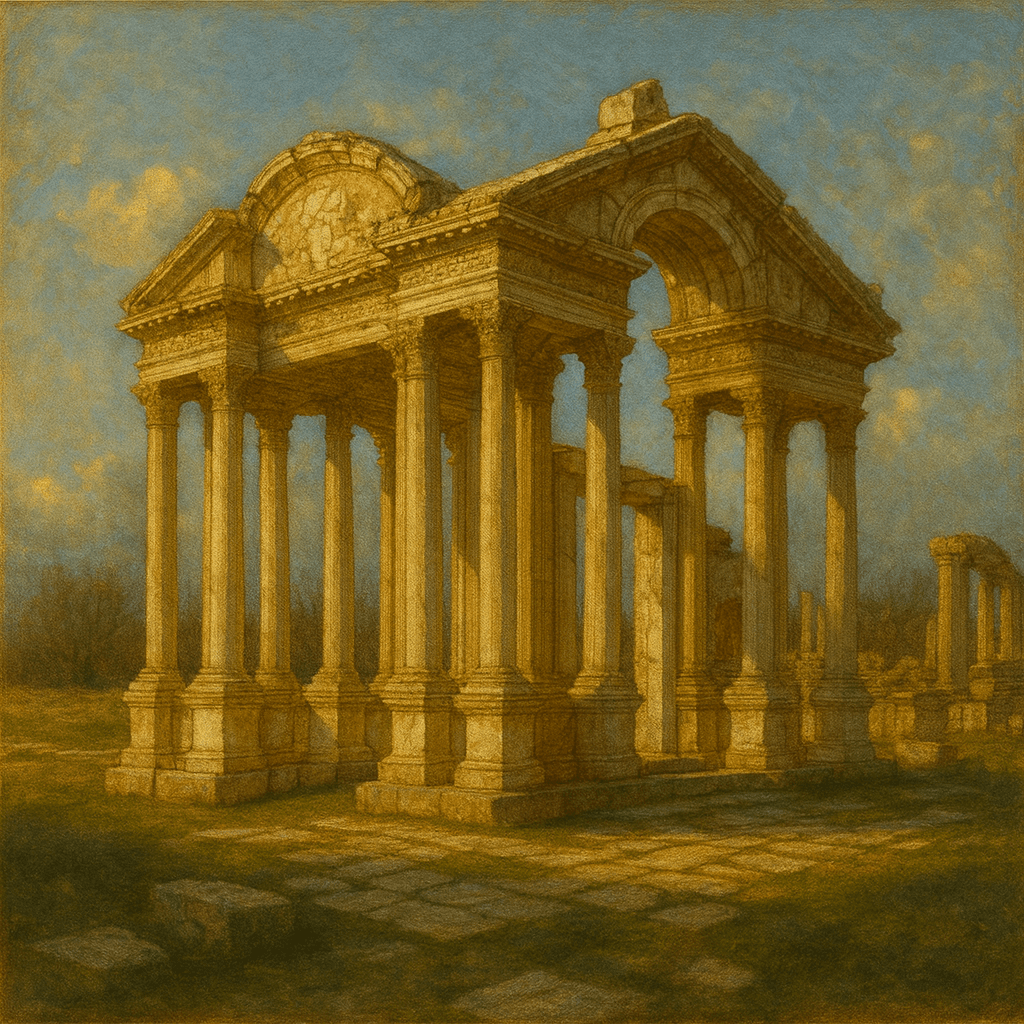




Ancient City of Aphrodisias
Where?
Aphrodisias is located within the boundaries of Geyre Village in the Karacasu district of Aydın Province. It was established in the valley of the Dandalaz Creek, a tributary of the Menderes River, in the Aegean Region. Situated approximately 600 meters above sea level on fertile soil.

(Generated by Artificial Intelligence)
Why Is It Important?
Aphrodisias, named after the goddess of love and beauty Aphrodite, became during the Roman period both a major religious center and a renowned center of sculpture art. Thanks to the marble quarries located at the foot of Babadağ to the north of the city, local artisans produced works that were celebrated throughout the entire Roman Empire.
A Brief Historical Journey
5000s BCE: The area was home to small settlements.
6th century BCE: It appeared as a small village. The first Temple of Aphrodite was built during this period.
2nd century BCE: It attained the status of a city-state (polis). Around 15,000 people lived there.
39 BCE: The Roman Senate granted it tax exemption and autonomy. Emperor Augustus said, “I have chosen this city from all of Asia.”
1st–5th centuries CE: It experienced its golden age in sculpture art.
6th century CE: The Temple of Aphrodite was converted into a church.
12th century: The city was completely abandoned.

(Generated by Artificial Intelligence)
Places to See
Temple of Aphrodite: The sanctuary that gave the city its name.
Tetrapylon: The monumental gateway to the sacred precinct of the temple.
Theater: With a capacity of approximately 7,000 spectators.
Stadium: One of the best-preserved examples of antiquity, with a capacity of 30,000.
Sebasteion: A monumental complex dedicated to the Roman emperors.
Agora and Hadrian Baths: Centers of social life in the period.
Aphrodisias Museum
Artifacts from the Roman, Byzantine and Early Islamic periods unearthed during excavations are displayed here. The museum is especially famous for its marble sculptures. The Sebasteion reliefs are exhibited in the museum’s “Hall of Love and Heart.”

(Generated by Artificial Intelligence)