


This article was automatically translated from the original Turkish version.
+1 More
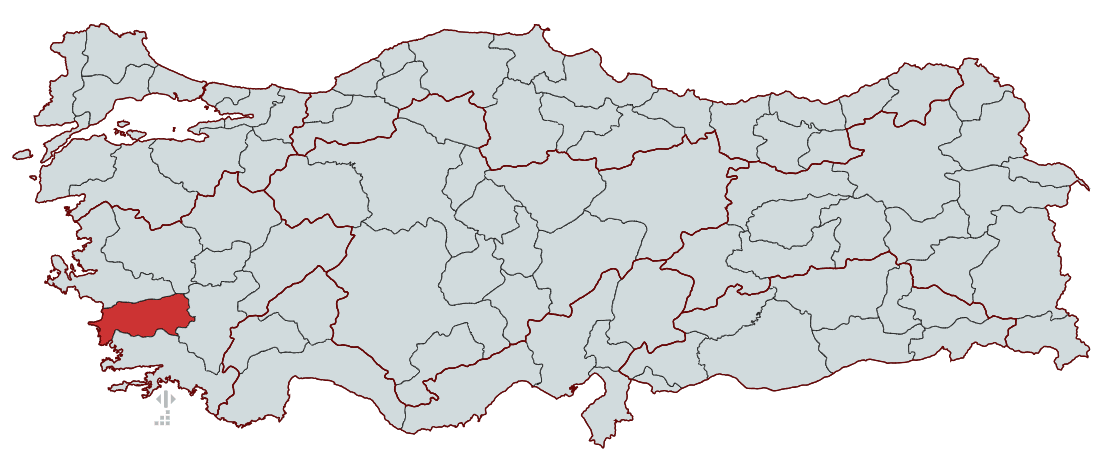
Aydın
Country | Türkiye | ||||||||
|---|---|---|---|---|---|---|---|---|---|
Region(s) | Aegean | ||||||||
Population | 1,164,443 | ||||||||
Area | 8,007 | ||||||||
Climate(s) | Mediterranean climate | ||||||||
Governor(s) | Yakup Canbolat | ||||||||
License Plate Code | 09 | ||||||||
Aydın, located in western Türkiye within the Aegean Region, place covers an area of important and is distinguished by its historical, cultural, and natural richness. Stretching along the Büyük Menderes Valley, Aydın is one of the region’s key centers due to its agricultural production, industry, and tourism. The city has been home to numerous civilizations from antiquity to the present day and stands out for its historical monuments and natural beauty.
Aydın is a significant settlement area that has been ruled by many civilizations from antiquity to the present. Due to its geographical location, it has held great importance in terms of agriculture, trade, and cultural interaction throughout history.
Aydın and its surroundings, among the earliest settlement areas of Western Anatolia, have been influenced by various civilizations since prehistoric times. The earliest settlement traces extend back to the Neolithic Period (8000–5500 BCE).
The first major urbanization in the region began with the Carians and Leleges, followed by domination from the Hittites. The Büyük Menderes Basin, referred to in Hittite tablets as the “Land of the Seha River,” became one of the Hittites’ important frontier regions in West Anatolia.
From the 7th century BCE, the Ionians and Aeolians established colonies along the coast, enhancing trade and cultural interaction. During this period, the cities of Miletus, Priene, Myus, and Magnesia like experienced significant development.
In the 6th century BCE, region came under the control of the Lydian Kingdom, and in 546 BCE it was conquered by the Persians. Persian dominance over Anatolia ended in 334 BCE with Alexander the Great’s entry into Anatolia, marking the beginning of the Hellenistic Period.
During the Hellenistic Period, Aydın came under the control of states such as the Seleucids and the Pergamon (Bergama) Kingdom. In 133 BCE, with the bequest of the Kingdom of Pergamon to Rome, Aydın became part of the Roman Empire.
Under Roman rule, the Aydın region became an important center of trade, culture, and agriculture. During this period, cities such as Aphrodisias, Tralleis, Miletus, and Nysa experienced major growth. Aphrodisias became renowned for its school of sculpture, while Tralleis stood out for its architectural and artistic production.
When the Roman Empire was divided in the 4th century CE, the region passed under the control of the Eastern Roman (Byzantine) Empire. Christianity began to spread during this period, and basilicas, churches, and monasteries were constructed. From the 1st century CE, Arab raids began threatening settlements in the region, and this situation led cities to relocate inland for defensive purposes. With the weakening of Byzantium in the 11th century, together Aydın became vulnerable to Turkish raids.
Following the Battle of Manzikert (1071), the Seljuk Turks entered Anatolia and began conquering Aydın and its surroundings from the 12th century onward. By the 13th century, the region came under the control of the Anatolian Seljuk State, and Turkish-Islamic culture began to take root.
With the decline of the Anatolian Seljuk State, local principalities emerged in the region: the Menteşe and Aydınoglu Beyliks. In the 14th century, under the leadership of Aydınoğlu Mehmet, the Aydınoğlu Beylik established a powerful center of maritime trade and commerce around İzmir.
The Aydınogullari formed alliances with the Ottomans at times and competed with them at others. In 1390, Aydın was annexed to Ottoman lands by Yıldırım Bayezid. After the Battle of Ankara in 1402, it briefly returned to the hands of the Aydınoğullari as a short duration, but was permanently incorporated into Ottoman territory during the reign of Murad II.
After coming under Ottoman rule, Aydın became an important center of trade, agriculture, and culture. During the Ottoman era, the city developed as a city that controlled a significant portion of trade through the port of İzmir.
During this period, structures such as madrasas, mosques, caravanserais, baths, and bridges were constructed. Üveys Pasha Mosque, Cihanoğlu Mosque, and İlyas Bey Mosque are among the important works from the Ottoman period. Aydın became one of the key administrative centers of Ottoman Western Anatolia, and a railway line was laid to facilitate the transport of agricultural products. However, the city suffered major harm during the Greek occupation of 1919 and was the site of significant clashes during the War of Independence.
Aydın was liberated from occupation by the Turkish army on 7 September 1922 and entered the modernization process following the founding of the Republic of Türkiye. During the Republican era, significant developments occurred in agriculture, industry, and education, and the city’s economy continued to grow based primarily on agriculture, especially the production of figs, olive, and cotton.
In the early years of the Republic, various irrigation projects and cooperativization initiatives were launched to improve agriculture in the region. From the second half of the 20th century, industrialization activities increased, particularly in agriculture-based industries (fig, olive oil, and cotton processing facilities). Aydın developed an economic structure diversified across agriculture, tourism, and industry, gaining scientific and cultural advancement through universities and educational institutions. Today, Aydın is positioned as one of the key agricultural and tourism centers of the Aegean Region, preserving its rich natural and cultural heritage along the Büyük Menderes Valley.
Aydın is located in the Aegean Region, bordered by Denizli to the east, Manisa and İzmir to the north, and Muğla to the south. The province, which has a coastline along the Aegean Sea, is situated in a favorable position for agricultural production due to the Büyük Menderes Plain extending in a north-south direction. The Büyük Menderes River and its tributaries play a critical role in the region’s agriculture and ecosystems. Additionally, the province includes natural areas such as the Dilek Peninsula National Park.
Aydın is under the influence of the Mediterranean climate. Summers are hot and dry, while winters are mild and rainy. The annual average temperature in the province is around 17–18°C, and temperatures can rise to 40°C during write months. Along the Büyük Menderes Plain, temperature and humidity levels are higher, providing favorable conditions for agricultural activity. In the higher elevations of the Aydın Mountains, temperatures are slightly lower, and time snowfall can occur during snow.
According to 2023 data, the total population of Aydın is 1,164,443. The city has a balanced structure in terms of urban and rural population distribution. Aydın is one of the provinces in Türkiye with a high proportion of elderly population and has a structure in which the population increases in migration areas and during the tourism season.
Aydın Province attracts attention due to the dense populations of large districts such as Efeler, Nazilli, Kuşadası, Söke, and Didim. The population distribution by district is as follows:
District Population
According to these figures, the elderly population is larger than the young population. The middle age group constitutes 66 percent of the total population.
Aydın is one of the most important provinces in the Aegean Region for agriculture and livestock, with a large portion of its economy based on agriculture. The province’s fertile soils, favorable climatic conditions, and proximity to water resources enable diversification in agricultural production. The agricultural sector plays a decisive role in the province’s economic indicators such as employment, industry, and exports.
Aydın has a wide range of products due to its Mediterranean climate and alluvial soils in the Büyük Menderes Basin. The province is one of Türkiye’s key centers for fig, olive, chestnut, and strawberry production.
Livestock farming is also a vital component of Aydın’s agricultural economy. Both large and small livestock farming, as well as poultry animal farming, are practiced. Milk and dairy production supports the cheese and butter industries. Koçarlı, Çine, and Bozdoğan districts are leading areas for milk production.
Agriculture-based industrial facilities in Aydın add economic value by processing agricultural products.
Fig processing and packaging facilities are concentrated mainly in Germencik and Nazilli districts. Olive and olive oil factories are located in various parts of the province, and Aydın olive oil holds a significant position in both domestic and export markets. Cotton yarn and textile factories are densely located in Söke and its surroundings. Fruit juice and jam production facilities show particular focus on processing products such as strawberries and figs.
The Büyük Menderes River and its associated irrigation systems are of great importance for the sustainability of agricultural production in Aydın. Irrigation projects such as Çine Dam and Adnan Menderes Dam meet irrigation needs and ensure continuous production.
Aydın’s agricultural products hold a significant place in Türkiye’s agricultural exports. Many products, primarily figs, olive oil, chestnuts, and strawberries, are exported to Europe Union countries, the Middle East, and USA.
Fig exports are the province’s most important foreign exchange-earning agricultural activity and constitute a large share of Aydın’s total exports.
Olive oil, Aydın chestnuts, and organic agricultural products are other notable items in terms of export value.
Cotton and textile products, combined with local industry, are directed toward international markets to contribute to the economy.
Aydın is an important tourism center due to its historical and natural attractions. Among the ancient cities in the province, Aphrodisias is listed on the UNESCO World World Heritage List and was a major culture and art center during the Roman period. Besides Aphrodisias, ancient cities such as Milet, Priene, Magnesia, Tralleis, Nysa, Alinda, Alabanda, and Myus are also significant tourist sites.
Aydın has been an important settlement area since antiquity and has hosted numerous civilizations. The archaeological sites in the region hold great historical and archaeological value.
Located on the UNESCO World Heritage List, Aphrodisias was renowned in antiquity for its art, sculpture, and temple architecture. Structures such as the Temple of Aphrodite, Stadium, the Agora, and Theater are found in the city.
One of the closest ancient cities to the city center of Aydın. This city, known for its gymnasium (sports school) and arched structures, was famous in antiquity for its intellectuals and philosophers.
Founded by one of Alexander the Great’s generals, it includes important structures such as the Temple of Artemis, the Agora, the Theater, and the Stadium. In antiquity, it occupied a major commercial center position.
Known as an educational and cultural center. The city contains structures such as the Theater, Library, and Roman Baths. It is believed that the ancient historian Strabo received his education here.
Stands out as one of the powerful cities of the Hellenistic period. The Agora, walls, and theater are among the most important structures of the city. It is known that the Carian Queen Island lived in this city.
A city known for diplomacy and law education, it features remains of a theater, agora, and temple.
Founded as a harbor city linked to Miletus, but gradually moved inland due to alluvial deposits carried by the Büyük Menderes River. These ancient cities in Aydın serve as evidence of the region’s historical and economic importance throughout time and continue to preserve their value through archaeological excavations and conservation efforts.
Aydın possesses natural areas hosting various ecosystems due to its geographical structure within the Büyük Menderes Basin. Important natural areas in the province include national parks, wetlands, caves, mountainous regions, and coastal ecosystems.
Located along the Aegean Sea coast between the districts of Kuşadası and Söke in Aydın. Covering approximately 27,598 hectares, this area was designated a national park in 1966. Situated at the convergence of Mediterranean and Aegean ecosystems, this natural area boasts rich biodiversity. Sığla forests, maquis areas, and coastal ecosystems are among the park’s important habitats. Wild sheep (mouflon), wild boar, roe deer, and various bird species live here naturally. The Zeus Cave and various coves within the national park are geographically and geologically significant areas.
Located within the boundaries of Söke district, where the Büyük Menderes River meets the sea. This area is considered an internationally significant wetland (RAMSAR Site). It serves as a vital habitat for bird species such as flamingos, pelicans, herons, and avocets. Additionally, some endangered mammal species such as the Eurasian otter (Lutra lutra) can be observed in the region. The nesting grounds of Sea turtles (Caretta caretta) are also located in this delta, making it an ecologically protected area.
Encompasses the high elevations in the east and northeast of the province. Madran Mountain, at 1,792 meters, is the highest peak in Aydın. The mountainous areas are covered with extensive oak and pine forests and are of great importance from a biodiversity perspective. The region is also rich in source waters, and a large portion of Aydın’s drinking water sources are supplied from these mountainous areas.
Located in the boundaries of Bozdoğan district, around the Arch Dam. The canyon, characterized by steep and deep valleys due to its geological formation, attracts attention with its natural beauty. The canyon, which joins the Dam Lake, offers suitable areas for nature observation and research. Remains from the Roman and Byzantine periods are also found around the canyon, giving the area both natural and archaeological value.
Located in Kuşadası district, at the entrance to the Dilek Peninsula. Shaped by karstic formations, the cave contains a small lake fed by underground waters. The lake’s water has a mixture of fresh and saltwater. Mythological accounts associate the cave with legends that Zeus hid here.
Located near the border of Aydın and Muğla, close to the district of Söke. Historically known as the Latmos Gulf, this area transformed into a lake due to alluvial deposits carried by the Büyük Menderes River. Bafa Lake is an important habitat for various bird species such as pelicans, black-winged stilts, and raptors. Additionally, prehistoric rock paintings on the Latmos Mountains (Beşparmak Mountains) enhance the area’s archaeological significance.
Aydın possesses a geography that hosts diverse ecosystems. It is among Türkiye’s important natural areas due to its national parks, wetlands, mountainous regions, and geological formations. Its ecological diversity and geomorphological structure enrich the province’s natural resources.
Aydın keeps its rich cultural heritage alive through festivals and traditional events.
Camel wrestling, a heritage of Yörük culture, has a history of approximately 2,000 years. This tradition, which continued during the Ottoman period, is still practiced in Aydın, which hosts some of Türkiye’s largest camel wrestling events.
The traditional festival, held annually in Sultanhisar district in May, aims to promote the region’s strawberry production and cultural richness.
Aydın continues to be one of Türkiye’s most important tourism and cultural centers, thanks to its natural beauty, agricultural potential, and rich history.
References

Aydın
Country | Türkiye | ||||||||
|---|---|---|---|---|---|---|---|---|---|
Region(s) | Aegean | ||||||||
Population | 1,164,443 | ||||||||
Area | 8,007 | ||||||||
Climate(s) | Mediterranean climate | ||||||||
Governor(s) | Yakup Canbolat | ||||||||
License Plate Code | 09 | ||||||||
History
Ancient Period (BCE)
Roman and Byzantine Period (CE)
Seljuk Period (11th–13th Centuries)
Ottoman Period (15th–20th Centuries)
Republican Period (1923–Present)
Geography
Climate
Population
Population Distribution and Population by District
Age Distribution
Economy
Aydın’s Agriculture-Based Economy
Agricultural Production and Product Diversity
Livestock and Dairy Products
Agriculture-Based Industry and Processing Facilities
Irrigation and Agricultural Productivity
Exports and Economic Contribution
Tourism
Ancient Sites in Aydın
Aphrodisias Ancient City (Karacasu)
Tralleis Ancient City (Aydın Center)
Magnesia Ancient City (Germencik)
Nysa Ancient City (Sultanhisar)
Alinda Ancient City (Karpuzlu)
Alabanda Ancient City (Çine)
Myus Ancient City (Söke)
Natural Beauties and Protected Areas in Aydın
Dilek Peninsula-Büyük Menderes Delta National Park
Büyük Menderes Delta and Wetlands
Aydın Mountains and Madran Baba Region
Arapapıştı Canyon
Zeus Cave
Bafa Lake and Its Surroundings
Festivals and Cultural Events
Camel Wrestling
Sultanhisar Atça Nysa Strawberry Festival