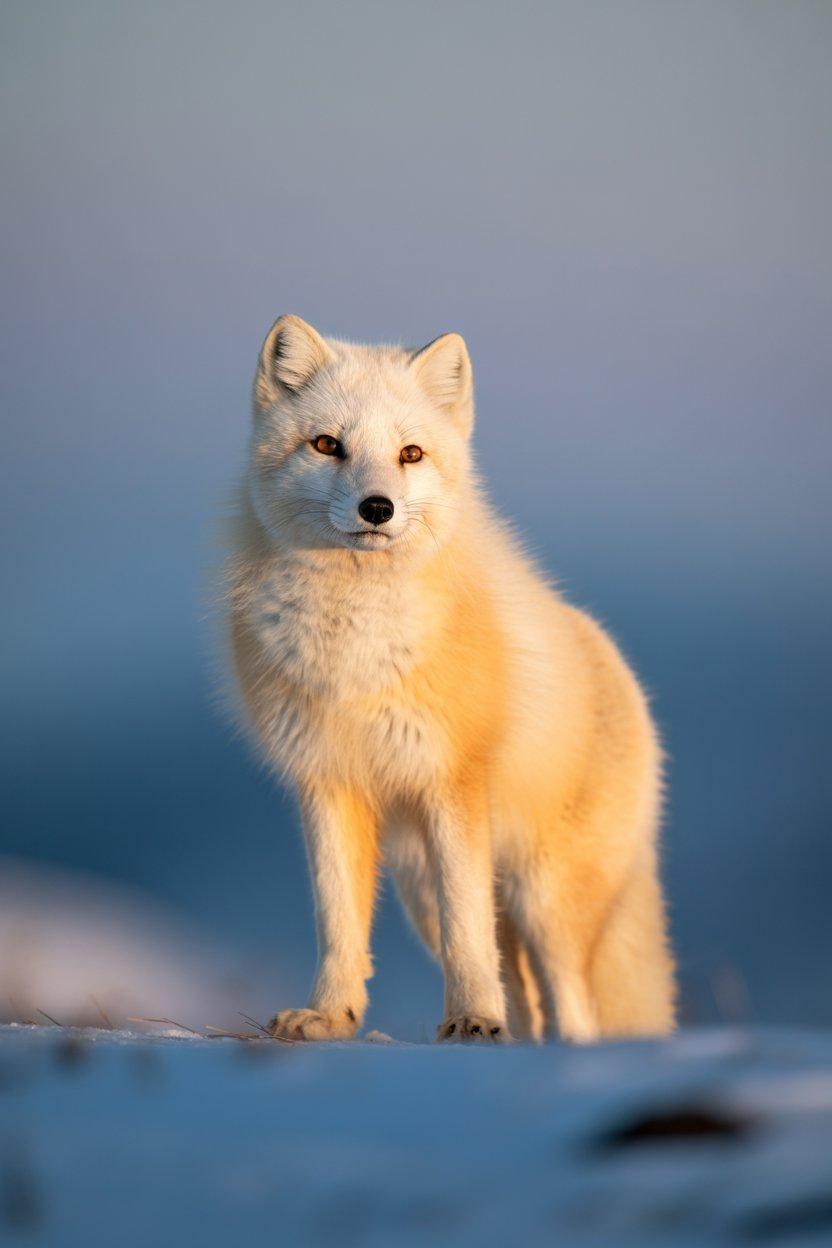




Arctic Fox
The Arctic fox (Vulpes lagopus) belongs to the dog family. It lives in cold, snowy regions. One of its most distinguishing features compared to other foxes is its soft, thick fur, which is pure white in winter and gray-brown in summer. This fur protects it from the cold.

An Arctic fox curled up around its tail. (Pexels)
What Does It Look Like?
Its short ears, short nose, and stocky body help reduce heat loss. Its fur is the thickest of any mammal’s and becomes even thicker in winter. It uses its bushy tail both for balance and, while sleeping, to wrap around its body like a blanket to retain warmth.
Its paws are also covered in fur, much like snow boots. This adorable animal can move silently across the snow and is one of the most resilient creatures in the polar regions.

Arctic fox (Pexels)
What Colors Does It Have?
The Arctic fox’s fur changes with the seasons. In winter, most individuals have pure white fur, allowing them to blend into the snow.
In summer, the winter fur is shed and replaced by a summer coat of gray, brown, or stone-colored fur that matches the surrounding rocks and vegetation.
Some very rare individuals are of the “blue morph”; their fur remains dark blue-gray year-round, providing better camouflage in rocky environments.

Arctic fox family (generated by artificial intelligence.)
How Large Do They Grow?
Arctic foxes have a body length of approximately 50–60 cm and a tail of about 30 cm. Their weight typically ranges from 3 to 8 kilograms. Thus, an Arctic fox is about the size of a small dog.
What Do They Eat?
In the wild, Arctic foxes feed on small rodents (especially lemmings), birds and their eggs, fish, fruits, and occasionally the remains of dead animals. They particularly favor hunting lemmings (short-tailed field mice). When food becomes scarce in winter, they store excess food in caches for later use.

Arctic fox (Pexels)
Where Do They Live?
Arctic foxes typically inhabit the coldest regions of the North Pole. They are most commonly found in Greenland, northern Canada, Alaska, Siberia, and northern Scandinavia. They live in large, complex dens with tunnels dug into the ground, some of which have been used for hundreds of years across multiple generations.
They prefer snowy tundra regions (treeless, icy areas covered with shrubs), coastal areas near glaciers, and rocky shorelines. These habitats make it easy for them to find prey and remain hidden by their white fur.

(Generated by artificial intelligence.)
Contributions to the Ecosystem
Arctic foxes sometimes bury small prey they have hunted or leftover food under snow or between rocks for winter storage. When they become hungry later, they locate and consume these hidden caches. Occasionally, they forget where they stored food, creating unexpected feasts for other animals.
Conservation Status
The Arctic fox is listed as “Least Concern” by the International Union for Conservation of Nature (IUCN), meaning its population is currently not at risk. However, because it lives in extremely cold regions, climate warming may negatively affect its future.