



Atmosphere
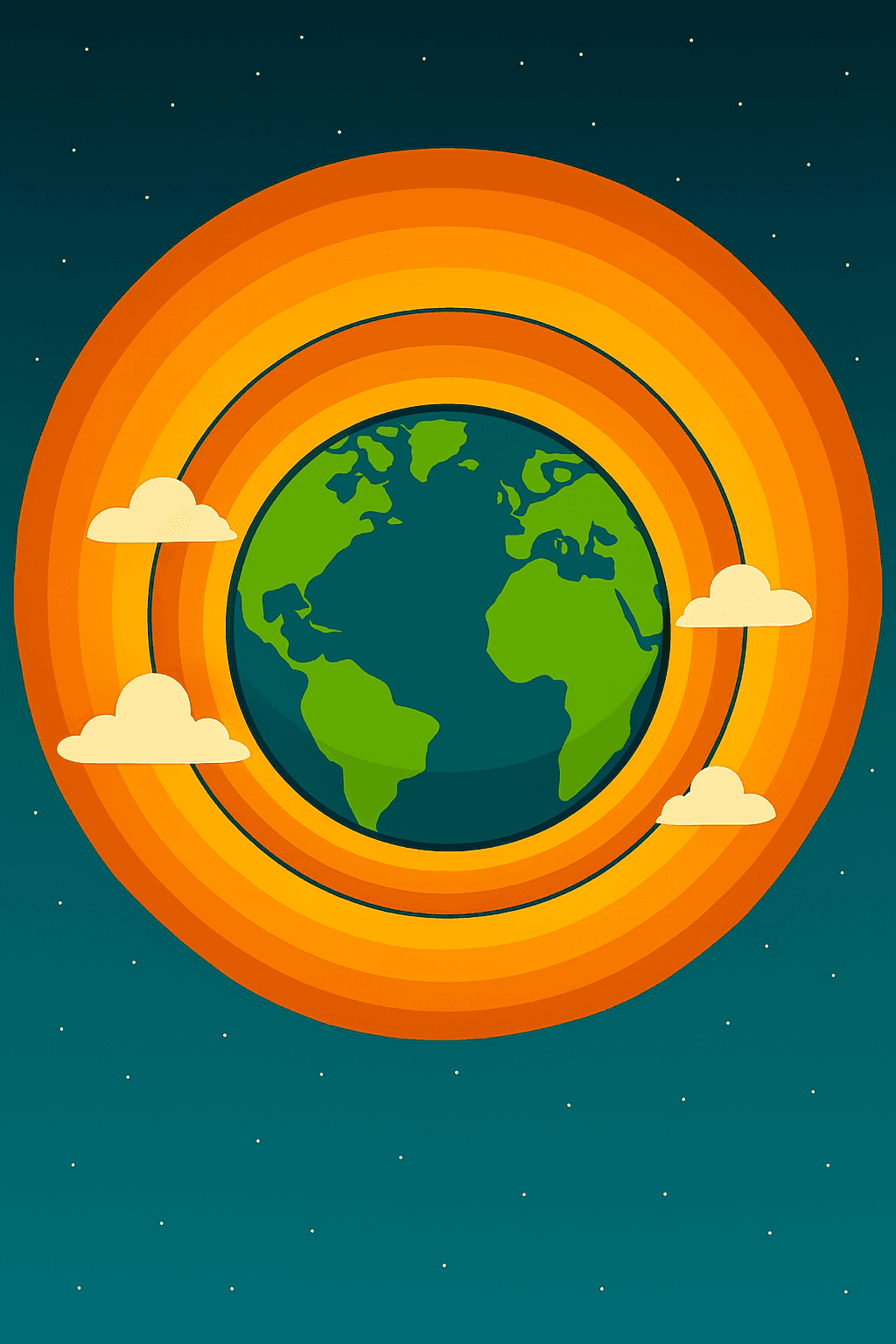
There is an invisible layer of gas that wraps around the Earth like a blanket. We call this the atmosphere! Thanks to the atmosphere, we can breathe, stay warm, and observe clouds in the sky. We are also protected from harmful solar radiation and experience weather phenomena such as rain and snow. Without the atmosphere, the Earth would be extremely silent and freezing cold.
🍊 Layers of the Atmosphere
The atmosphere is not made of a single layer but consists of six nested layers, each with its own unique properties.

Atmosphere (Generated by Artificial Intelligence)
☁️ 1. Troposphere – Where Rain Dances
This is the layer closest to Earth. Clouds form here, birds fly here, and we breathe in this layer. All weather phenomena occur here. Its thickness ranges from 8 km at the poles to 14 km in warmer regions. Because the air is dense in the troposphere, breathing is easy. Temperature decreases as altitude increases.
🧪 2. Stratosphere – The Layer Protected by Ozone
Located directly above the troposphere, this layer is free of storms and has calmer air. It contains the ozone layer, which shields us from harmful solar radiation. Temperature increases with altitude in the stratosphere—isn’t that a little surprising?
☄️ 3. Mesosphere – Where Meteors Burn to Ash
This layer is where meteoroids from space burn up! Although the mesosphere is very thin in terms of air density, it is strong enough to stop meteors. Temperatures here are extremely low, making breathing impossible. For this reason, the mesosphere is known as Earth’s coldest layer.
🔥 4. Thermosphere – The Temperature Champion!
As its name suggests, this layer is truly extremely hot! Temperatures can reach up to 2000°C, but the air is so thin that you would not feel this heat. Even the space station orbits here! Sound cannot travel here because there are not enough molecules to carry sound waves.
💫 5. Ionosphere – The Magical Realm Filled with Light
This layer works together with the thermosphere and interacts with solar radiation. Gases become excited by these rays and acquire an electric charge, resulting in the formation of auroras, or northern lights. The ionosphere reflects radio waves, enabling global communication.
🚀 6. Exosphere – The Final Stop of the Atmosphere
"Exo" means outer. The exosphere is the region where the atmosphere meets outer space. It is so vast that you must travel very far to truly leave it behind. Satellites orbit here, and the air is so thin that breathing is impossible.

Atmosphere (Generated by Artificial Intelligence)
Thanks to the atmosphere, we are able to live, learn, and witness the wonders of nature!