



August 17, 1999 Gölcük Earthquake Commemoration Day
Gölcük Earthquake of August 17
On August 17, 1999, at 03:02 local time, a major earthquake occurred with its epicenter in the Gölcük district of Kocaeli. This earthquake, which lasted approximately 45 seconds, had a magnitude of 7.4 or 7.5. This event, which deeply affected Türkiye’s recent history, is regarded as one of the largest natural disasters of the 20th century due to the vast area it impacted and the extensive material losses it caused.

Generated with Artificial Intelligence.
Effects and Damage Status
The earthquake affected many cities in the Marmara Region, including Kocaeli, Yalova, Sakarya, Istanbul, and Düzce, and was felt across a vast geographic area stretching from Ankara to Izmir.
According to official reports, 17,480 of our citizens lost their lives and more than 43,000 were injured. Some unofficial sources suggest the death toll may have been significantly higher. Tens of thousands of homes and businesses were destroyed or severely damaged, leaving approximately 600,000 people homeless. In total, nearly 16 million people were affected to varying degrees by the earthquake.

Generated with Artificial Intelligence.
Developments After the Earthquake
The August 17 Earthquake is considered a turning point in Türkiye for disaster management and construction practices. In the aftermath, the critical importance of preparedness prior to disasters, compliance with technical standards, and effective oversight was strongly emphasized. Major steps taken since then include:
- The building inspection system has been legally established and implemented nationwide.
- Identification, reinforcement, and urban transformation of vulnerable structures have become state policy.
- Educational and awareness campaigns to build a disaster-resilient society have been accelerated.
What Should We Do Before an Earthquake?
Earthquakes are a natural reality of the Earth and cannot be prevented. However, by acquiring accurate information and preparing adequately, we can protect ourselves from their potential damage.
Generated with Artificial Intelligence.
Precautions Before an Earthquake
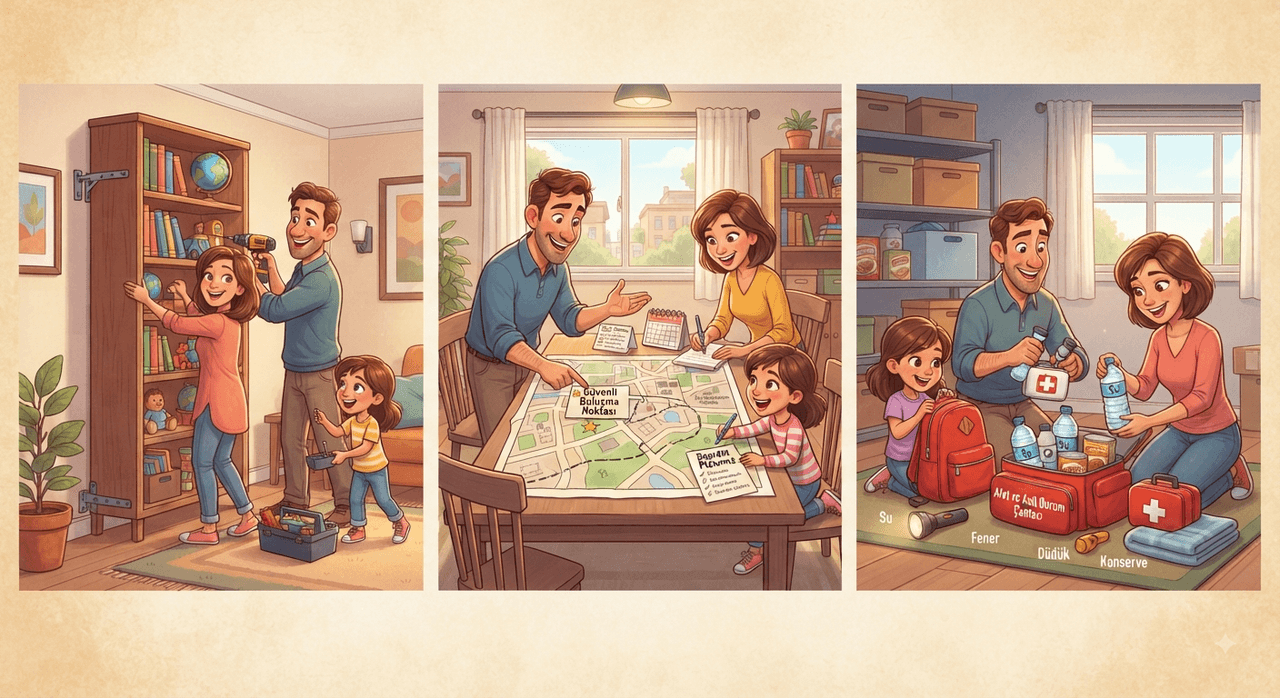
- We should secure heavy furniture in our homes (such as bookshelves, cabinets, and white goods) to the walls.
- We should develop an earthquake plan with our families and identify safe meeting points.
- We should prepare an emergency and disaster kit containing water, first aid supplies, a flashlight, and a whistle.

Generated with Artificial Intelligence.
Actions During an Earthquake
- We must not panic and should remain calm.
- We should take cover next to a sturdy table, desk, or chair and perform the “Drop, Cover, and Hold On” motion, protecting our head and neck with our hands.
- We must never use elevators and should not run for stairwells during the quake. We should stay away from balconies, windows, and objects that may fall on us.

Generated with Artificial Intelligence.
Actions After an Earthquake
- After the shaking stops, we should leave the building calmly following the instructions of our teachers or elders.
- We must ensure that gas, water, and electricity valves are turned off.
- We should move to safe open areas such as parks and gardens and follow official warnings.

Created with Artificial Intelligence.
Day of Remembrance
Every year on August 17, various ceremonies are held to honor the citizens who lost their lives in the earthquake and to ensure that the reality of earthquakes is never forgotten and preparedness is never neglected. These commemorative events emphasize raising awareness of disaster risks and learning from past painful experiences to build a safer future.