



Baklava
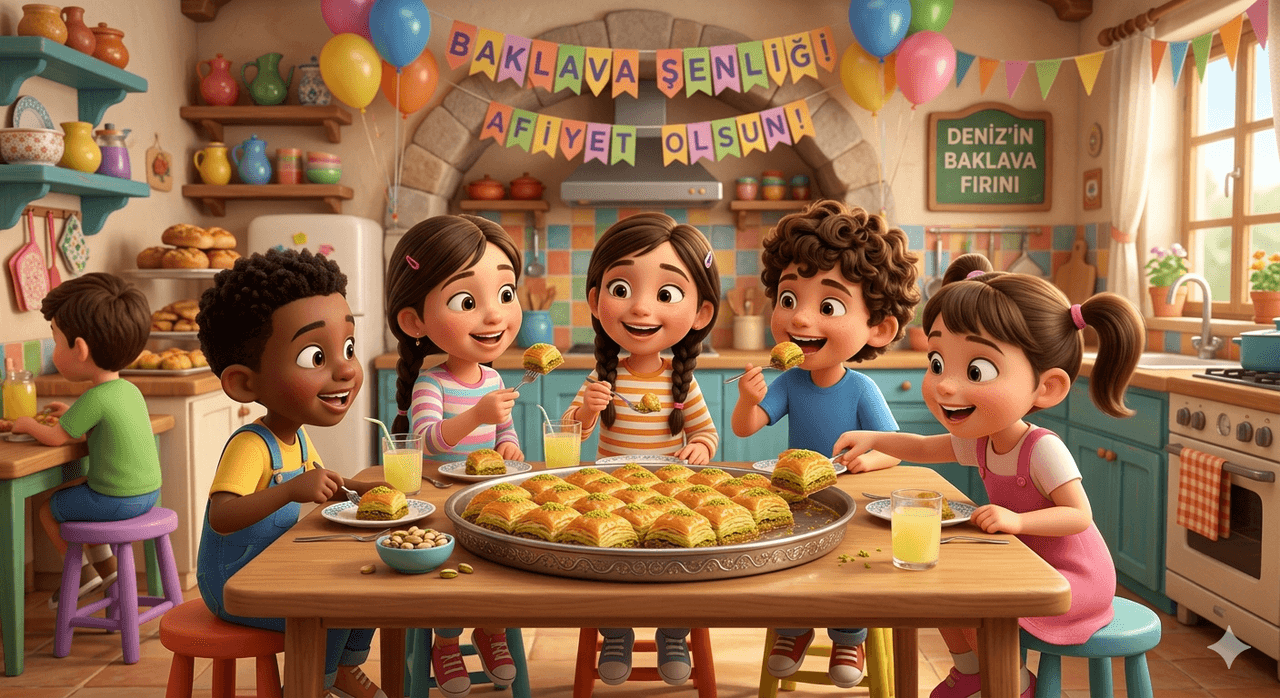
Have you heard a crisp, crackling sound? That sound comes from baklava—the most beloved guest at our tables, with its pistachios and golden-yellow color! Baklava is not just a dessert; it is also one of our very ancient traditions.
What Is Baklava and How Is It Made?
Baklava is made by layering thin sheets of dough called yufka, rolled as thin as paper. A skilled baklava maker rolls the dough so finely that you can read a newspaper through it! Typically, between 40 layers of yufka, nuts such as Antep pistachios, walnuts, or hazelnuts are placed. It gains its famous flavor when sweet syrup is poured over the top.
A Journey Through Time: The Story of Baklava
Baklava has a very ancient history. According to kitchen records from Ottoman palaces, baklava was already being prepared 550 years ago (in 1473) during the reign of Fatih Sultan Mehmet. At that time, the sultan would send trays of baklava to his soldiers in the middle of Ramadan. This special ceremony was known as the "Baklava Procession".
How to Recognize a Good Baklava?
To determine whether a baklava is truly high quality, we can use our senses:
- Appearance: Its color should shine like gold.
- Sound: When a fork is pressed into it, it should produce a crisp "hiss" sound.
- Aroma: The scent of fresh butter and the pistachios inside should reach your nose.
World-Famous Antep Baklava
When people in our country think of baklava, the first city that comes to mind is Gaziantep. The Antep baklava is so distinctive that it has been officially registered as a Turkish dessert by the European Union.