



Bitlis (Province)
Bitlis is a city located in eastern Türkiye, built on valleys surrounded by mountains, with a history extending back to the earliest antiquity. It has served as a home to numerous civilizations from the Urartians to the Ottomans. It is notable for its stone structures, its fortress, harsh climate, and rich cultural heritage.
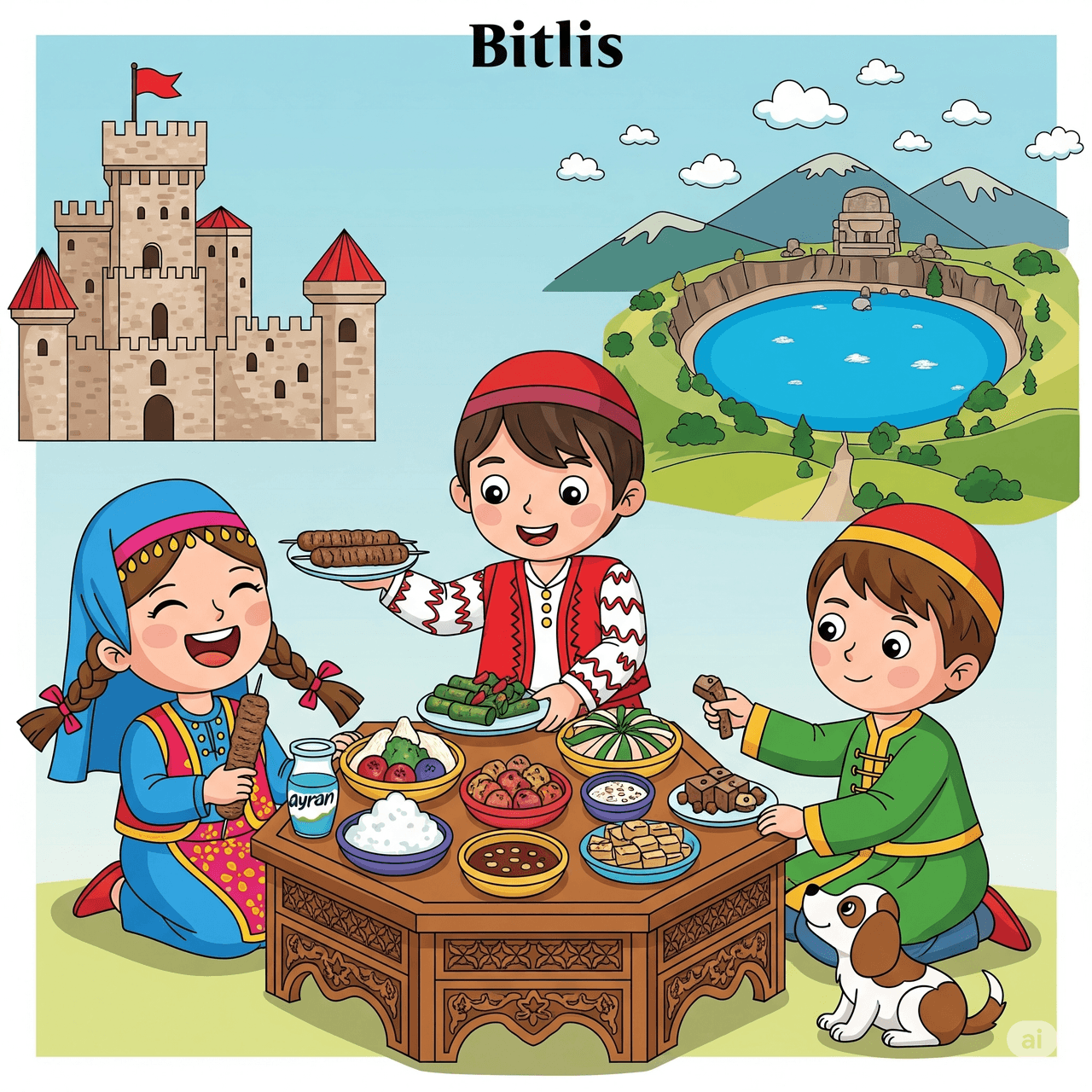
Bitlis Regional Values and Historical Monuments (Generated by Artificial Intelligence.)
📍 Where?
Bitlis is situated in Türkiye’s Eastern Anatolia Region, near Lake Van. It lies within a narrow, elongated valley encircled by mountains, at an elevation of approximately 1400 to 1500 meters. This high altitude results in very severe and snowy winters.
⏳ History
Bitlis has been inhabited since ancient times. Obsidian stones found in the region indicate that the area was already in use during the Stone Age. In the 2000s BCE, the Urartians ruled the area, followed by the Assyrians, Medes, Persians, and Macedonians.
🏰 Where Does the City’s Name Come From?
According to some sources, the name Bitlis derives from a commander named Badelis, who served in the army of Alexander the Great and built a fortress here. This fortress is the Bitlis Fortress, which still stands today.
🏰 Governance of Bitlis Through History
Throughout history, Bitlis has come under the rule of many civilizations. As a settlement since the Urartian period, it later became part of the Byzantine Empire following the Persians and Romans. Beginning in the 11th century, with the arrival of Turkic peoples, Islamic-Turkic culture began to spread. After the influence of the Seljuks and Artuqids, Bitlis came under Ottoman control in the 16th century. During the Ottoman period, Bitlis maintained its status as an important administrative and cultural center as a sanjak.
🍽️ Bitlis Cuisine
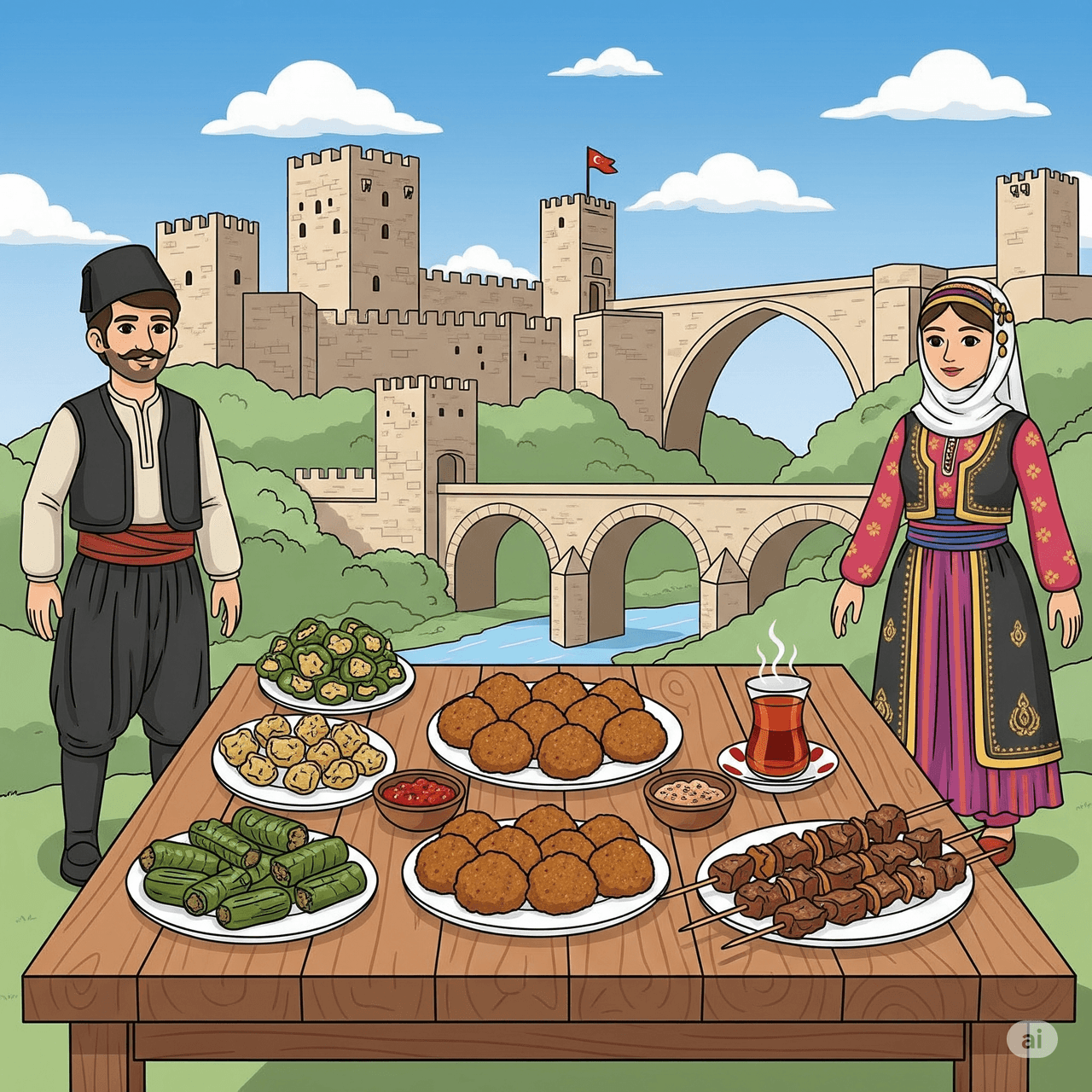
Due to its cold climate and mountainous terrain, Bitlis is known for its nourishing and warm dishes. One of its most famous regional specialties is büryan kebab, prepared in special ovens and served early in the morning. Ayran aşı is a cooling soup made with yogurt. Other beloved dishes include keşkek, içli köfte, ciğer taplaması, and Bitlis köftesi. For dessert, cevizli ve ballı kavut stands out. These dishes reflect Bitlis’s historical and cultural richness on the dining table.

Bitlis Regional Dishes (Generated by Artificial Intelligence.)
🏞️ Natural Beauties
Nemrut Crater Lake is one of Bitlis’s natural wonders, containing both hot and cold lakes. It is very close to Lake Van, and some districts, such as Tatvan, lie along its shores. With its mountains, highland pastures, and forests, Bitlis offers an excellent destination for nature walks.

Some Historical Sites (Generated by Artificial Intelligence.)
🕌 Historical Monuments and Structures
Bitlis is a city filled with stone structures bearing the traces of many civilizations over centuries. Most of these monuments are constructed from basalt or a durable dark stone known as Ahlat stone. The buildings in the city generally reflect Ottoman, Seljuk, and local beylik architectural influences.
Bitlis Fortress: Built atop a high rock in the center of the city, this fortress was constructed for defense and offers a commanding view over Bitlis. Although the exact builder is unknown, tradition attributes it to a commander named Badlis, one of Alexander the Great’s generals. The fortress still stands today with its stone walls and towers.
Ulu Cami: Constructed in the 12th century, this is one of Bitlis’s oldest mosques. It is notable for its thick walls, simple decorations, and tall minaret. The mosque’s inscription is among the historical documents marking the transition to Ottoman rule.
Şerefiye Camii and Medresesi: Built in the 16th century by Şeref Han of Bitlis, this complex served both religious and educational purposes. It was a place where children studied the Qur’an and other sciences during that era.
Hazo Hanı, Kızlar Camii, Yusufiye Medresesi, El-Aman Hanı: These are other significant Ottoman-era structures in Bitlis. They typically functioned as caravanserais for travelers, schools for students, or places of worship for the public.
Ahlat Kümbetleri and Mezar Taşları: The district of Ahlat in Bitlis is renowned for its historic gravestones. These are large, inscribed, and intricately carved tomb monuments. Dating from the Seljuk period, they represent some of the finest examples of Turkic-Islamic funerary architecture. Notable structures include the Ulu Kümbet, Emir Bayındır Kümbeti, and Hasan Padişah Kümbeti.
These structures not only narrate Bitlis’s history but also demonstrate the high level of stonemasonry achieved in the region. Today, these monuments remain standing and are open to visitors.
🧵 Economy and Livelihood
Historically, carpet weaving, leatherworking, and tobacco cultivation were widespread. Today, animal husbandry and fruit farming continue, and walnuts, honey, and other natural products are particularly famous in Bitlis.
🎓 Education and Culture
Bitlis is home to a university (Bitlis Eren University) and numerous schools. Local crafts, folk music, and the dengbêj tradition are especially strong.
🧠 Notable Figure: İdris-i Bitlisî
İdris-i Bitlisî, born in Bitlis, served as an advisor to Ottoman Sultan Yavuz Sultan Selim in the 16th century. He was both a historian and a statesman, and remains a prominent figure in Bitlis’s cultural heritage.