




Can Animals Have More Than One Heart?
In humans and most animals, there is a single heart. The heart sustains life by pumping blood throughout the body. However, in nature some organisms have circulatory systems that require more than one heart. There are animals with multiple hearts, and this specialized structure helps them survive in their environments.
Organisms Without Hearts
Some invertebrates such as jellyfish, corals, sponges, and starfish have no heart. Instead of blood vessels, these organisms have a water vascular system. For example, in starfish, water enters through a pore called the madreporite in the central part of the body, circulates through canals, and reaches the tube feet. In this way, nutrients and oxygen are distributed throughout the body.

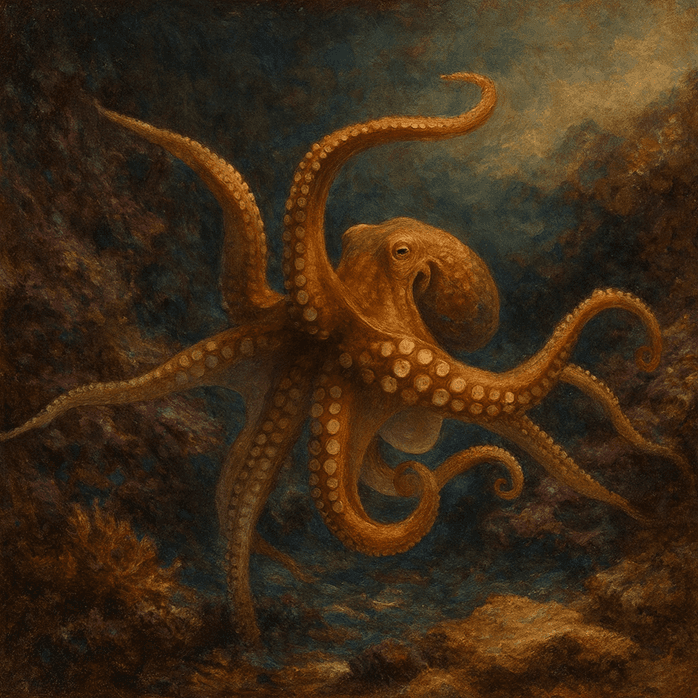
Octopus (generated by artificial intelligence)
Marine Animals With Multiple Hearts
Octopuses, cuttlefish, and squids have three hearts.
- Two of them are branchial hearts. Their function is to pump blood to the gills for oxygenation.
- The third is the systemic heart, which pumps oxygenated blood throughout the body.
The blood of these animals is blue because, instead of hemoglobin found in humans, their blood contains a copper-based protein called hemocyanin.
Sludge Eel Fish
Sludge eel fish, which live in the deep oceans, secrete large amounts of mucus for defense. These animals have four or five hearts. Some pump blood to the gills while others support circulation, enabling them to survive even in waters with low oxygen levels.

Sludge eel fish (generated by artificial intelligence)
Earthworms
The circulatory system of earthworms, which aerate the soil, is also remarkable. Their bodies contain five vessels called aortic arches. These structures contract and relax like hearts to pump blood. For this reason, earthworms are said to have five hearts.

Earthworm (generated by artificial intelligence)
Other Examples
- Spiny lobster: It has four hearts and its blood is blue.
- Sludge fish: It is equipped with four hearts and multiple gills.