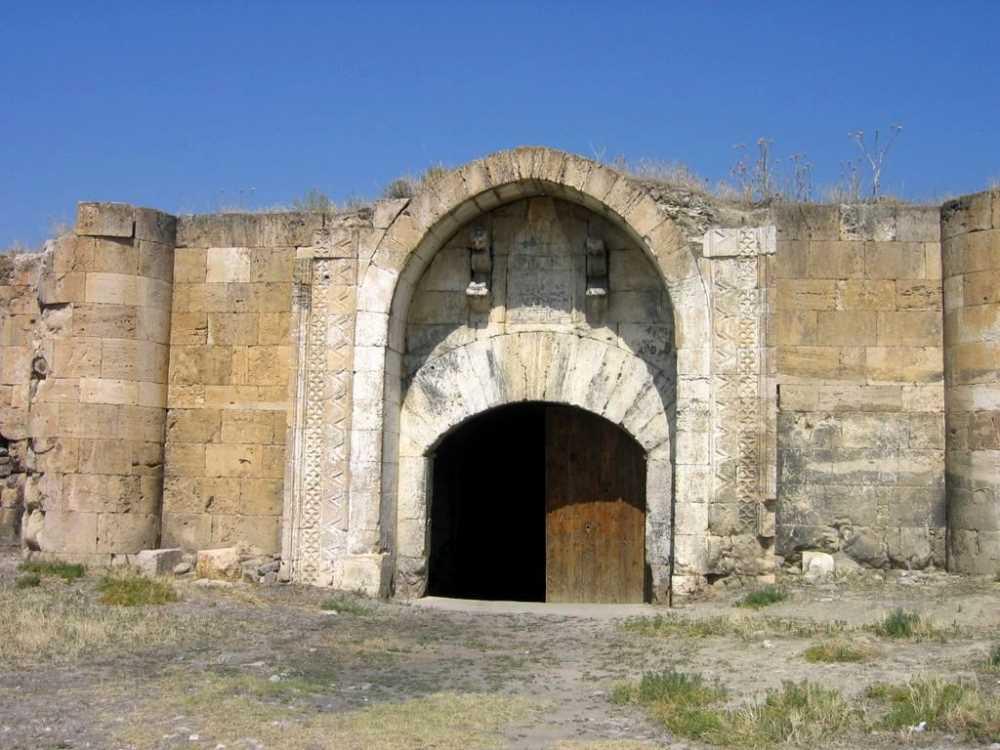




Çardak Kervansarayı (Denizli)
A caravanserai is a large structure that, hundreds of years ago, provided safe lodging for travelers and their animals along long trade routes. Like modern hotels, they were built to allow caravans to rest, eat, and protect their goods. Çardak Caravanserai, also known as Hanâbâd, is one of these ancient lodging places located near Denizli. This structure shows us how important trade was in earlier times.
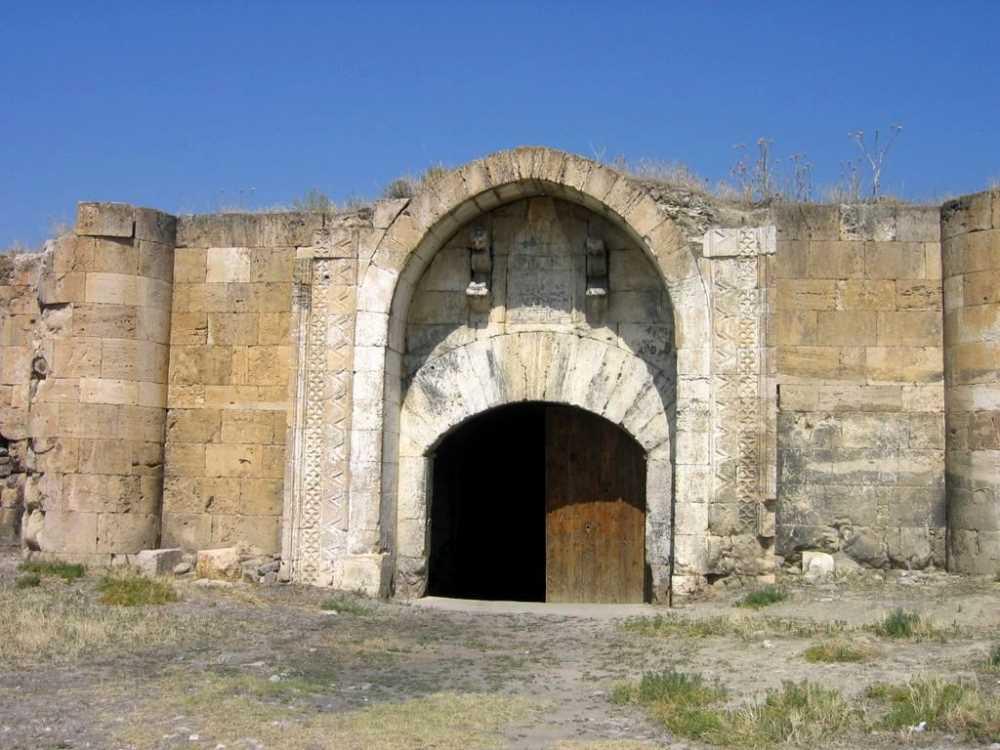
Çardak Caravanserai (Culture Portal)
🕰️ A Journey Through Time
Çardak Caravanserai was built approximately 800 years ago, in the year 1230, during the period of the Anatolian Seljuk State. It was commissioned by Esedüddin Ayaz, one of the regional rulers of that time. The caravanserai stood along an important trade route that extended from Denizli to Eğirdir. At the time of its construction, it played a vital role in ensuring the safe travel of merchants and the growth of commerce.
What Was the Purpose of a Caravanserai?
Caravanserais served as "rest stops" along trade routes for caravans.
- Security: Caravanserais appeared like fortresses due to their thick walls and towers, protecting merchants and their valuable goods from thieves and hostile individuals.
- Lodging: Travelers rested in rooms within the caravanserai or in the covered arcades (columned galleries) surrounding the courtyard. A separate enclosed area was provided for animals.
- Amenities: Inside the caravanserai there were also structures such as a mosque and a bathhouse. This allowed travelers arriving after long journeys to clean themselves and perform their religious duties.
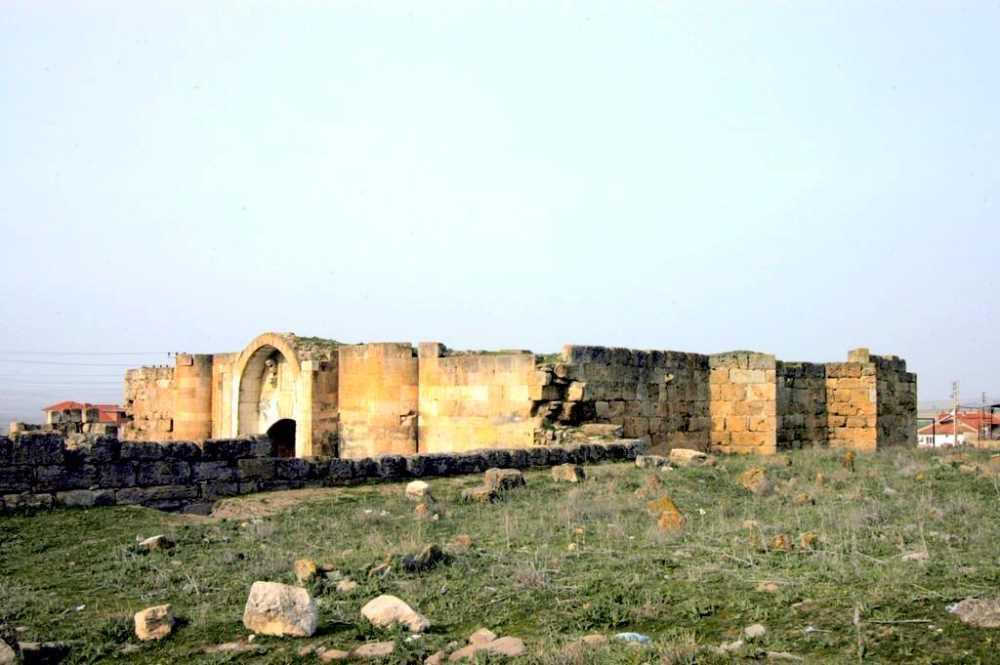
Çardak Caravanserai (Culture Portal)
What Was the Architecture of the Caravanserai Like?
Çardak Caravanserai is a simple and practical example of Seljuk architecture.
- Two Sections: The building had two main parts: one was the summer section, centered around a large open courtyard, and the other was the winter section, covered with pointed vaults (semi-cylindrical ceilings).
- Stone Masonry: The walls and columns of the structure were made of cut stone, giving it a sturdy, fortress-like appearance from the outside.
- Interesting Decorations: On the stone piers (columns) inside the enclosed section, relief carvings depict bull heads, two fish, and bearded human heads. There were also lion statues beside the main entrance. These figures are believed to represent planetary and zodiac symbols from earlier beliefs.