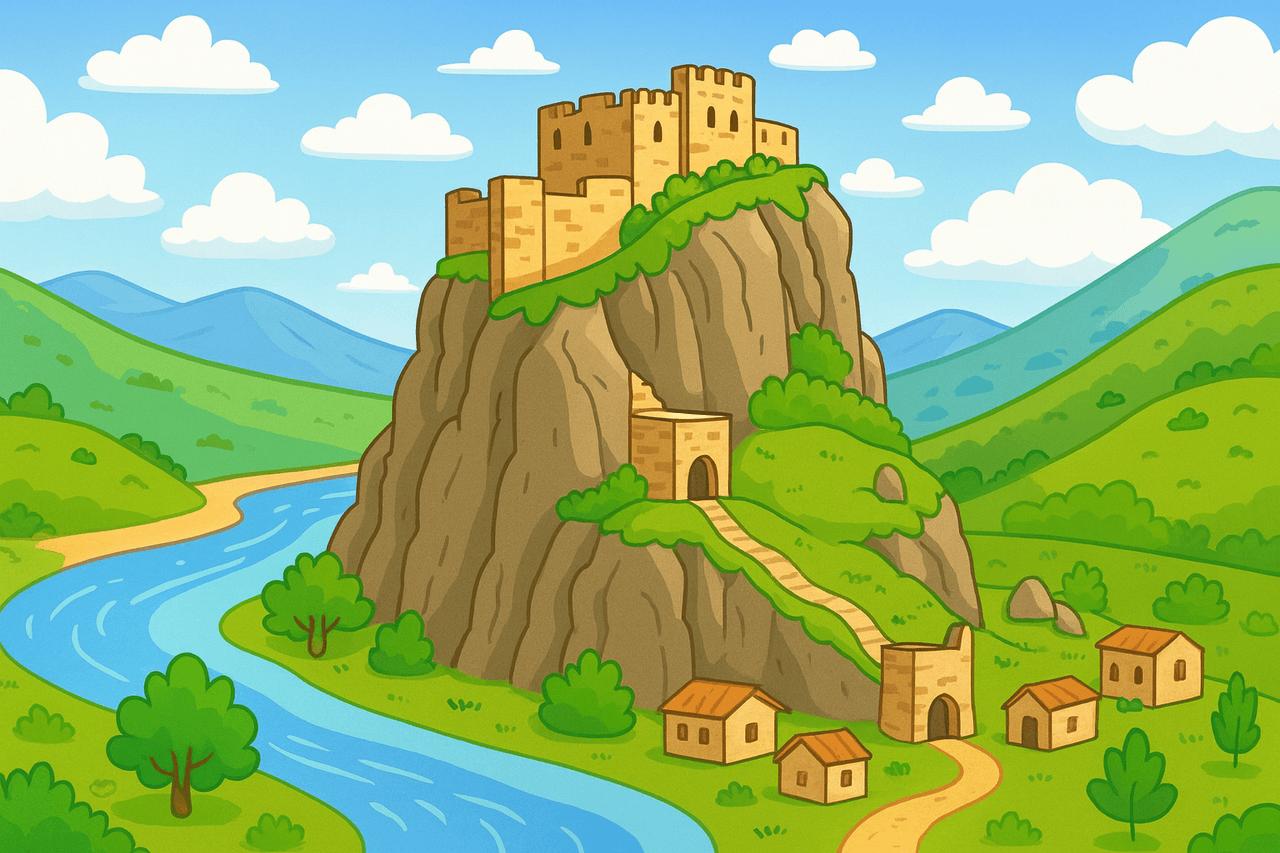




Castle of Bağ
Bağın Castle is located near Dedebağ (Bağın) Village in the Mazgirt district of Tunceli. The castle is built on a high and steep rock beside the Peri River. Due to this elevated position, ascending to the castle is difficult, making it a strongly defensible site. The castle overlooks the Peri Valley, situated between the Munzur Mountains and the Kert Mountains. This valley was historically used as both a route and a defensive line.
History
Bağın Castle was constructed by the Urartians in the 9th century BCE (approximately 2,800 years ago!). The Urartians were highly skilled in stonework, and this expertise is clearly visible in the castle’s walls. Later, the Medes, Persians, Macedonians, Romans, Byzantines, and Turks also used the castle. Thus, over time, the castle served as a stronghold for many different civilizations.
During the Seljuk period, the region came under Turkish administration, and the castle became one of the important administrative centers in Eastern Anatolia.

Culture PortalGenerated from Inspiration Taken from the Photograph.
Architectural Features
The castle sits atop a natural rock accessible only through a narrow single passage. To reach this passage, one must first pass through a tunnel carved into the rock, then ascend a stone staircase of approximately 40 steps to reach the castle. This design has made the castle both secure and difficult to access.
At the upper part of the castle are located watchtowers, water reservoirs (cisterns), rock-cut tombs, and places of worship. These features indicate that the castle was not only a military installation but also served as a residential and religious site.
Significance of the Castle
Bağın Castle was not merely a defensive structure; it also functioned as an administrative center and a lookout point along trade routes. The Peri Valley was a vital transit corridor between Erzincan, Elazığ, and Bingöl. Therefore, the castle played a crucial role in protecting trade routes and ensuring the security of surrounding villages.
Additionally, the nearby rock-cut tombs and inscriptions reveal that the area was also used as a burial ground for noble and military figures in ancient times.

Culture PortalGenerated from Inspiration Taken from the Photograph.
Today
Although some parts of Bağın Castle have suffered damage, the majority of the structure remains standing. The fortification walls, rock-cut staircases, and observation areas are still visible.
The Tunceli Provincial Directorate of Culture and Tourism has designated the castle as a cultural heritage site requiring protection. As a result, efforts are being made to preserve its historical and archaeological value.