This article was automatically translated from the original Turkish version.
+1 More
Location | Sivas Türkiye | ||||||||
|---|---|---|---|---|---|---|---|---|---|
Construction Period | The base is Roman, the superstructure is from the Seljuk period | ||||||||
Construction Material | Cut stone | ||||||||
Length(s) | 104.5 metres | ||||||||
Width | 4.55 metres | ||||||||
Number of Arches | 13 | ||||||||
Arch Type | Pointed and circular arches | ||||||||
Selyaran | Triangular section, on both facades | ||||||||
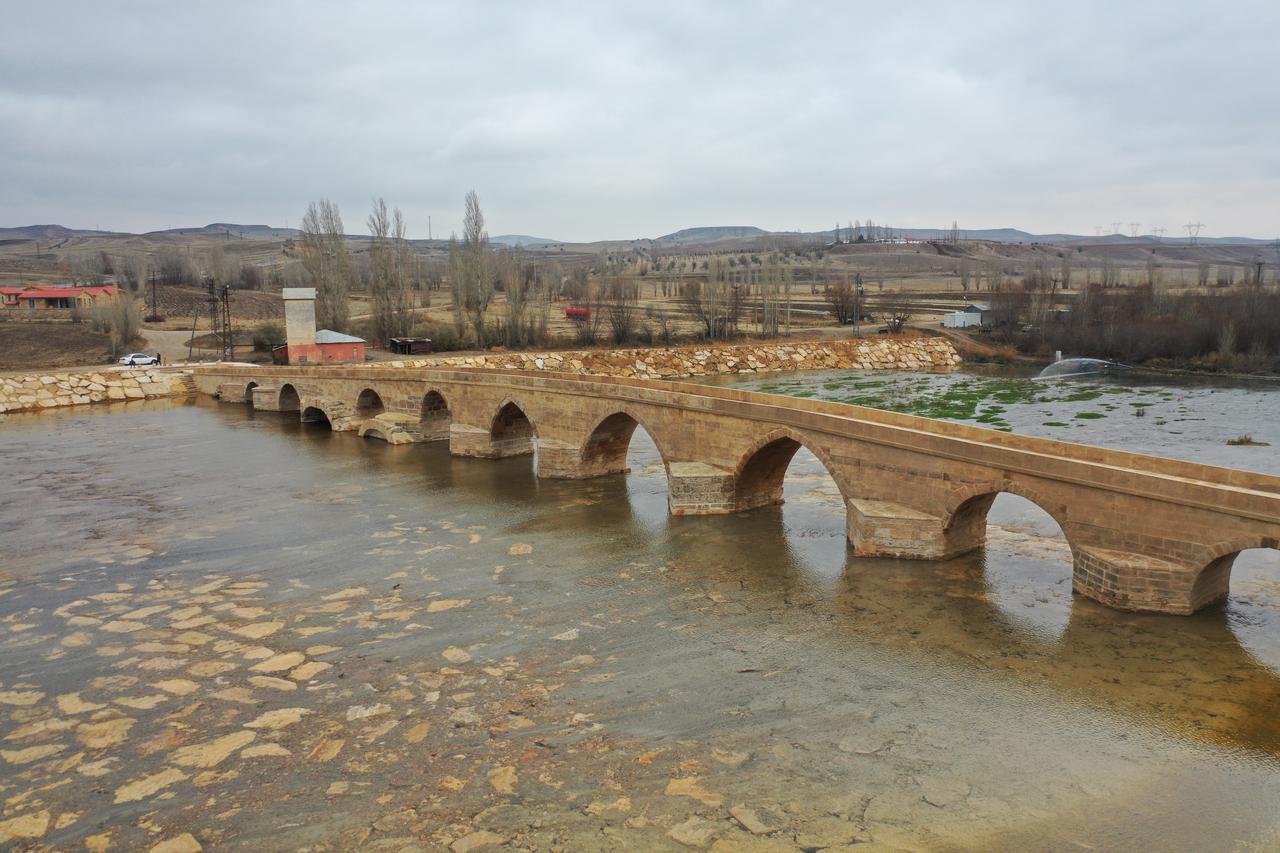
Yıldız Irmağı Köprüsü is a historic stone bridge located approximately 5 kilometers northeast of the city center of Sivas, Türkiye, spanning the Yıldız Irmağı. The structure is currently closed to traffic and measures 104.5 meters in length and 4.55 meters in width. Constructed from cut stone, the bridge consists of 13 arch openings arranged in a combination of pointed and circular forms. On both facades, triangular-shaped selyaran elements are present, reflecting a functional design approach. The bridge exhibits characteristics of the Seljuk period, while remnants of Roman-era construction are also found in its lower sections. The structure has been officially registered as one of Türkiye’s important cultural heritage elements and underwent comprehensive restoration in 2008.
The bridge is situated approximately 5 kilometers from the center of Sivas, crossing a narrow and deep section of the Yıldız Irmağı. The riverbed at this location historically posed a natural barrier to transportation, necessitating the construction of a fixed crossing structure. Although the river’s flow varies seasonally and occasionally causes flooding, these environmental conditions were taken into account during the bridge’s planning.
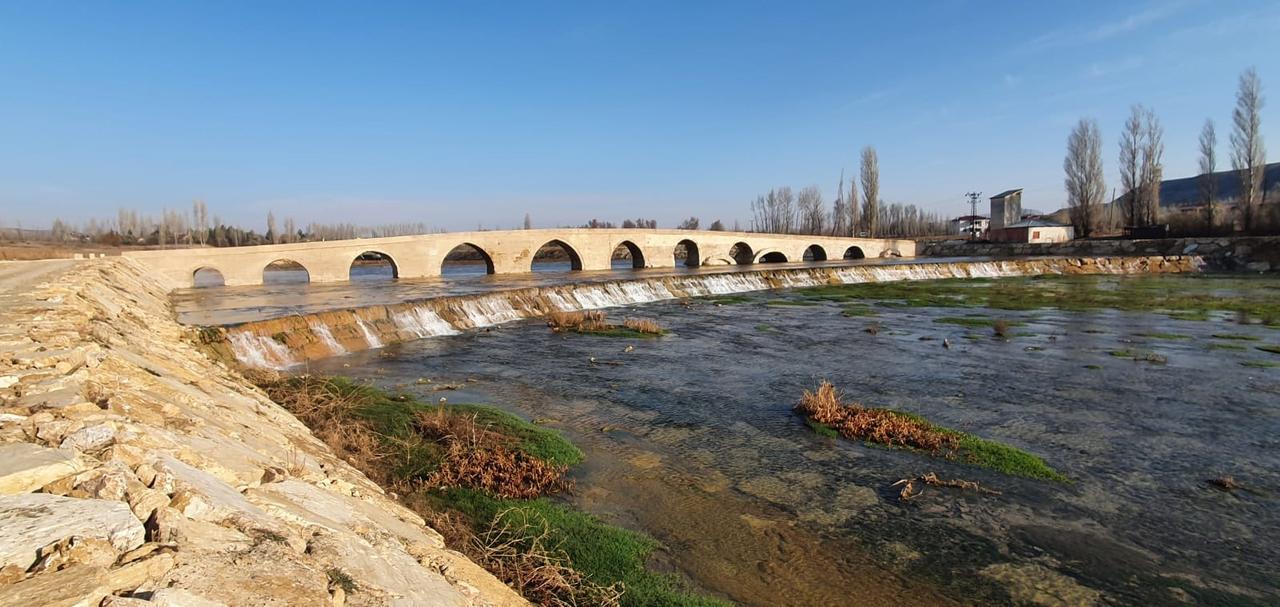
Yıldız Irmağı Köprüsü (General Directorate of Highways)
The exact date of construction of the Yıldız Irmağı Köprüsü is not definitively known, but its foundation incorporates Roman-era stone blocks and masonry techniques. The superstructure, however, is characterized by stonework and arch systems typical of Seljuk architectural style. These features indicate that while the bridge’s origins may date back to the Roman period, its current form largely results from a major reconstruction during the Seljuk era. The structure underwent various repairs during the Ottoman and Republican periods, giving it a layered historical character.
The bridge is 104.5 meters long and 4.55 meters wide. Its body is constructed from cut stone, with large stone blocks used in the foundational sections. The arch spans are arranged to accommodate the intensity of the water flow and the topography of the valley. The central, largest arch provides structural balance, while the arches gradually decrease in size toward the sides, forming a total of 13 openings.
The arches are designed in varying forms: some are pointed, others are circular. This diversity suggests that the bridge was repaired and partially rebuilt during different historical periods. Triangular-shaped selyaran elements placed in front of the arch piers serve to reduce the force of the water flow and protect the piers from erosion.
Architectural decoration on the bridge is minimal. However, simple ornamental motifs can be found on some keystone blocks and selyaran surfaces. The bridge deck is paved with stone slabs, and stone parapets have been constructed along both sides. The austere, unadorned and functional design reflects the structure’s primary purpose as a crossing.
Over its historical lifespan, the Yıldız Irmağı Köprüsü has undergone various interventions. Evidence from differences in stonework quality indicates that certain arches were rebuilt during the Ottoman period. During the Republican era, protective interventions were carried out, but a comprehensive restoration was conducted in 2008 under the supervision of the General Directorate of Highways. This project included reinforcement of the arches, replacement of selyaran elements, repair of stone joints, and reconfiguration of the paving surface.
The bridge has been officially registered by the Ministry of Culture and Tourism of the Republic of Türkiye as an immovable cultural heritage site and is under legal protection. Currently, the bridge is closed to vehicular and pedestrian traffic. The surrounding natural landscape has been preserved, with no modern development present. This condition allows the bridge to maintain its integrity within its historical and environmental context.
The Yıldız Irmağı Köprüsü is one of the significant examples of Anatolian stone bridge architecture, distinguished by its layered historical past, traces of construction and repair from multiple periods, original architectural details, and preserved natural surroundings. Built upon Roman foundations and reflecting Seljuk-period characteristics, the structure is regarded not only as an engineering achievement but also as a tangible record of historical continuity and architectural transformation. Although closed to traffic today, its cultural significance ensures that it is carefully preserved and documented.
Video of the Historical Yıldız Köprüsü Aerial View (Urfa Milat)
General Directorate of Highways. "Projeler Detay – Yıldız Köprüsü." Accessed June 25, 2025. https://www.kgm.gov.tr/Sayfalar/KGM/SiteTr/Projeler/ProjelerDetay.aspx?q=139.
Ministry of Culture and Tourism. "Yıldız Irmağı Köprüsü." *Kültür Portalı*. Accessed June 25, 2025. https://www.kulturportali.gov.tr/turkiye/sivas/kulturenvanteri/yildiz-irmagi-koprusu.
Urfa Milat Youtube Kanalı. "Sivas Yıldız Irmağı Köprüsü." Accessed June 25, 2025. https://youtu.be/v1BEhTCh1vA?si=E8IrT2wXLxFse04-.
Şahankaya Polat, Elmas. “Tarihi Sivas Köprüleri.” *Palmet Dergisi*, no. 4 (2023): 130–150. Accessed June 26, 2025. https://dergipark.org.tr/tr/pub/palmet/issue/80102/1360109.

Location | Sivas Türkiye | ||||||||
|---|---|---|---|---|---|---|---|---|---|
Construction Period | The base is Roman, the superstructure is from the Seljuk period | ||||||||
Construction Material | Cut stone | ||||||||
Length(s) | 104.5 metres | ||||||||
Width | 4.55 metres | ||||||||
Number of Arches | 13 | ||||||||
Arch Type | Pointed and circular arches | ||||||||
Selyaran | Triangular section, on both facades | ||||||||
No Discussion Added Yet
Start discussion for "Yıldız Irmağı Köprüsü" article
Location and Geographical Context
History
Structural and Architectural Features
Decoration and Surface Details
Repairs and Restoration Process
Protection Status and Current Condition