


This article was automatically translated from the original Turkish version.
+2 More
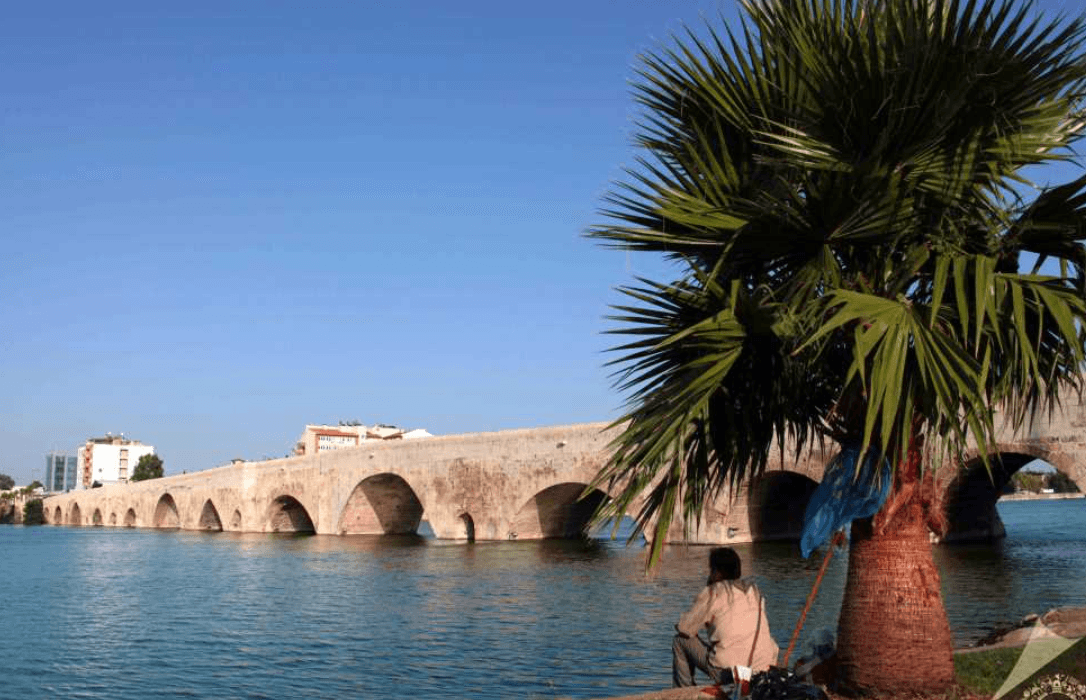
Stone Bridge
Location | Adana | ||||||||
|---|---|---|---|---|---|---|---|---|---|
Year of Construction | 4th century | ||||||||
Adana on the Seyhan River, place area Taşköprü is one of the unique examples of Roman engineering. City history’s important symbol, bridge, has been continuously maintained and has held great strategic and economic importance since the day it was built, from the Roman Empire through the Ottoman period.
There are limited definitive sources regarding the construction of the Stone Bridge, but the most widely accepted common opinion is that it was commissioned by the Roman Emperor Hadrian. However, some sources suggest the bridge may date back to the time of Pompeius or Augustus. Nevertheless, the earliest construction of the Adana Stone Bridge is traced to the 4th century, when transportation gained critical importance across the vast territories of the Roman Empire. During this period, a safe and durable bridge was needed to facilitate passage between Asia and Europe. The bridge’s construction was completed during the reign of Emperor Theodosius I and was overseen by Auxentius. It is also recorded that the bridge underwent numerous repairs over time; Byzantine Emperor Justinian, Harun al-Rashid, and Ottoman sultans all undertook restoration work on the structure.
The Stone Bridge exhibits the characteristic features of Roman bridges. Stretching in a East-west direction, the bridge is 300 meters long, with 14 main arch arches and five spillway arches. With an average width of 9.5 meters, the bridge has undergone structural modifications due to various repairs over time. The arch spans range between 13.7 and 19.6 meters. Building rests on solid foundations, reflecting the engineering knowledge of its era. The stones used in construction were sourced from nearby mountains, with the majority transported from Çalı Dağı and Misis regions east of the Seyhan River. The transportation of these stones required significant organization and labor power.
In antiquity, the bridge was located at one of the most critical points along the region’s military and commercial routes and held strategic significance, especially for the Roman Empire. Its position along key trade corridors of the Silk Road and Spice Road made it one of the central hubs for both regional and international trade. Moreover, the bridge’s construction on the Seyhan River, designed to withstand the river’s harsh natural conditions, represents a major engineering achievement.
The Adana Stone Bridge has undergone numerous repairs throughout its history. Byzantine Emperor Justinian carried out the first major restoration, during which the riverbed was altered and the bridge was rebuilt. In subsequent centuries, numerous figures including Abbasid Caliph Mamun, Ottoman Sultan Ahmed III, and Ziya Pasha undertook repair work. The final restoration in 1949 completed the series of maintenance efforts the bridge had undergone over time. Since 2007, the Stone Bridge has been used as a pedestrian bridge and has become one of Adana’s most important tourist and cultural sites.
Culture Portal. "Taşköprü." Accessed February 13, 2025. https://www.kulturportali.gov.tr/turkiye/adana/gezilecekyer/tas-kopru804491.
Gül, Tolga. "Adana Taşköprü (Theodosius Köprüsü)." Türkiye Turizm Ansiklopedisi. Accessed February 13, 2025. https://turkiyeturizmansiklopedisi.com/adana-tas-kopru-theodosius-koprusu.
Ramazanoğlu, Gözde. "Adana’da Roma Dönemi Köprüsü: Taşköprü." Ç.Ü. Sosyal Bilimler Enstitüsü Dergisi 18, no. 1 (2009): 305-322.

Stone Bridge
Location | Adana | ||||||||
|---|---|---|---|---|---|---|---|---|---|
Year of Construction | 4th century | ||||||||
History and Construction Process
Architectural Features
Strategic and Economic Importance
Repairs and Maintenance