




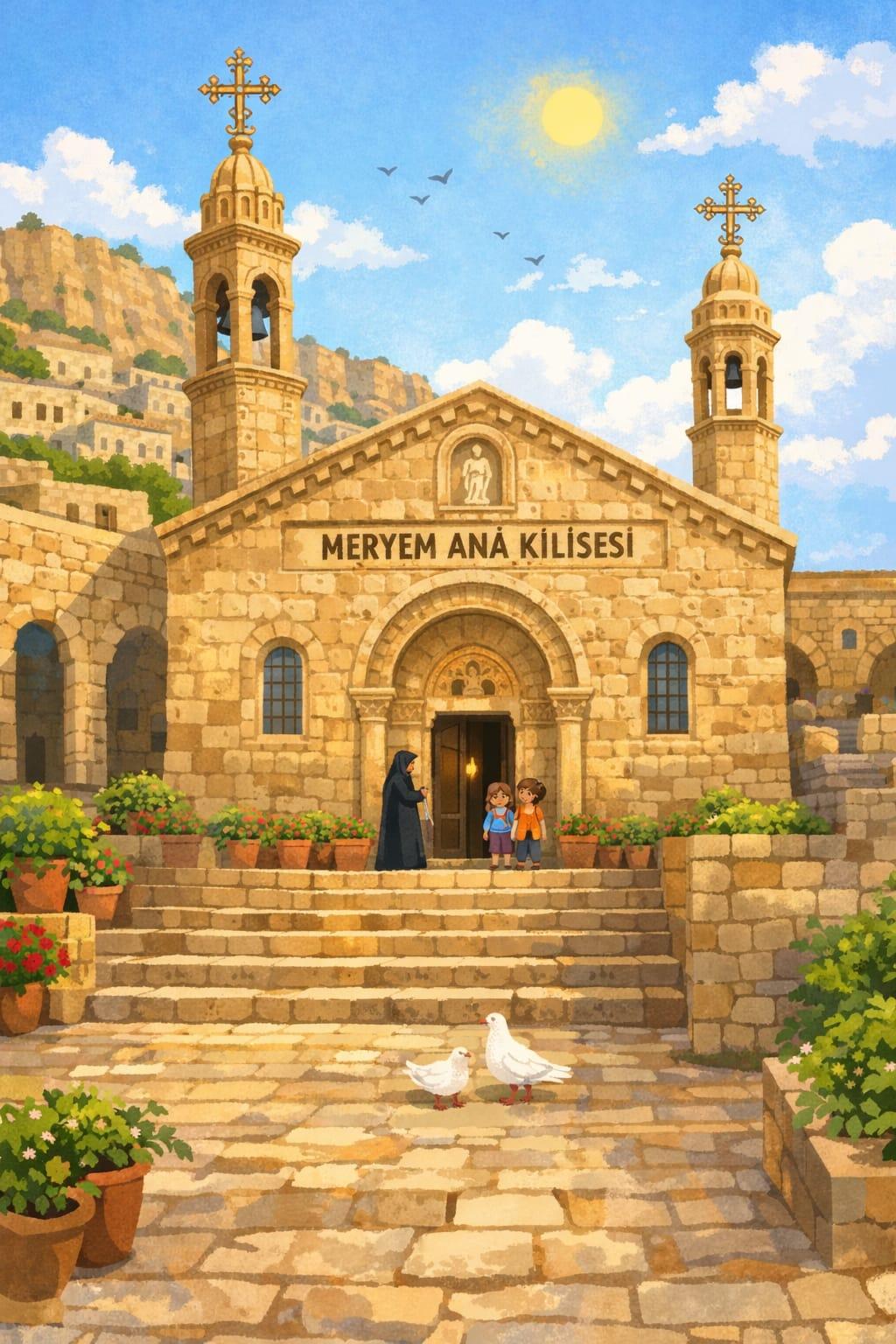
Church and Patriarchate of the Virgin Mary
Mardin's narrow, historically evocative streets are lined with fairy-tale buildings constructed entirely of yellow stone. Among the most elegant of these structures is the Church of the Virgin Mary and Patriarchate, which served both as a place of worship and as the residence of important religious leaders of its time. This distinctive building greets you at Republic Square in the heart of Mardin. As one of the city’s most significant landmarks, the church preserves the stories of its past through its architecture and exquisite minor artworks. Let us explore the fragments of these golden-hued stones and uncover the world they hold.
A Church Where Sounds Resonate
Church of the Virgin Mary was constructed in 1860 and belongs to the Syriac Catholic Community. One of its most astonishing features is its acoustical design, which can be described as an engineering marvel. Thanks to this unique structure, even the faintest spoken word is clearly audible from every corner of the church. Upon entering, you are met with craftsmanship that dazzles the eye. Particularly, the patriarch’s seating area and the pulpit from which the Gospel is read are crafted with exquisite woodwork. The delicate ornamental carvings on these wooden elements lend the building a noble and serene atmosphere.
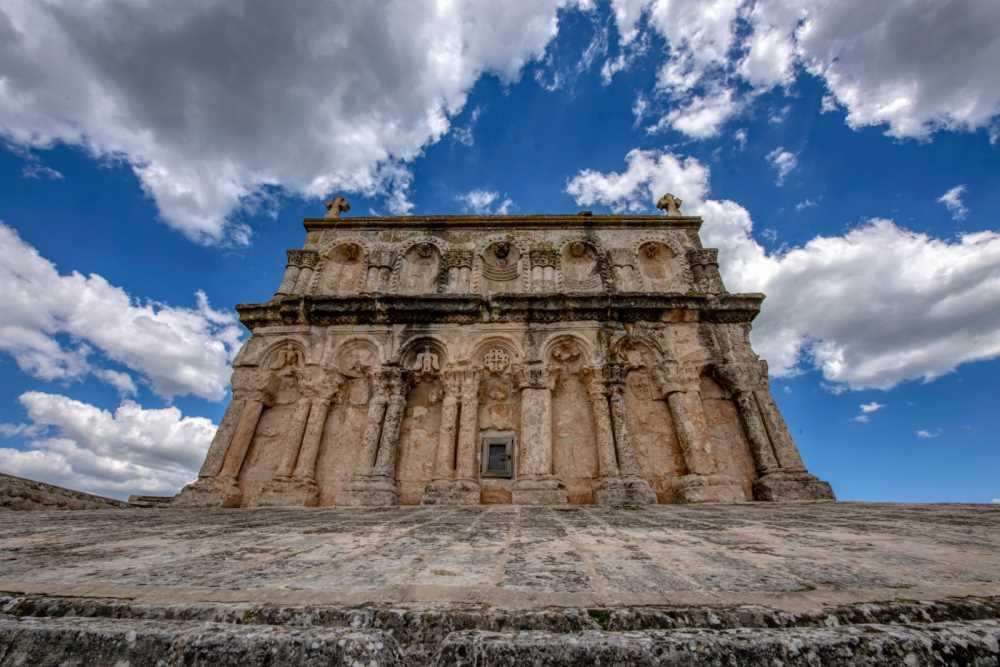
Church of the Virgin Mary and Patriarchate (Kültür Portalı)
Grapes and Delicate Details
One of the most beautiful details of this church is its decoration. The patriarchal pulpit and seating areas within the interior are adorned with motifs of grape clusters, symbols of abundance. These motifs reveal the extraordinary artistry of the craftsmen who lived in Mardin at the time. In the church courtyard, aesthetic railings, circular stone columns, and elegant arches enhance the visual harmony. Each stone bears the labor of centuries, transforming the structure into nothing less than a monumental work of art.
From an Old Residence to a Modern Museum
Immediately adjacent to the church stands the Patriarchate House, built in 1895. For many years, it served as both a residence and a center of activity for the Syriac community’s prominent figures. Over time, the building underwent several changes; part of it was even demolished during expansion works in 1914. In 1988, the structure was transferred to the Ministry of Culture and Tourism. After extensive restoration, it opened its doors as a museum in 1995. Today, as you explore this museum, you trace the thousands of years of Mardin’s history and the art of coexistence among diverse cultures.
A Journey Through Time
Exactly 166 years ago, in 1860, when the foundations of the Church of the Virgin Mary were laid, life in Mardin was vastly different. At that time, this church was regarded with great excitement as one of the city’s newest and most modern structures.