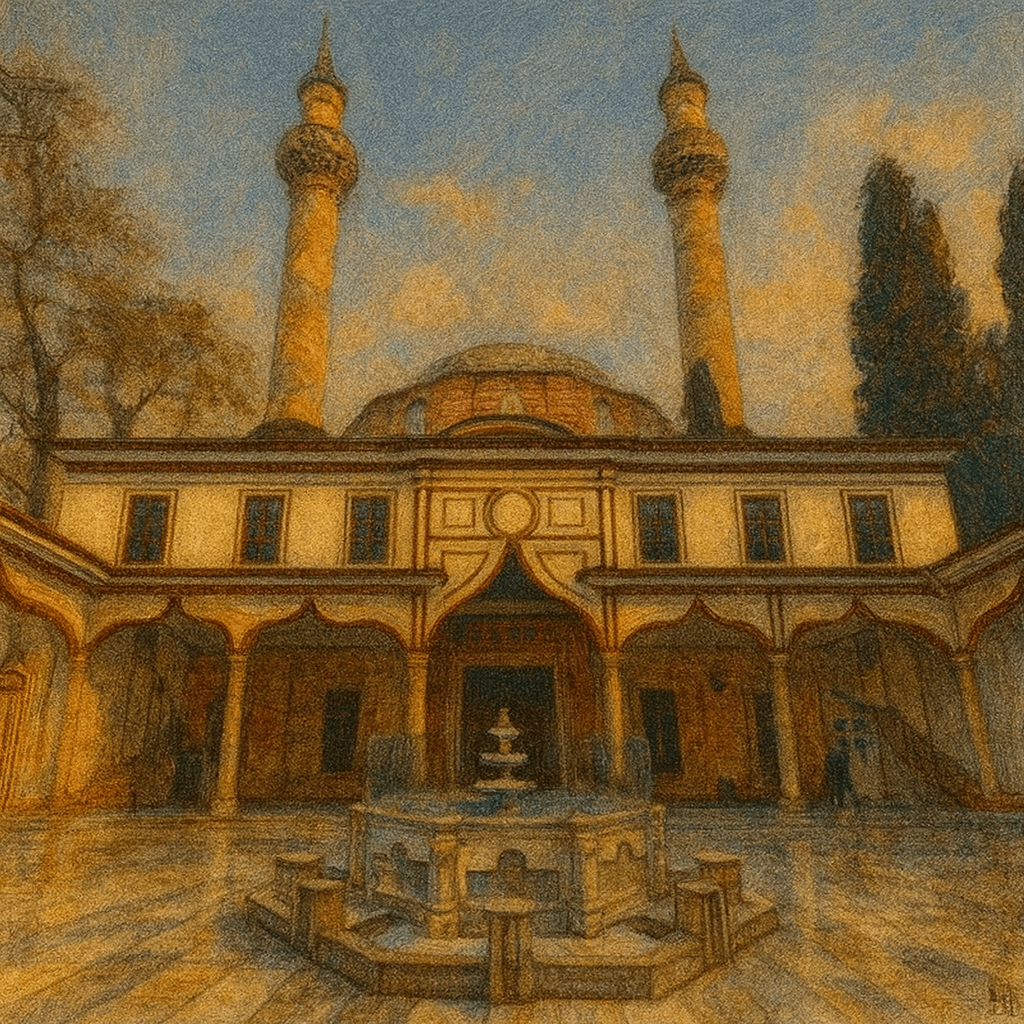




Emir Sultan Mausoleum
Emir Sultan Mausoleum is an octagonal, domed monumental tomb located in the courtyard of the Emir Sultan Camii in Bursa. Inside are the sarcophagi of Emir Sultan, a respected scholar and Sufi of the Ottoman period, his wife Hundi Hatun (Hundi Fatma Sultan), their son Emir Ali Çelebi, and two of their daughters. The structure, which had deteriorated over time, was restored in 1868 during the reign of Sultan Abdülaziz (at that time, II. Abdülhamid was still a prince). Above the eastern entrance, a restoration inscription dated H.1285 (1868) is prominently visible.
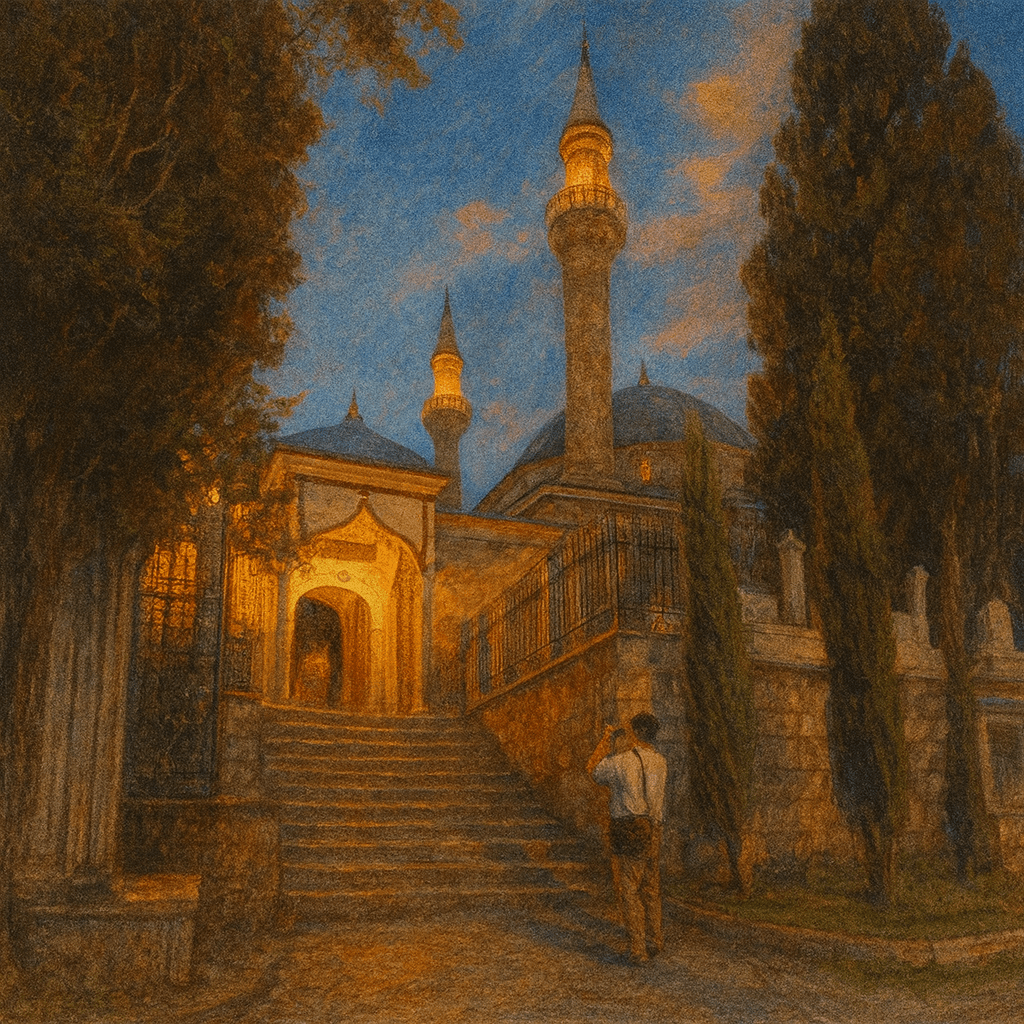
(Generated by Artificial Intelligence)
Who Was Emir Sultan?
Born as Şemseddin Muhammed el-Buhârî, Emir Sultan chose Bursa as his place of settlement upon arriving in Anatolia and established himself in the city in 1391. He married Hundi Hatun, the daughter of Yıldırım Bayezid, and became a prominent figure in Bursa’s spiritual life. He died in 1429 during an outbreak of plague in the city.
Architectural Features (What Do You Notice?)
- Plan: The tomb has an octagonal (octagon) plan. The octagon is a balanced form frequently used in Islamic architecture.
- Covering: A tall drum-supported dome covers the octagonal body.
- Facades and Light: All surfaces except the eastern facade, which contains the entrance, feature large round-arched windows, allowing soft light to enter the interior.
- Courtyard: The tomb is situated within the mosque courtyard; the courtyard includes a şadırvan and arcaded walkways designed to accommodate the culture of visitation.
- Inscription: The H.1285 (1868) inscription above the eastern entrance marks the date of the restoration.
Terminology Box
- Drum: The ring-like structure upon which the dome rests, elevating the building.
- Sarcophagus: A symbolic wooden or stone covering placed above a grave.
Who Is Buried Inside?
- Emir Sultan (Şemseddin Muhammed el-Buhârî)
- Hundi Hatun (Hundi Fatma Sultan)
- Emir Ali Çelebi
- Two daughters
The sarcophagi are arranged within a section enclosed by iron railings, serving both protective and reverential purposes.
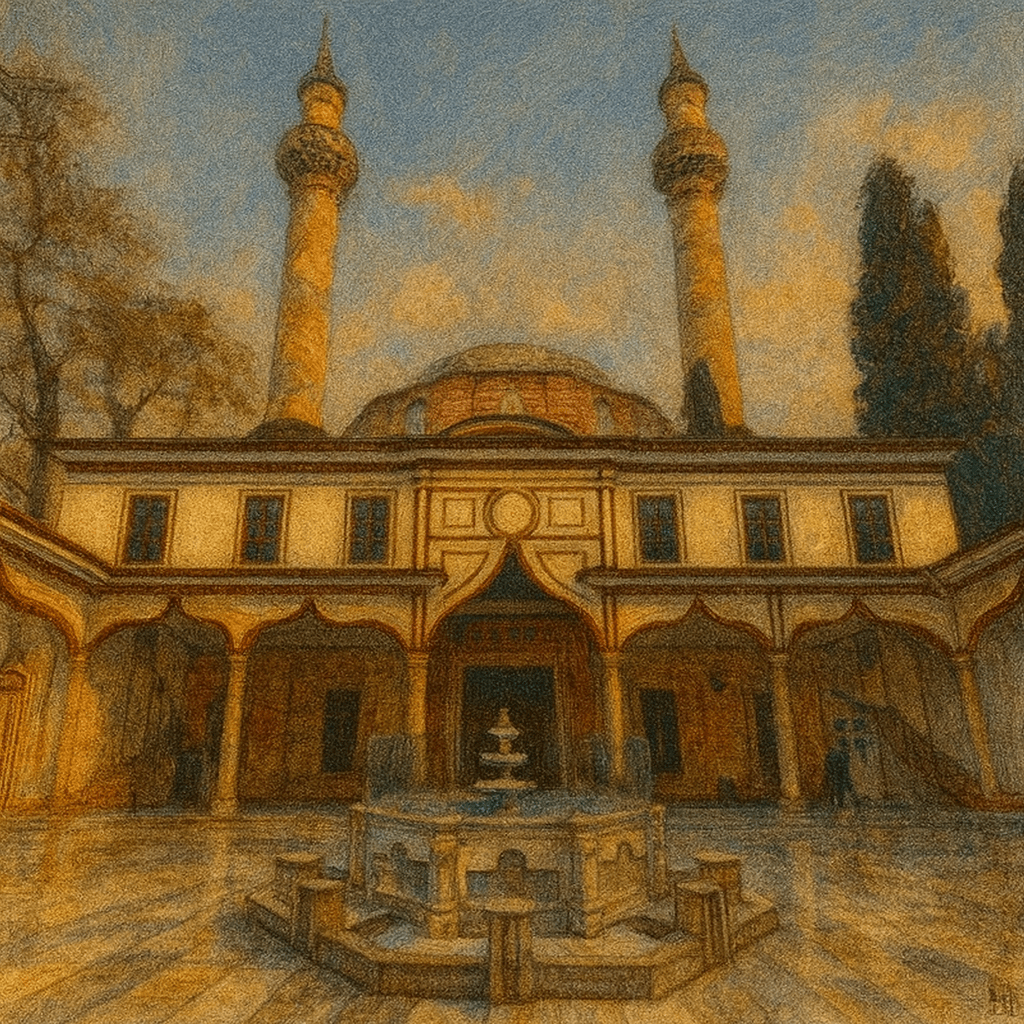
(Generated by Artificial Intelligence)
Chronological Journey
- 1391: Emir Sultan arrives in Bursa.
- 1429: Years of plague; Emir Sultan passes away.
- 15th century: Initial construction period of the tomb.
- 1868: The structure is comprehensively restored during the reign of Sultan Abdülaziz; the H.1285 inscription is placed above the entrance.
Why Is It Important?
The Emir Sultan Mausoleum holds a special place within Bursa’s religious and cultural heritage. Its integration with the mosque into a külliye complex illustrates how religious and social life were intertwined in Ottoman cities. Furthermore, its octagonal plan and harmonious proportions serve as an exemplary illustration of Ottoman tomb architecture.
Visitation Culture – How Should We Behave?
- Be quiet and respectful.
- When taking photographs, be mindful of the privacy of individuals inside.
- Do not touch inscriptions, symbols, or sarcophagi; the structure is under preservation.
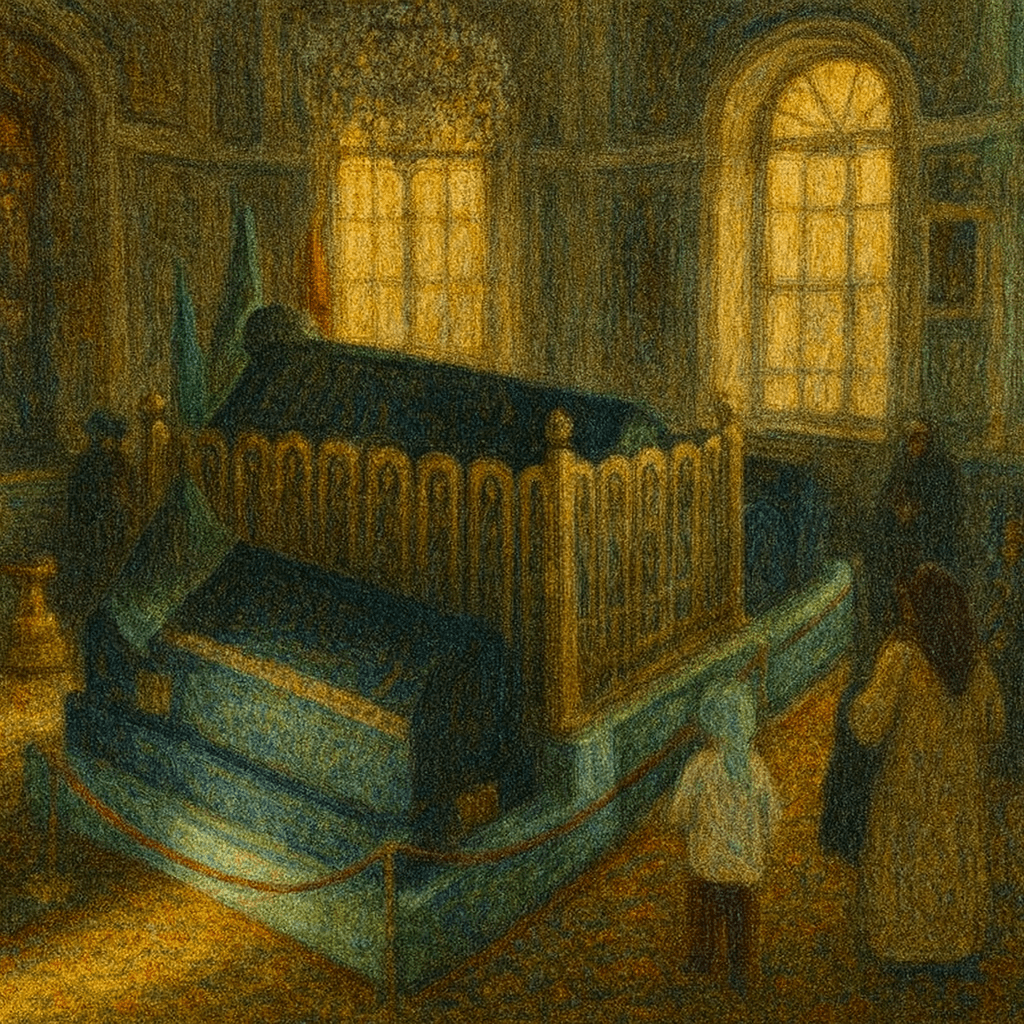
(Generated by Artificial Intelligence)