



Fasting
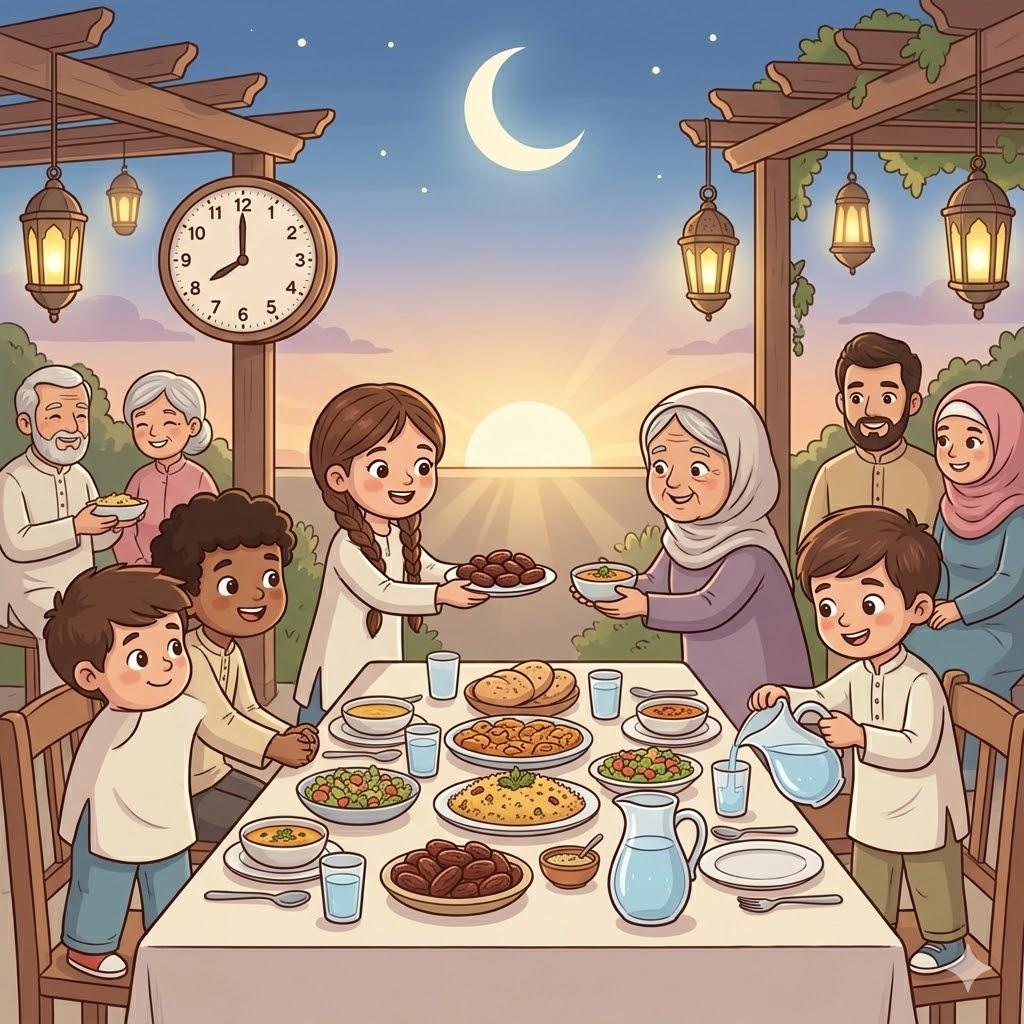
Fasting means abstaining from food and drink with the intention of worship from the break of dawn until sunset. In many parts of the world, people of various faiths observe fasting at specific times according to their beliefs. You may have seen people around you waking up for suhoor during the month of Ramadan or eagerly waiting for the time of iftar.
What Is Fasting and How Is It Observed?
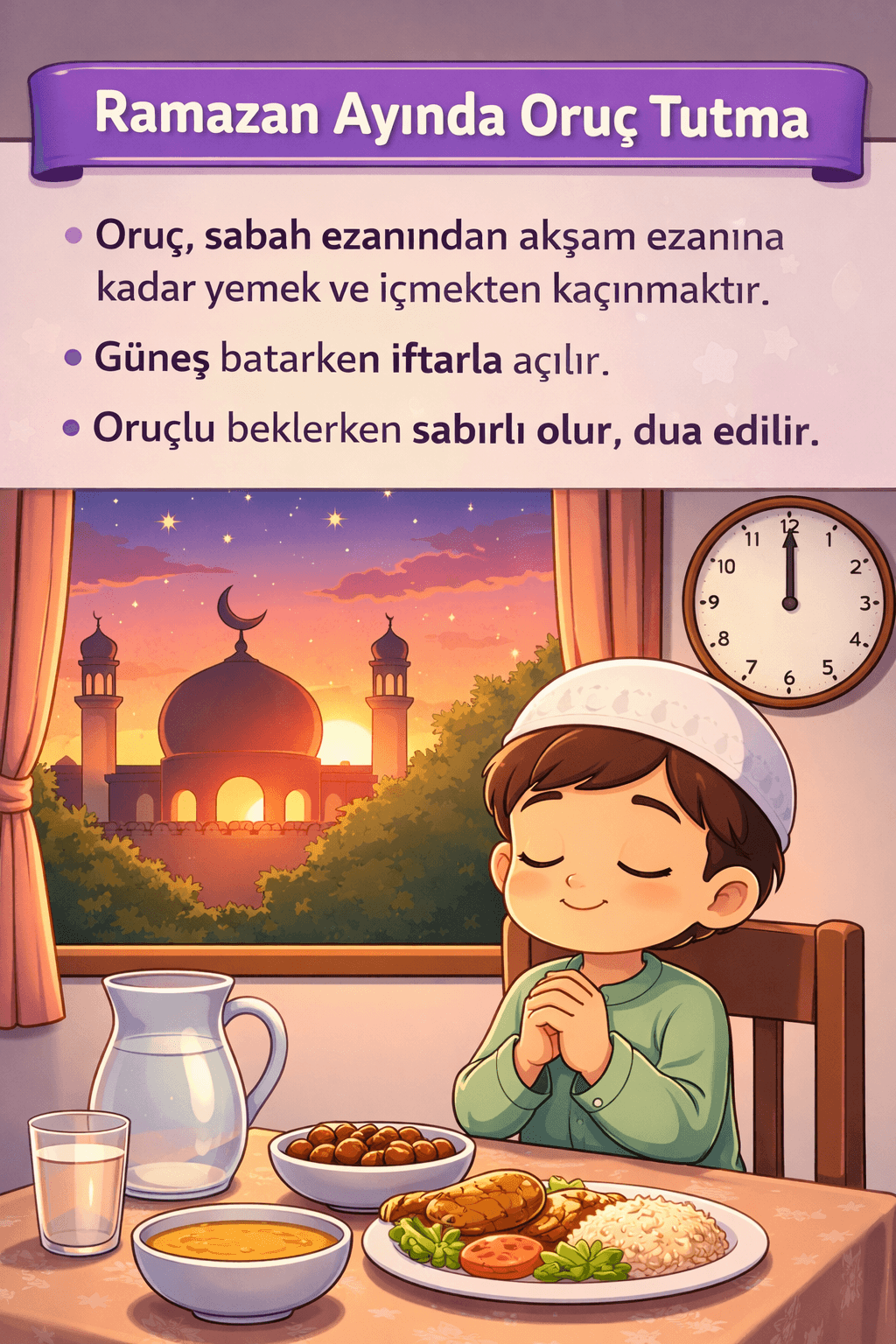
In Islam, fasting lasts from the pre-dawn time known as imsak until sunset. Those who fast do not eat or drink anything during this period. When the sun sets, they break their fast with iftar and have a meal.
Fasting is not merely about going without food; it is also about learning patience. Through fasting, people come to better appreciate the blessings they have and develop compassion for those in need. This act of worship helps individuals gain control over their desires.

Oruç - AA
Who Observes Fasting?
According to Islamic teachings, every healthy, mentally capable Muslim who has reached puberty is required to fast during the month of Ramadan. However, children, the very elderly, the sick, and travelers are not obligated to fast.
Children are not required to fast for the entire day because they are still growing. Nevertheless, many children try fasting for part of the day to emulate their elders and become accustomed to this cherished tradition.
Fasting in Different Religions
Fasting as an act of worship is found in nearly all religions. In Judaism, fasting is observed as a means of repentance and drawing closer to God. In Christianity, fasting is practiced in emulation of the fasts observed by Jesus and his disciples.
Fasting also exists in Eastern religions such as Buddhism and Hinduism. In some traditions, no food is consumed at all during the day, while in others, people abstain from specific foods such as meat or dairy products, practicing what is called a "dietary restriction." Each culture's method and purpose of fasting vary according to its own beliefs.