





Gölova (District)
Sivas is a particularly unique district under our province, notable for its natural beauty and historical significance. Located at the heart of Anatolia, it lies at the point where the Black Sea, Central Anatolia, and Eastern Anatolia regions come closest to one another. Thanks to this position, it encompasses the distinctive charms of all three regions. Let us explore this colorful district more closely!
Where Is Gölova Located?
Gölova is situated within a basin surrounded by mountains. It borders Refahiye to the east, İmranlı to the south, Akıncılar to the west, and Çamoluk to the north. Its elevation is approximately 1,300 meters above sea level, and the famous Kelkit River and Çobanlı River flow through its territory.
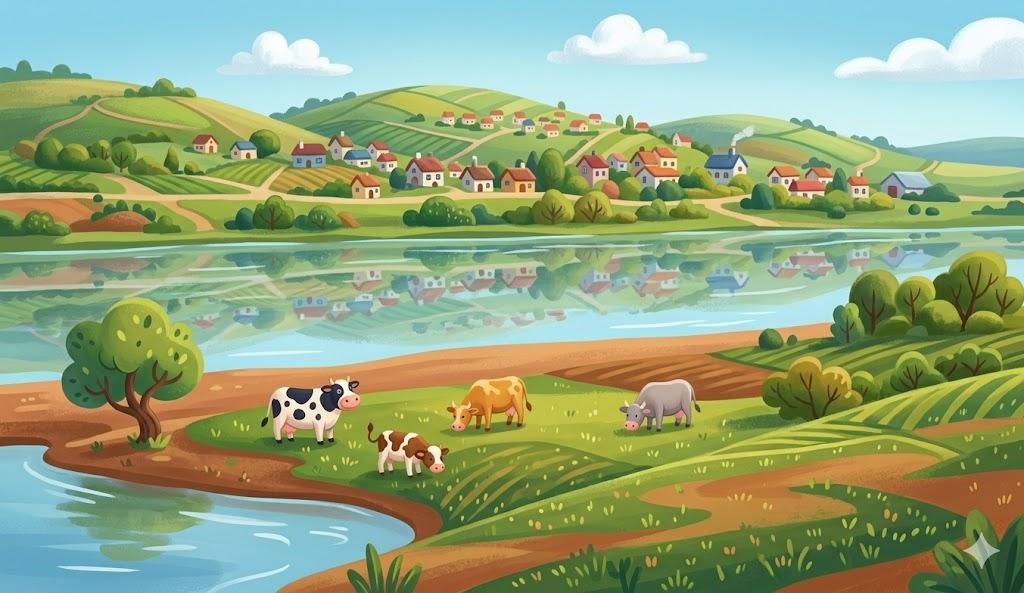
Visual representing Gölova (generated by artificial intelligence)
The district’s climate is as distinctive as its location. In the past, winters were harsher and colder, but over time, the influence of the Black Sea climate has led to milder weather conditions. This has contributed to greater diversity in plant and animal life in the region.
What Exists in Gölova’s Natural Environment?
Gölova is a true paradise for birds. The Gölova Dam Lake, Aşağı Tepecik Lake, and Sütlü Lake serve as resting places for many migratory bird species.
- Red-crested pochards and cranes are among the most notable bird species found here.
- Additionally, fish species such as carp, mullet, and silverfish live in the lakes.
- Although the district’s vegetation is generally steppe, higher elevations feature forests of fragrant juniper trees.
Gölova’s history extends back thousands of years, to approximately 4,000 years ago (2000 BCE). At various times, the Hittites, Byzantines, and the Empire of Trebizond inhabited these lands. The famous traveler Evliya Çelebi passed through this area centuries ago and mentioned Gölova in his writings under the name “Ağvanis.”
Historical Structures and Culture
One of the district’s most important historical structures is the Çoban Baba Türbesi in Çobanlı Village. It is believed to have been built in the 14th or 16th century. The local population has made every effort to preserve this ancient structure, ensuring its survival to the present day. There is also another historical tomb in Karayakup Village.

Çoban Baba Türbesi (generated by artificial intelligence)