




Gürcütepe
Gürcütepe
Let us travel back in time to visit a very ancient village: Gürcütepe. Established thousands of years ago, during the period when humans transitioned from hunting and gathering to settled life, this was a major settlement. Located right next to the city of Şanlıurfa, this hill holds a massive secret beneath its soil: one of humanity’s earliest villages!
Gürcütepe is part of a significant region known as the Taş Tepeler, which includes the renowned Göbeklitepe. Research conducted here provides clues about how our ancestors lived, built their homes, and learned agriculture. Like assembling the pieces of a puzzle, archaeologists are piecing together the picture of the past with every artifact uncovered at Gürcütepe.
What Was Life Like at Gürcütepe?
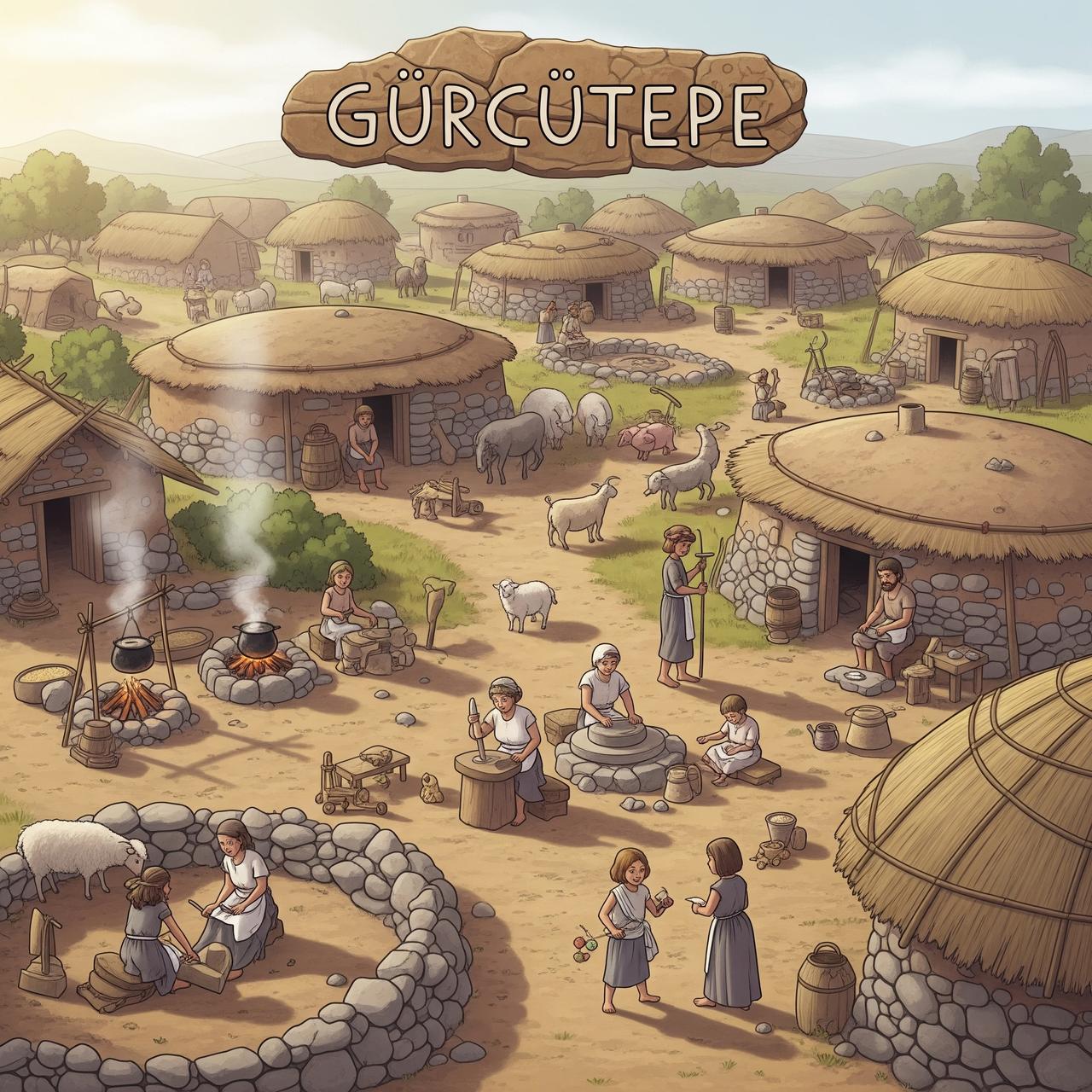
Imagine you were a child living at Gürcütepe around 10,000 years ago. What would your life have been like? First, your house would have looked very different from today’s. Excavations have revealed that people lived in circular or oval-shaped dwellings. The foundations of these homes were made of stone, while the walls were constructed from “pise,” a technique involving compacted earth that was molded into shape and left to dry, forming a sturdy structure.
Traces of daily life have been found both inside and around the homes. For example, hearths used for cooking, pits for storing food, and areas designated for waste disposal have been uncovered. This indicates that the inhabitants of Gürcütepe led a structured village life. It is also known that animals such as cattle, pigs, sheep, and goats were domesticated here. This means people no longer simply hunted these animals—they lived alongside them. This marked one of the most significant changes in human lifestyle!
What Was Found?
Archaeologists have unearthed many exciting objects from beneath the soil at Gürcütepe. These discoveries reveal just how skilled the people of that era were. The most common tools found were made of flint and obsidian, used for cutting and piercing. Obsidian is a type of volcanic glass, prized for its sharpness and used to make blades, arrowheads, and other tools.
In addition, stone vessels and small carvings made from limestone were discovered. These figurines may hold important insights into the beliefs or daily lives of the people at that time. Each artifact feels like a message from the past, helping us imagine the world these ancient people inhabited.
A Journey Through Time
Life at Gürcütepe dates back approximately 9,000 to 11,000 years, to the Neolithic Period (Polished Stone Age). This era represents a turning point in human history, as people began farming the land, domesticating animals, and establishing permanent villages—for the first time, they shifted from a nomadic lifestyle to a settled one.
Near Gürcütepe lies the world-famous Göbeklitepe, also from the same period. While Göbeklitepe is known as a ceremonial center featuring massive circular and T-shaped stone pillars, Gürcütepe was a large settlement where people lived and carried out their daily routines. Together, these two sites offer invaluable perspectives on different aspects of social life during this transformative era.