


Hodak Game
Have you ever played a game using only materials you found around you, without needing any technology, and running everywhere? Hodak is a traditional children’s game with historical roots stretching to the present day, particularly in the Çorum and Dörtdivan regions, combining speed, concentration, and fun. While playing, children develop both physical and mental skills and socialize outdoors.
Core Game Materials
Everything needed to begin this exciting game is found in nature. The player must find a sturdy stick, approximately one meter long, suited to their height and strength. The central element of the game, called “emen,” is typically a small pit dug at a distance. The “hodak” itself is actually a leg bone from large livestock. If a bone cannot be found, a hard piece of wood shaped like a top at one end may be used instead. Once the materials are ready, the next step is selecting the “güdekçi,” the most challenging role in the game.
How Is the Güdekçi Chosen?
In Hodak, the person who acts as the “ebe” (base) is called the “güdekçi,” and because this role is very tiring, few players want to take it. A fair method is used to select the güdekçi. All players gather their sticks and one child throws them into the air. After the sticks fall to the ground, players step backward one by one. The player whose foot first touches a stick becomes the güdekçi. The other players are freed from being the base and begin playing. Hodak can be played in two different ways depending on the number of players, and it is most enjoyable with three to six participants.
Single Emen Hodak
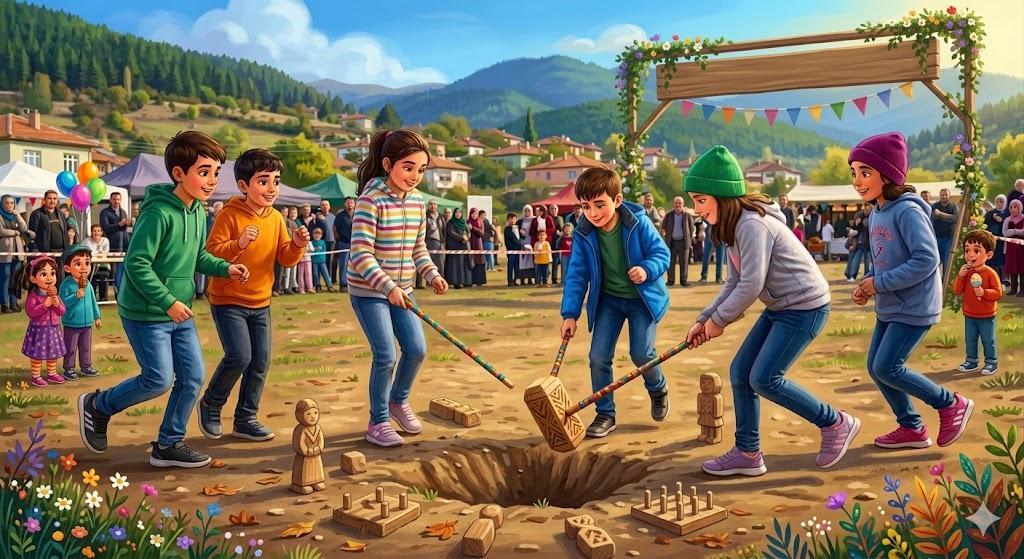
A single pit (emen) is dug in the center of the playing area, and the hodak is placed a few steps away from it. The güdekçi’s main task is to use their stick to push or drag the hodak into the pit. However, the other players constantly strike the hodak to keep it away from the pit. If the güdekçi successfully gets the hodak into the pit or touches another player with their stick while the hodak is in motion, they are freed from being the base.
Multiple Emen Hodak
In this version, each player has their own pit, and there is also a shared pit called the “cin emeni.” The güdekçi tries to throw the hodak into the cin emeni while simultaneously preventing other players from protecting their own pits. Players hold their sticks inside their respective pits to defend them, making the game more strategic.
Horak Festivals in Dörtdivan
In the Dörtdivan district of Bolu, this game is known as “Horak” and is popular not only among children but also among young girls and brides. Every year in September and October, some villages host festivals called “Horak Mayhası.” These events feature inter-village tournaments, and losing teams treat the winning teams to meals. This tradition brings people together and fosters new friendships.
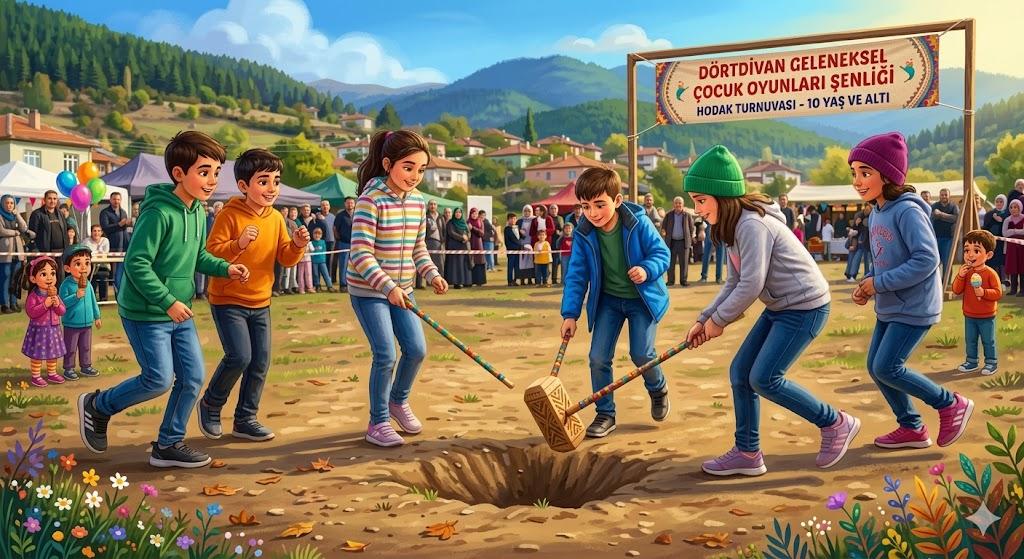
Children Playing Hodak, Representative Image (This Image Was Generated by Artificial Intelligence.)
A Journey Through Time
It is known that around 100 years ago, Hodak was one of the most widely played games among children and youth across Anatolia. Today, efforts are being made to preserve such traditional games as part of the cultural heritage.