




How Do Rockets Reach Space?
Rockets are super-fast, powerful vehicles that carry satellites, space telescopes, and astronauts from Earth into the depths of space. To move more easily against wind and Earth’s invisible pulling force called gravity, they are designed as long, slender cylinders with pointed tips.
One of the most interesting differences between rockets and airplanes or helicopters is this: Airplanes need oxygen from the air to operate. But since rockets must fly through the vacuum of space where there is no air, they carry both their fuel and the oxygen they need in huge tanks behind them!
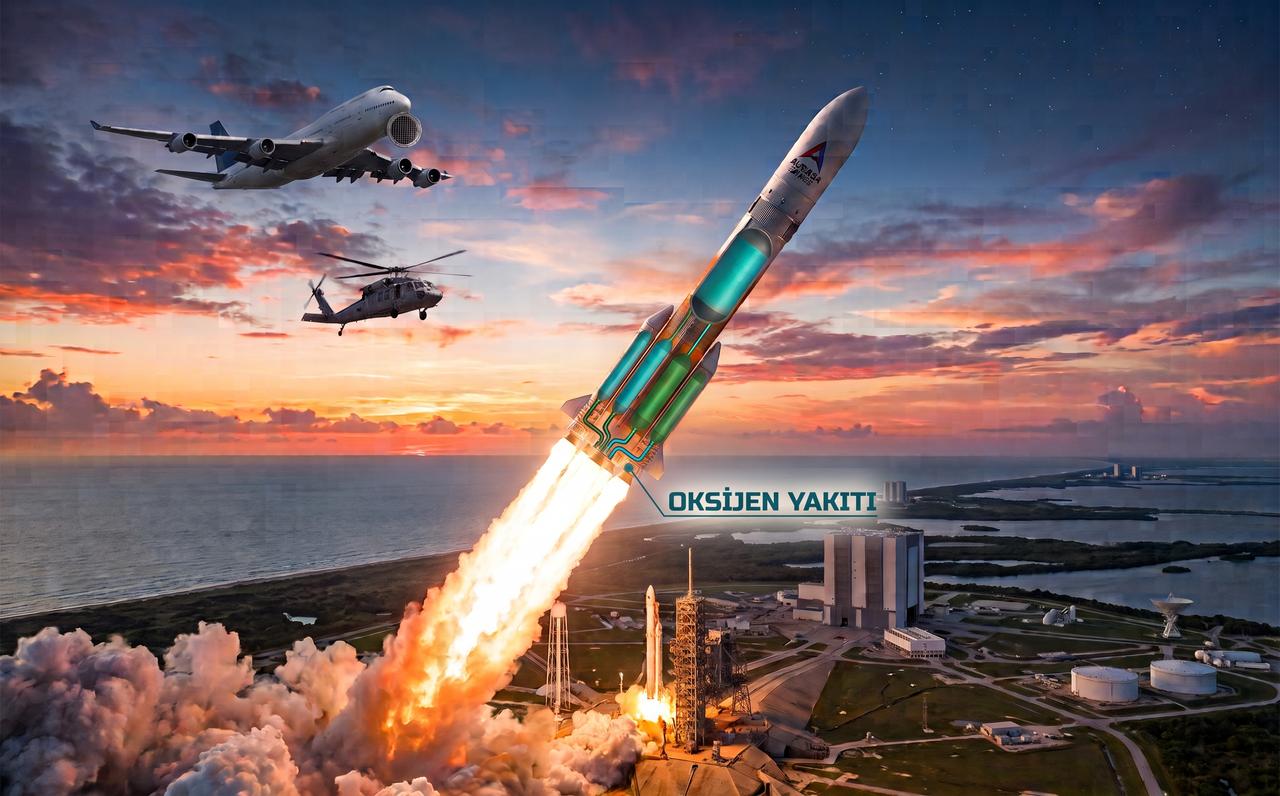
The flight pattern of an aircraft and a rocket. (Generated by artificial intelligence)
How Do Rockets Reach Space?
The secret to how rockets reach space is similar to playing with a balloon! What happens when you inflate a balloon and let it go without tying its mouth? As the air rushes out downward, the balloon shoots upward rapidly, right?
Rockets work exactly according to this "Action-Reaction" principle:
- Fuel inside the rocket’s engine is ignited, producing a massive flame.
- Hot gases and smoke are forcefully expelled downward through an opening at the base of the rocket (Action).
- As these gases push downward, the rocket is propelled upward with tremendous speed in the exact opposite direction (Reaction).
Thanks to the immense force of the flames beneath it, the rocket overcomes Earth’s gravitational pull. To reach space, it must travel hundreds of times faster than a car—reaching speeds of about 28,000 kilometers per hour! As it ascends, it sheds empty fuel tanks to become lighter and reaches its destination in space.
What Do They Look Like and How Are They Built?
When we look at a rocket from the outside, it may appear like a giant piece of chalk, but inside it consists of three main sections:
- Valuable Payload (Top Section): This is the satellite, giant telescope, or small capsule where astronauts sit.
- Fuel Tanks (Body): Huge tanks that make up nearly the entire body of the rocket.
- Engine and Exhaust (Bottom Section): The massive engine section where fuel is burned and flames are expelled outward.
How Big Are They and How Much Do They Weigh?
Rockets are truly enormous! While small research rockets are only a few meters tall, the giant Saturn V rocket that carried humans to the Moon was as tall as a 36-story building (110 meters).
Their weight is incredible: A fully fueled rocket ready for launch can weigh as much as about 500 giant elephants combined (2,000 to 3,000 tons). Most of this weight comes from fuel alone!
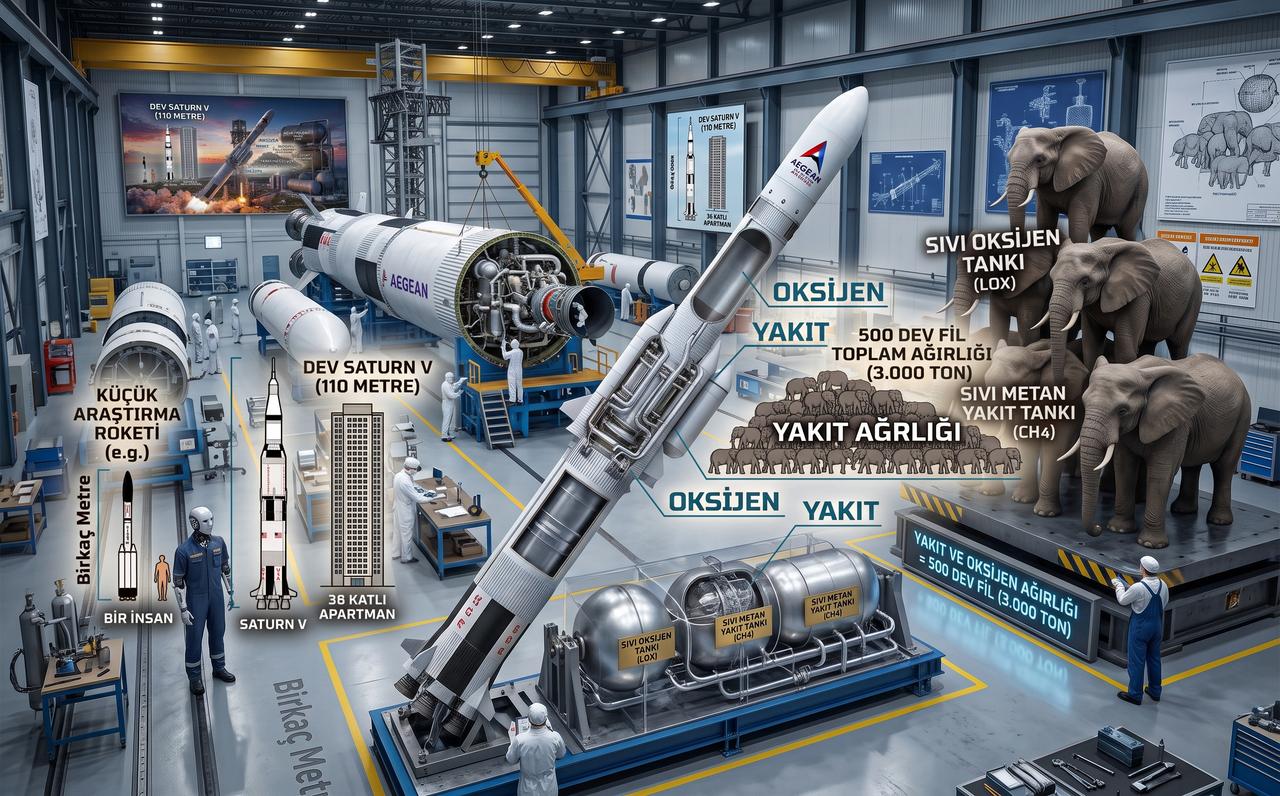
Rockets in the manufacturing facility. (Generated by artificial intelligence)
How Long Do They Fly?
The most exciting part of a rocket’s journey actually lasts just a short time! Burning its fuel to deliver astronauts or satellites into space takes only 8 to 15 minutes.
After completing its mission and separating from its payload, the rocket leaves behind the objects it carried, which continue operating in space for years. In fact, some modern smart rockets can return to Earth after delivering their payload and land vertically back on the ground.
Who Invented the Rocket?
The history of rockets goes back thousands of years! The earliest simple rockets were festive firecrackers made in China hundreds of years ago by filling bamboo tubes with gunpowder. Over time, this propulsion technology was adapted for warfare and defense.
The story of modern rockets that reach space unfolded as follows:
- 1926: Scientist Robert Goddard launched the first liquid-fueled rocket powered by gasoline in his backyard.
- 1957: Russia (USSR) sent the first artificial satellite, Sputnik 1, into space using a rocket.
- 1969: The United States used the giant Saturn V rocket to send astronauts to the Moon, marking the first time humans set foot on its surface.
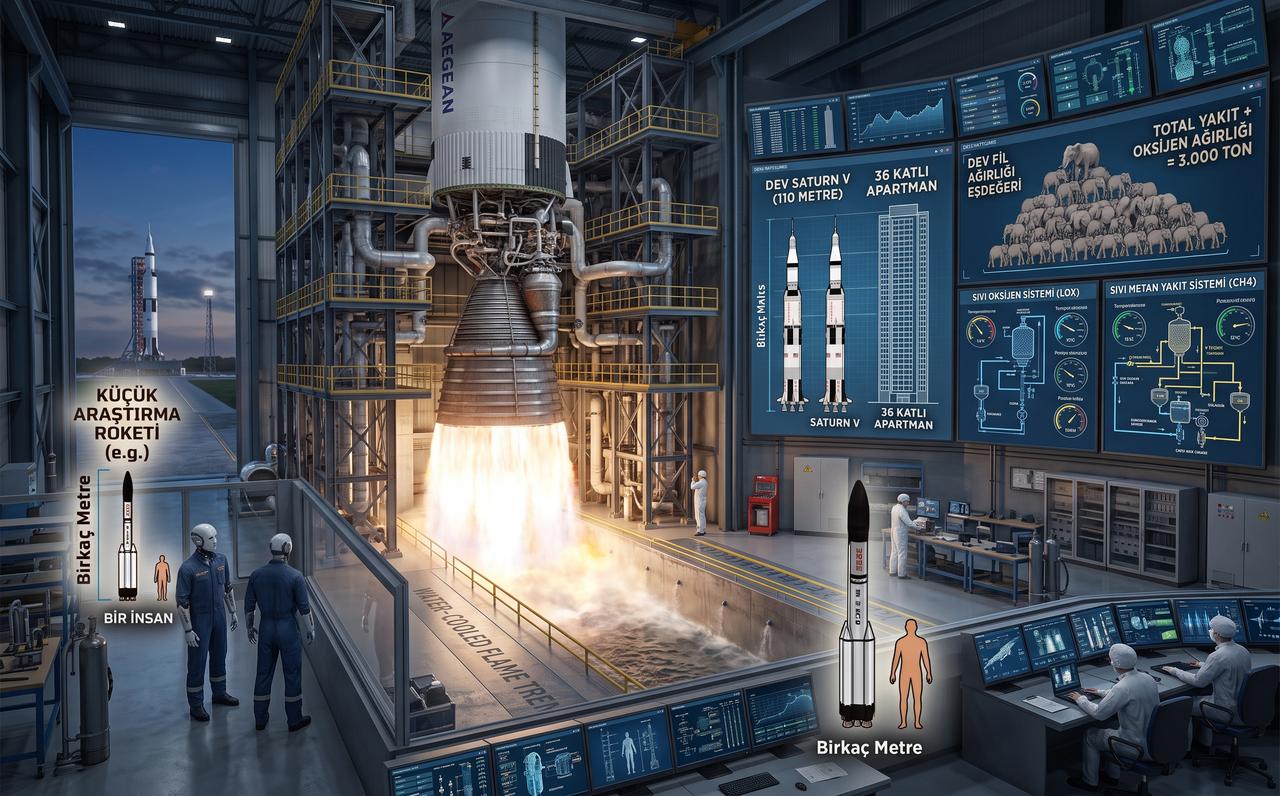
An image about rockets. (Generated by artificial intelligence)
What Are Rockets Used For?
Without rockets, we would not know most of what we do about space! We use rockets for the following purposes:
- Exploring Space: Carrying space telescopes, robotic rovers to Mars, and astronauts into space.
- Connecting Earth: Placing satellites into Earth’s orbit to broadcast television, internet, and mapping (GPS) signals.
- Weather Forecasting: Launching meteorological satellites into the sky to predict weather conditions.