



How Is Paper Produced?
Paper is a thin material made from plant fibers. It is used for writing, drawing, printing books, and packaging. It appears in every aspect of daily life and facilitates communication. Paper is also an indispensable tool for creative projects and handicrafts. It serves as the fundamental medium for information sharing among humans.

(Generated by artificial intelligence.)
The History of Paper
Paper was first produced in China and later spread across the world. Thanks to paper, humans gained the ability to store and share information. This invention made a significant contribution to the development of education and culture. By enabling the emergence of books and written documents, paper introduced a major innovation to human history.
Raw Materials Used in Paper Production
Wood from trees, wood chips from apricot and other fruit trees, and agricultural residues are used in paper manufacturing. These materials are processed without harming the environment. Thus, natural resources are conserved and waste is converted into useful products through recycling. This method forms the foundation of sustainable production.

(Generated by artificial intelligence.)
How Is Paper Pulp Prepared?
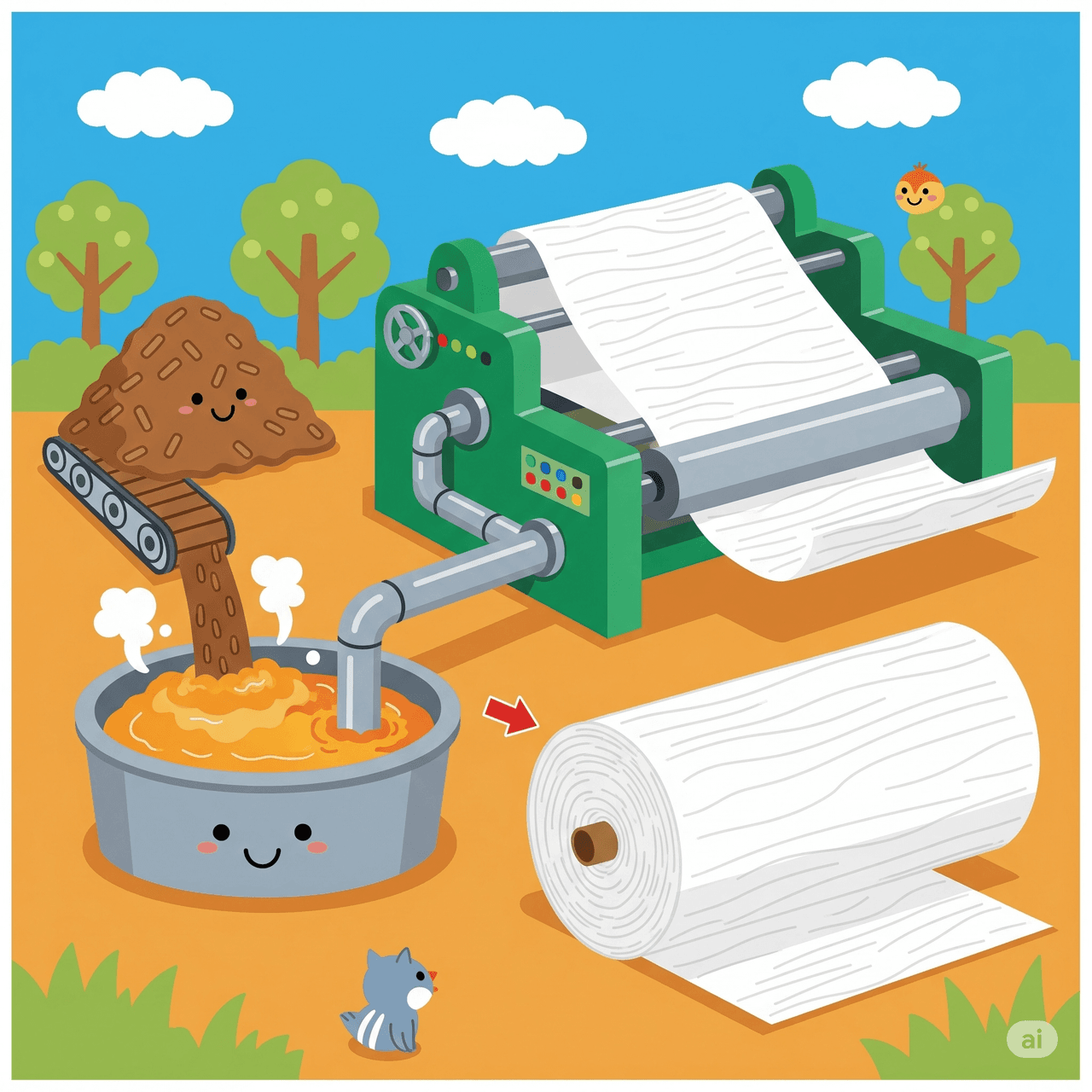
Wood and plant fibers are ground and mixed with water to produce paper pulp. The pulp is prepared so that the fibers adhere to one another and is processed using specialized machinery. The consistency of the pulp determines the quality of the paper. This stage is critical in achieving the paper’s strength and smooth texture.
Shaping the Paper
The pulp is formed into thin layers and pressed. Excess water is removed, and the paper is dried and hardened. This step ensures the paper becomes durable enough for use. Drying methods influence the paper’s texture, thickness, and elasticity, contributing to the creation of different paper types.

(Generated by artificial intelligence.)
Types of Paper
Various types of paper are produced for different purposes. Cardboard, book paper, newsprint, and specialized packaging papers differ based on the raw materials used and the processing methods applied. Each type of paper has distinct strength, texture, and absorbency. This variety enables paper to be used across numerous industries and artistic fields.
Industrial Raw Material Selection
The choice of raw material in paper and cardboard production forms the basis of quality. Types of wood and agricultural residues determine production costs and environmental impacts. The correct selection ensures both high-quality paper and sustainable production. Environmental and economic criteria are considered in raw material selection.

(Generated by artificial intelligence.)
Environmental Benefits
Using waste wood and agricultural residues in paper production helps preserve forest resources. Through recycling and the use of agricultural waste, no harm is caused to the environment. This approach forms the foundation of sustainable production and contributes to maintaining ecological balance. It also prevents the waste of natural resources.
The Importance of Paper in Daily Life
Paper is essential in education, communication, art, and packaging industries. Books, notebooks, newspapers, and cardboard boxes rely on paper in every area of our lives. Thanks to paper, information and products are transported safely. Additionally, paper enables individuals to develop their creativity.
The Future of Paper Production
New technologies and alternative raw materials are making paper production more environmentally friendly. The use of agricultural residues is increasing and energy savings are being achieved. In the future, paper production will be both sustainable and more economically efficient. Thus, nature will be protected while the paper industry meets modern demands.