



Iğdır
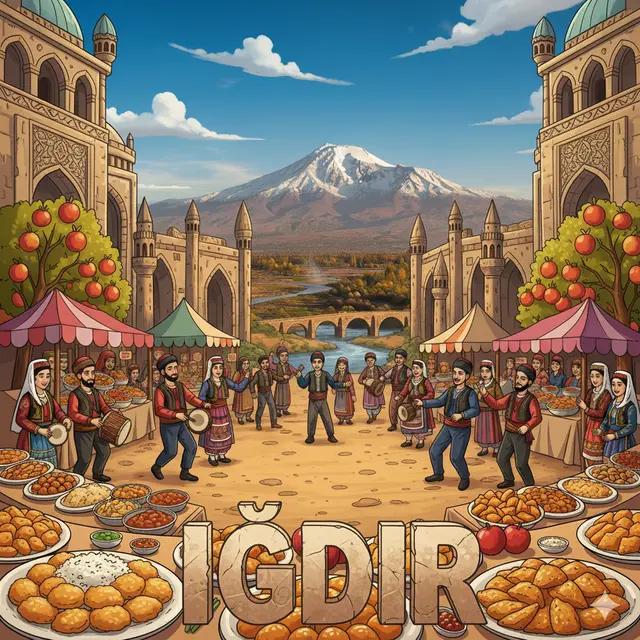
Iğdır is a city in Türkiye’s Eastern Anatolia Region, known for its natural beauty and historical significance. The city lies adjacent to Ağrı Dağı, Türkiye’s highest mountain. One of the distinctive features of Iğdır is its unique climate, shaped by the high mountains surrounding it. This localized climate is known as a microclimate, enabling the cultivation of a wide variety of agricultural products, from cotton to peaches.
(Generated by artificial intelligence)
Why Is Its Geography and Climate Special? 🏔️
Iğdır occupies a unique position, bordered by the Aras River to the north and three countries: Armenia, Nakhchivan (an exclave of Azerbaijan), and Iran. The city lies in a depression between high mountains.
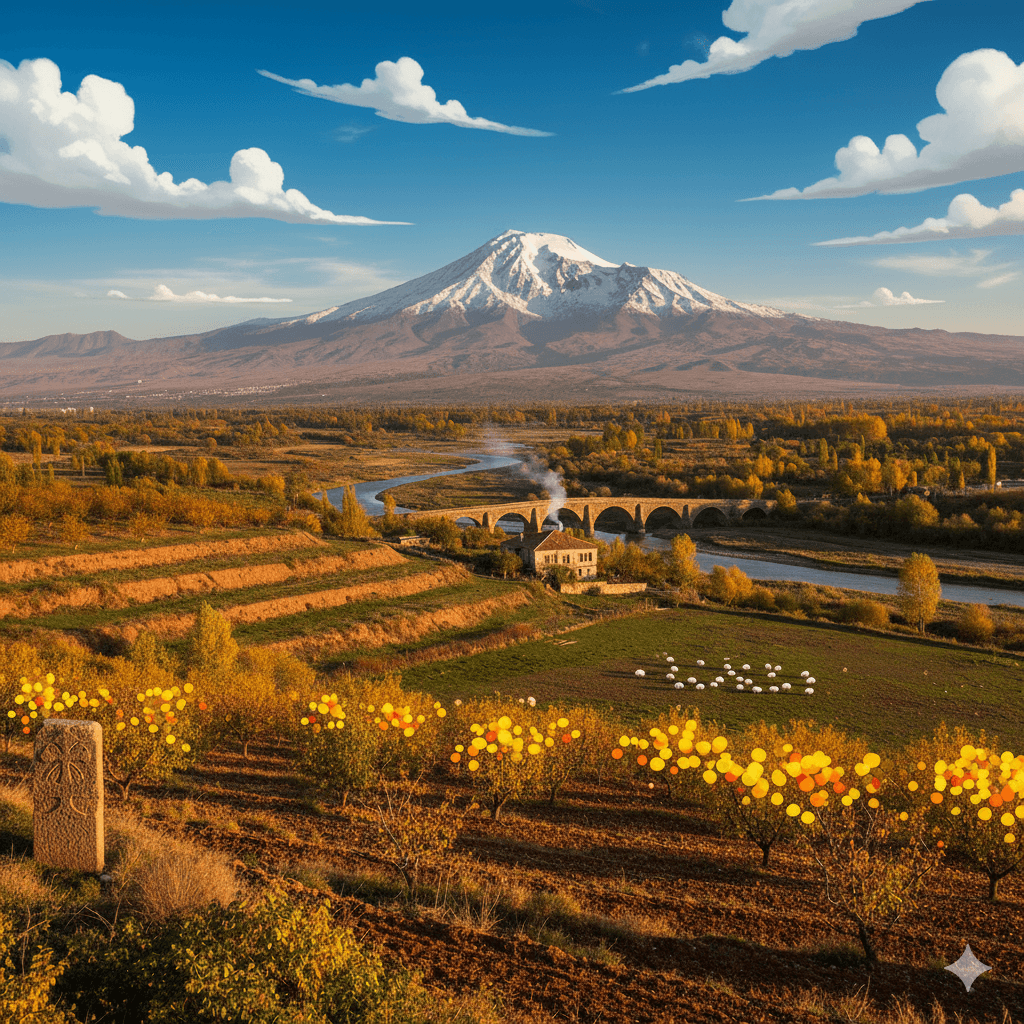
This geographical setting influences Iğdır’s climate. Although winters in Eastern Anatolia are typically harsh and cold, winters in the Iğdır Plain are milder and summers are long and hot. This phenomenon is called a microclimate. Just as a houseplant can survive indoors despite winter conditions outside, the Iğdır Plain enjoys a warmer climate than its surrounding regions.
Thanks to its fertile and well-irrigated soil, the region produces abundant cotton, sugar beet, and a wide variety of fruit, especially the famous Iğdır apricot.

(Generated by artificial intelligence)
Time Travel: Historical Traces of Iğdır 🕰️
The history of Iğdır dates back to ancient times. Remnants of early civilizations such as the Urartians have been found in the region. However, the name Iğdır is believed to originate from the Iğdır Tribe, one of the 24 tribes of the Oghuz Turks. The word “Iğdır” carries meanings such as “good, great, noble, renowned.”
Throughout history, Iğdır has served as a key stop along major trade routes, enriching its cultural heritage. Structures such as the Ejder Caravanserai, once used by caravans, have survived to the present day.
Culture and Traditions of Iğdır 🎊
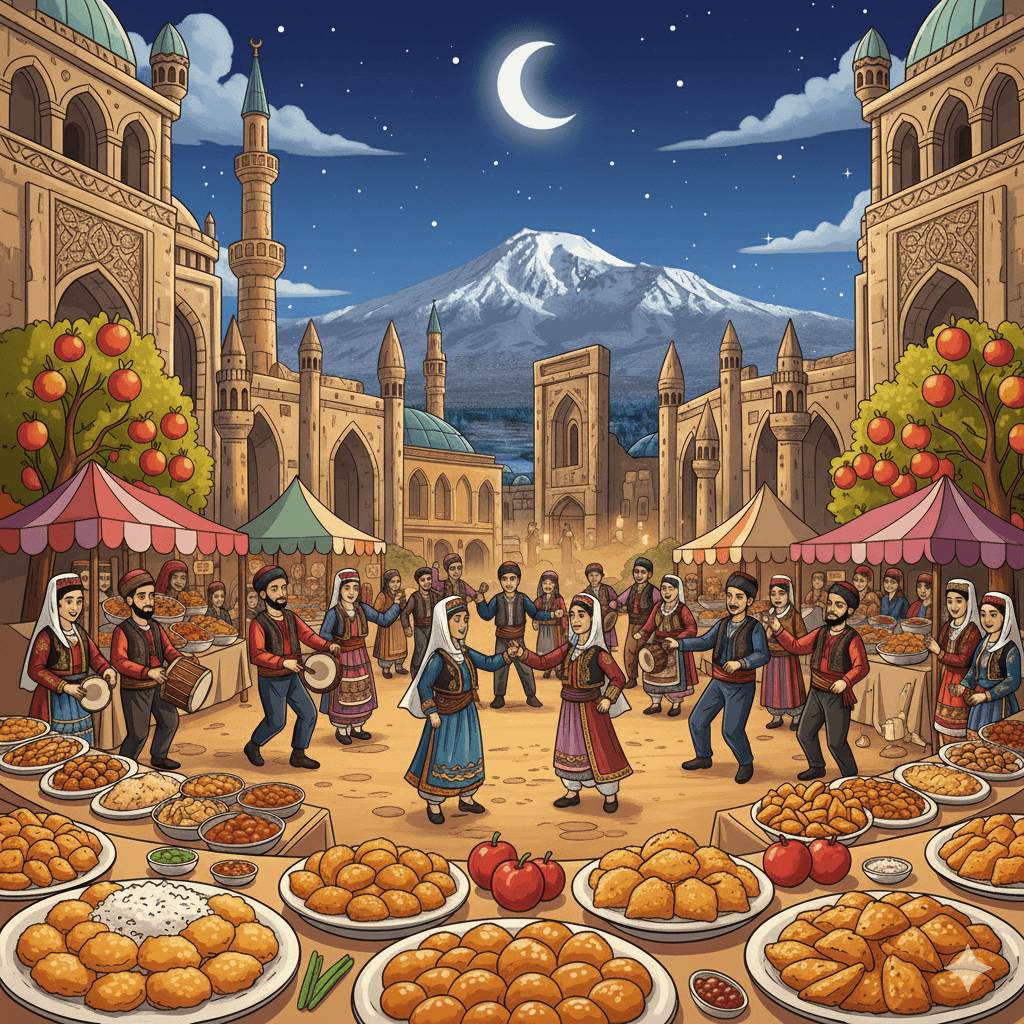
In Iğdır, the Nevruz Festival (New Day) is celebrated with great enthusiasm. Nevruz symbolizes the arrival of spring and the beginning of new life. Perhaps you have helped your mother or father clean your home before spring. Similarly, the people of Iğdır clean their homes before the festival and on the day itself, light bonfires and jump over them. Jumping over fire, in ancient beliefs, signifies purification from illness.
Sheep-Headed Tombstones: In the Karakoyunlu district of Iğdır, ancient Turkish tombstones with sheep-head carvings can be found. These statues were typically erected over the graves of individuals who died young or demonstrated heroism. These stones provide valuable insights into the beliefs and artistic sensibilities of that era.
(Generated by artificial intelligence)
Places to Visit in Iğdır with Children 🗺️
Iğdır offers many interesting sites where children can both have fun and learn:
Tuzluca Salt Caves: These caves in the Tuzluca district resemble a vast underground world of salt. Salt has been extracted from here for years. The salt crystals inside the caves are particularly captivating.
Rainbow Hills: These hills in Tuzluca are colorful, just like a rainbow! Due to different minerals in the soil, they display numerous shades of red, yellow, and brown. You can take a walk across these colorful hills and enjoy stunning views.
Meteor Crater: Iğdır is home to the world’s second-largest meteorite crater. Formed by a meteorite that fell from the sky in ancient times, this crater is 35 meters wide and 60 meters deep. Seeing the immense impact a single meteorite can leave is truly astonishing!