


This article was automatically translated from the original Turkish version.
+2 More
Tuzluca Salt Caves
Location | Iğdır Türkiye Tuzluca District | ||||||||
|---|---|---|---|---|---|---|---|---|---|
Formation Age | 24–37 million years | ||||||||
Temperature | Constant 12°C (year-round) | ||||||||
Depth(s) | Approximately 80 meters underground | ||||||||
Area(s) | 55 dunams | ||||||||
Reserve | 226 million tons of rock salt | ||||||||
Daily Production | 60 tons (maximum 200 tons) | ||||||||
Therapeutic Effect | Asthma, COPD, bronchitis | ||||||||
Number of Visitors | Total 300,000+ | ||||||||
Tourism Beginning | 2021 (Opening of the Salt Therapy Center) | ||||||||
Historical Use | Medes, Persians, Urartians, Kingdom of Armenia | ||||||||
Climate Role | Summer natural cooling area | ||||||||
In the eastern part of Türkiye, within the district of Tuzluca attached to the province of Iğdır, the Salt Caves are a natural formation known for both their geological structure and historical background. Rock salt layers formed millions of years ago deep beneath the surface provide various contributions to the region in economic, tourist and health sectors.

Tuzluca Salt Therapy Center (Photo: Mehmet Bağcı)
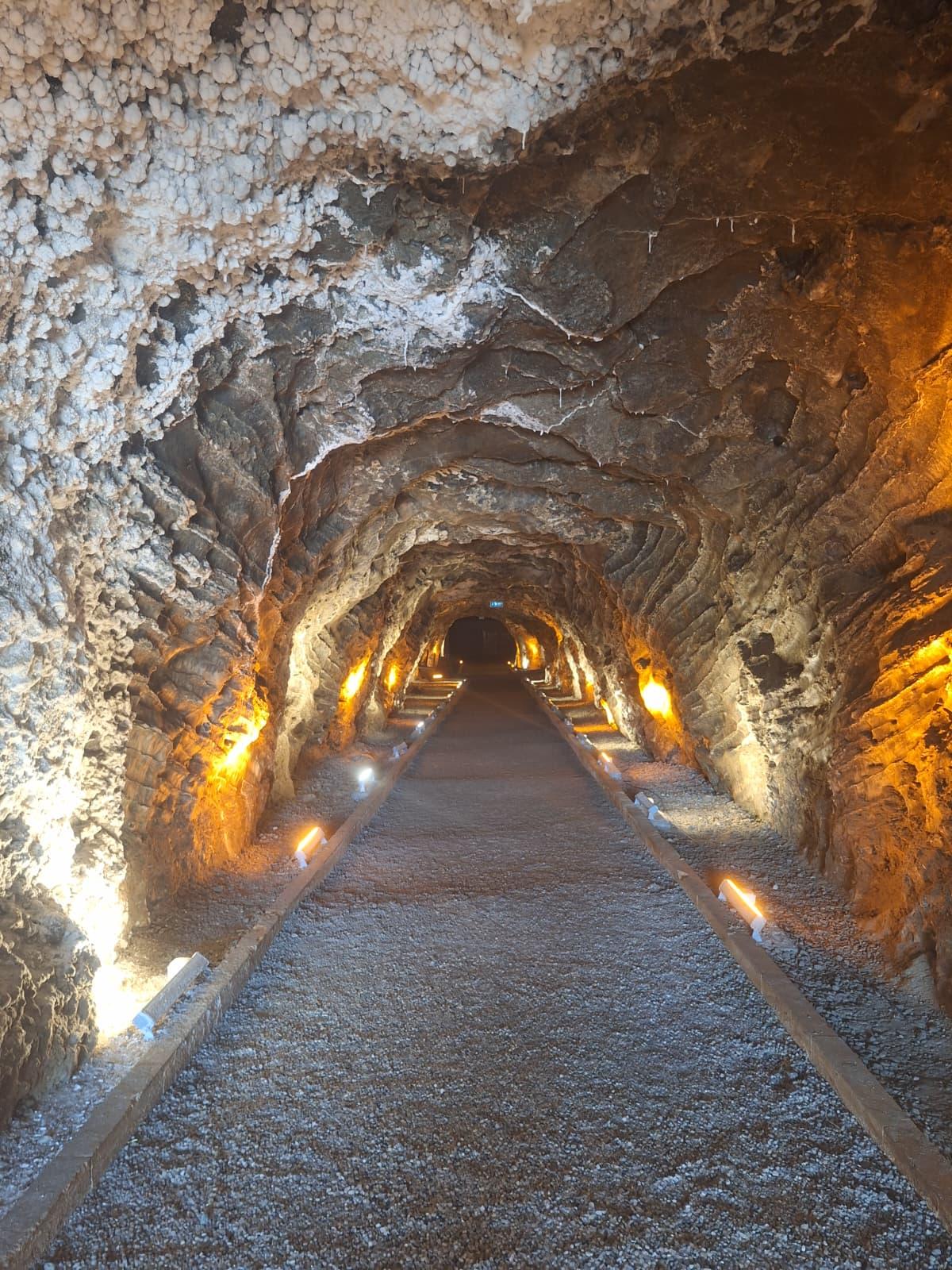
The Salt Caves are located within the interior of Tuz Dağı, and the rock salt formations inside are estimated to have formed approximately 24 to 37 million years ago. The caves maintain a constant temperature of 12°C throughout the year, making them a suitable environment for scientific research and offering an important microclimate for health tourism. The cave system consists of gallery rooms resembling chambers, interconnected by tunnels extending downward beneath the surface.

Some of the Cave Chambers (Photo: Mehmet Bağcı)
Salt has been a vital resource for many civilizations throughout history. The salt reserves in the Tuzluca region were utilized in the past by states such as the Median Empire, the Persians, the Urartians and the Armenian Kingdoms. Although written sources do not directly document this use, oral history and archaeological data from the region support this claim. In the 15th century, the Spanish envoy Ruy González de Clavijo, who visited the region, mentioned the Salt Caves in his travelogue and noted that local communities extracted salt from these caves.

Macro (Close-up) Image of Salt Inside the Cave (Photo: Mehmet Bağcı)
The Salt Caves continue to hold economic significance today. Approximately 60 tons of salt are produced daily within the caves, and this amount could be increased to 200 tons when operating at full capacity. Tuz Dağı is considered one of Türkiye’s largest salt reserves and has the potential to meet the country’s salt needs for approximately 100 years. A railway wagon used between 1920 and 1930 for transporting salt from Zonguldak is now exhibited at Iğdır University as a historical document of this process.

A Railway Wagon Used for Salt Transportation Between 1920 and 1930 (Iğdır University)
The Salt Caves possess not only economic value but also therapeutic potential. The Salt Therapy Center, opened in 2021, offers an alternative treatment environment for individuals suffering from respiratory conditions such as asthma, bronchitis and COPD. The high concentration of salt and the constant air temperature within the caves contribute to the alleviation of symptoms associated with these illnesses. Since its opening, approximately 300,000 people have visited the caves.

Tıbbı Nebevi (Photo: Mehmet Bağcı)
The Salt Caves serve as a natural refuge for the local population during summer months due to their natural coolness. Even when external temperatures reach up to 45°C, the caves maintain a constant internal temperature of 12°C, positioning them as a natural “climate balancer.” Visitors spend extended periods with their families inside the caves, resting in the cool environment. Covering an area of 55 hectares, the caves also host various cultural events.

Cave Galleries Located Approximately 80 Meters Below Ground (Photo: Mehmet Bağcı)
Accessed November 26, 2025.
Dalkılıç, Yeşim. "Iğdır Tuzluca Tuz Mağaraları." Türkiye Turizm Ansiklopedisi, 2024. Accessed August 6, 2025.
Iğdır Üniversitesi Tuz Terapi Uygulama ve Araştırma Merkezi. "Iğdır’ın Saklı Cenneti: Tuz Mağaraları." Tuzmer.igdir.edu.tr, August 6, 2025.
Iğdır Üniversitesi. "Tarihi Tuzluca Tuz Mağarası’nda Kullanılan Vagon Karaağaç Kampüsü’nde Sergilenmeye Başlandı." Iğdır Üniversitesi Blog, August 6, 2025.
Kültür Portalı. "Tuz Mağaraları." Kültür Portalı, Accessed August 6, 2025.
TRT Haber. "Iğdır’daki Tuzluca Tuz Mağaraları Sağlık İçin de Kullanılacak." TRT Haber, August 9, 2021.
Tuzluca Belediyesi. "Tuzluca Tuz Mağaraları." Tuzluca Belediyesi Resmi Sitesi, Accessed August 7, 2025.
Yıldız, Hüseyin. "Iğdır’daki Tuz Mağaraları Yaz Sıcaklarında Serin Bir Sığınak Oluyor." Anadolu Ajansı, August 27, 2024.

Tuzluca Salt Caves
Location | Iğdır Türkiye Tuzluca District | ||||||||
|---|---|---|---|---|---|---|---|---|---|
Formation Age | 24–37 million years | ||||||||
Temperature | Constant 12°C (year-round) | ||||||||
Depth(s) | Approximately 80 meters underground | ||||||||
Area(s) | 55 dunams | ||||||||
Reserve | 226 million tons of rock salt | ||||||||
Daily Production | 60 tons (maximum 200 tons) | ||||||||
Therapeutic Effect | Asthma, COPD, bronchitis | ||||||||
Number of Visitors | Total 300,000+ | ||||||||
Tourism Beginning | 2021 (Opening of the Salt Therapy Center) | ||||||||
Historical Use | Medes, Persians, Urartians, Kingdom of Armenia | ||||||||
Climate Role | Summer natural cooling area | ||||||||
Geological Structure and Physical Characteristics
Historical Use of Salt
Salt Production in the Modern Era
Salt Therapy Center and Health Tourism
Touristic and Cultural Value