

This article was automatically translated from the original Turkish version.
+2 More
Type of Geographical İndication | Place of Origin | ||||||||
|---|---|---|---|---|---|---|---|---|---|
File Number | C2017/170 | ||||||||
Application Date | 01.11.2017 | ||||||||
Registration Number | 385 | ||||||||
Registration Date | 17.09.2018 | ||||||||
Product / Product Group(s) | Processed and unprocessed fruits vegetables and mushrooms | ||||||||
Applicant/Registrant(s) | Iğdır Chamber of Commerce and Industry | ||||||||
Status | Registered | ||||||||
Iğdır Kayısı is a registered geographical indication apricot variety unique to Iğdır Province in Türkiye. Iğdır Kayısı, as a type of geographical indication named after its place of origin, was registered by the Turkish Patent and Trademark Office on 17 September 2018. The registering institution is the Iğdır Chamber of Commerce and Industry. This geographical indication has been protected since 1 November 2017 under Law No. 6769 on Industrial Property.
The geographical boundary of Iğdır Kayısı includes Iğdır Province and its districts as well as the Kağızman district of Kars Province. The name of the geographical indication may be used alongside a trademark on the product. Additionally, a specific logo must appear on the product packaging or the crates used for transportation.
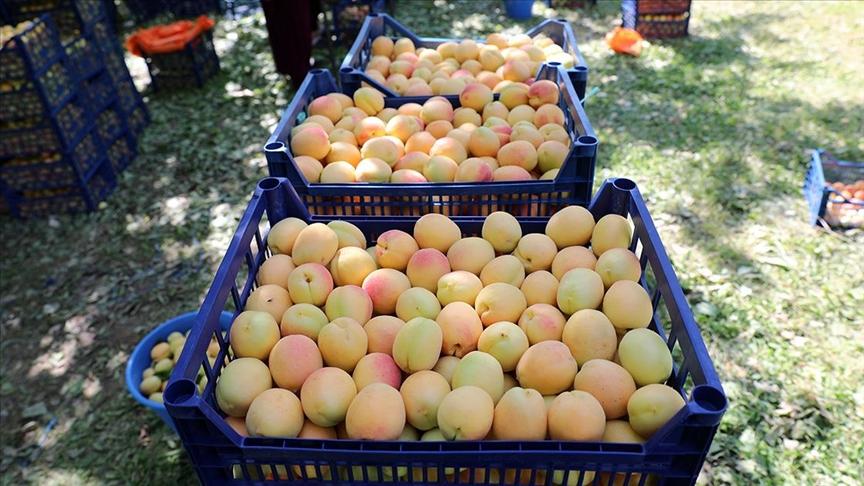
Iğdır Kayısı produces broad-crowned and vigorously growing trees. Its most distinctive feature is its large table-grade fruits with high eating quality. The dominant variety in Iğdır apricot production areas is Şalak. Other local varieties such as Teberze and Ordubat are used as pollinators.

Image of Iğdır Kayısı (Anadolu Agency)
Iğdır Kayısı thrives in a climate with cold winters and hot, sunny summers. It grows well in warm, nutrient-rich soils. In the Aras Valley, the period from full bloom to harvest ranges from 97 to 123 days.

Image of Iğdır Kayısı Harvesting (Anadolu Agency)
Monitoring of Iğdır Kayısı is conducted by a minimum four-member inspection body composed of experts from the Iğdır University Faculty of Agriculture, Department of Horticultural Crops, and the Iğdır Provincial Directorate of Agriculture, under the coordination of the Iğdır Chamber of Commerce and Industry. Inspections are carried out twice annually during production and harvest phases, as well as whenever a complaint is filed, suspicion arises, or deemed necessary.
The inspection body may utilize personnel from public or private institutions or hire experts and services as needed. In cases of unauthorized or non-compliant use, the Iğdır Chamber of Commerce and Industry initiates the necessary legal procedures. Inspection reports are submitted annually to the Turkish Patent and Trademark Office.
Anadolu Ajansı. "Hasadına Başlanan Iğdır Kayısısı Avrupa, Rusya, Gürcistan ve Azerbaycan’a İhraç Ediliyor." July 15, 2024. https://www.aa.com.tr/tr/ekonomi/hasadina-baslanan-igdir-kayisisi-avrupa-rusya-gurcistan-ve-azerbaycana-ihrac-ediliyor/3607810.
Turkish Patent and Trademark Office. "Iğdır Kayısısı." Geographical Indications and Traditional Product Name Detail Page. Accessed July 15, 2025. https://ci.turkpatent.gov.tr/cografi-isaretler/detay/38397.
Turkish Patent and Trademark Office. *Iğdır Kayısısı Coğrafi İşaret Tescil Belgesi*. Accessed July 15, 2025. https://ci.turkpatent.gov.tr/Files/GeographicalSigns/d058fb7e-ef31-423a-88b4-9884346f2698.pdf.

Type of Geographical İndication | Place of Origin | ||||||||
|---|---|---|---|---|---|---|---|---|---|
File Number | C2017/170 | ||||||||
Application Date | 01.11.2017 | ||||||||
Registration Number | 385 | ||||||||
Registration Date | 17.09.2018 | ||||||||
Product / Product Group(s) | Processed and unprocessed fruits vegetables and mushrooms | ||||||||
Applicant/Registrant(s) | Iğdır Chamber of Commerce and Industry | ||||||||
Status | Registered | ||||||||
Geographical Boundary and Usage Format
Distinctive Characteristics
Physical Characteristics of the Fruit:
Phytochemical Characteristics of the Fruit:
Production Method
Phenological Stages:
Monitoring
Inspection Criteria: