



Light Pollution
Do you enjoy looking up at the night sky and seeing the stars? In the past, everyone could easily see thousands of stars in the night sky. But now, in some places, the stars have become invisible. The reason for this is light pollution! So what does that mean? Let’s learn together.

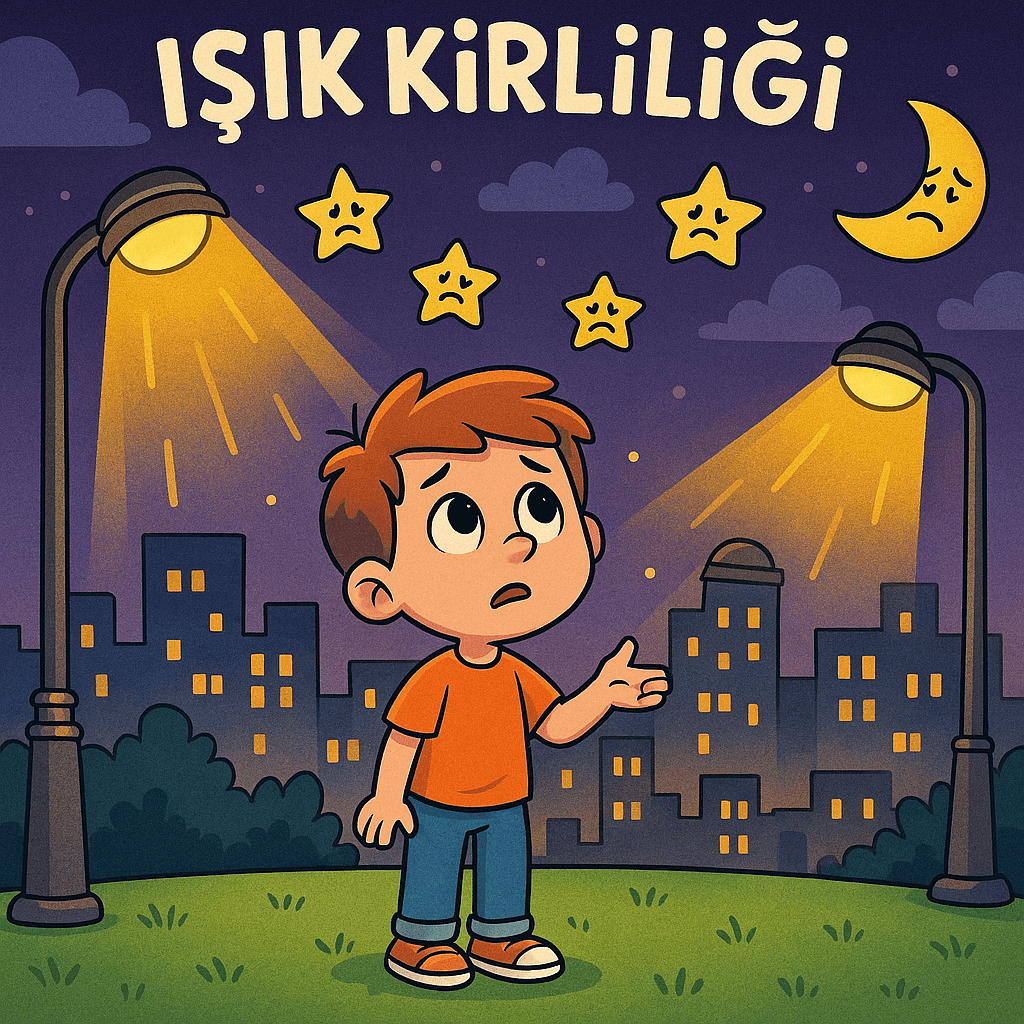
Light Pollution (Generated by Artificial Intelligence.)
What Is Light Pollution?
Light pollution refers to artificial lights that are used excessively or in the wrong places, disturbing the environment and us. For example, street lamps, outdoor lights from homes, or large billboards sometimes shine brighter than necessary. These lights illuminate the night sky and make it harder for us to see the stars. Moreover, these lights can harm nature, animals, and even our own health.
Light pollution manifests in several ways:
- Glare: Excessively bright lights cause discomfort to our eyes.
- Skyglow: In cities, the night sky appears as bright as if it were daytime.
- Light trespass: Light spills into places where it is not needed, such as into a neighbor’s home or a forest.
- Clutter: Too many lights grouped together create confusion and visual noise.
What Causes Light Pollution?
Light pollution is primarily caused by the excessive use of artificial lighting, especially in cities. What are these sources?
- Street lamps
- Shops’ or parking lots’ lights
- Outdoor lighting from homes and workplaces
- Bright, colorful signs
- Lamps that emit light upward or sideways
These lights often shine in the wrong direction—for example, into the sky! This results in both energy waste and the loss of natural darkness at night.
What Does Light Pollution Affect?
Light pollution does not only hide the stars—it also impacts many other things. Let’s see what happens:
Human Health
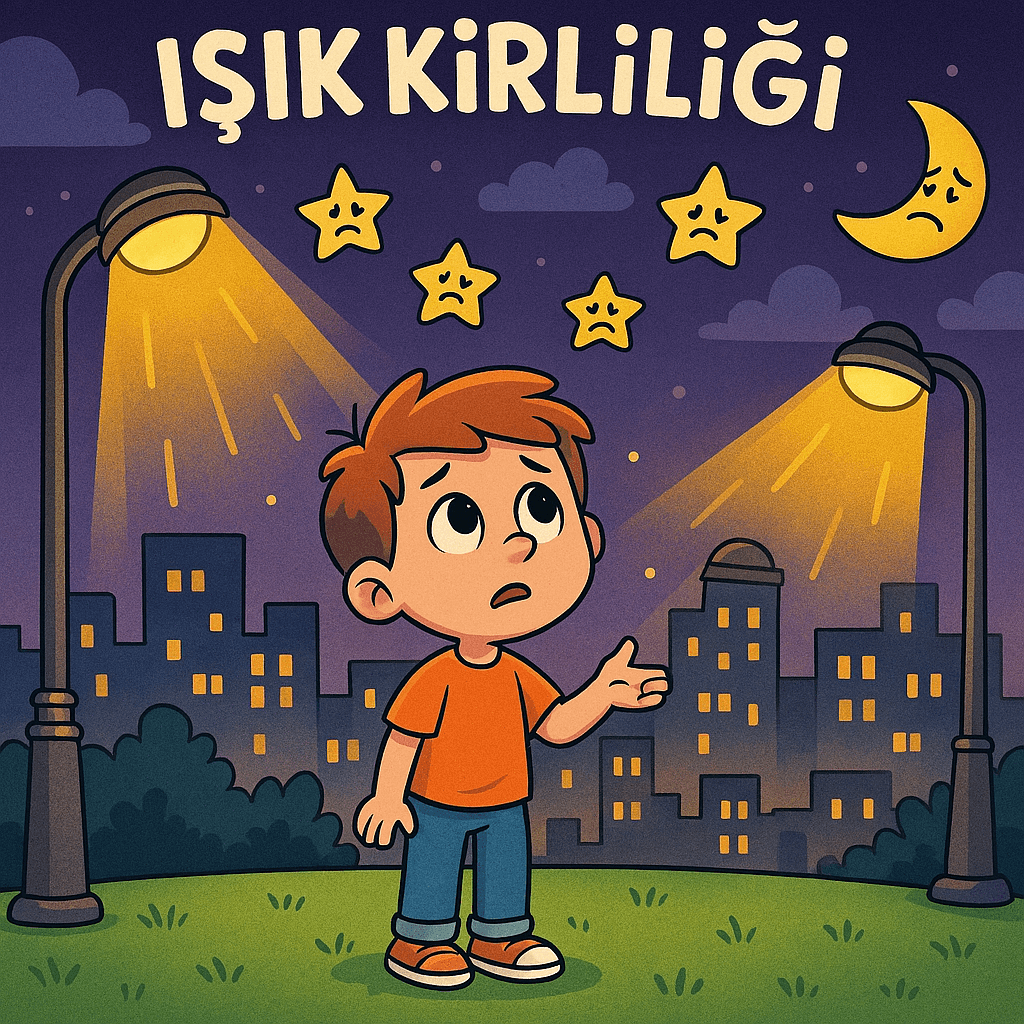
Exposure to too much light at night can disrupt our sleep patterns. Our bodies produce a substance called melatonin, which signals us to “go to sleep.” But bright lights reduce melatonin levels. As a result, we may have trouble sleeping and feel tired or irritable. Additionally, prolonged exposure to excessive light can strain our eyes and lead to vision problems over time.
Nature and Animals
Animals and plants are also affected by light pollution. For example:
- Birds: Nocturnal migratory birds become disoriented by bright lights and lose their way.
- Sea turtles: Hatchlings follow the moonlight to reach the ocean, but city lights confuse them and lead them in the wrong direction.
- Insects and fish: Lights alter their feeding and reproductive behaviors.
- Plants: Excessive light interferes with their growth because they cannot tell which season it is.

Light Pollution (Generated by Artificial Intelligence.)
Energy and Environment
Excess lighting wastes electricity unnecessarily. This leads to financial loss and contributes to air pollution and climate change, since generating electricity often relies on fossil fuels.
Stargazing and Astronomy
Light pollution makes it difficult to see stars and planets. Scientists and star enthusiasts must travel far away from cities to dark locations to observe the night sky. This makes their work significantly more challenging.
What Can We Do to Reduce Light Pollution?
Good news! We can all take steps to reduce light pollution. Here are some ideas:
- Use lights only when necessary: For example, turn off outdoor lights at night when you are at home.
- Choose the right lamps: Use fixtures that direct light downward only, so they do not brighten the sky.
- Use motion-sensor lights: These lamps turn on only when someone passes by, saving energy.
- Close your curtains or blinds: This prevents indoor light from spilling outside.
- Tell everyone: Educate your family and friends about light pollution so that everyone becomes more mindful.