


This article was automatically translated from the original Turkish version.
+4 More
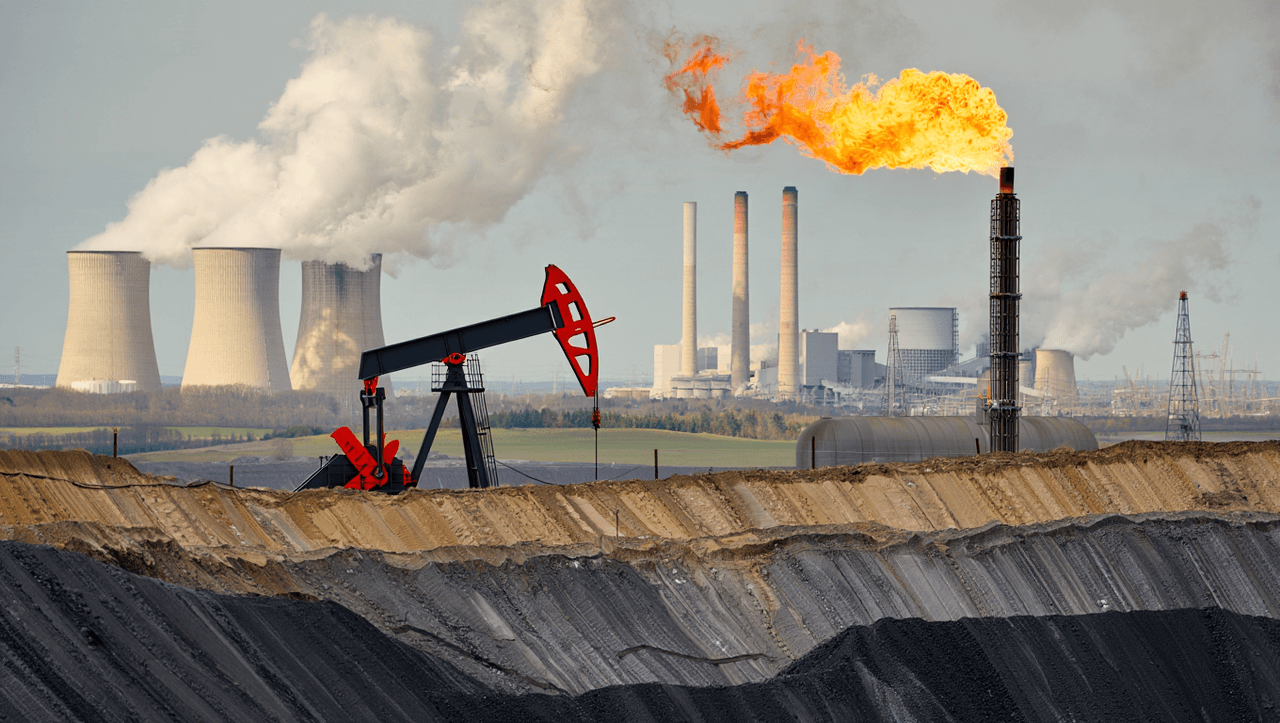
Fossil Fuels (Generated with Artificial Intelligence)
Definition(s) | A non-renewable energy source formed from the remains of organisms that lived millions of years ago | ||||||||
|---|---|---|---|---|---|---|---|---|---|
Main Type(s) | Coal Natural Gas Petroleum | ||||||||
Formation Process | Anaerobic (oxygen-free) decomposition under high pressure and temperature | ||||||||
Basic Components | Hydrocarbons and Carbon | ||||||||
Major Applications | Electricity generation, Transportation, Industry, Heating, Petrochemicals | ||||||||
Primary Environmental Impact | Greenhouse gas emissions and global warming | ||||||||
Fossil fuels are non-renewable natural energy sources formed through the chemical transformation of remains of living organisms such as plants and animals that lived millions of years ago, under high pressure and temperature in an oxygen-free environment beneath the Earth’s crust. These fuels are rich in carbon and hydrocarbons. Since they release large amounts of energy when burned, they have become the primary energy source of the modern world since the Industrial Revolution. The most common and well-known types of fossil fuels are coal, oil, and natural gas. Due to the millions of years required for their formation, these resources are finite, and their use leads to serious environmental problems, primarily climate change.
The formation of fossil fuels is a complex geological process spanning millions of years. It begins with the accumulation of organic matter—dead plants and animals—beneath sedimentary layers. Over time, these remains are buried deeper by layers of mud, sand, and rock. As depth increases, rising pressure and temperature alter the chemical structure of the organic material in an oxygen-free environment (anaerobic decomposition). Different types of organic matter and geological conditions lead to the formation of different fossil fuels. Coal deposits typically form from the decay and compression of terrestrial plant remains, especially vegetation in swampy areas. The remains of plankton and other microorganisms living in oceans settle on the seafloor and become compressed under sediment, leading to the formation of oil and natural gas. This transformation process is completed when organic residues become enriched in carbon and are converted into substances used today for energy production.
Although the use of fossil fuels dates back to prehistoric times, their widespread and industrial-scale use began with the Industrial Revolution in the 18th century. Ancient civilizations such as the Babylonians, Egyptians, and Chinese are known to have used coal and oil seepages on a small scale. However, coal, which powered steam engines during the Industrial Revolution, fundamentally transformed production and technology. Coal became the primary energy source in numerous sectors, from iron and steel manufacturing to railway transportation. In the 19th century, the commercial use of oil began, particularly replacing whale oil for lighting; with the invention of internal combustion engines, it became indispensable to the transportation sector. Natural gas, once considered a byproduct of oil production, gained importance in the 20th century as a major resource for heating, electricity generation, and industry. Fossil fuel consumption rose from approximately 100 TW/h in 1800 to 135,000 TW/h in 2017, increasing more than a thousandfold over the last two centuries.
Fossil fuels exist primarily in solid, liquid, and gaseous forms. Each type has a distinct chemical composition, energy density, and environmental impact.
Coal is a solid fossil fuel whose main component is carbon. It contains variable amounts of hydrogen, sulfur, oxygen, and nitrogen. Based on carbon content and calorific value, coal is classified into four main types: anthracite (highest carbon content), bituminous coal, lignite, and peat (lowest carbon content). Coal is extracted through surface mining or underground mining methods. It is widely used in thermal power plants for electricity generation and in energy-intensive industries such as iron and steel production. Due to its high carbon content, coal releases more carbon dioxide upon combustion than other fossil fuels.
Oil, or crude oil, is a liquid fossil fuel composed of a complex mixture of hydrocarbons. After extraction from underground using drilling techniques, it is refined in refineries into various products. These include fuels such as gasoline, diesel (gas oil), jet fuel, fuel oil, lubricating oil, and LPG (liquefied petroleum gas), as well as petrochemical feedstocks used to produce plastics, fertilizers, pharmaceuticals, paints, and synthetic materials. The transportation sector is heavily dependent on oil.
Natural gas is a gaseous fossil fuel consisting largely of methane (CH₄), along with other hydrocarbons such as ethane, propane, and butane. It is typically found above oil reservoirs or in standalone deposits. It is considered cleaner than coal and oil because it emits less carbon dioxide, sulfur dioxide, and particulate matter during combustion. Natural gas is transported via pipelines or liquefied (LNG) and carried in specialized tankers. It is widely used for heating in homes and industry, cooking, and electricity generation (in natural gas combined-cycle power plants).
In addition to the main types, unconventional fossil fuels include oil sands (a mixture of sand and clay containing bitumen) and oil shales (sedimentary rocks containing kerogen, an organic substance). The extraction and processing of these resources are more costly and environmentally destructive compared to conventional fossil fuels.
Fossil fuels have a broad range of applications that form the foundation of the global economy and modern life. Their high energy density and portability make them indispensable across many sectors.
Electricity Generation: A significant portion of the world’s electricity is produced in thermal power plants fueled by coal and natural gas. The heat generated by burning these fuels converts water into steam, which drives turbines to produce electrical energy.
Transportation: Land, air, and sea transport are almost entirely dependent on petroleum derivatives. Gasoline and diesel power cars, buses, and trucks; jet fuel powers aircraft; and fuel oil propels ships.
Industry: Coal and natural gas are heavily used in industrial processes requiring high temperatures, such as iron and steel, cement, glass, and paper production. These fuels are also burned to meet the energy needs of industrial facilities.
Heating: Natural gas, coal, and fuel oil are widely used to heat homes, commercial buildings, and industrial facilities.
Petrochemical Industry: Oil and natural gas are not only energy sources but also essential raw materials for the chemical industry. Countless products—including plastics, synthetic fibers (nylon, polyester), fertilizers, pesticides, detergents, solvents, paints, and pharmaceuticals—are manufactured through petrochemical processes.
The extraction, transportation, and combustion of fossil fuels cause numerous adverse effects on the environment and human health. These impacts manifest at local, regional, and global scales.
The combustion of fossil fuels releases large quantities of greenhouse gases, particularly carbon dioxide (CO₂), into the atmosphere. These gases accumulate and trap heat from the sun, leading to a rise in the planet’s average temperature—global warming. Global warming triggers climate change, resulting in rising sea levels, increased frequency and intensity of extreme weather events (droughts, floods, storms), and ecosystem disruption. Intergovernmental Panel on Climate Change (IPCC) reports identify fossil fuel-based emissions as the primary cause of the climate crisis.
Burning fossil fuels releases not only CO₂ but also numerous pollutants harmful to human health. These include sulfur dioxide (SO₂), nitrogen oxides (NOₓ), particulate matter (PM2.5 and PM10), carbon monoxide (CO), and volatile organic compounds. These pollutants can cause respiratory diseases such as asthma and bronchitis, cardiovascular conditions, and cancer. In urban areas, the main source of air pollution is fossil fuel combustion in vehicles and industry.
Sulfur dioxide and nitrogen oxides released into the atmosphere react with water vapor to form sulfuric acid and nitric acid. When these acids fall to the ground as rain, snow, or fog, they create acid rain. Acid rain damages forests and vegetation, increases the acidity of lakes and rivers, destroying aquatic life, and corrodes buildings and historical monuments.
Significant environmental contamination can occur during the extraction and transport of fossil fuels. Oil spills from tanker accidents or pipeline leaks cause massive oil releases into seas and oceans, devastating marine ecosystems and coastal areas. Coal mining activities can pollute groundwater and surface water through acid mine drainage. Additionally, the large land areas required for mining lead to land degradation, habitat loss, and reduced biodiversity.
The combustion of coal generates large quantities of solid waste. Fly ash and bottom ash produced in thermal power plants contain toxic heavy metals such as arsenic, mercury, chromium, and cadmium. If not stored safely, these wastes can leach into soil and groundwater, posing serious contamination risks.
Boyle, Godfrey, et al., eds. Energy Systems and Sustainability: Power for a Sustainable Future. 3rd ed. Oxford: Oxford University Press, 2016.
Gary, James G., Glenn E. Handwerk, and Mark J. Kaiser. Petroleum Refining: Technology and Economics. 5th ed. Boca Raton: CRC Press, 2007.
Intergovernmental Panel on Climate Change (IPCC). *AR6 Climate Change 2021: The Physical Science Basis*. Accessed July 30, 2025. https://www.ipcc.ch/report/ar6/wg1/.
International Energy Agency (IEA). "World Energy Outlook 2023." IEA. Accessed July 30, 2025. https://www.iea.org/reports/world-energy-outlook-2023.
McGlade, Christophe, and Paul Ekins. "The Geographical Distribution of Fossil Fuels Unused When Limiting Global Warming to 2 °C." *Nature* 517 (2015): 187–190. https://doi.org/10.1038/nature14016.
Mokhatab, Saeid, William A. Poe, and James G. Speight. Handbook of Natural Gas Transmission and Processing. Amsterdam: Elsevier, 2006.
North, F. K. Petroleum Geology. Berlin: Springer Science & Business Media, 1985.
Our World in Data. "Fossil Fuels." Our World in Data. Accessed July 30, 2025. https://ourworldindata.org/fossil-fuels.
Patz, John A., Diarmid Campbell-Lendrum, Tracey Holloway, and Jonathan A. Foley. "Impact of Regional Climate Change on Human Health." Nature 438, no. 7066 (2005): 310–317.
Seinfeld, John H., and Spyros N. Pandis. Atmospheric Chemistry and Physics: From Air Pollution to Climate Change. 3rd ed. Hoboken, NJ: John Wiley & Sons, 2016.
Smil, Vaclav. Energy and Civilization: A History. Cambridge: MIT Press, 2017.
Speight, James G. The Chemistry and Technology of Coal. 2nd ed. Boca Raton: CRC Press, 2014.
Speight, James G. The Chemistry and Technology of Petroleum. 5th ed. Boca Raton: CRC Press, 2014.
Tissot, Bernard P., and Dietrich H. Welte. Petroleum Formation and Occurrence. 2nd ed. Berlin: Springer, 1984.
U.S. Energy Information Administration (EIA). "International Energy Outlook 2023." EIA. Accessed July 30, 2025. https://www.eia.gov/outlooks/ieo/narrative/index.php.
World Health Organization (WHO). *Air Quality Guidelines*. Accessed July 30, 2025. https://www.who.int/publications/i/item/9789240034228.

Fossil Fuels (Generated with Artificial Intelligence)
Definition(s) | A non-renewable energy source formed from the remains of organisms that lived millions of years ago | ||||||||
|---|---|---|---|---|---|---|---|---|---|
Main Type(s) | Coal Natural Gas Petroleum | ||||||||
Formation Process | Anaerobic (oxygen-free) decomposition under high pressure and temperature | ||||||||
Basic Components | Hydrocarbons and Carbon | ||||||||
Major Applications | Electricity generation, Transportation, Industry, Heating, Petrochemicals | ||||||||
Primary Environmental Impact | Greenhouse gas emissions and global warming | ||||||||
Formation of Fossil Fuels
History
Types of Fossil Fuels
Coal
Oil
Natural Gas
Other Fossil Fuels
Applications
Environmental and Health Impacts
Global Warming and Climate Change
Air Pollution
Acid Rain
Water and Soil Pollution
Waste Problem