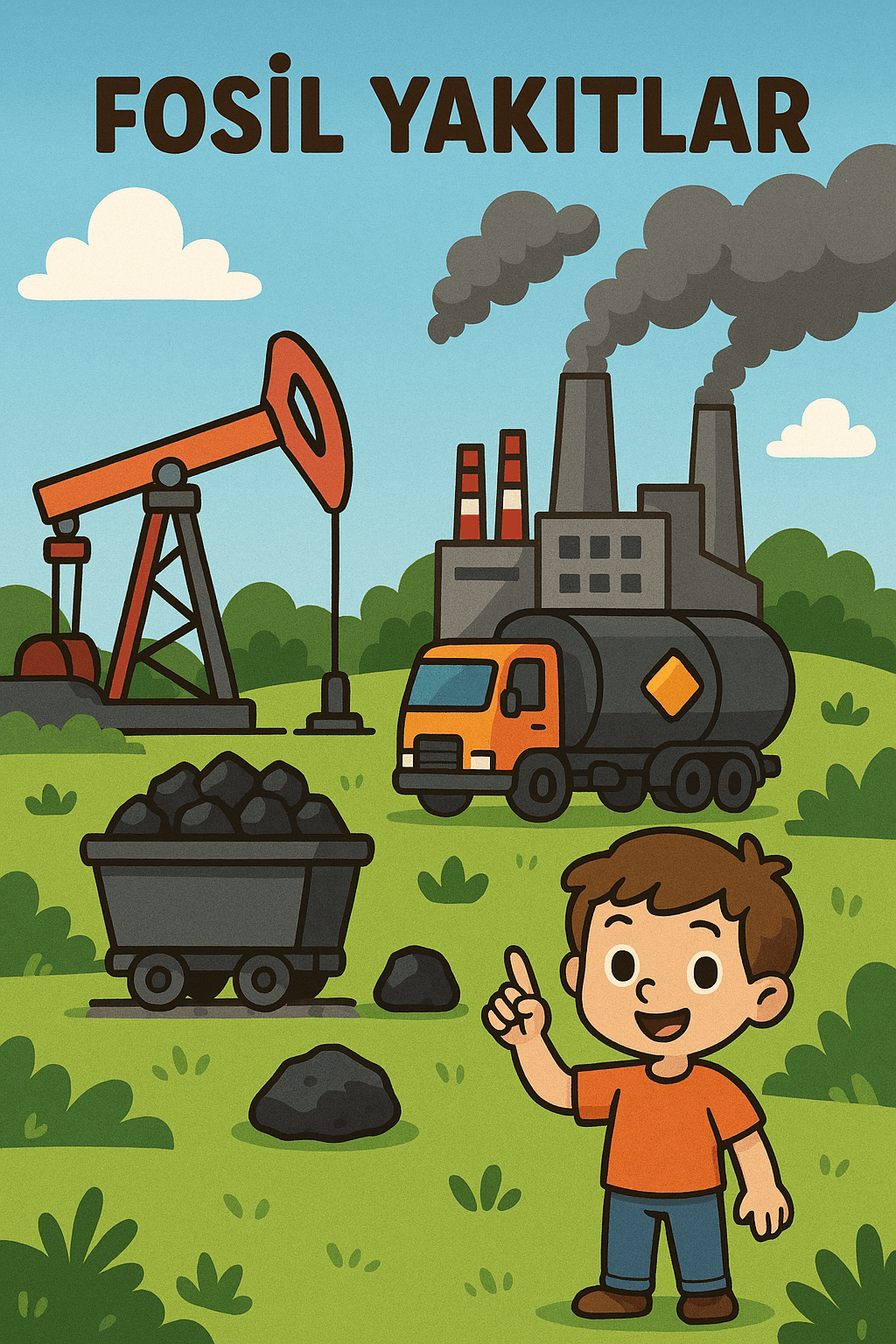




Fossil Fuels
Fossil fuels form when plants and animals that lived millions of years ago were compressed underground and gradually transformed into coal, oil, and natural gas. These fuels are like stored energy hidden deep within the Earth. But this energy can harm the environment.

Fossil Fuels (Generated by Artificial Intelligence.)
Coal
Coal forms when vast forests that existed millions of years ago were buried underground and transformed over time into a hard, rock-like substance. The trees and plants in these forests, deprived of oxygen while submerged in mud and water, decomposed into a dark layer. This layer was subjected to intense pressure and heat deep beneath the Earth’s surface for millions of years, eventually turning into coal.
Coal:
- Is black and hard
- Releases large amounts of heat and energy when burned
- Is used in large power plants to generate electricity
However, when coal is burned, it releases carbon dioxide, sulfur dioxide, and particulate matter into the air. These gases:
- Cause air pollution
- Lead to acid rain
- Contribute to global warming
Petroleum
Petroleum forms from the remains of ancient marine organisms such as plankton. After these organisms died, their remains sank to the ocean floor, were covered by layers of mud, and were compressed underground for millions of years. Over time, these remains turned into a liquid and became petroleum.
Petroleum:
- Is a dark, oily liquid
- Is used as fuel for cars, airplanes, and ships
- Is also used in the production of many products such as plastic, paint, and medicine
However, during extraction and combustion, petroleum:
- Releases carbon dioxide, nitrogen oxides, and harmful chemicals into the air
- Can harm marine life if spilled during ocean accidents
- Can contaminate soil and water

Fossil Fuels (Generated by Artificial Intelligence.)
Natural Gas
Natural gas is usually found near oil deposits and is stored underground in gaseous form. At first glance, it appears cleaner because it emits fewer pollutants than coal or oil. However, this does not mean it is completely harmless.
Natural gas:
- Is colorless and odorless (but is odorized for safety purposes)
- Is used in homes for heating and cooking
- Is also used in electricity generation
When burned:
- It releases gases such as carbon dioxide and methane
- Methane, when released into the atmosphere, contributes to the greenhouse effect and accelerates global warming
- There is a risk of explosion if leaks occur during transportation through pipelines
Why Are They Used?
Fossil fuels are powerful. They are used to generate electricity, heat homes, and power vehicles because:
- They are relatively easy to find in some countries
- They are easy to transport
- They provide energy immediately
But these conveniences come at a cost...
Damage to the Environment
When fossil fuels are burned, they release harmful gases into the air. These gases:
- Cause air pollution
- Lead to acid rain
- Accelerate climate change
- Contribute to global warming
For example, when coal is burned, it releases carbon dioxide and sulfur gases. These gases accumulate in the atmosphere and raise the Earth’s temperature, leading to melting glaciers, changes in animal migration patterns, and disruptions in weather patterns.

Fossil Fuels (Generated by Artificial Intelligence.)
Are There Alternatives?
Yes! Renewable energy sources can replace fossil fuels:
- Solar energy ☀️
- Wind energy 💨
- Hydroelectric power (water power) 🌊
These sources do not pollute the environment, are inexhaustible, and are safer for our future.
Türkiye and the World
Fossil fuels remain the most widely used energy source globally. In Türkiye, coal and natural gas play a significant role in electricity generation. However, many countries are now shifting toward clean sources such as solar and wind energy.
Fossil fuels are powerful but dangerous. Transitioning to cleaner and safer energy sources in the future is essential to protect the environment and ensure a healthier world. By becoming informed about this issue, you can become an energy hero who helps protect nature!