


This article was automatically translated from the original Turkish version.
+3 More
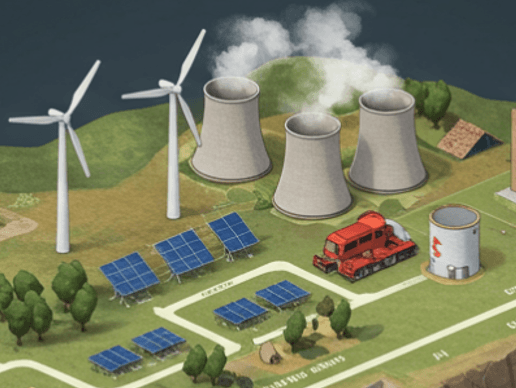
Generated with artificial intelligence.
Sustainable Energy
Fundamental Principle | Consideration of Environmental, Economic, and Social Balance | ||||||||
|---|---|---|---|---|---|---|---|---|---|
Primary Sources | Solar, Wind, Hydroelectric, Geothermal, Biomass | ||||||||
Key Benefits | Combating Climate Change, Energy Security, Economic Development | ||||||||
Supporting Technologies | Energy Storage, Smart Grids, Energy Efficiency | ||||||||
Sustainable energy is a concept that refers to energy sources and technologies that meet the current generation’s energy needs without compromising the ability of future generations to meet their own needs, while causing no harm to the environment and being suitable for long-term use. This approach integrates efficiency, renewability, and environmentally friendly solutions by maintaining environmental, economic, and social balance throughout energy production and consumption processes. Global challenges such as greenhouse gas emissions caused by fossil fuels (coal, oil, natural gas), climate change, environmental pollution, and resource depletion have increased the need for sustainable energy systems. Sustainable energy not only minimizes environmental impacts but also enhances energy security, supports economic development, and creates new employment opportunities.

Renewable Energy Sources (Generated by Artificial Intelligence.)
Although the concepts of sustainable energy and renewable energy are often used interchangeably, there is a significant distinction between them. Renewable energy refers to energy derived from natural sources that continuously regenerate themselves, such as sunlight and wind. These sources are theoretically inexhaustible. Sustainable energy, however, has a broader definition and can be considered a subset of renewable energy. For an energy source to be sustainable, its rate of extraction must be lower than its natural rate of regeneration. Additionally, the production and consumption processes must not cause long-term harm to the environment, economy, or society. For example, solar and wind energy are considered both renewable and sustainable, whereas biomass energy may be renewable but not sustainable if trees are harvested faster than forests can regrow. This distinction plays a critical role in the development of energy policies and technologies.
Sustainable energy is obtained from various sources that are continuously renewed through natural cycles and cause minimal environmental harm. These sources form the foundation for building a cleaner future by reducing dependence on fossil fuels.
Solar energy is generated by harnessing the light and heat energy from the sun and is one of the most abundant and cleanest energy sources in the world. Photovoltaic (PV) panels convert sunlight directly into electricity and are used across a wide range of applications, from residential rooftops to large-scale power plants. Solar thermal systems transform solar energy into heat for water heating and industrial processes. Solar energy systems can be installed as grid-connected (On-Grid), off-grid, or hybrid configurations. Technologies such as solar tracking systems enhance efficiency by allowing panels to follow the sun throughout the day. Major advantages of solar energy include zero carbon emissions, low operational costs, and contribution to energy independence.

Kalyon Karapınar Solar Power Plant (AA)
Wind energy is generated by converting the kinetic energy of wind into electricity using wind turbines. These turbines can be installed on land (onshore) or at sea (offshore). Offshore wind farms benefit from stronger and more consistent winds over the ocean, resulting in higher efficiency. In addition to being clean and renewable, wind energy offers low operational costs after installation. However, it also has disadvantages, including visual impact, noise levels, dependence on weather conditions, and potential effects on wildlife. Careful planning and environmental impact assessments are necessary to minimize these effects.
Hydroelectric energy is generated by harnessing the power of flowing water. Water stored in dams or drawn from river flows turns turbines to drive generators. It is one of the most widely used renewable energy sources globally. In addition to large dams, smaller-scale and less environmentally disruptive applications such as run-of-the-river and micro-hydroelectric systems are also available. Hydroelectric energy stands out as a reliable and continuous energy source.

Yusufeli Dam Generating Hydroelectric Power (AA)
Geothermal energy is derived from heat beneath the Earth’s crust. Hot water or steam sources near the surface are used either to drive turbines for electricity generation or directly for heating buildings and industrial facilities. Geothermal energy is a continuous and reliable source independent of weather conditions. It produces very low carbon emissions and therefore holds significant potential in combating climate change.
Biomass energy is produced by converting organic materials such as plant and animal waste into energy through combustion, fermentation, or other chemical processes. This process yields heat, electricity, or biofuels. Biomass contributes to waste management by utilizing agricultural residues and organic waste. However, its sustainability depends on the regeneration rate of the feedstock and the environmental impacts of the production process.
Technologies such as ocean and hydrogen energy are increasingly finding their place in the sustainable energy portfolio. Ocean energy aims to generate electricity from the movement of waves and tides. Hydrogen energy, particularly “green hydrogen” produced using renewable sources, is viewed as a key solution for energy storage and transportation.
Energy efficiency refers to minimizing the amount of energy required to deliver a specific service or product. It is one of the fundamental pillars of sustainability because the cleanest energy is the energy that is not consumed at all. Energy efficiency directly contributes to resource conservation, reduced energy costs, and lower greenhouse gas emissions. Various methods can be applied to improve energy efficiency in businesses and homes, including enhancing building insulation, using energy-efficient LED lighting systems, selecting high-efficiency electrical appliances, and recovering waste heat from industrial processes for reuse.
Effective use of sustainable energy sources requires the development of a range of supporting technologies and systems. These technologies overcome the challenges posed by renewable energy and ensure more reliable and efficient operation of energy systems.
One of the greatest challenges of renewable energy sources such as solar and wind is their intermittent production due to weather conditions. Energy storage systems store excess energy when it is produced and make it available when needed. Technologies such as lithium-ion batteries, pumped hydroelectric storage, and green hydrogen ensure energy continuity and contribute to grid stability.
Smart grids are systems that modernize traditional electricity networks using digital technologies. They monitor energy production and consumption in real time to balance supply and demand. Smart grids facilitate the integration of renewable energy sources into the grid, reduce energy losses, and empower consumers to manage their own energy consumption. These systems make the energy infrastructure more flexible, reliable, and efficient.
Systems that monitor and analyze energy consumption in real time enable the identification of waste and the development of efficiency strategies. Particularly in industrial facilities and large buildings, these systems facilitate data-driven decision-making to reduce energy costs and lower carbon footprints.
The transition to sustainable energy offers multifaceted benefits for the planet’s future, manifesting in environmental, economic, and social dimensions.
Around the world, countries have set carbon neutrality targets by 2050 in line with international commitments such as the Paris Climate Agreement. To achieve these goals, governments implement policies that incentivize renewable energy investments through tax incentives and subsidies. At the same time, businesses view sustainability as a competitive advantage and invest in renewable energy and energy efficiency to comply with environmental regulations and strengthen their brand image. Growing public awareness and the adoption of energy-saving habits by individuals are critical to the success of this global transformation.
Anadolu Ajansı. “Karapınar GES 400 Milyon Dolarlık Doğal Gaz Kullanımının Önüne Geçti.” Accessed July 27, 2025. Accessed Adresi.
Anadolu Ajansı. “Yusufeli Barajı ve HES’te Su Yüksekliği 177 Metreyi Geçti.” Accessed July 27, 2025. Accessed Adresi.
Emeksiz, Cem, and Muhammed Musa Fındık. “Sürdürülebilir Kalkınma İçin Yenilenebilir Enerji Kaynaklarının Türkiye Ölçeğinde Değerlendirilmesi.” *Avrupa Bilim ve Teknoloji Dergisi*, Özel Sayı 26 (2021): 155–164. Accessed July 27, 2025. Accessed Adresi.
Gerger, Atakan, Güneş Çetin Gerger, and Devrim Şavlı. “Sürdürülebilir Enerji Politikaları Kapsamında Yeşil Enerji Kullanımına Yönelik Mali Teşvikler: İzmir ve Manisa Üretim Firmaları ile Anket Çalışması.” *International Journal of Public Finance* 9, no. 1 (2024): 125–150. Accessed July 27, 2025. Accessed Adresi.
Kır, Yakup, and Fatih Korkmaz. “Güneş Paneli Parametrelerinin Online Ölçümü ve Uzaktan İzlenmesi.” *Sürdürülebilir Mühendislik Uygulamaları ve Teknolojik Gelişmeler Dergisi* 4, no. 1 (2021): 46–52. Accessed July 27, 2025. Accessed Adresi.
Saçlı, Ahsen. “Sürdürülebilir Gelecekte Yenilenebilir Enerjinin Rolü.” *Çağdaş Yerel Yönetimler Dergisi* 34, no. 1 (2024): 121–148. Accessed July 27, 2025. Accessed Adresi.
Önal, Müdrike. “Sürdürülebilir Kalkınmada Yenilenebilir Enerjinin Önemi: Türkiye Üzerine Bir Değerlendirme.” *Sosyoekonomi* 28, no. 51 (2020): 385–401. Accessed July 27, 2025. Accessed Adresi.
Öymen, Gözde. “Yenilenebilir Enerjinin Sürdürülebilirlik Üzerindeki Rolü.” *İstanbul Ticaret Üniversitesi Sosyal Bilimler Dergisi* 19, no. 39 (2020): 1069–1087. Accessed July 27, 2025. Accessed Adresi.
Özkaya, Yavuz. “Enerji Tüketimi, Çevresel Sürdürülebilirlik ve Dijitalleşme: Gelişmekte Olan Ülkelerde Ekonomik Büyümeye Etkileri.” *Enderun Dergisi* 9, no. 1 (2024): 67–87. Accessed July 27, 2025. Accessed Adresi.

Generated with artificial intelligence.
Sustainable Energy
Fundamental Principle | Consideration of Environmental, Economic, and Social Balance | ||||||||
|---|---|---|---|---|---|---|---|---|---|
Primary Sources | Solar, Wind, Hydroelectric, Geothermal, Biomass | ||||||||
Key Benefits | Combating Climate Change, Energy Security, Economic Development | ||||||||
Supporting Technologies | Energy Storage, Smart Grids, Energy Efficiency | ||||||||
No Discussion Added Yet
Start discussion for "Energy Systems and Sustainability" article
Sustainable and Renewable Energy Concepts
Sustainable Energy Sources
Solar Energy
Wind Energy
Hydroelectric Energy
Geothermal Energy
Biomass Energy
Other Emerging Sources
Energy Efficiency and Sustainability
Sustainable Energy Technologies and Systems
Energy Storage Systems
Smart Grids
Energy Monitoring and Management Systems
Importance and Benefits of Sustainable Energy
Global and Institutional Transformation