


This article was automatically translated from the original Turkish version.
+5 More
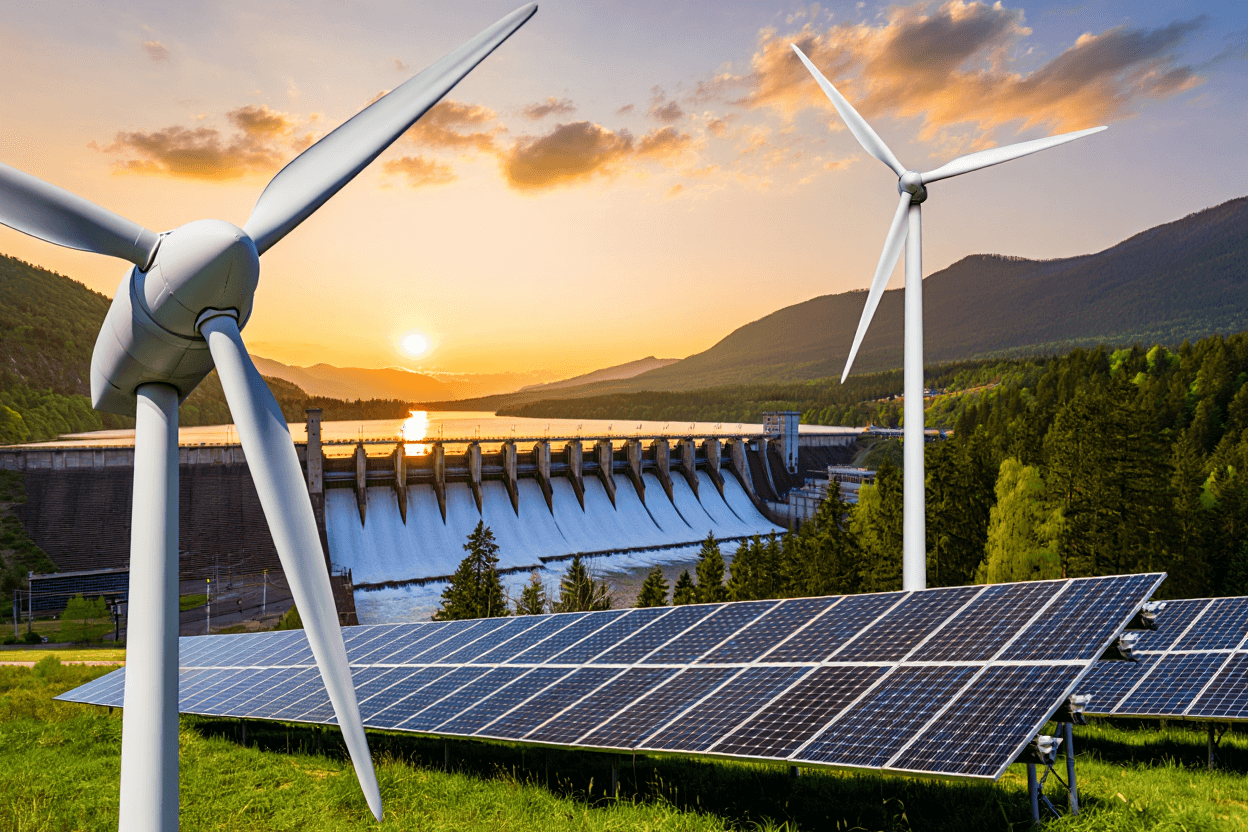
Sustainable Energy Management (Generated with Artificial Intelligence)
Definition(s) | A systematic approach aimed at the efficient and economic use of energy resources. sustainable | ||||||||
|---|---|---|---|---|---|---|---|---|---|
Basic Objectives | Energy Efficiency, Cost Savings, Reduction of Environmental Impacts, Energy Security. | ||||||||
Main Component(s) | Energy Efficiency Energy Policies. Carbon Management Digitalization Renewable Energy | ||||||||
Related Technologies | Artificial Intelligence (AI), Internet of Things (IoT), Smart Grids, Energy Management Systems (EMS). | ||||||||
Related Standard | ISO 14001 Environmental Management System. | ||||||||
Sustainable energy management is a systematic approach aimed at the efficient, effective, and sustainable use of energy resources. This concept encompasses all strategies, policies, and practices necessary to achieve energy conservation, reduce environmental impacts, and generate economic benefits. In today’s world, faced with global challenges such as rising energy demand, climate change, and limited natural resources, sustainable energy management holds critical importance at both individual and institutional levels. This approach plays a fundamental role in achieving the United Nations Sustainable Development Goal of “access to affordable, reliable, sustainable and modern energy for all.” The management process includes stages such as collecting energy consumption data, analyzing it, and developing improvement strategies based on these data.
Sustainable energy management aims to balance three interrelated core dimensions: environmental, economic, and social sustainability. When evaluated as a whole, these three dimensions provide a solid foundation for the long-term success of energy systems.
The primary objective of this dimension is to minimize the negative ecological impacts of energy production and consumption. Key goals include reducing dependence on fossil fuels, lowering greenhouse gas emissions, and decreasing the carbon footprint. Within this framework, the use of renewable energy sources such as solar, wind, and hydropower is encouraged, and resource conservation is achieved by improving energy efficiency. Practices such as waste management and control of water and air pollution are also essential components of environmental sustainability.
This dimension focuses on reducing energy costs and supporting economic growth. Applications such as energy efficiency projects and waste heat recovery significantly lower operational expenses for businesses. The renewable energy sector creates new employment opportunities, boosts job creation, and revitalizes local economies. Moreover, companies that adopt sustainable practices strengthen their brand reputation among investors and consumers, gaining a competitive advantage.
Ensuring fair and equitable access to energy forms the foundation of social sustainability. Energy policies must guarantee that all segments of society can benefit from reliable and affordable energy sources. Public participation helps shape energy policies in line with societal needs and expectations. Energy efficiency training for employees and raising awareness of sustainability within communities are also key elements of the social dimension.
Building a sustainable energy future requires the development of well-structured policies and strategies at both national and institutional levels. These policies are designed to ensure energy security, meet environmental targets, and support economic stability.
At the national level, energy policies guide the energy sector through laws, regulations, and incentive mechanisms. Key elements include diversifying energy sources, increasing energy efficiency, offering tax incentives for renewable energy investments, and setting decarbonization targets. International initiatives such as the European Green Deal encourage countries to take more ambitious steps toward digitalization and the transition to clean energy.
At the institutional level, companies develop their own sustainability strategies to reduce environmental impacts and enhance operational efficiency. These strategies typically begin with detailed energy audits. Based on audit findings, points of energy waste are identified, measurable targets are set, and improvement projects are implemented. Companies adopt international standards such as ISO 14001 Environmental Management System to structure their processes within a systematic framework and report their sustainability performance transparently.

Sustainable Energy Management (Generated by Artificial Intelligence)
Technological advancements, particularly digitalization, play a central role in transforming sustainable energy management. Technologies such as artificial intelligence (AI), the Internet of Things (IoT), big data analytics, and smart grids enable energy systems to become more efficient, flexible, and intelligent.
Artificial intelligence algorithms analyze energy consumption patterns and provide recommendations to prevent waste. In smart buildings, heating, cooling, and lighting systems, supported by AI-driven automation, activate only when needed, achieving significant energy savings. In renewable energy production, AI analyzes meteorological data to accurately predict solar and wind energy output. These forecasts help balance energy supply and demand and maintain grid stability.
IoT sensors installed at energy consumption points in industrial facilities and buildings collect real-time data on energy usage. These data are analyzed on platforms such as Energy Management Systems (EMS) or Building Management Systems (BMS). Smart grids powered by this data manage energy flow in real time, detect faults immediately, and redirect energy through alternative routes to minimize disruptions. These systems make energy distribution safer and more efficient.
Energy efficiency is one of the foundational pillars of sustainable energy management, delivering both cost savings and environmental benefits by reducing the amount of energy consumed. A variety of efficiency measures are available for businesses and individuals.
In industrial facilities, waste heat generated by processes such as compressed air compressors or furnace flues can be recovered using specialized technologies and used for hot water or space heating. Replacing lighting systems with LED technology, which consumes less energy and has a longer lifespan, offers substantial savings potential. Additionally, improving building insulation and enhancing the efficiency of cooling systems are effective methods for reducing energy consumption.
Transparent monitoring of energy consumption is the first step toward improving efficiency. Energy monitoring systems collect data through analyzers installed at consumption points and consolidate reports on a single platform. This enables managers to analyze energy consumption trends, detect anomalies, and develop efficiency strategies. Uninterruptible power supplies (UPS) and generator systems ensure operational continuity during energy outages.
The most effective way to reduce dependence on fossil fuels and achieve a carbon-free future is to integrate renewable energy sources into energy systems. Clean energy sources such as solar, wind, hydropower, biomass, and geothermal form the foundation of a sustainable energy portfolio.
The integration of these sources is carried out through both large-scale power plants and local generation facilities. For example, many industrial facilities and commercial buildings install solar power plants (SPP) on their rooftops to generate their own electricity and reduce carbon emissions. Wind turbines are emerging as a major clean energy source in regions with high wind potential.
One of the greatest challenges of renewable energy is its intermittency and dependence on weather conditions, as with solar and wind. However, AI-supported production forecasts and advancing energy storage technologies are helping overcome these challenges and enhancing grid reliability.
Carbon management is the process of measuring, monitoring, and reducing greenhouse gas emissions resulting from an organization’s activities. This process lies at the heart of combating climate change and achieving environmental sustainability goals.
Companies implement various strategies to reduce their carbon footprint. These include replacing vehicle fleets with electric or hybrid models, using cleaner alternatives such as natural gas instead of fossil fuels in production processes, substituting hazardous chemicals with environmentally friendly options, and favoring green transportation options in logistics. Additionally, activities such as reforestation projects that create carbon sinks support these strategies.
The effectiveness of carbon management processes is ensured through international standards and transparent reporting. The ISO 14001 Environmental Management System provides organizations with a systematic framework for continuously improving their environmental performance. AI-based systems enable companies to monitor carbon emissions in real time, helping them comply with legal obligations and produce more accurate sustainability reports.
Atasayın Enerji ve Mühendislik. "Enerji Verimliliği ve Sürdürülebilirlik İçin Entegre Çözümler." Accessed July 25, 2025. https://atasayin.com/enerji-verimliligi-ve-surdurulebilirlik-icin-entegre-cozumler/.
Boyle, Godfrey, ed. Renewable Energy: Power for a Sustainable Future. 4th ed. Oxford: Oxford University Press, 2012.
Demirtaş, Özgür. "Evaluating the Best Renewable Energy Technology for Sustainable Energy Planning." *International Journal of Energy Economics and Policy* 3, Special Issue (2013): 23–33. Accessed July 25, 2025. https://dergipark.org.tr/tr/download/article-file/361259.
Diesendorf, Mark. Sustainable Energy Solutions for Climate Change. Sydney: UNSW Press, 2014.
Dijitaldetaylar. "Sürdürülebilir Enerji Yönetimi ve Stratejileri." Dijitaldetaylar, February 15, 2025. Accessed July 25, 2025. https://dijitaldetaylar.com/yenilenebilir-enerji-teknolojileri/surdurulebilir-enerji-yonetimi-ve-stratejileri/308482.
EkoYapı Dergisi. "Sürdürülebilir Dünya İçin Akıllı Enerji Yönetimi." EkoYapı Dergisi, January 6, 2025. Accessed July 25, 2025. https://www.ekoyapidergisi.org/surdurulebilir-dunya-icin-akilli-enerji-yonetimi.
Integral Akademi. "Çevresel Sürdürülebilirlik ve Enerji Yönetimi." Integral Akademi. Accessed July 25, 2025. https://www.integralakademi.com/sayfalar-detay/351/cevresel-surdurulebilirlik-ve-enerji-yonetimi.html.
Intergovernmental Panel on Climate Change (IPCC). *AR6 Climate Change 2022: Mitigation of Climate Change*. Accessed July 25, 2025. https://www.ipcc.ch/report/ar6/wg3/.
International Energy Agency (IEA). World Energy Outlook 2023. Accessed July 25, 2025. https://www.iea.org/reports/world-energy-outlook-2023.
Mackay, David J.C. Sustainable Energy – Without the Hot Air. Cambridge: UIT Cambridge Ltd., 2009.
Mellit, Adel, and Soteris Kalogirou. "Artificial Intelligence and Internet of Things to Improve Efficacy of Diagnosis and Remote Sensing of Solar Photovoltaic Systems: Challenges, Recommendations and Future Directions." *Renewable and Sustainable Energy Reviews* 143 (2021): 110889. Accessed July 25, 2025. https://doi.org/10.1016/j.rser.2021.110889.
REN21. *Renewables 2023 Global Status Report*. Accessed July 25, 2025. https://www.ren21.net/reports/global-status-report/.
Schneider Electric. "Sürdürülebilir Enerji Yönetiminde Dijitalleşme." *Harvard Business Review Türkiye*, November 12, 2024. Accessed July 25, 2025. https://hbrturkiye.com/sponsorlu-icerik/surdurulebilir-enerji-yonetiminde-dijitallesme.
Siemens. "Enerji ve Sürdürülebilirlik." Siemens Türkiye. Accessed July 25, 2025. https://www.siemens.com/tr/tr/urunler/bina-teknolojileri/enerji-ve-surdurulebilirlik.html.
Twidell, John, and Tony Weir. Renewable Energy Resources. 3rd ed. London: Routledge, 2015.
VTC Enerji. "VTC Enerji – Sürdürülebilirlik İçin Dijital Enerji Yönetimi." VTC Enerji. Accessed July 25, 2025. https://www.vtcenerji.com/.

Sustainable Energy Management (Generated with Artificial Intelligence)
Definition(s) | A systematic approach aimed at the efficient and economic use of energy resources. sustainable | ||||||||
|---|---|---|---|---|---|---|---|---|---|
Basic Objectives | Energy Efficiency, Cost Savings, Reduction of Environmental Impacts, Energy Security. | ||||||||
Main Component(s) | Energy Efficiency Energy Policies. Carbon Management Digitalization Renewable Energy | ||||||||
Related Technologies | Artificial Intelligence (AI), Internet of Things (IoT), Smart Grids, Energy Management Systems (EMS). | ||||||||
Related Standard | ISO 14001 Environmental Management System. | ||||||||
No Discussion Added Yet
Start discussion for "Sustainable Energy Management" article
Core Dimensions of Sustainability
Environmental Sustainability
Economic Sustainability
Social Sustainability
Energy Policies and Strategies
The Role of Digitalization and Technology
Artificial Intelligence and Big Data
Internet of Things and Smart Grids
Energy Efficiency Applications
Efficiency in Industry and Buildings
Energy Monitoring and Management Systems
Integration of Renewable Energy Sources
Carbon Management and Environmental Standards