


This article was automatically translated from the original Turkish version.
+2 More
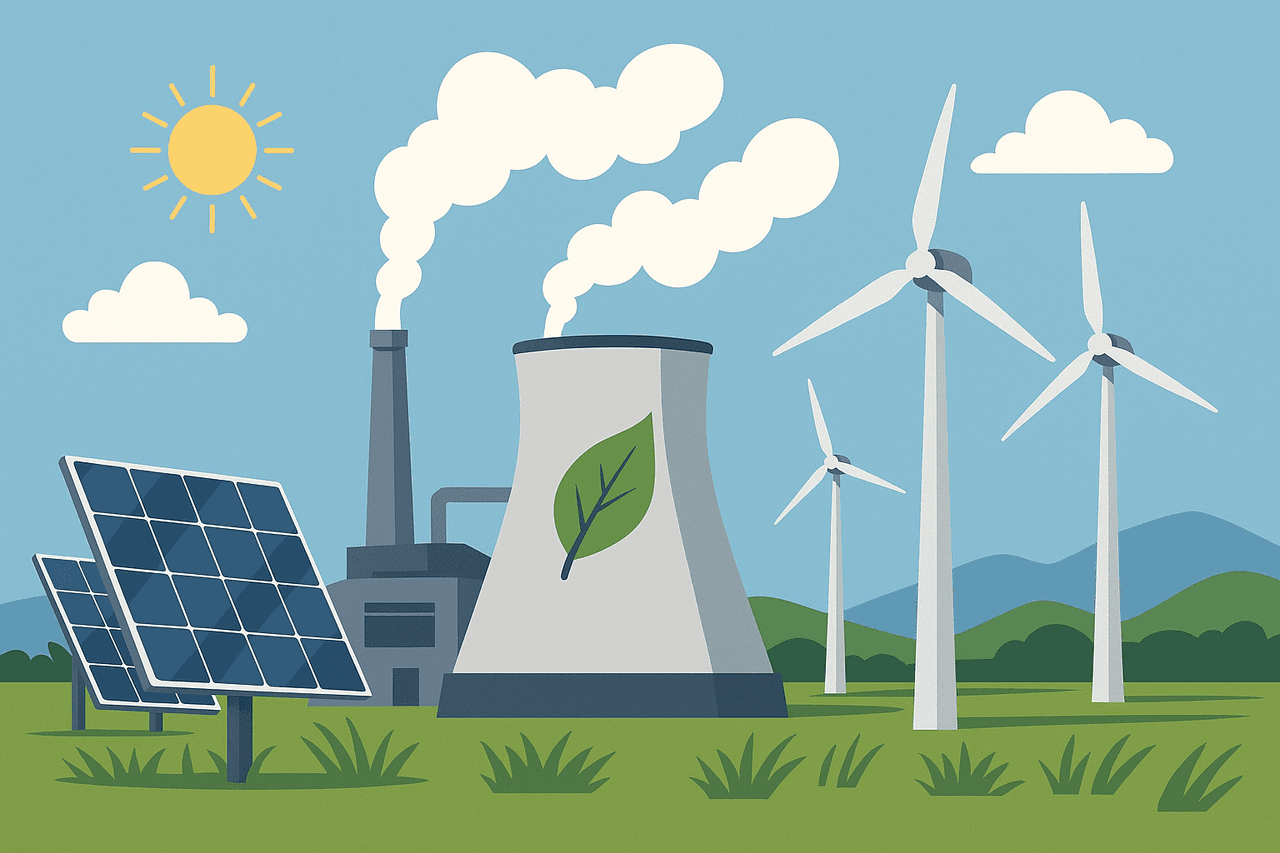
Carbon Neutral Energy Systems
Definition(s) | The removal of carbon from the atmosphere equivalent to the amount of carbon emitted into the atmosphere. | ||||||||
|---|---|---|---|---|---|---|---|---|---|
Primary Objective | Combating climate change and limiting global warming. | ||||||||
Main Strategies | Renewable energy, energy efficiency, carbon capture, carbon offsetting | ||||||||
Related Concept | Zero Carbon (Carbon Zero): No carbon emissions result from activities. | ||||||||
Türkiye’s Goal | Achieving carbon neutrality by 2053. | ||||||||
International Standard | ISO 14064, PAS 2060 | ||||||||
Carbon-neutral energy systems are technological and managerial frameworks that aim to eliminate human-induced greenhouse gas emissions through integrated production, consumption and conversion processes. The primary objective of these systems is to eradicate net carbon emissions arising from energy production and consumption. In the context of combating climate change, carbon neutrality requires the transformation of not only the energy sector but also numerous other sectors including transportation, industry, agriculture, buildings and urban planning.
Carbon neutrality means that greenhouse gases emitted as a result of an activity are either directly reduced or offset through reforestation and carbon capture, utilization and storage (CCUS) technologies. International efforts to reduce greenhouse gas emissions, initiated by the Kyoto Protocol, gained more concrete form with the Paris Climate Agreement (2015), which set expectations for countries to achieve net-zero emissions by 2050.
Türkiye formally adopted carbon neutrality as an official goal upon ratifying the Paris Climate Agreement in 2021. However, continued reliance on fossil fuels in energy production, financial shortcomings and limitations in technological infrastructure have made achieving this target difficult. International trade regulations such as the European Green Deal and the Carbon Border Adjustment Mechanism are compelling Türkiye to accelerate the transformation of its energy and industrial sectors.
Carbon-neutral energy systems are not based solely on the widespread adoption of renewable energy sources; they require the integration of energy management, storage, smart systems, digitalization and carbon removal technologies.
In Türkiye, solar, wind, geothermal, biomass and small hydropower plants play a critical role in energy transformation. Under the framework of the European Green Deal, the share of renewable sources in energy production must be increased. However, analyses reveal that high installation costs and long investment payback periods for renewable energy facilities have slowed this process.
At this stage, strengthening financing and incentive mechanisms is essential. European Union funding mechanisms supporting renewable energy investments—for example Horizon Europe and the Green Deal Fund—offer opportunities for Türkiye. In addition, increasing domestic production capacity for solar and wind energy can help reduce costs.
Smart systems are digital infrastructures that enhance energy efficiency and are crucial for achieving carbon-neutral goals. IoT-based energy management systems, AI-powered load-balancing algorithms, smart meters and distributed energy generation networks optimize energy flow from consumption points to production units.

Use of Smart Systems in Achieving Carbon-Neutral Goals (generated by artificial intelligence)
Smart grids facilitate the integration of renewable energy sources into electricity networks and enable real-time management of supply-demand balance. Furthermore, AI-based energy monitoring and analytics software identify unnecessary energy consumption, contributing to emission reductions.
The intermittent nature of renewable energy sources—for example, the absence of solar generation at night or the cessation of wind—causes fluctuations in energy supply. Therefore, energy storage technologies are a fundamental component of carbon-neutral energy systems. Storage systems balance the temporal gap between production and consumption, enhance grid reliability and reduce dependence on fossil fuels.

Energy Storage Technologies (generated by artificial intelligence)
Main storage methods include:
Energy storage technologies enable the full integration of renewable sources into the grid, ensure supply-demand balance and enhance the stability of the energy infrastructure. For Türkiye, the widespread adoption of storage technologies is critical both for improving the effectiveness of renewable energy investments and for achieving the 2050 carbon neutrality target.
Carbon Capture, Utilization and Storage (CCUS) is considered a critical bridging technology in the transition to carbon neutrality, particularly for fossil fuel-dependent power plants and large-scale industrial facilities. CCUS involves capturing carbon dioxide at its source, separating it, and eliminating it through two primary methods.
1. Underground storage (carbon sequestration and storage): Carbon dioxide gas is injected under high pressure into deep geological formations such as depleted oil and gas reservoirs or saline aquifers for long-term storage. This method prevents CO2 from being released into the atmosphere and reduces global greenhouse gas accumulation.
2. Utilization (carbon reuse): Captured CO2 can be used as a feedstock in the chemical and construction industries. For example, it is employed in carbon-based chemical production or as a concrete hardening agent in building materials.
CCUS technology has significant potential to substantially reduce emissions during the transition of existing fossil fuel-based energy infrastructure. However, barriers to its widespread adoption include high investment costs, concerns over storage site safety, and legal and logistical challenges.
In Türkiye, energy-intensive sectors such as cement and iron and steel are identified as priority areas for CCUS applications. Due to the implementation of the Carbon Border Adjustment Mechanism under the European Green Deal, these sectors will inevitably need to integrate CCUS technologies to reduce their carbon footprints.
Additionally, identifying suitable geological formations for underground carbon storage and establishing safety protocols for these sites represent important research and development priorities for Türkiye. Resources emphasize the need for international cooperation and incentive mechanisms to reduce CCUS costs and enhance technological maturity.
The industrial sector is responsible for a large share of Türkiye’s total carbon emissions and is critical to the success of carbon-neutral goals. Electrification, waste heat recovery, green hydrogen use and carbon capture technologies must be widely adopted in energy-intensive industries such as cement, iron and steel, and chemicals.
As noted in available sources, the Carbon Border Adjustment Mechanism under the European Green Deal will enter into force in 2026. This regulation will compel Türkiye’s export-oriented industrial enterprises to certify their carbon footprints and transition production processes to low-carbon technologies.
Digitalization in the industrial sector is viewed as a key strategy for reducing carbon footprints. Smart sensors and big data analytics identify energy losses in production processes, offering opportunities for improvement. Moreover, circular economy practices—such as waste reuse and industrial symbiosis—contribute to reducing industrial emissions.
Road transport constitutes a significant portion of total greenhouse gas emissions. Electric vehicles, hydrogen fuel cell systems, biofuels and smart logistics management practices are critical elements of carbon-neutral transportation.
Research demonstrates that fleet transformation—from diesel vehicles to electric or hybrid vehicles—and route optimization software are effective in reducing emissions in the logistics sector. Additionally, micro-mobility solutions—such as shared bicycles and scooters—and intelligent traffic management reduce dependence on private vehicles in urban areas, contributing to carbon neutrality.

Carbon-Neutral Transportation (generated by artificial intelligence)
Carbon-neutral transportation planning relies not only on new technologies but also on solutions that enhance the efficiency of existing systems. In Türkiye, initiatives under green logistics include carbon emission measurement, carbon certification and the promotion of intermodal transport.
Buildings are a major source of energy consumption and consequently carbon emissions. Net-zero energy buildings, passive building design, smart building management systems, heat pumps and rooftop solar panels form the foundation of carbon neutrality strategies.

Building Aligned with Carbon Neutrality Strategy (generated by artificial intelligence)
Research highlights that improving building insulation and using energy-efficient construction materials can reduce energy consumption by 30–40 percent. This underscores the critical importance of transforming the built environment for Türkiye to achieve its carbon neutrality target.
The transition of lighting technologies is a vital step in carbon-neutral energy systems. Compared to conventional lighting, LED technology can achieve energy savings of up to 50 percent and reduce maintenance costs due to its longer lifespan.
Smart sensors integrated into LED systems—such as motion detectors, daylight sensors and timers—ensure lighting operates only when needed, enhancing energy efficiency.

Carbon-Neutral Lighting Technologies (generated by artificial intelligence)
In Türkiye, municipalities are implementing LED conversion projects in public areas, while the private sector is adopting similar systems in factories and office buildings. This transition reduces energy consumption and lowers carbon emissions, contributing to carbon neutrality goals.
Türkiye’s carbon neutrality goal is directly linked to economic growth and financial development. Analyses covering the period from 1980 to 2020 show that economic growth and financial development have negatively impacted carbon neutrality and that current trends threaten the 2050 target.
In this context, financing models that support low-carbon technology investments—such as green bonds and international funds—and carbon pricing mechanisms are under discussion. Moreover, because the European Green Deal directly affects Türkiye’s foreign trade, the integration of industrial enterprises into carbon certification processes has become a necessity.
Barriers to the transition to carbon-neutral energy systems include:
However, Türkiye can achieve its 2050 carbon neutrality target through the widespread adoption of smart systems, accelerated integration of renewable energy sources in the energy sector and utilization of international funding. Additionally, investments in circular economy and sectoral digitalization are expected to reduce energy dependence while delivering economic and environmental benefits.
Sürmeli, R. Ö. “Karbon Nötr Geleceğe Doğru: Akıllı Sistemlerin Entegre Uygulamalarıyla Karbon Ayak İzi Üzerindeki Etkisi.” *Journal of Sustainable Structures (JOSS)* 4, no. 1 (2025): 55–73. Accessed July 22, 2025. https://dergipark.org.tr/tr/pub/joss/issue/93462/1692969.
Taluğ, Ceren. “Karbon Nötr Aydınlatma Sistemlerinin Önemi.” *Ekoyapı Dergisi.* Accessed July 22, 2025. https://www.ekoyapidergisi.org/karbon-notr-aydinlatmanin-onemi-nedir.
Yıldız, M. “Türkiye’nin Karbon Nötrlüğü Hedefinde Ekonomik Faktörlerin Rolü.” *Ekonomi Politika ve Finans Araştırmaları Dergisi* 8, no. 1 (2025): 102–129. Accessed July 22, 2025. https://doi.org/10.30784/epfad.1207540.
“Carbon Neutral Energy.” ScienceDirect. Accessed July 22, 2025. https://www.sciencedirect.com/topics/earth-and-planetary-sciences/carbon-neutral-energy.
“Carbon Neutral Transport on Highways.” *Ministry of Transport and Infrastructure Green Logistics Workshop.* Accessed July 22, 2025. https://uhdgm.uab.gov.tr/uploads/pages/yesil-lojistik-calistayi-gerceklestirildi/karayolunda-karbon-notr-tasimacilik.pdf.
“China Energy Sector’s Carbon Neutrality Roadmap: Report Summary.” *World Energy Council Turkey.* Accessed July 22, 2025. https://dunyaenerji.org.tr/cin-enerji-sektorunun-karbon-notr-yol-haritasi-raporu-ozeti/.

Carbon Neutral Energy Systems
Definition(s) | The removal of carbon from the atmosphere equivalent to the amount of carbon emitted into the atmosphere. | ||||||||
|---|---|---|---|---|---|---|---|---|---|
Primary Objective | Combating climate change and limiting global warming. | ||||||||
Main Strategies | Renewable energy, energy efficiency, carbon capture, carbon offsetting | ||||||||
Related Concept | Zero Carbon (Carbon Zero): No carbon emissions result from activities. | ||||||||
Türkiye’s Goal | Achieving carbon neutrality by 2053. | ||||||||
International Standard | ISO 14064, PAS 2060 | ||||||||
No Discussion Added Yet
Start discussion for "Carbon Neutral Energy Systems" article
Conceptual and Historical Background
Core Components and Technological Elements
Renewable Energy Infrastructure
Smart Systems and Energy Management
Energy Storage Systems
Carbon Capture, Utilization and Storage (CCUS)
Sectoral Applications
Industrial Sector
Transportation and Logistics
Built Environment and Buildings
Lighting Systems
Economic, Social and Political Factors
Challenges and Future Outlook