


This article was automatically translated from the original Turkish version.
+2 More
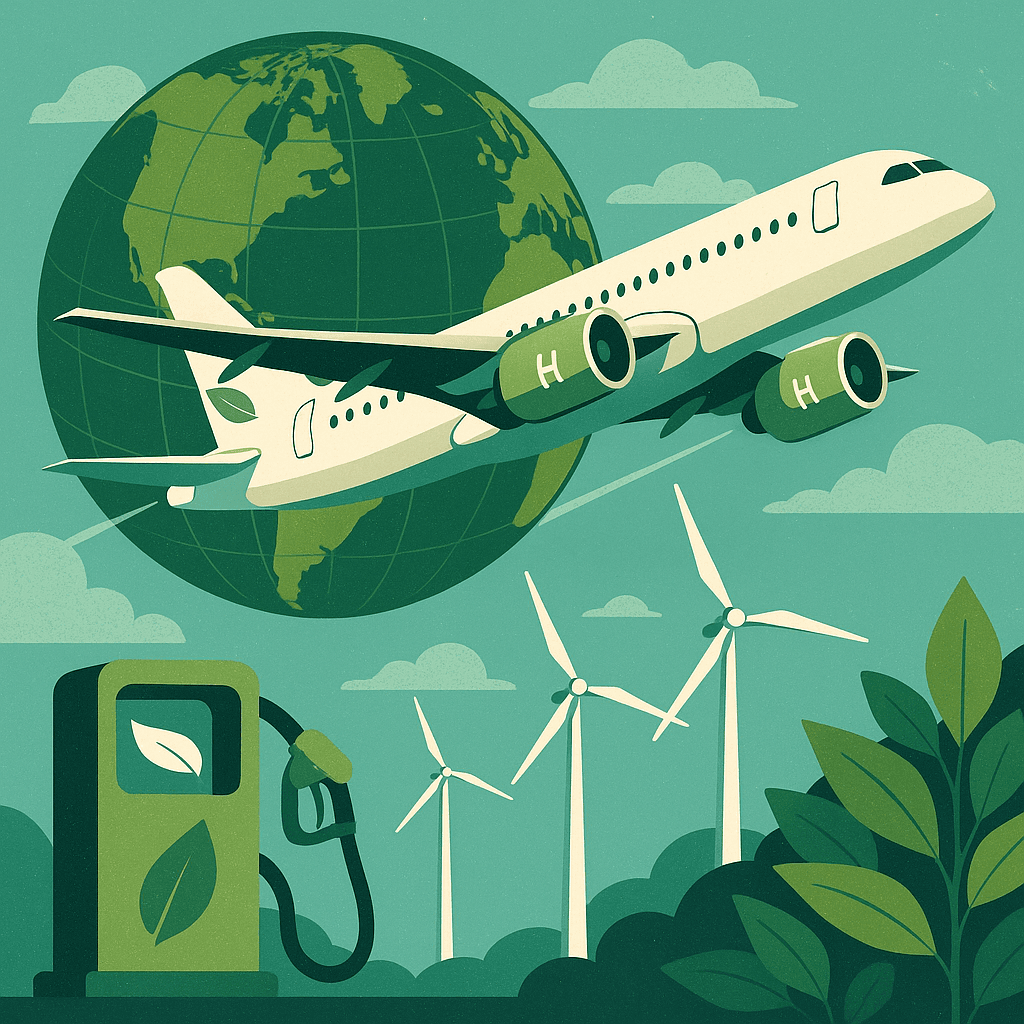
Carbon Neutral Aviation Strategies (generated with artificial intelligence)
Purpose(s) | Climate-friendly flight with clean energy and efficient technologies | ||||||||
|---|---|---|---|---|---|---|---|---|---|
Theme(s) | Sustainability Environment Technology | ||||||||
Elements | SAF, Electric/hydrogen aircraft, Energy efficiency, Carbon management | ||||||||
The growing impacts of global warming have placed the aviation sector at the center of carbon neutrality goals. Air transport, which remains dependent on fossil fuels, contributes significantly to global greenhouse gas emissions and is considered a priority area for low-carbon transition due to its energy-intensive nature. A carbon-neutral aviation approach entails the integrated implementation of alternative energy sources advanced design solutions market-based regulations and technological innovations to minimize environmental impacts.
The most decisive factor in achieving the aviation sector’s carbon neutrality goals is energy transition. In this context sustainable aviation fuels have emerged as one of the most effective solutions capable of replacing conventional fossil fuels. These fuels produced from feedstocks such as waste oils biomass synthetic carbon sources and green hydrogen can be used in existing aircraft engines without structural modifications. Research on hydrogen-powered engines and fully sustainable fuel-compatible aircraft forms the foundation for long-term zero-carbon flights. However limited production capacity and high costs hinder their large-scale adoption in the short term.
Improving energy efficiency in aircraft is as crucial as fuel transition for reducing carbon emissions. Fuel consumption is reduced through enhanced airframe aerodynamics lightweight material usage and improved thermodynamic efficiency in engine design. Advanced engine control systems ensure more balanced combustion processes reducing particulate matter and nitrogen oxide emissions. In this regard digital twin technology artificial intelligence-assisted analysis and adaptive control systems provide solutions that dynamically adapt to flight conditions.
The effectiveness of strategies developed to achieve carbon neutrality is comprehensively analyzed using systems dynamics models. These models integrate the interrelationships between economic growth population increase air travel demand fuel consumption and technological progress. Findings indicate that individual measures have limited impact but the combined application of fuel efficiency alternative energy use and next-generation aircraft technologies enables long-term emission reductions.
Economic instruments supporting emission reduction in aviation include carbon taxes and emissions trading systems. Hybrid models combining both mechanisms aim to preserve environmental sustainability and economic balance. In systems where large airlines are subject to emissions trading and small and medium-sized operators are subject to carbon taxes low-emission operations are incentivized. Such hybrid approaches strengthen market stability while enhancing the effectiveness of carbon reduction.
Achieving the aviation sector’s carbon neutrality goal requires a holistic approach not only in the production of new aircraft but also in the management of existing fleets. Total emissions across the lifecycle stages of aircraft—design production operation and retirement—constitute a major portion of the sector’s carbon budget. Consequently fleet renewal processes now necessitate prioritizing aircraft with high fuel efficiency sustainable fuel compatibility or zero emissions. In the long term the widespread adoption of electric and hydrogen-powered aircraft is regarded as one of the most critical steps toward global emission reduction.
Carbon-neutral aviation goals are supported by national strategies and international standards. Some countries are strengthening sustainable fuel infrastructure through investment in hydrogen technologies while other regions mandate airlines to use a specified percentage of clean fuels through legal regulations. Aircraft manufacturers are expanding emissions reporting across their entire supply chains and developing plans to reduce indirect emissions from production. These policies are enabling the sector to enter a transformation process aligned with global carbon neutrality targets.
Carbon-neutral aviation is a multidimensional transformation process that extends beyond technological innovation. All elements—from fuel production to fleet management market mechanisms to international policies—must advance in coordinated harmony. Widespread adoption of sustainable fuels deployment of high-efficiency engine technologies implementation of integrated carbon policies and strengthened global cooperation constitute the fundamental conditions for the aviation sector to align with long-term climate goals.
Chen, Wei, and Yi Ai. “Research on the Carbon Emission Prediction and Reduction Strategies for the Civil Aviation Industry in China: A System Dynamics Approach.” *Sustainability* 16, no. 20 (2024): 8950. Accessed November 3, 2025. https://doi.org/10.3390/su16208950.
European Commission. “Reducing Emissions from Aviation.” *Climate Action – Transport Decarbonisation.* Accessed November 3, 2025. https://climate.ec.europa.eu/eu-action/transport-decarbonisation/reducing-emissions-aviation_en.
Kito, M., H. Takayabu, and K. Nansai. “Carbon-Neutral Pathways to 2050 for Japan’s Aviation Industry in the Absence of a Mass Supply of Sustainable Aviation Fuels.” *Journal of Industrial Ecology* 27 (2023): 1579–1592. Accessed November 3, 2025. https://doi.org/10.1111/jiec.13443.
Kumar, Supraja, and Dan Rutherford. *Lifetime Emissions from Aircraft under a Net-Zero Carbon Budget.* International Council on Clean Transportation (ICCT), July 18, 2024. Accessed November 3, 2025. https://theicct.org/publication/lifetime-emissions-from-aircraft-under-a-net-zero-carbon-budget-jul24/.
Xu, Zheng, Jinze Pei, and Yue Song. “The Optimization of Aviation Technologies and Design Strategies for a Carbon-Neutral Future.” *Symmetry* 16, no. 9 (2024): 1226. Accessed November 3, 2025. https://doi.org/10.3390/sym16091226.
Zhang, P., R. Ding, Y. Wang, Q. Zhang, and L. Zhao. “Emission Reduction with Hybrid Mechanisms in Civil Aviation: An Evolutionary Game Approach.” *Frontiers in Environmental Science* 11 (2023): 1138931. Accessed November 3, 2025. https://doi.org/10.3389/fenvs.2023.1138931.
Zhou, Hongwei. “Air Passenger Carbon Offset and Carbon Neutrality Strategies: Implementation Mechanism by Convolutional Neural Network.” *Heliyon* 10, no. 19 (2024): e37495. Accessed November 3, 2025. https://doi.org/10.1016/j.heliyon.2024.e37495.


Carbon Neutral Aviation Strategies (generated with artificial intelligence)
Purpose(s) | Climate-friendly flight with clean energy and efficient technologies | ||||||||
|---|---|---|---|---|---|---|---|---|---|
Theme(s) | Sustainability Environment Technology | ||||||||
Elements | SAF, Electric/hydrogen aircraft, Energy efficiency, Carbon management | ||||||||
No Discussion Added Yet
Start discussion for "Carbon Neutral Aviation Strategies" article
Energy Transition and Sustainable Aviation Fuels
Optimization of Aircraft Design and Engine Technologies
Emission Reduction Strategies Through Systems Dynamics Approach
Market-Based Mechanisms and Carbon Management
Lifecycle Emissions and Fleet Management
National and Institutional Policies