


This article was automatically translated from the original Turkish version.
+2 More
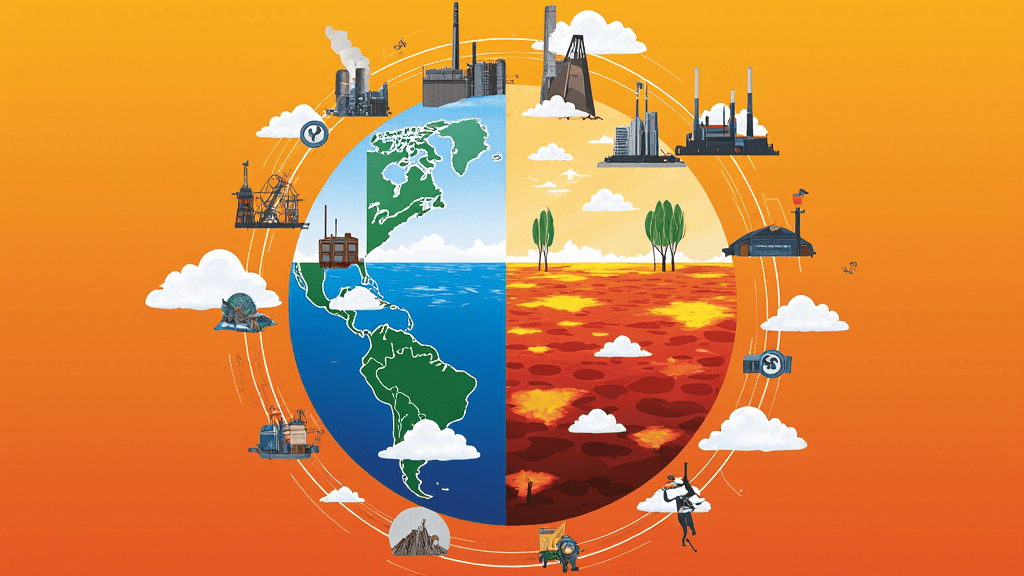
Climate Change and Energy (Generated with Artificial Intelligence)
Main Cause | Increased Greenhouse Gas Emissions from the Combustion of Fossil Fuels (Coal, Oil, Natural Gas) | ||||||||
|---|---|---|---|---|---|---|---|---|---|
Primary Greenhouse Gases | Carbon Dioxide (CO₂), Methane (CH₄), Nitrogen Oxides (N₂O) | ||||||||
Main Effects | Global Temperature Rise, Extreme Weather Events, Sea Level Rise, Ecosystem Disruptions | ||||||||
Solution Paths | Renewable Energy (Solar, Wind, Hydropower), Energy Efficiency, Sustainable Policies | ||||||||
Impact on the Energy Sector | Production Inefficiency, Infrastructure Damage, Increased Demand | ||||||||
Climate change refers to long-term and significant alterations in the global climate system, driven by increasing concentrations of greenhouse gases in the atmosphere. This phenomenon is directly linked to patterns of energy production and consumption. The use of fossil fuels such as coal, oil, and natural gas for energy generation releases various greenhouse gases into the atmosphere, primarily carbon dioxide (CO₂). These gases trap heat radiated from the Earth’s surface, intensifying the greenhouse effect and leading to a rise in the planet’s average surface temperature.
Global temperature rise leads to consequences such as sea level rise, increased frequency and intensity of extreme weather events, disruption of ecosystem balances, and altered conditions for agricultural production. This process represents a comprehensive environmental transformation that directly affects natural cycles, water resources, biodiversity, and human life.
While the energy sector is one of the primary drivers of climate change, it also holds a central position in efforts to find solutions. Expanding renewable energy sources, improving energy efficiency, and adopting low-carbon technologies are among the key strategies to mitigate the impacts of climate change. These efforts are critically important for aligning global energy systems with sustainability goals.
Global warming and the resulting climate change are primarily caused by increased concentrations of greenhouse gases due to human activities. These gases allow sunlight to reach the Earth’s surface but trap the heat radiated back from the surface, thereby strengthening the natural greenhouse effect. As a result, the atmosphere behaves like an insulating layer, causing the planet to warm. While this process is naturally essential for sustaining life, it has become unbalanced due to rising emissions from human activities since the Industrial Revolution.
The energy sector has the greatest impact on climate change because energy production still relies heavily on fossil fuels for most key economic activities such as transportation, industry, and heating. Burning fossil fuels releases various greenhouse gases into the atmosphere, primarily carbon dioxide (CO₂). This situation, combined with rising energy demand, leads to higher emission levels and accelerates global warming.
However, other human activities beyond energy also deepen the process. Chemical reactions in industrial production, such as cement and metal processing, release additional greenhouse gases. Incineration or improper management of waste causes the release of carbon-based compounds. The agricultural sector also significantly affects the climate system. Methane (CH₄) emissions from livestock, nitrous oxide (N₂O) released from fertilizer use, and disrupted soil balance due to land cultivation are among the main factors increasing greenhouse gas concentrations in the atmosphere.
Another contributing factor is deforestation. Forests act as ecosystems that naturally absorb carbon dioxide and maintain atmospheric balance. Cutting down, burning, or converting forests into agricultural land reduces carbon sinks and releases stored carbon back into the atmosphere.
Among all these factors, energy production and consumption stand out as the primary global source of greenhouse gas emissions. Therefore, international strategies to limit climate change center on transforming the energy sector. Transitioning to renewable energy, improving energy efficiency, and implementing technologies that reduce carbon emissions are widely recognized as the most effective solutions in combating the climate crisis.
Renewable energy sources provide an environmentally sustainable alternative to fossil fuel-based energy systems and play a fundamental role in reducing the impacts of climate change. Sources such as solar, wind, hydropower, geothermal, and biomass either produce no greenhouse gas emissions during energy generation or emit them at very low levels. These characteristics make renewable systems a strategic solution for slowing global temperature rise and preserving atmospheric carbon balance.
The most prominent advantage of renewable energy technologies is that they do not emit carbon dioxide (CO₂) or other greenhouse gases during operation. Electricity generation through solar panels or hot water production via solar collectors has significantly lower environmental impacts compared to fossil fuel-based energy production. Similarly, wind turbines convert the kinetic energy of wind into electricity without any combustion process, thus avoiding the release of pollutants such as particulate matter, nitrogen oxides, or sulfur dioxide. Moreover, wind energy production does not require water for cooling as thermal power plants do, contributing to the conservation of water resources.
The transition to renewable energy is not only important for reducing environmental impacts but also for enhancing energy security. The limited reserves of fossil fuels and their volatile market prices render countries dependent on external energy supplies. In contrast, renewable resources are continuously replenished by nature, supporting long-term energy sustainability and strengthening national energy independence. When combined with energy efficiency technologies, these sources enable further emission reductions. For example, integrating renewable energy systems with heat pumps, high-efficiency air conditioning units, or smart energy management solutions reduces total energy consumption, allowing remaining demand to be met by clean sources. This holistic approach supports the development of a low-carbon structure in both energy production and consumption, promoting a long-term balance in the fight against climate change.

A Visual Representing the Role of Renewable Energy in Climate Change (Generated by Artificial Intelligence)
The relationship between climate change and the energy sector is reciprocal. Energy production and consumption contribute to climate system changes as major sources of greenhouse gas emissions, while the physical effects of climate change significantly influence energy production, transmission, and consumption dynamics. Rising temperatures, altered precipitation patterns, droughts, and extreme weather events are among the factors directly affecting the sustainability and reliability of energy infrastructure.
Impacts on energy production: The physical consequences of climate change affect different energy production methods in various ways. Hydropower plants may experience reduced generation capacity due to irregular river flows and precipitation patterns. The efficiency of thermal power plants can decline as higher temperatures increase cooling water demands and reduce water availability. Renewable energy systems are not entirely immune to these effects; extreme heat can reduce the performance of photovoltaic panels, while irregular wind patterns can cause fluctuations in turbine energy output.
Impacts on transmission and distribution infrastructure: Electricity transmission and distribution systems are among the most vulnerable components of infrastructure to climate-related disasters. Severe storms, flooding, lightning strikes, and extreme heat can damage power lines and transformers, causing prolonged outages. Additionally, the increasing frequency of forest fires poses a significant threat to transmission lines passing through forested areas. Such events affect both energy supply reliability and investment costs. Rising natural disaster risks increase maintenance, repair, and insurance expenses in the energy sector, placing pressure on its economic sustainability.
Changes in electricity demand: Climate change also significantly transforms patterns of energy demand. Heatwaves increase the use of cooling systems, causing sudden spikes in electricity demand during summer months, while severe cold periods raise electricity consumption for heating. These demand fluctuations can create supply-demand imbalances in existing energy infrastructure and overload grid systems. Furthermore, as the share of renewable energy in electricity generation grows, variability in production due to weather conditions makes demand management more complex.
For these reasons, the energy sector is not only a cause of climate change but also a direct recipient of its impacts. This reciprocal relationship has made enhancing the resilience of energy systems, reducing climate risks, and implementing sustainable energy policies a global strategic priority.
Türkiye is among the countries vulnerable to the adverse effects of climate change due to its geographic location and climatic diversity. Rising average temperatures, intensifying drought trends, declining water resources, increasing frequency of heatwaves, and more widespread flooding and forest fires directly affect both ecological systems and economic activities. These developments necessitate integrating Türkiye’s energy policies with strategies to combat climate change.
In recent years, Türkiye has accelerated investments in renewable energy in line with goals of energy security and sustainability. The share of renewable energy sources, particularly solar and wind, is steadily increasing within the country’s total installed power capacity. With contributions from hydropower, geothermal, and biomass, Türkiye has made notable progress in reducing its dependence on fossil fuels for electricity generation. National energy planning aims to gradually increase solar and wind energy capacity by 2030 and significantly raise the share of renewables in the overall energy mix. Accordingly, a substantial portion of investments in the energy sector is directed toward low-carbon technologies.
At the policy level, Türkiye’s efforts to combat climate change are supported by institutional and strategic frameworks. The Presidency of Climate Change, operating under the Ministry of Environment, Urbanization and Climate Change, coordinates initiatives related to greenhouse gas emission reduction, adaptation policy development, and monitoring international commitments. National documents such as the “Climate Change Mitigation Strategy and Action Plan (2024–2030)” define targets for emission reduction and energy transition, prioritizing increased use of renewable energy, promotion of energy efficiency, and protection of carbon sinks.
The private sector is also actively participating in this transformation. Many companies in the energy, industry, and finance sectors have committed to reducing their carbon footprint, transitioning to sustainable production systems, and setting climate targets aligned with international agreements. These efforts reflect the broader trend of aligning Türkiye’s energy sector with a low-carbon economy and strengthening national capacity to combat climate change.
Combating climate change is not limited to transforming energy production methods; equally essential is the more efficient and rational use of energy. Energy efficiency is based on the principle of achieving the same service or production output with less energy. This approach reduces fossil fuel consumption, lowers greenhouse gas emissions, and enables more sustainable use of energy resources.
Energy efficiency policies and practices cover a broad range of areas. Key applications include building insulation, use of high-efficiency heating and cooling systems, energy-saving lighting solutions, and preference for low-energy electrical appliances. In the industrial sector, methods such as using efficient motors and equipment, process optimization, and waste heat recovery help reduce energy intensity. In transportation, the adoption of electric vehicles, improvement of public transit, and promotion of walking or cycling instead of motorized vehicles for short distances are considered important steps in reducing energy consumption.
Individual-level energy conservation habits are also significant. Avoiding unnecessary use of electronic devices, efficient water use, and minimizing wasteful energy consumption at home can produce small-scale but collectively large impacts. From a technological perspective, carbon capture and storage (CCS) systems are emerging as solutions that aim to capture carbon dioxide emitted during energy production and store it safely underground. These technologies are viewed as complementary tools for emission reduction during transitional periods when fossil fuel-based energy production has not yet been fully phased out. However, making CCS systems viable at scale requires reducing costs and increasing infrastructure investments.
An effective strategy against climate change requires a multidimensional approach rather than a single-dimensional energy transition. Widespread adoption of renewable energy sources, increased energy efficiency, promotion of clean technologies, and adoption of sustainable consumption habits, when implemented together, provide an effective path toward long-term environmental and economic balance.
Askari, Mohammad Reza and Navid Parsa. “A Techno-Economic Analysis of the Interconnectedness between Energy Resources, Climate Change, and Sustainable Development.” 2024. Accessed October 6, 2025. https://arxiv.org/abs/2412.12235.
Dumrul, C., F. Bilgili, F. Zarali, Y. Dumrul, and Z. Kiliçarslan. “The Evaluation of Renewable Energy Alternatives in Turkey Using Intuitionistic-Fuzzy EDAS Methodology.” *Environmental Science and Pollution Research* 31 (February 2024): 15503-15524. Accessed October 6, 2025. https://doi.org/10.1007/s11356-023-31816-7.
Guler, Yasemin, and Prashant Kumar. “Climate Change Policy and Performance of Türkiye in the EU Harmonization Process.” *Frontiers in Sustainable Cities* 4 (2022): 1–8. Accessed October 6, 2025. https://doi.org/10.3389/frsc.2022.1070154.
Gül, Hasan Hüseyin Miraç, Hakan Ercan, Bülent Akınoğlu, and Şenay Açıkgöz. “A Retrospective Assessment of Türkiye’s Recent Energy Policy in Terms of Energy Security and Climate Change Mitigation.” *Energies* 18, no. 4 (2025): 951. Accessed October 6, 2025. https://doi.org/10.3390/en18040951.
Jurasz, J., F. A. Canales, A. Kies, M. Guezgouz, and A. Beluco. “A Review on the Complementarity of Renewable Energy Sources: Concept, Metrics, Application and Future Research Directions.” *Solar Energy* 195 (January 2020): 703–724. Accessed October 6, 2025. https://doi.org/10.1016/j.solener.2019.11.087.
T.C. Ministry of Environment, Urbanization and Climate Change. *2053 Long Term Climate Strategy*. Ankara: T.C. Ministry of Environment, Urbanization and Climate Change, 2023. Accessed October 6, 2025. https://unfccc.int/sites/default/files/resource/Turkiye_Long_Term_Climate_Strategy.pdf.


Climate Change and Energy (Generated with Artificial Intelligence)
Main Cause | Increased Greenhouse Gas Emissions from the Combustion of Fossil Fuels (Coal, Oil, Natural Gas) | ||||||||
|---|---|---|---|---|---|---|---|---|---|
Primary Greenhouse Gases | Carbon Dioxide (CO₂), Methane (CH₄), Nitrogen Oxides (N₂O) | ||||||||
Main Effects | Global Temperature Rise, Extreme Weather Events, Sea Level Rise, Ecosystem Disruptions | ||||||||
Solution Paths | Renewable Energy (Solar, Wind, Hydropower), Energy Efficiency, Sustainable Policies | ||||||||
Impact on the Energy Sector | Production Inefficiency, Infrastructure Damage, Increased Demand | ||||||||
Causes of Climate Change and the Role of the Energy Sector
The Role of Renewable Energy in Combating Climate Change
Impacts of Climate Change on the Energy Sector
Climate Change and Energy Policies in Türkiye
Energy Efficiency and Mitigation Strategies